What to Ask Your Hairdresser: Exactly What to Say at Your Next Appointment
Most bad haircuts are not bad haircuts. The cut itself is often fine — it is simply not the cut the woman in the chair wanted. She said “a little off the ends” and the stylist heard two inches. She said “something different” and the stylist heard a full transformation. The gap between the picture in your head and the result in the mirror is almost always a communication gap, not a skill gap. That is good news, because communication is something you can prepare before you sit down. Knowing what to ask your hairdresser before you arrive is the simplest way to close that gap.
This guide shows you what to ask your hairdresser at every stage of the appointment: what to prepare before you go, the exact sentences to use in the consultation, how to talk about maintenance and price, how to speak up while the cut is happening, and how to fix a bad result politely afterwards. No salon jargon — just the words that work.

Photo: Pexels
Before the Visit: Photos and the Right Words
Good communication starts at home, not in the chair. Knowing what to ask your hairdresser starts here: three small preparations make the five-minute consultation work much harder. Do them before you arrive and you will walk in calm instead of trying to find the words while the cape is being clipped around your neck.
Bring two or three reference photos. A photo removes the guesswork that words cannot. “A bit shorter” means a different length to every person in the room; a photo means the same thing to both of you. Choose photos of real people with hair like yours — similar thickness, similar wave or curl. One photo for the length, one for the shape or layers, and one for the colour if you are changing it. And bring one photo of a style you do not want: “something like this, but definitely not that” is one of the clearest briefs a stylist can get.
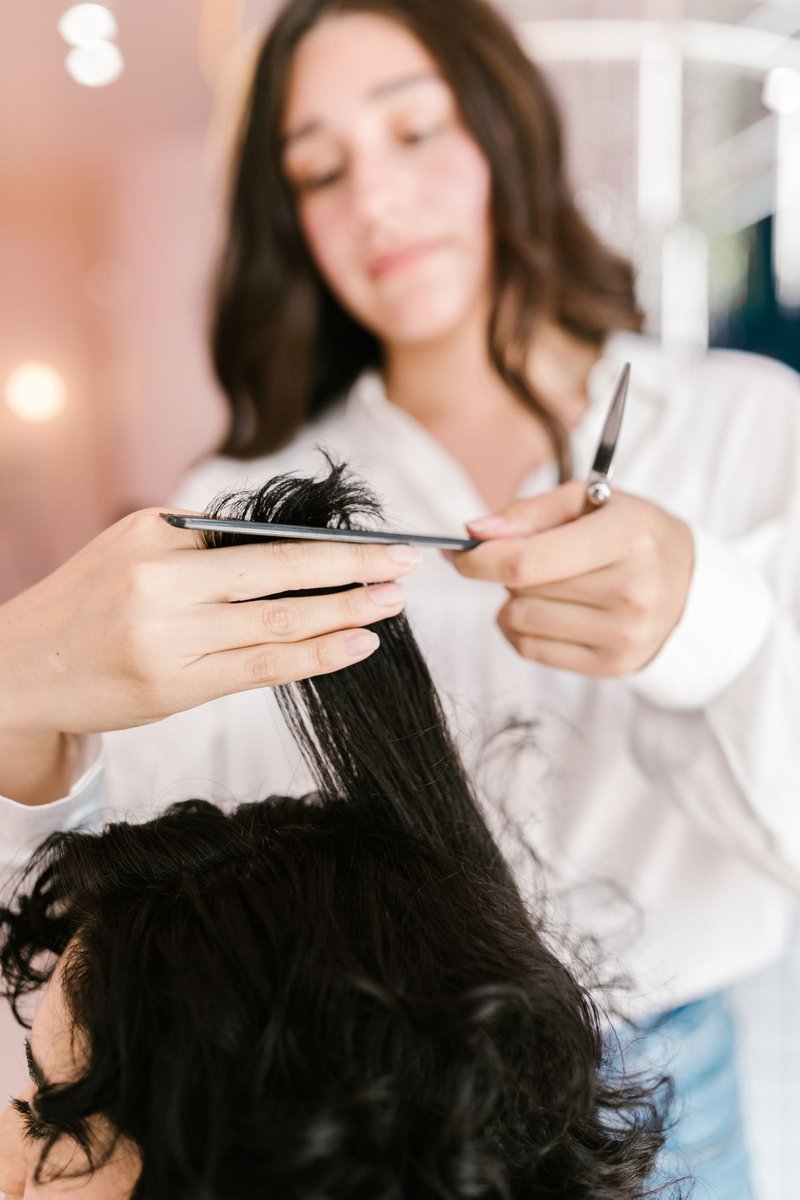
Photo: Pexels
Decide your limits before you arrive. Answer three questions for yourself: how short are you willing to go, how much time will you honestly spend styling your hair each morning, and how often can you return for maintenance? A style that needs a daily blow-dry is the wrong style if you air-dry and leave the house in ten minutes. Your honest answers are the brief; the stylist’s job is to fit the cut to them.
Write down your hair history. Colour, bleach, box dye, keratin, perm, extensions — anything done to your hair in the last two years, even if it has grown out or faded. Chemical history changes what is safe to do today, and a stylist who does not know about an old box dye can end up with breakage or a colour that turns out nothing like the photo. If you are not sure what was used last time, say so: “I coloured it at home about a year ago” is useful information. If you are choosing a new shape, our guide to how to choose a haircut for your face shape helps you name the shape before you describe it.
The Words That Mean Nothing — and What to Say Instead
Most salon misunderstandings come from a handful of vague words. They sound clear when you say them and mean something different to everyone who hears them. Swap each one for a sentence with a measurement in it.
“Just a trim.” To one stylist this means half an inch; to another it means two. Say instead: “Take off one inch, no more, and keep the shape exactly as it is.”
“A little shorter.” Anchor the length to your body: chin length, collarbone length, past the shoulders. “Keep it past my shoulders when it is dry” is clear; “a little shorter” is not.
“Some layers.” Say what the layers are for: “I want movement around my face without losing thickness at the ends,” or “I still need to tie it all into a ponytail.” The purpose tells the stylist where the shortest layer should start.
The Consultation Script: Exactly What to Say
The consultation is the few minutes before the cape goes on, and it is the most important part of the whole appointment. Do not rush it. Show the photos, name the one thing you like most in each, state your limits, then ask the stylist what they would change about the plan. That is why knowing what to ask your hairdresser matters most in these few minutes.
Step 1: Show the photos and name the part you love. “I like the length in this one and the face-framing layers, but I don’t want the fringe.” Point at the exact part. The stylist now knows what to protect if the rest cannot be copied.
Step 2: Say what is not working now. “My ends always look thin,” or “My hair goes flat by noon.” Complaints are data: they point the stylist toward the technical fix. Mention cowlicks or a part that will not sit straight.
Step 3: Ask the five questions that matter. Cover all five before any cutting starts: Can you show me on my own hair where the final length will sit when it is dry? How will this look on a normal day, when I air-dry it? Will this work with my natural texture, or does it need heat styling every morning? How will it grow out over the next eight to ten weeks? And what would you change about this plan? That last question is the most useful one in the consultation: the stylist sees your hair from angles you cannot, and their honest answer often saves you from a style that looks perfect in the photo and wrong on you.

Photo: Pexels
Scripts for a Cut, a Colour, and a Big Change
Copy these lines and adjust the details to your own hair. They are written to be said out loud, not memorised word for word. Each line answers, in plain words, what to ask your hairdresser for that service.
For a haircut: “I like the layers in this photo, but I don’t style my hair every morning. Can you keep the length below my shoulders, keep the ends looking thick, and make it easy to manage? I need to tie it all back for workouts, so please don’t cut the face-framing pieces too short.”
For a colour change: “I like this warm brown, but my hair was dyed dark before. Can we get there today, or will it take more than one visit? Will I need bleach, and what will it look like after the first session?” If you are thinking about a bigger shift, such as letting grey grow in, read our step-by-step guide to going grey gracefully first — it explains the timeline honestly, so you can ask about a realistic plan instead of a miracle in one visit.
For a big change: “I’m thinking about going much shorter. Can we book a separate consultation first, so we can talk it through without the pressure of the clock? I want to know what the grow-out looks like and how often I’d need to come back.” A standalone consultation before a major cut, a colour correction, or extensions is always worth the time.
If the stylist suggests something you do not want: “That sounds interesting, but I’d prefer to stick with the original plan — can we do that instead?” Thank them and decline clearly. If one keeps pushing after you have said no twice, that tells you about the stylist — and it is a fair reason to try someone else next time.
Talking Maintenance and Price
Price and maintenance are the two questions clients are most embarrassed to ask, and the two that cause the most regret when skipped. Ask both before the service starts.
Price: “What is the estimated total for today, and does that include the blow-dry?” Then: “Please let me know before you add anything extra.” Confirm whether the price covers the cut, the colour or toner, any treatment, and extra product for long or thick hair. If a new product comes up mid-service, the stylist should tell you the cost before proceeding, not at the desk afterwards.
Maintenance: “How often will I need to come back to keep this shape, and what does it need at home?” Short pixies and blunt bobs usually need a visit every four to six weeks; soft long layers can grow gracefully for eight to twelve. If the answer is a 30-minute blow-dry and three products and you have ten minutes and one, say so now — the stylist can adjust the cut to your real routine. Our complete volume guide for fine hair shows the small steps that keep a cut looking good between visits.
Aftercare: Before you leave, ask: “What exactly should I avoid for the next few days?” Fresh colour usually needs 48 hours before washing; keratin needs three days without water, ponytails, or clips. Ask for the aftercare in writing if it is a major service, and book your next appointment before you walk out.
Speaking Up During the Cut or Colour
Once the service starts, most clients go quiet. They watch in the mirror, notice something heading the wrong way, and say nothing — hoping it will come together. Silence during the service is the most avoidable cause of a bad result.
Speak early, not late. “Could we leave a little more length on the sides?” said mid-cut is a quick adjustment. “I wanted it longer” said after the cut is finished is impossible. If the fringe is getting shorter than you agreed, or the colour at the front is lighter than the reference — say it the moment you notice it. A professional stylist is never offended by a mid-service check-in; they would far rather pause and correct than deliver a result you are unhappy with.
Use the mirror checks. Many stylists turn you to the mirror at natural pauses during a cut or after rinsing colour. Those moments are invitations to look. Check the length, the shape, and the balance on both sides. If something looks off, say it then — not after the blow-dry, when the only options left are a redo or a refund.
How to Fix a Bad Result Politely
Sometimes, even with a good consultation, the result is wrong. What you do next decides whether it gets fixed for free or festers into a bad review.
Before you leave the salon, say it. If one side looks slightly longer than the other, or the fringe sits differently from what you agreed, mention it while you are still in the chair. “The left side looks slightly longer than the right — could we even it out?” gives the stylist something specific to fix. Most stylists will fix small adjustments on the spot, for free.
If you notice it at home, call within 48 hours. Some problems only show up after you wash and style the hair yourself, without the salon’s blow-dry and finishing products. Uneven layers, a colour that dried differently from the reference, a fringe that sits shorter than agreed — call within two days, describe the exact problem, and ask what their adjustment policy covers. Most reputable salons fix genuine mistakes within this window at no charge. Waiting a week makes it much harder for the salon to know whether the problem came from the appointment or from something that happened afterwards.
Keep it specific and calm. Name the problem, name what you agreed, and ask for the fix: “We agreed on collarbone length when dry, and the shortest layer sits above my chin. Can we talk about how to fix the shape?” Specific and calm gets results; vague and angry gets defensiveness. If the salon refuses to discuss it at all, that is your answer about whether to go back.

Photo: Barron’s London Salon
Mistakes to Avoid
Arriving with only a vague idea. “Do something nice” is not a brief. Bring photos and know your limits.
Saying “just a little” about length. It means a different amount to every stylist. Use inches or a body reference point, and ask the stylist to show you where the dry length will sit.
Hiding your hair history. Old box dye, bleach, or keratin changes what is safe today. Silence about it risks breakage or a colour surprise.
Staying silent mid-service. A concern raised during the cut is a small adjustment; after the blow-dry it is a redo.
Skipping the price question. Ask for the estimated total before the service starts.
Waiting a week to complain. Problems raised within 48 hours get fixed.
Frequently Asked Questions
Do I need to know salon terminology before my appointment?
No. That is the stylist’s job. Describe what you want in plain language — “I want it to look lighter and more natural at the roots” says the same thing as a technical term. Photos help even more, because they skip words entirely.
Is it rude to speak up during my haircut?
No. “Can we pause for a moment and check the length?” is completely acceptable, and no good stylist will mind it. Speaking up early is part of the service, not an interruption of it. What feels rude is staying silent and then complaining afterwards, when nothing can be adjusted.
What if my stylist says my chosen hairstyle will not suit me?
Ask why, and ask for the closest alternative. A small change — keeping more length, softening the fringe, choosing a warmer tone — often gives you most of what you wanted in a version that works on your hair. Hear the reason first: it is usually about your texture or face shape, not about taste.
What should I do if I hate my haircut when I get home?
Call the salon within 48 hours, describe the exact problem, and ask about their adjustment policy. Most salons will fix a genuine mistake for free inside that window. A calm, specific call beats a furious review every time.

Photo: Flair Hairdressers
The 30-Second Check Before You Say Yes
Before the first cut or colour is applied, run through this list. If any answer is unclear, ask again — it takes thirty seconds and saves weeks of regret.
I know where the final length will sit when my hair is dry. I have shown which part of the photo I like, and which part I do not want. I have shared my hair history. I know what the style needs at home, the estimated total, and the backup plan if the first choice does not work. And I know when to come back.
Your hair is on your head every day. You deserve to understand what is being done to it, why it is being done that way, and how to take care of it afterwards. Now you know what to ask your hairdresser, and when to ask it. Asking questions does not make you difficult. It makes you the client every good stylist wants.
You May Also Like
If your hair feels dry or flat after a salon visit, our winter hair care routine explains how to stop dryness, static, and hat hair step by step. And if you are unsure how often to go back, our guide to how often you should trim your hair gives the honest answer for every hair type.