16 Shaggy Hairstyles for Women Over 50 That Add Volume
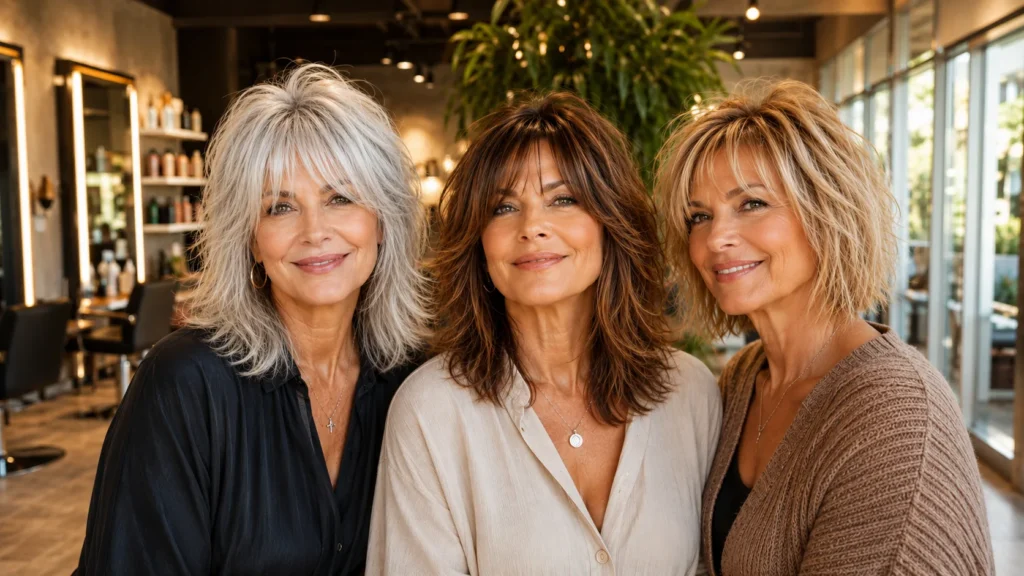
Your hair after 50 deserves better than a safe, predictable bob and a shaggy haircut might be the volume-boosting reset you didn’t see coming. After menopause, hair texture shifts, density drops, and the cuts that worked at 35 simply stop performing. I’ve worked with hundreds of women in this exact season of life, and the shag consistently delivers more lift, more movement, and more personality than almost anything else on the menu. Here are 16 styles I genuinely love plus the real-world advice to help you wear each one with confidence.
My Design Notes
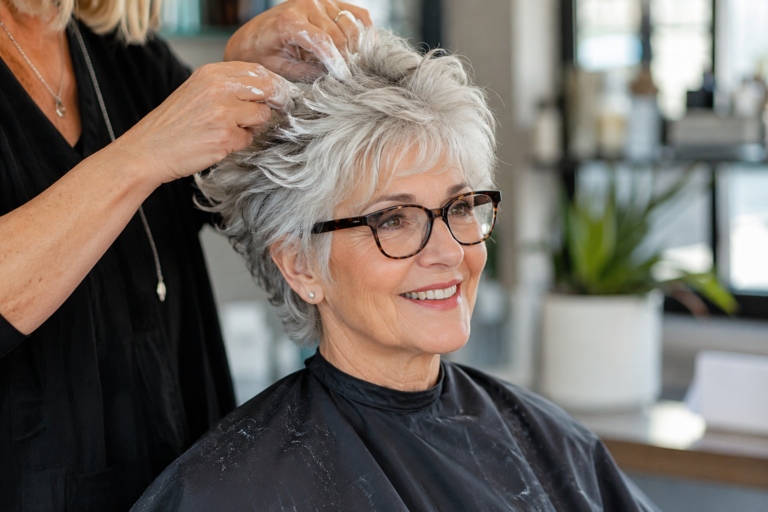
One of my most memorable clients was Susan, a 54 year old retired teacher from suburban Chicago who came to me last spring feeling completely invisible. Her hair had gone flat and lifeless after menopause, and she’d been wearing the same blunt bob for nearly eight years. We sat and talked for a good 20 minutes before I even picked up a comb. I recommended a soft feathered shag with curtain bangs, kept it shoulder-length, and added a few babylights to fake density where she needed it most. When I turned her chair around, she actually teared up. That moment stuck with me. In my experience, the right shag haircut doesn’t just change how a woman looks it changes how she carries herself walking out the door. That’s the real power of this cut, and it’s exactly why I keep recommending it to women over 50 who feel like their hair has stopped working for them.
16 Timeless Shag Haircut Secrets That Give Women Over 50 Stunning Volume and Effortless Style
1. Why the Shag Haircut Is Having a Major Moment for Women Over 50
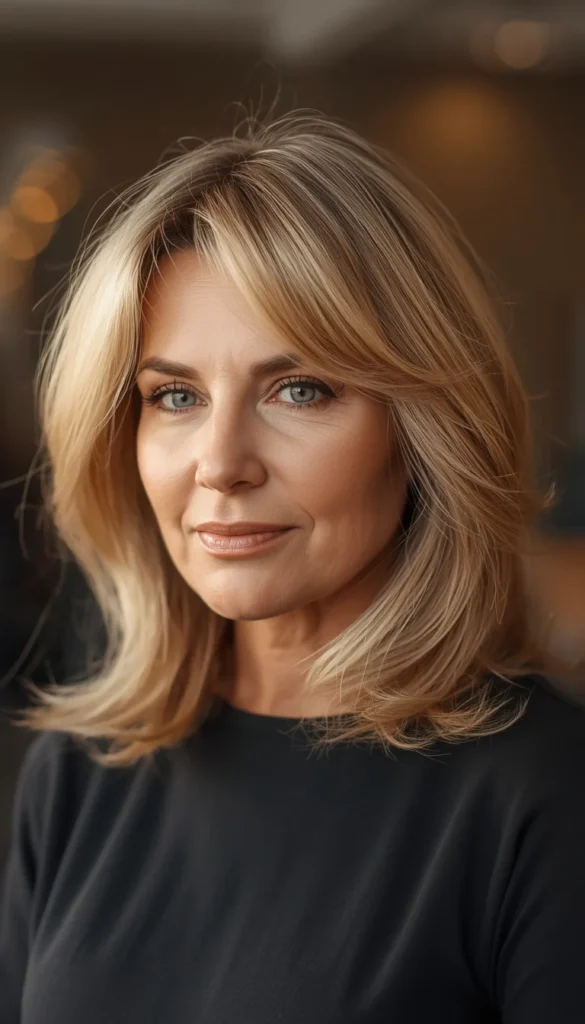
Let me be direct: the shag is not a trend. It’s a technique and a genuinely smart one for hair that’s changed after 50.
Razor-cut layers, strategic face-framing pieces, and a deliberately undone silhouette work together to create the illusion of thickness where fine hair has started to thin. The shag adds volume at the crown, movement at the ends, and softness around the face. Those are three things most women over 50 are actively chasing in a haircut, and very few cuts deliver all three at once.
What makes it especially relevant right now is the modern update. Today’s shag is softer, more customizable, and honestly more flattering on mature bone structure than its 1970s predecessor ever was. I’ve had clients in their late 60s come in asking for “something with life in it” and a well-executed shag is almost always the answer I come back to.
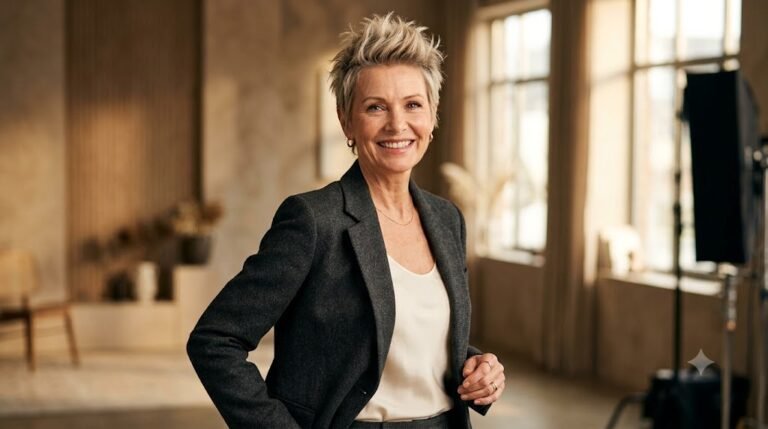
2. Short Feathered Shag with Crown Volume
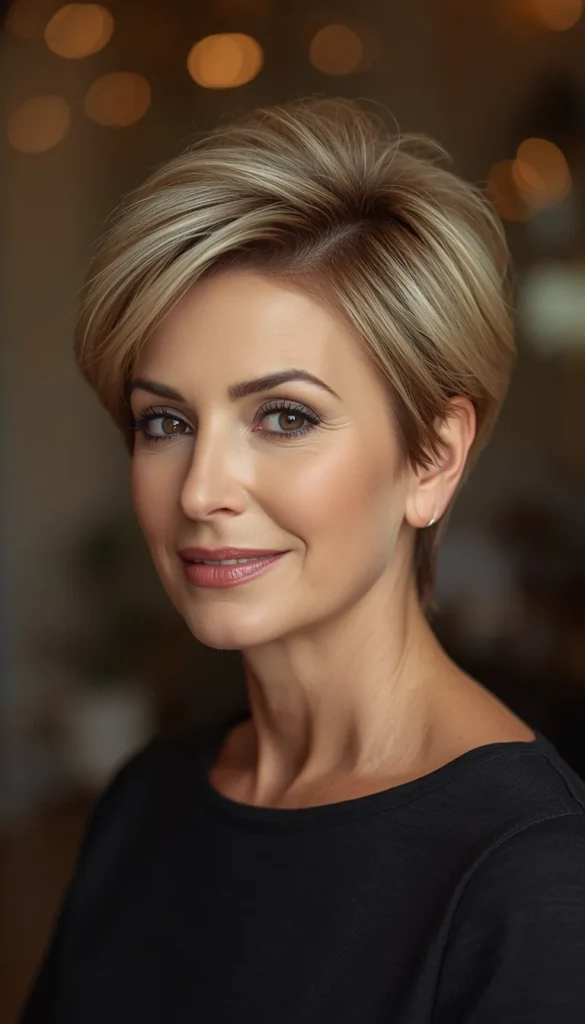
This is the one I recommend most often to women who are nervous about going shorter. The short feathered shag keeps length around the face while building serious volume at the crown which is exactly where most women over 50 start losing density first.
The feathered layers do the heavy lifting here. They catch light, create movement, and make fine hair look considerably fuller without any teasing or backcombing drama. One quick trick I’ve learned over the years: ask your stylist to keep the sideburns slightly longer and tapered. It frames the face beautifully and softens the jawline in a way that feels polished rather than severe.
This cut works especially well if you’re:
- Transitioning away from a blunt bob that’s fallen flat
- Dealing with thinning at the temples or crown
- Looking for something wash-and-go with minimal daily styling
The only thing to watch out for is grow-out. Feathered layers need a trim every 6 to 8 weeks to stay sharp, so factor that into your salon budget upfront.
3. Soft Layered Shag for Fine Hair
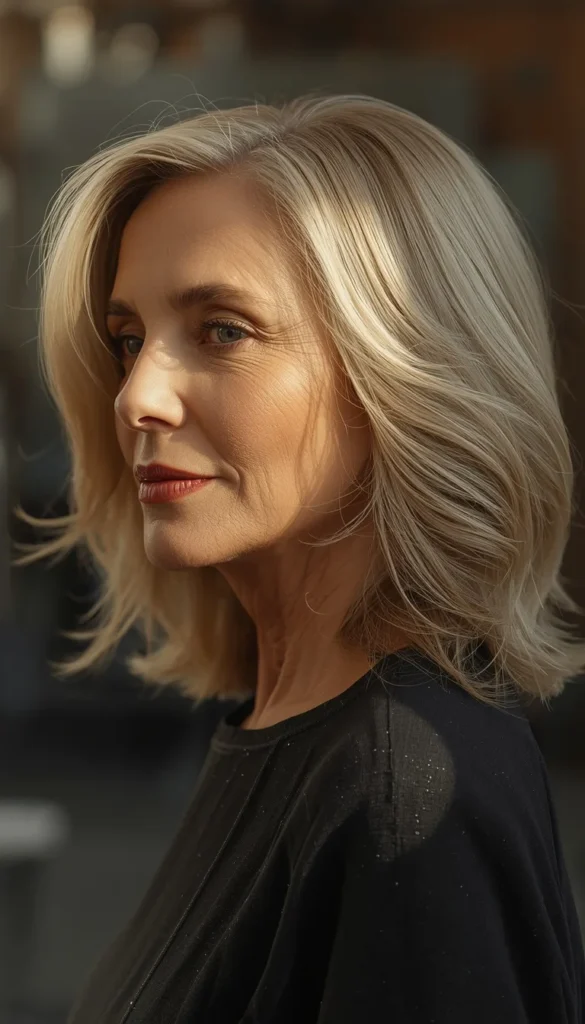
Fine hair over 50 needs a cut that works with what you have not one that pretends the last 30 years didn’t happen. The soft layered shag is built specifically for this reality.
Instead of blunt, heavy sections that pull fine strands down, this style uses scattered lightweight layers throughout the mid-lengths and ends. The result is hair that actually moves. It bounces when you walk. It holds a blowout longer than a standard cut because the layers distribute weight more evenly across the head.
A volumizing mousse applied to damp roots before blowdrying is your best friend here. I’m talking a golf-ball-sized amount, worked through from root to mid-shaft not just scrunched at the ends. That one small step makes a genuinely noticeable difference in how long the volume lasts through the day.
Color-wise, this style shines with soft babylights or a lived-in balayage. Adding dimension through color makes fine hair read as thicker to the eye, and when paired with these layers, the effect is really lovely.
Which shaggy style on this list made you stop scrolling — and does it match the hair texture you’re actually working with right now?
4. Medium Shag with Curtain Bangs
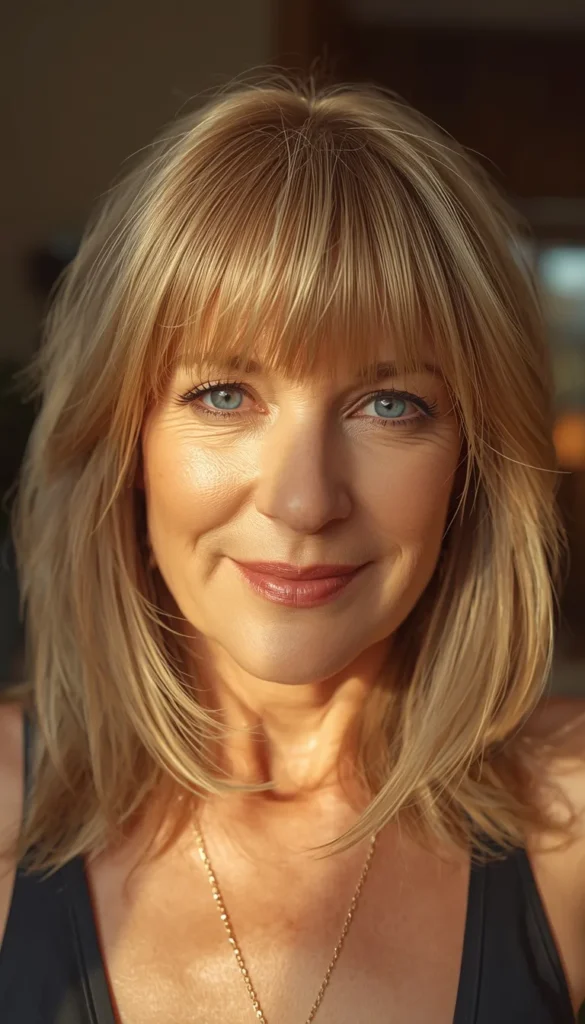
If there’s one combination I keep coming back to for women over 50, it’s a medium-length shag paired with curtain bangs. It is, without question, one of the most universally flattering setups I’ve worked with across different face shapes, hair textures, and personal styles.
Curtain bangs part naturally at the center and sweep outward, which means they frame the face without creating that heavy, forehead-covering wall that traditional blunt bangs can. They’re also significantly easier to grow out gracefully a practical win that my clients genuinely appreciate.
The medium length itself hits right around the collarbone, which is a sweet spot for women who want movement without the commitment of going fully short. Add in the shag layering and you get:
- A softer silhouette that works on oval, heart, and square face shapes
- Enough weight at the ends to control frizz on humid days
- A style that air-dries beautifully with minimal product
One thing to discuss with your stylist upfront the density of your layers at the crown. Too much removal up top on already-fine hair can backfire and create flatness rather than volume. A skilled stylist will customize this carefully.
5. Shaggy Bob for Women Over 50
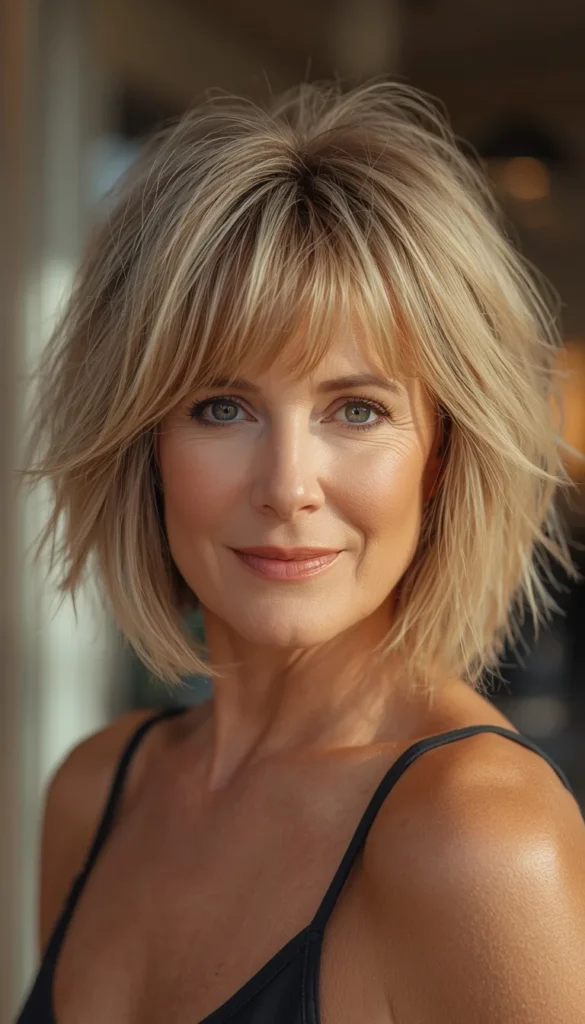
The shaggy bob is what happens when the classic bob finally gets some personality. It keeps the familiar, face-framing shape that so many women over 50 already love but the added texture and interior layers completely transform how it feels to wear.
Where a standard bob can look stiff and one-dimensional as hair thins with age, the shaggy version stays airy and alive. The ends are slightly razored rather than blunt-cut, which removes bulk without removing length. That distinction matters more than most people realize.
This is also one of the lowest-commitment entry points into the shag world. If you’ve been curious about the style but aren’t ready to go fully layered all over, the shaggy bob lets you test the waters beautifully. I always tell hesitant clients it’s still a bob, just a better one.
A quick trick I love for this cut: after blowdrying, wrap two-inch sections around a large barrel iron and immediately release without holding. Don’t curl just wrap and drop. It creates that effortless, slightly tousled movement that makes a shaggy bob look expensive rather than messy.
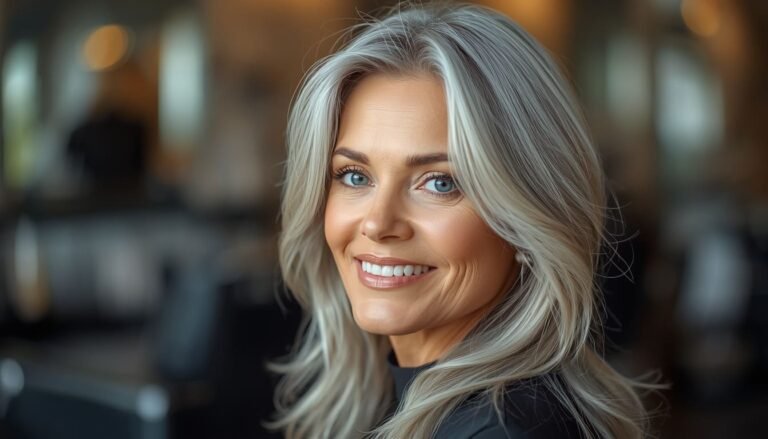
6. Long Layered Shag with Face Framing Pieces
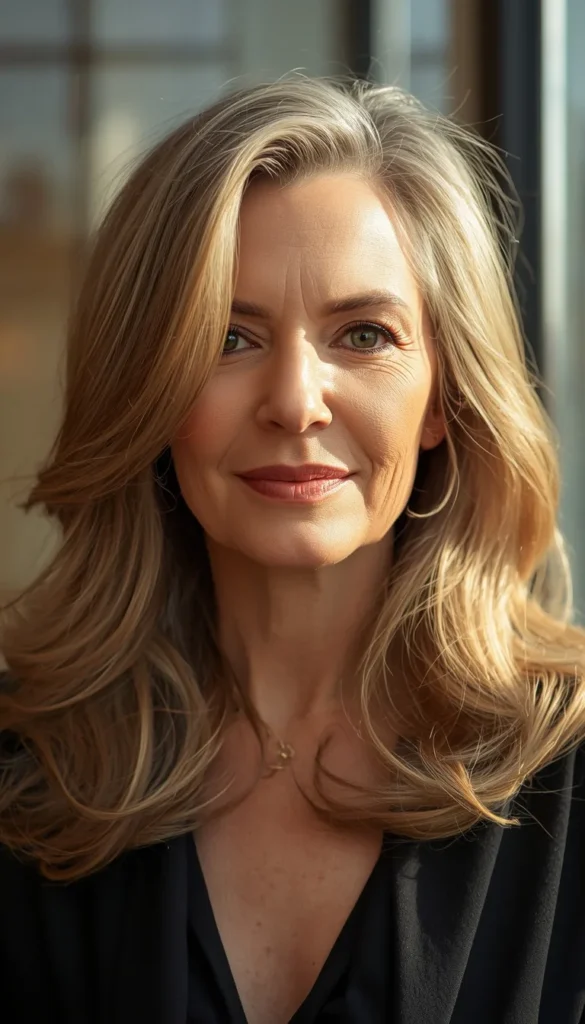
Here’s something I wish more women over 50 heard clearly: you do not have to cut your hair short just because you’re getting older. That rule is outdated, and frankly, it was never a rule to begin with.
A long layered shag worn at or below the collarbone is genuinely stunning on the right woman. The key is in the layering strategy. Long shags need face-framing pieces those intentional shorter sections that fall around the cheekbones and jawline to prevent the cut from looking heavy or shapeless. Without them, long layers on fine hair can drag everything downward and add years rather than subtracting them.
What makes this style work beautifully after 50:
- Face-framing pieces draw attention upward toward the eyes and cheekbones
- Long layers create movement without sacrificing the length you love
- A center or deep side part adds instant polish with zero extra effort
The honest maintenance reality here is that long shags need a trim every 8 to 10 weeks to keep the layers from blending into shapelessness. Skipping appointments is where this cut starts to lose its magic.
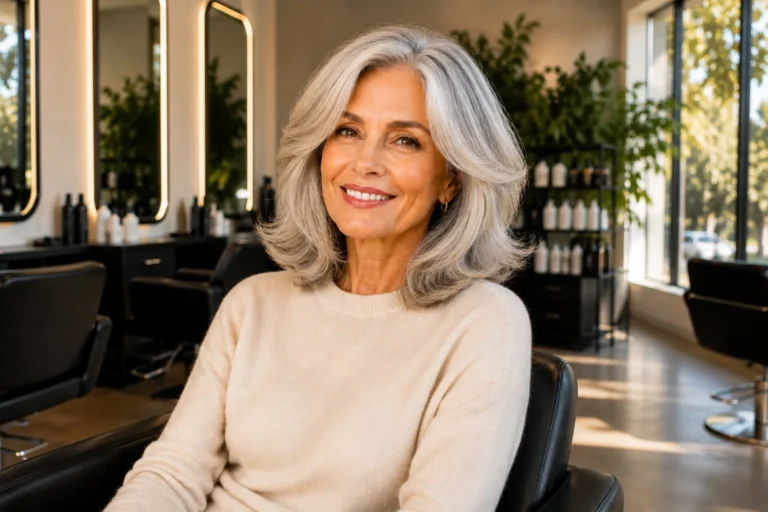
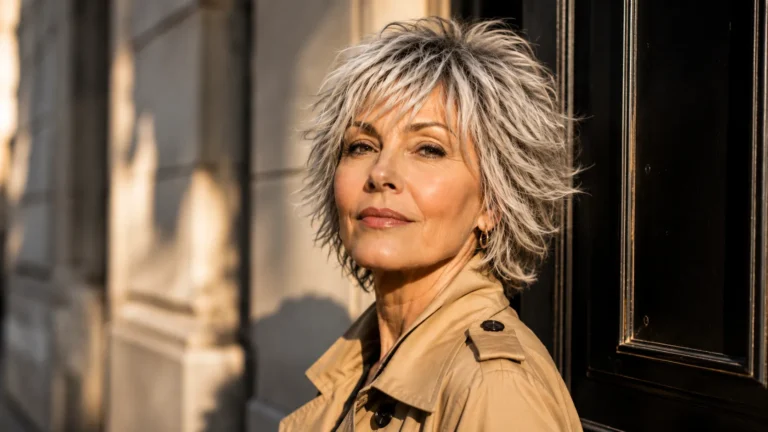
7. Feathered Shag Haircut Over 50 for Gray Hair
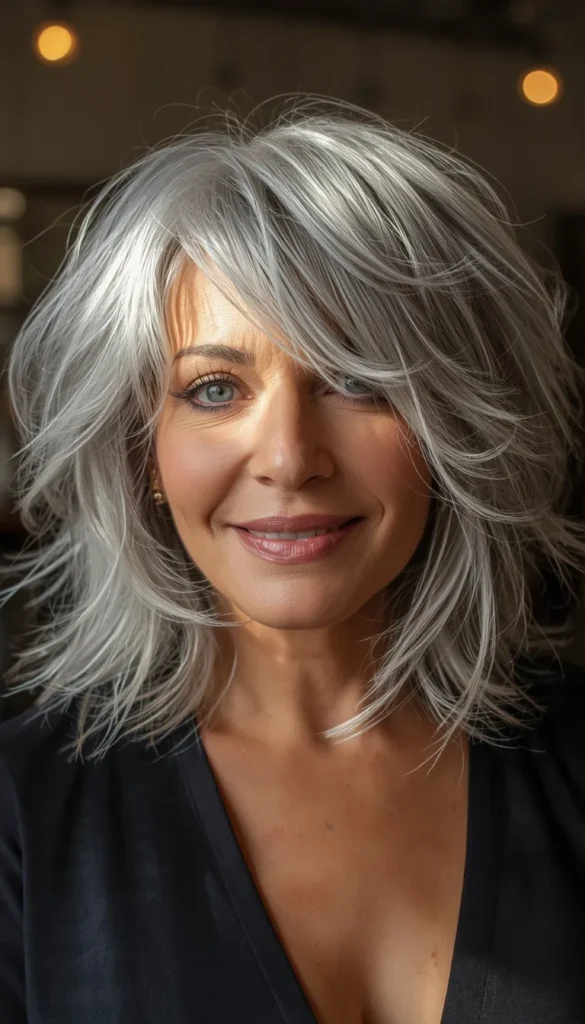
Gray hair gets a genuinely bad reputation it doesn’t deserve. In my experience, a well-cut feathered shag on silver or salt-and-pepper hair looks more sophisticated and intentional than almost any colored style I’ve worked with.
The feathering technique is particularly beautiful on gray because it catches light differently at every layer. Silver strands have a natural luminosity that colored hair often tries to replicate with highlights and here, you already have it built in. The movement from feathered layers enhances that shimmer in a way that feels genuinely luxurious.
There is one real challenge with gray hair that I always address honestly with my clients. Gray and silver strands tend to be coarser, drier, and more prone to frizz than pigmented hair. So the styling routine needs to adjust accordingly. A smoothing cream or light serum worked through damp hair before blowdrying makes a significant difference in how polished the finished look appears.
Deep conditioning once a week is non-negotiable for gray shags. I recommend it the way I recommend sunscreen just make it a habit and your hair will thank you for it.
8. Short Shag with Wispy Bangs
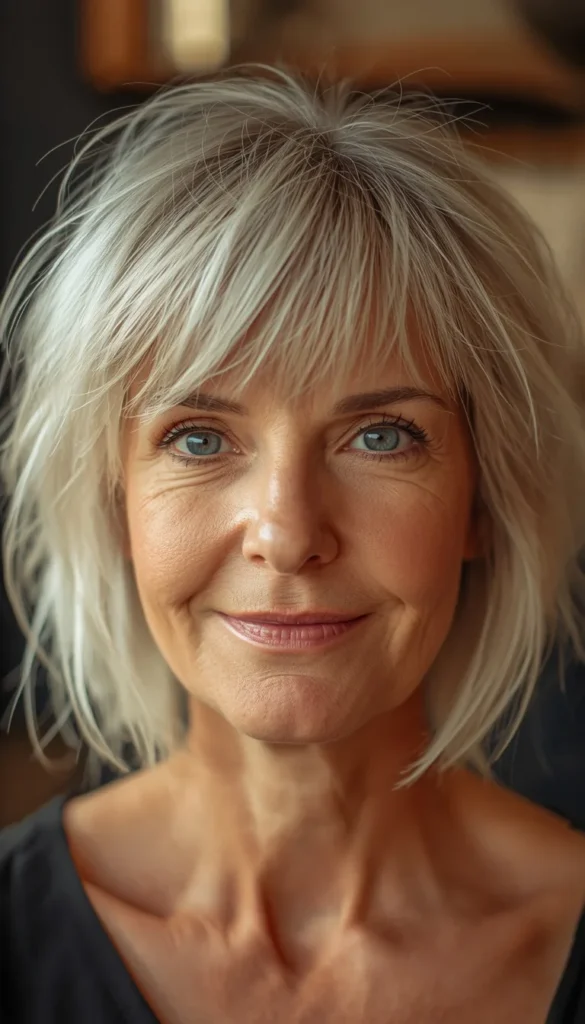
There is something quietly powerful about a short shag with wispy bangs on a woman over 50. It’s youthful without trying too hard. It’s polished without being uptight. And it requires far less morning effort than most people assume.
The wispy bang is the detail that makes this particular style work so well for mature faces. Unlike a blunt fringe that sits heavily across the forehead, wispy bangs are light, slightly transparent, and incredibly forgiving. They soften forehead lines naturally, draw attention to the eyes, and move with the rest of the hair rather than sitting stiffly apart from it.
For fine hair especially, this is a dream combination. The short shag builds volume at the crown where it’s needed most, and the wispy fringe adds that finishing touch of softness that makes the whole look feel intentional and fresh.
Styling this is genuinely simple:
- Blowdry roots upward with a paddle brush for lift
- Use a small round brush just on the bangs to direct them slightly to one side
- Finish with a light-hold flexible spray nothing stiff or crunchy
Trims every 5 to 6 weeks keep the wispy texture intact. Let them grow too long and they lose that airy quality that makes them so flattering in the first place.
Top 6 Shaggy Hairstyles for Women Over 50 at a Glance
| Hairstyle Idea | Estimated Price | Maintenance |
| Short Feathered Shag with Crown Volume | $65 to $120 per cut | Medium |
| Medium Shag with Curtain Bangs | $75 to $130 per cut | Medium |
| Shaggy Bob for Women Over 50 | $60 to $110 per cut | Low |
| Feathered Shag for Gray Hair | $70 to $125 per cut | Medium |
| Silver Shag with Full Fringe | $80 to $150 per cut | High |
| Shaggy Lob for Collarbone Length Hair | $65 to $120 per cut | Low |
9. Modern 70s Inspired Shag for Thick Hair
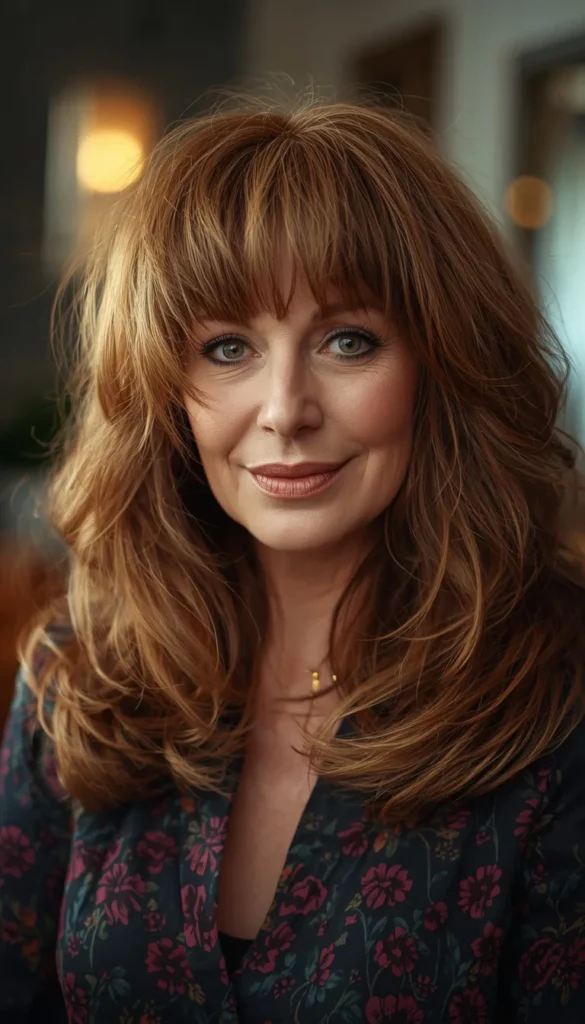
Women with thick hair over 50 often feel like their only option is to thin everything out aggressively or chop it all off. Neither is true and the modern 70s inspired shag proves it beautifully.
This style leans into thickness rather than fighting it. Long, feathered layers cascade from the crown downward, creating that iconic 70s silhouette with a genuinely contemporary finish. The difference between this and the original is in the execution today’s version uses softer, more blended layers rather than the harsh, choppy sections that defined the decade.
Thick hair actually holds this style better than any other texture. The layers have enough density to stay separated and defined, which means the movement you get from this cut is real and lasting not something that collapses by midmorning.
A few things worth knowing before you commit:
- Ask your stylist specifically for internal thinning rather than surface layering to remove bulk without affecting the silhouette
- Avoid heavy conditioners on the mid-lengths and ends they weigh thick hair down fast
- A medium-hold mousse on damp hair before diffusing gives the best results for that effortless, slightly voluminous finish
Salon visits every 8 weeks keep the shape from turning shapeless. Thick hair grows fast, and without regular maintenance this style can quickly start feeling heavy again.
10. Textured Shaggy Pixie for Low Maintenance Styling
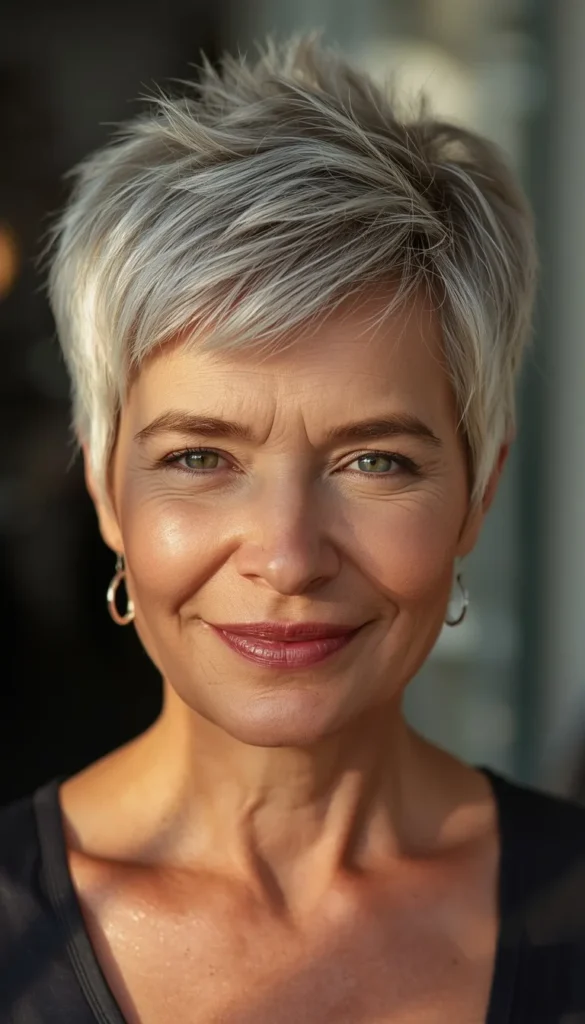
The textured shaggy pixie is the cut I recommend when a client looks me in the eye and says “I just want to wash it and go.” I take that request seriously and this style actually delivers on that promise.
It’s short, yes. But it’s not severe. The shaggy texture added throughout a pixie cut completely transforms its personality. Choppy layers at the crown create height and volume. Longer, slightly wispy pieces around the temples and ears soften the face. The result is something that feels modern and effortless rather than matronly or predictable.
What I love most about this cut for women over 50 is the morning routine it creates. A small amount of texturizing cream worked through slightly damp hair, a quick scrunch at the crown, and you’re genuinely done. No blowdryer required unless you want one.
This works beautifully on fine to medium density hair. If your hair is on the coarser side, ask your stylist to add a few extra razor-cut pieces throughout the top to keep the texture feeling light rather than bristly. That one adjustment changes everything about how this cut sits and moves through the day.
11. Layered Shag Hairstyle for Women Over 50 with Round Faces
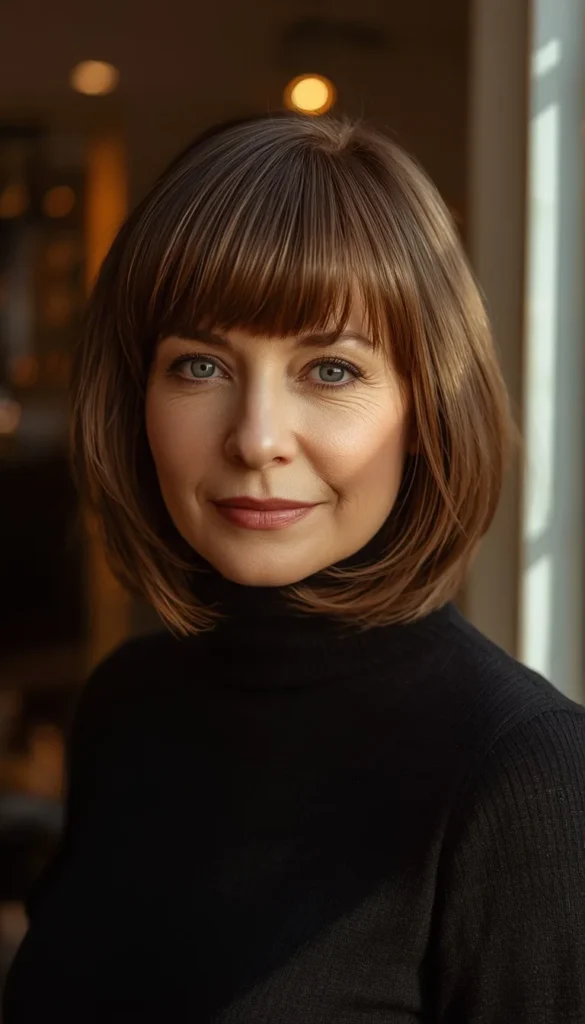
Round face shapes have specific needs from a haircut and the layered shag, done correctly, addresses every single one of them. The goal is always to create the visual impression of length and add definition to the jawline without making the face look wider.
The secret is in where the layers are placed. For round faces, I always direct my stylists to keep the layers longest around the jawline and below, while building volume and height at the crown. This vertical emphasis elongates the face naturally and creates beautiful balance.
Curtain bangs are a particularly smart pairing here. They part in the middle and draw the eye inward and upward rather than across the face, which is exactly the visual direction a round face benefits from. Avoid full blunt bangs with this face shape they cut the face horizontally and emphasize width rather than length.
A few additional styling notes worth keeping in mind:
- A center part almost always flatters round faces more than a side part
- Keep the most voluminous layers at the crown, not the sides
- Avoid excessive width at the cheekbones ask your stylist to keep layers there soft and close rather than heavily feathered outward
This is genuinely one of those cuts where the customization conversation with your stylist matters more than the reference photo you bring in.
12. Shaggy Lob for Collarbone Length Hair
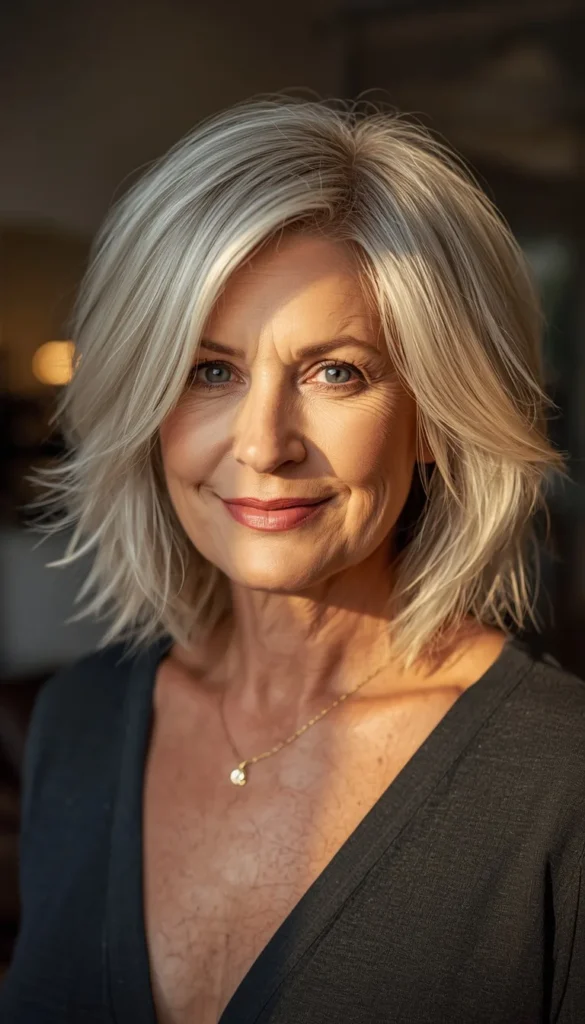
The shaggy lob or shag-lob if you want to get specific sits right at that sweet spot between short and long that so many women over 50 find themselves gravitating toward. It’s versatile enough to wear down, half-up, or pulled back on busy mornings, and the shag layering keeps it from ever looking flat or uninspired.
Collarbone length is particularly flattering after 50 because it skims the neckline in a way that feels elegant and deliberate. Add interior shag layers and suddenly that familiar length has movement, dimension, and a lived-in quality that a standard lob simply can’t achieve.
This is also one of the most forgiving grow-out lengths I’ve worked with. Because the layers are scattered rather than blunt, the cut transitions gracefully as it grows no awkward in-between phase that sends you running back to the salon ahead of schedule.
For fine hair, this is genuinely one of the best options on this entire list. The layering removes just enough weight to let fine strands move freely, while the collarbone length retains enough density to prevent the ends from looking stringy or sparse. A lightweight volumizing spray at the roots before blowdrying, and this cut practically styles itself.
If you could wake up tomorrow with any one of these 16 shaggy styles, which one would you pick and what’s honestly stopping you from booking that appointment?
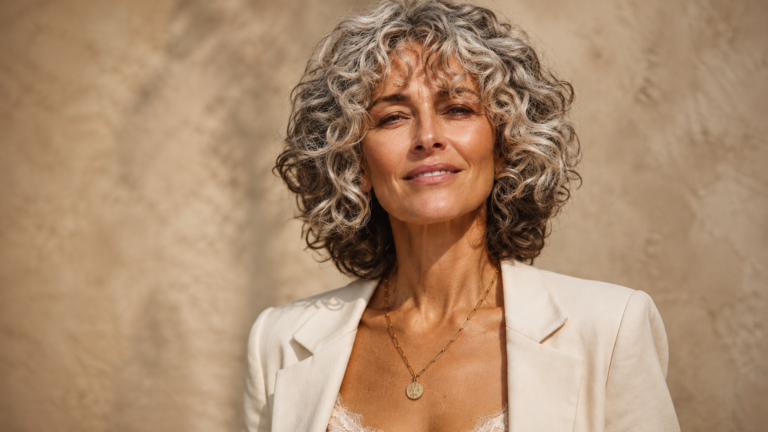
13. Razor Cut Shag for Natural Waves
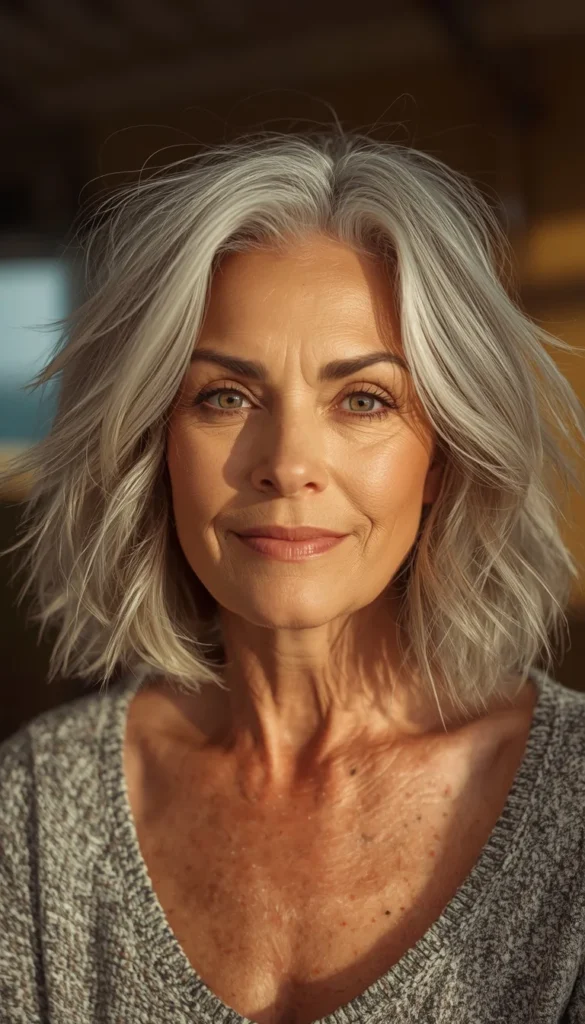
If you have natural wave in your hair and you’ve been fighting it your whole life, I want you to stop. The razor cut shag is quite possibly the best argument for finally working with your texture instead of against it.
The razor cutting technique removes weight from the ends in a way that a standard scissor cut simply cannot replicate. Instead of blunt, heavy sections that push waves down and out, razor cut ends allow each wave to spring up and move independently. The result is that effortless, beachy texture that women with straight hair spend an hour trying to recreate with a curling iron and you get it naturally.
This cut does come with one honest caveat. Razor cutting on dry or damaged hair can cause frizz rather than definition. If your hair is on the drier side which is common after 50 due to hormonal changes make sure your stylist knows this upfront. A good deep conditioning treatment before your cut appointment makes a real difference in how cleanly the razor glides and how beautifully the waves settle afterward.
Styling this at home is genuinely enjoyable:
- Apply a curl-enhancing cream or light defining gel to soaking wet hair
- Scrunch upward from ends to roots and let it air dry completely
- Once fully dry, break up the waves gently with dry hands for that soft, undone finish
This is low effort with a high visual payoff which is exactly what a great haircut should be.
14. Korean Inspired Soft Shag for a Youthful Look
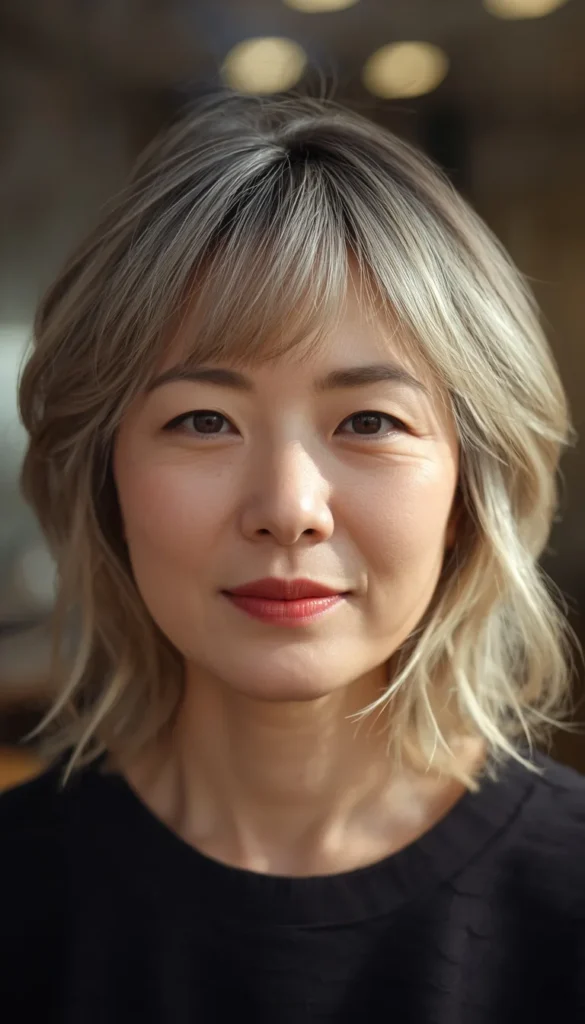
The Korean inspired soft shag has quietly become one of the most requested styles in my consultations over the last two years and I completely understand why. It takes everything flattering about the traditional shag and softens it into something that feels genuinely fresh and almost effortlessly youthful.
What sets this version apart is the emphasis on softness over texture. Where a classic shag leans into choppy, defined layers, the Korean inspired variation uses more blended, tapered ends that create a gentle, wispy finish. The bangs are typically airy and eyebrow-grazing rather than heavy or blunt, which makes them incredibly forgiving on mature foreheads.
For women over 50, this style works especially well because it never looks like it’s trying too hard. There’s a lightness to it both literally in terms of weight and visually in terms of overall impression that reads as confident and put-together without feeling overdone.
This is particularly beautiful on finer hair textures. The soft layering adds the appearance of volume without removing so much weight that fine strands are left looking sparse. One thing I always mention to clients considering this cut the fringe does require a little daily attention. A small round brush and 60 seconds with a blowdryer keeps it looking intentional rather than haphazard. It’s a small investment for a very lovely result.
15. Silver Shag Haircut with Full Fringe
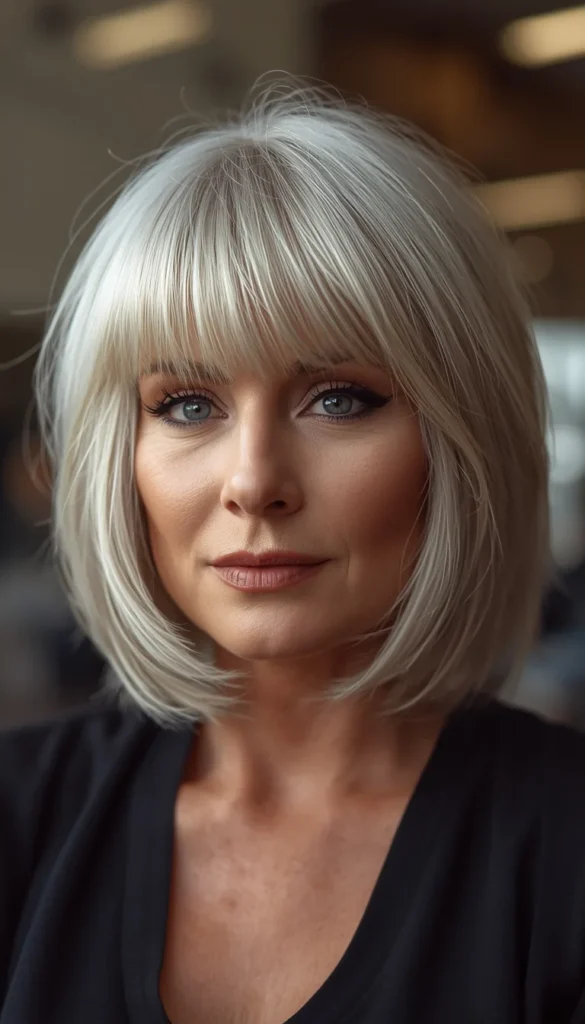
This is the one that stops people in their tracks. A silver shag with a full fringe is bold, intentional, and absolutely stunning on the right woman and more women over 50 qualify as “the right woman” for this look than they realize.
The full fringe here is key. Unlike wispy or curtain bangs, a full fringe sits across the forehead with confidence and creates an immediate focal point that draws attention straight to the eyes. On silver or white hair, this combination has a striking graphic quality that feels artistic rather than aging. I’ve seen this cut completely transform the way a woman presents herself in a room.
The silver tone itself deserves a moment of appreciation. Natural gray and silver hair has a luminosity and depth that no color service can fully replicate. Paired with the movement of a shag cut, it catches light at every layer and creates dimension that looks genuinely expensive.
A few real talk maintenance points worth knowing:
- Silver and white hair shows product buildup faster than pigmented hair a clarifying shampoo once a month keeps it bright and clean
- Purple or blue toning shampoo used once a week neutralizes any yellow warmth that develops over time
- The full fringe needs trimming every 4 to 5 weeks let it grow past the eyebrows and it loses its entire impact
This is a committed look. But women who go for it rarely look back.
Are you team wash-and-go simplicity or do you enjoy a few extra minutes of styling in the morning because your answer might tell you exactly which shag is right for you?
16. How to Talk to Your Stylist About a Shag Haircut

Walking into a salon with a reference photo is a great start. But knowing what to actually say when you get there is what separates a good haircut from a truly great one and for a shag haircut specifically, the conversation matters enormously.
The shag is one of those cuts that lives or dies by customization. A version that looks incredible on a fine-haired woman with an oval face might be completely wrong for someone with thick, coarse hair and a round face shape. Your stylist needs specific information to get this right, and it’s completely okay actually, it’s necessary to come prepared.
Here’s what I always recommend bringing up before a single snip happens:
- Your density reality: Be honest about where your hair has thinned. Crown thinning, temple recession, and overall fine texture all affect how layers should be distributed throughout the cut.
- Your styling tolerance: Tell your stylist exactly how many minutes you’re willing to spend on your hair each morning. Five minutes and ten minutes require completely different layer placements.
- Your bang hesitation: If you’re nervous about fringe, say so. A good stylist will suggest curtain bangs or face-framing pieces as a lower-commitment entry point that still gives you the shag effect.
- Your maintenance budget: Shags need regular trims to stay sharp. If you can realistically make it to the salon every 8 weeks, your stylist should build the cut accordingly. If it’s more like every 12 weeks, the layering needs to be softer so the grow-out is more graceful.
The best thing you can say to a stylist is simply this: “I want more volume and movement, and I’m open to layers but I need this to work with my real life.” That one sentence opens the door to a genuinely collaborative conversation. And that conversation is where a great haircut actually begins.
Your 2-Minute Shag Decision Map
By Budget
Salon Smart (Under $90)
- Shaggy Bob — minimal layering, fewer cuts needed per year
- Short Feathered Shag — simple to execute, most stylists nail it
- Shaggy Lob — grows out gracefully, stretches time between trims
Investment Style ($90 to $150+)
- Silver Shag with Full Fringe — requires frequent fringe trims and toning treatments
- Korean Inspired Soft Shag — needs a skilled stylist familiar with the technique
- Medium Shag with Curtain Bangs plus Babylights — color service adds to total cost
By Lifestyle
Wash and Go Women
- Textured Shaggy Pixie — scrunch and step out, done in under 5 minutes
- Razor Cut Shag for Natural Waves — air dries beautifully with minimal product
- Shaggy Bob — one quick blowdry and it holds shape all day
Style Enthusiasts
- Silver Shag with Full Fringe — bold, graphic, makes a statement every single day
- Modern 70s Inspired Shag for Thick Hair — rewards the extra 10 minutes of styling
- Long Layered Shag with Face Framing Pieces — versatile enough to wear five different ways
Frequently Asked Questions
Are shaggy hairstyles good for thinning hair over 50?
Yes, and they’re honestly one of the best options available. Razor-cut layers distribute weight evenly and create the illusion of fullness where hair has thinned.
How often should women over 50 trim a shag haircut?
Ideally, every 6 to 8 weeks for short shags and every 8 to 10 weeks for longer versions. Skipping trims is where shags lose their shape fastest.
Can women over 50 pull off a shag haircut with gray hair?
Absolutely. Gray and silver hair has natural luminosity that makes feathered shag layers look genuinely stunning — no color required.
What face shapes do shag haircuts flatter most?
Shags work on almost every face shape. Oval and heart shapes have the most flexibility, while round faces do best with longer shags that add vertical length.
Is a shag haircut high maintenance for older women?
It depends on the length. Short shags need more frequent trims but less daily styling. Longer shags are more forgiving between appointments but need a few extra minutes each morning.
Conclusion
The women I’ve worked with who take the shag plunge almost never regret it — and most of them wish they’d done it sooner. Your hair after 50 isn’t something to manage or work around; it’s something to dress up, show off, and have a little fun with. Pick one style from this list that made you pause, screenshot it, and bring it to your next salon appointment. That one conversation could genuinely change how you feel walking out the door every single morning. So tell me — which shaggy style caught your eye, and are you finally ready to make the cut?

2 Comments