
How to Add Volume to Fine Hair: The Complete Guide
Fine hair can look freshly styled for twenty minutes, then fall flat at the roots before lunch. If that sounds familiar, you are not doing anything wrong: fine strands are lighter, smoother, and quicker to show oil and buildup than thicker hair. The fix is not more product or a pricier shampoo. It is learning how to add volume to fine hair in the right order, so each step builds on the one before it. Once you know how to add volume to fine hair, the routine takes minutes, not hours.
This guide gives you that order: why fine hair falls flat, the wash-day routine that sets volume up correctly, the styling steps that hold it, the cuts that help, and the mistakes that undo it all. No brand names, no ten-product shopping list: just the method, the order, and the small moves that make the biggest difference.

Photo: Sam Villa
Why Fine Hair Falls Flat
Three words get mixed up: fine, thin, and thinning. Fine describes the thickness of one strand: fine hair has a small diameter, so each strand is light and smooth. Thin describes density: how many strands you have per square inch. You can have a thick head of fine hair or thin hair with coarse strands. Thinning means you are shedding more than usual, and your ponytail is getting thinner over time.
That difference decides what you can fix. Strand thickness is mostly genetic: no shampoo changes the diameter of your hair. What you can change is how the hair sits, how clean the roots are, and how much lift your cut and drying give it. Volume, for fine hair, is something you build, not something you buy in a bottle.
Fine hair falls flat for four reasons that stack up. Oil and buildup coat the roots and glue strands together, so they lie flat and show scalp. Heavy products do the same: rich conditioners, oils, and thick creams weigh light strands down within hours. The wrong cut removes density at the ends, so the hair looks wispy. And drying without lift lets the roots set flat, which is the position they remember all day. Each section below removes one of those four causes, in order.
The 3-Zone Volume Method
Here is the method: treat your hair as three zones, and give each zone only what it needs. Roots need lift and nothing heavy. Mid-lengths need light body and grip. Ends need density and protection. Most volume problems come from giving every zone the same product. Split the zones and the routine gets simple.
Roots: keep them clean, use only light sprays or foams, and dry them against the direction they fall. Mid-lengths: a small amount of mousse or thickening cream, worked through damp hair, gives the grip that holds a shape. Ends: a little protection and a clean, blunt edge, so the bottom looks as full as the top. Keep this picture in mind: every step below is one zone getting what it needs.
One honest note: volume built this way looks soft and touchable, not stiff. If your hair has ever felt crunchy after styling, that was too much product in the wrong zone, not a sign you need more hold. Less product, placed correctly, beats more product every time.
How to Add Volume to Fine Hair: The Wash-Day Routine
Volume starts in the shower, because a clean root lifts and a coated root lies flat. Wash as often as your scalp needs: if your roots turn oily by day two, washing every day or every other day is what your scalp asks for. Stretching washes when your roots are oily only flattens the hair faster.
Step 1: Shampoo at the scalp only. Massage a volumizing or clarifying shampoo into the scalp with your fingertips, and let the lather run down the lengths as you rinse. Scrubbing the lengths tangles fine hair and strips the ends. Step 2: Condition the ends only. Apply a lightweight conditioner from the mid-lengths to the ends, never on the scalp, and rinse it out fully. Any conditioner left near the roots is weight you will feel by noon.
Step 3: Once or twice a month, use a clarifying wash. Dry shampoo, hairspray, and hard water leave residue that regular shampoo does not fully remove, and that residue is a common reason volume slowly disappears over weeks. Do not overdo it: too much clarifying dries the ends, which break and look thinner.
Step 4: Towel-dry gently. Blot, do not rub. Fine hair is most fragile when wet, and rough towel-drying snaps strands around the hairline, which thins the very area where you need fullness. Detangle with a wide-tooth comb, starting at the ends and working up, and never brush wet hair hard. Learn more about hair care.

Photo: Haiirology
Styling Steps That Hold
Fine hair takes the shape it dries in. If the roots dry flat against your scalp, that is the position they keep. If you want to know how to add volume to fine hair that stays up past lunch, the drying step is where it is decided, and it is worth five extra minutes.
Step 1: Apply product to damp roots, in sections. A lightweight volumizing foam or root-lifting spray goes on the crown, the part line, and around the face, where hair collapses first. Work it in with your fingertips. Keep leave-in conditioner and heat protectant on the mid-lengths and ends, as a fine mist or light formula, not a cream near the scalp.
Step 2: Rough-dry upside down until the hair is about 70 to 80 percent dry. Flip your head forward, aim the dryer at the roots, and rake your fingers through as you dry. The roots lift against gravity, and that lift sets the shape. Use moderate heat: fine hair does not need the hottest setting.
Step 3: Finish with a round brush, one section at a time. Flip upright, take a section at the crown, place a medium round brush at the root, pull the section up and away from the scalp, and aim the dryer down the hair shaft. Finish each section with a cool shot before you release it: cooling sets the shape, so you need less finishing product later. A few well-directed sections at the crown change the whole shape.
Step 4: Set the crown with Velcro rollers if you want more. Roll the warm, nearly dry sections at the crown and around the face away from your face, let them cool completely, then remove them gently. Rollers give longer-lasting body than a curling iron on fine hair, because the shape sets as the hair cools.
Step 5: Finish light. A few short bursts of texture spray at the roots and mid-lengths add grip and airy fullness. Switch your part while you style, too: hair that always parts in the same place lies flat along that line, so drying it on the opposite side and moving it back once cool gives instant lift for free. If you need height for an evening out, backcomb gently at the crown: push a small section toward the scalp in short strokes with a fine-tooth comb, smooth the top layer over it, and mist lightly. Fine hair backcombs easily, and rough teasing breaks it.
Cuts That Add Volume
Styling can only do so much: your cut sets the foundation. The rule is simple: blunt ends look thicker, wispy ends look thinner. A clean, solid edge at the bottom of your hair makes the whole head look denser, because the ends carry as much hair as the roots.
The most reliable volume cuts are the blunt bob, the lob, and the shoulder-length cut with a strong perimeter. Shorter hair is lighter, so roots lift more easily and ends stay dense instead of tapering away. A few long layers around the face add movement. What hurts is the opposite: too many short layers, heavy thinning shears, or razor cutting at the tips, which strip away the density that makes hair look thick. If you love long hair, keep the length but ask for a shape that preserves density through the bottom, with only light face-framing layers.
Ask your stylist for exactly this: “I want blunt, dense ends and lift at the crown, with only light layers around my face. Please do not thin the ends.” Those two sentences prevent the most common salon mistake. A fresh trim matters too: split ends separate into wispy pieces, so regular trims keep the edge looking full. For cut ideas that already do this work, see our guide to haircuts for thin fine hair.
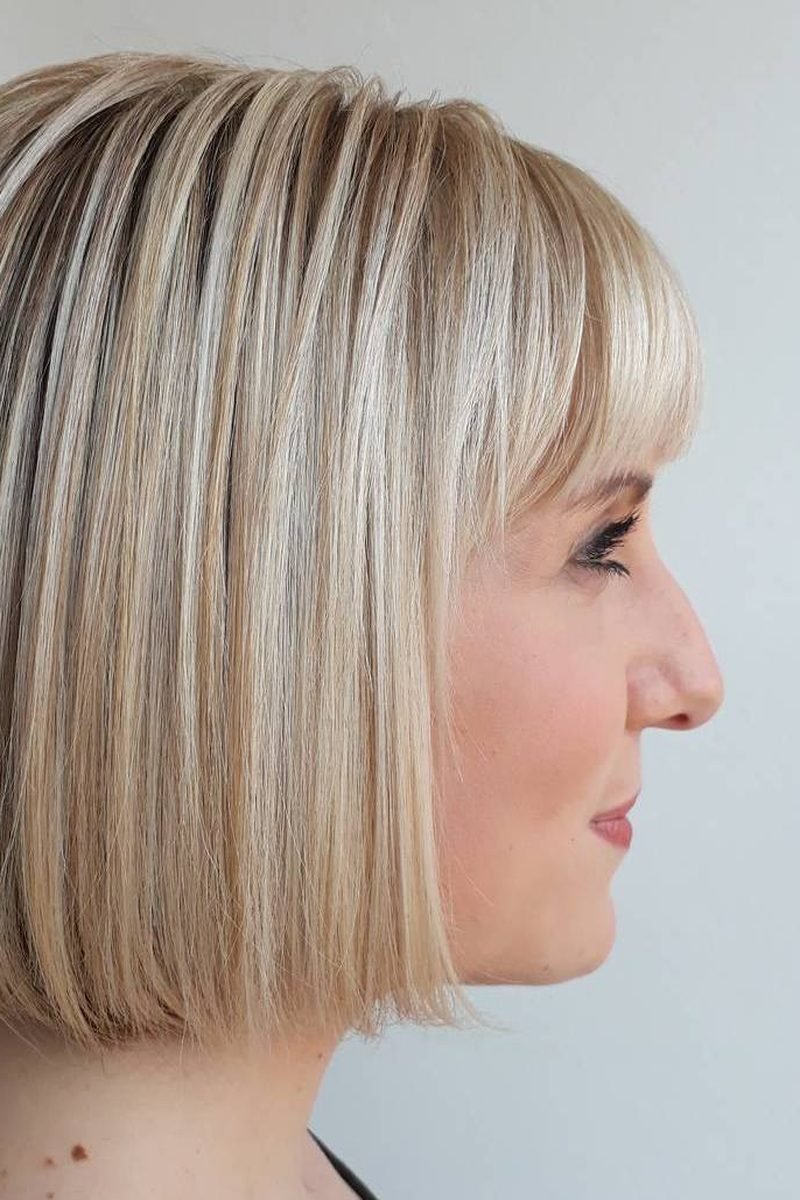
Photo: The Right Hairstyles
Volume by Hair Length
Short hair: the easiest length for volume, because there is so little weight pulling the roots down. A pixie or a chin-length bob with a solid edge lifts almost on its own. Style it with mousse on damp hair, dry with your fingers, and finish with texture spray. The main risk is over-layering, which turns a pixie wispy. For short styles, see these short pixie cut ideas.
Medium hair: the sweet spot. A lob or shoulder-length cut gives you enough length to wave and enough lightness to hold lift. This is the length where the round-brush blow-dry and Velcro rollers earn their keep, and a deep side part adds the most height. See our lob haircuts for thin hair for shapes that keep the ends dense at this length. For medium lengths, see these shoulder-length hairstyles for thin fine hair.
Long hair: the hardest length, because weight pulls the roots flat and the ends thin out. Keep the perimeter blunt, add only long layers, and use the braid-wave trick: on damp hair, work in mousse, split the hair into two loose braids, dry them, then undo and rake through with your fingers for soft waves that add width. On day two, a loose updo lifts the roots and hides flatness; our updos for fine thin hair are built for exactly that. Whatever the length, the rule holds: shorter and blunter reads fuller, longer and wispier reads thinner.
Colour and Texture Tricks That Fake Fullness
Colour can make fine hair look thicker without changing a single strand. The trick is dimension: a single flat shade shows every gap, while highlights, lowlights, or a subtle gloss break the hair into layers of light and shadow, so the eye reads more hair. Ask for soft dimension rather than a solid block of colour, and go gentle: heavy bleaching makes fine hair fragile, and breakage thins the lengths.
The second trick is contrast. Thinning shows most where dark hair meets a pale scalp, so a root touch-up spray or tinted powder on the part line darkens visible scalp, and a shade closer to your natural colour hides regrowth. Soft waves help too: they bend light in more directions than pin-straight hair, so the same hair reads fuller waved than straight.

Photo: The Right Hairstyles
Day 2: How to Keep the Volume
Volume made in the morning often dies by noon, and the fix is a small refresh, not a full restyle. At the first sign of oil, use dry shampoo at the roots, not when they are already slick: a few light sprays, wait a minute, then massage it in and brush it out. It absorbs oil and gives the roots grip again. A quick refresh is all it takes once you know how to add volume to fine hair.
Overnight, protect the shape. Never sleep with damp hair: it dries pressed against the scalp and wakes up flat and uneven. Dry the roots fully before bed, then gather the hair into a loose, high ponytail or a soft topknot, loose enough not to crease or pull. In the morning, take it down, flip your head forward, shake the roots with your fingers, and add a little texture spray at the crown. Two minutes, and most of the volume is back.
Avoid the day-two trap of piling on more product. Dry shampoo used every day builds up and clogs the roots, which weighs them down. One refresh a day is enough; if the roots are still flat after that, it is a wash day, not a product day.
Mistakes to Avoid
Conditioner on the roots. It is the single most common volume killer. Conditioner belongs on the mid-lengths and ends only.
Heavy oils, creams, and serums near the crown. A drop of oil on dry ends is fine; the same drop at the roots flattens everything. Keep rich products from the ears down.
Over-layering the cut. Layers remove weight, and fine hair has no weight to spare at the ends. A few face-framing layers, yes; short layers all over, no.
Letting the roots dry flat. Air-drying without lifting the roots sets them flat for the whole day. If you air-dry, clip the roots up while they dry.
Too much heat, no protection. Fine hair is fragile, and heat damage thins the lengths over time. Always use a heat protectant, and keep the dryer on moderate heat.
Tight ponytails and slick styles every day. Constant pulling stresses the roots and can cause traction hair loss at the hairline. Keep tight styles occasional, not daily.
Sleeping with wet hair. It dries flat and uneven, and the breakage thins the hair further.
Dry shampoo every day. It is a refresh, not a wash. Daily use builds residue that flattens the roots it was meant to lift.

Photo: Flawless Hair
Frequently Asked Questions
How often should I wash fine hair? As often as your scalp needs it. If your roots turn oily by day two, washing daily or every other day is right for you. Clean roots lift; oily roots lie flat.
Can fine hair ever look thick? Yes, in appearance. You cannot change the diameter of your strands, but learning how to add volume to fine hair, a blunt cut, clean roots, and a little dimension can make it look noticeably fuller. The goal is fuller-looking hair.
What is the best haircut for fine hair? A blunt bob, a lob, or a shoulder-length cut with a solid edge and only light face-framing layers. Shorter reads fuller, because the ends stay dense and the roots carry less weight. See these haircuts for thin fine hair.
Does mousse really help, or does it weigh hair down? Mousse is the lightest volumizing product there is, and it helps when you use a small amount on damp roots and mid-lengths. The mistake is using too much, or using a cream or oil instead. A golf-ball-sized amount of foam is plenty.
When should I see a doctor about thinning? If your part is widening, your ponytail is getting thinner, or you are shedding much more than usual for weeks, styling is no longer the question. See a dermatologist: low iron, thyroid changes, stress, and hormonal shifts are common, treatable causes.
Fine hair does not need a new personality, it needs a better order: clean roots, light product in the right zones, drying against gravity, and a cut that keeps the ends dense. Start with one change, the wash-day routine or the drying method, and give it a week. Volume that lasts is built one small step at a time. That is how to add volume to fine hair without weighing it down.