14 Wash and Wear Hairstyles for Women Over 70 With Thin Fine Hair
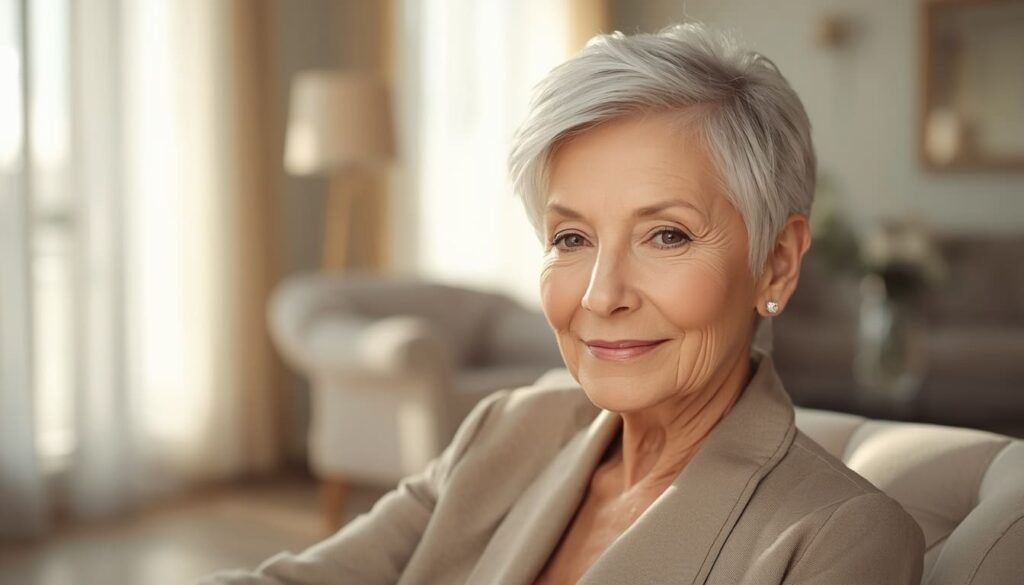
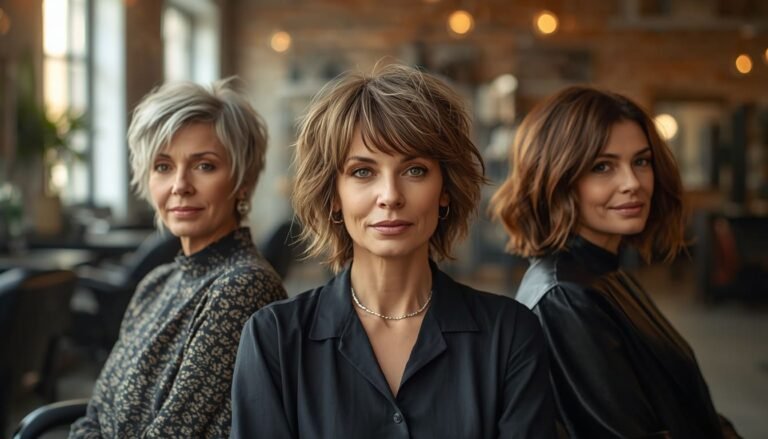
If you’re spending more time fighting your hair every morning than actually enjoying it, something needs to change. Women over 70 with thin fine hair deserve a cut that works with them, not against them. And I’m not talking about settling for a style that just looks “age-appropriate.” I’m talking about genuinely great hair that air-dries beautifully, holds its shape, and takes under five minutes to manage. The 14 wash and wear hairstyles I’m sharing here are chosen specifically for thin fine hair at this stage of life, because your hair has its own unique needs right now, and cookie-cutter lists simply don’t cut it.
My Design Notes
I still think about a client I worked with a few years back a retired school principal from Austin, Texas, who swam three mornings a week and had completely given up on her hair. She came in wearing a shoulder-length style she’d been defaulting to for over fifteen years. Her hair was fine, diffuse-thinning, fully silver, and she’d tried going shorter twice before with results that left her crown looking sparse and see-through. When I actually analyzed her thinning pattern, I realized every previous stylist had been layering her the wrong way for her specific density. We went with a feathered pixie bob, slightly longer and disconnected on top, very light through the sides and nape. The transformation wasn’t dramatic in the way you see on TV makeover shows. It was quieter than that. She shook her hair out after her swim the very next morning, ran her fingers through it, and was done in under four minutes. She called my salon two days later just to say she finally felt like herself again. That’s what the right wash and wear cut actually does for women with thin fine hair it gives you your mornings back.
Mastering Effortless Style: Proven Haircut Secrets for Women Over 70 with Thin Fine Hair
1. Classic Textured Pixie
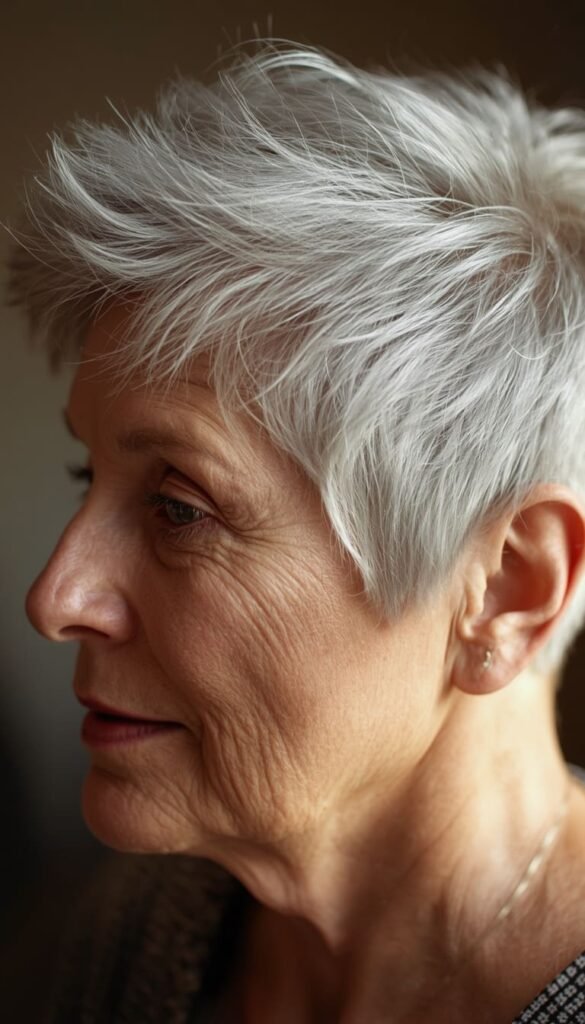
The classic textured pixie is, without question, my number one recommendation for women over 70 with thin fine hair who want a true wash and wear lifestyle. Here’s why it works so well: when hair is kept short, each strand carries less of its own weight. That means natural lift happens right at the root, without you doing anything at all. Add some choppy texture through the crown, and suddenly your hair looks intentionally full rather than accidentally sparse.
What makes this cut genuinely wash and wear is the texture. A smooth, sleek pixie will show every thin spot. A textured one, with piece-y layers and a slightly undone finish, makes fine hair look like a deliberate style choice. Shake it out after washing, scrunch in a tiny amount of lightweight mousse, and you are honestly done.
One thing to watch out for is going too short through the crown if your thinning is concentrated there. Ask your stylist to keep just a little extra length on top, maybe half an inch more than you think you need. That small detail makes the difference between a pixie that looks full and one that looks see-through under bright light.
- Works best for diffuse thinning and crown thinning patterns
- Trim every 4 to 5 weeks to keep the shape clean and intentional
- Drugstore win: Not Your Mother’s Curl Talk Mousse at around $9 works beautifully on fine textured pixies
2. Feathered Pixie with Wispy Bangs
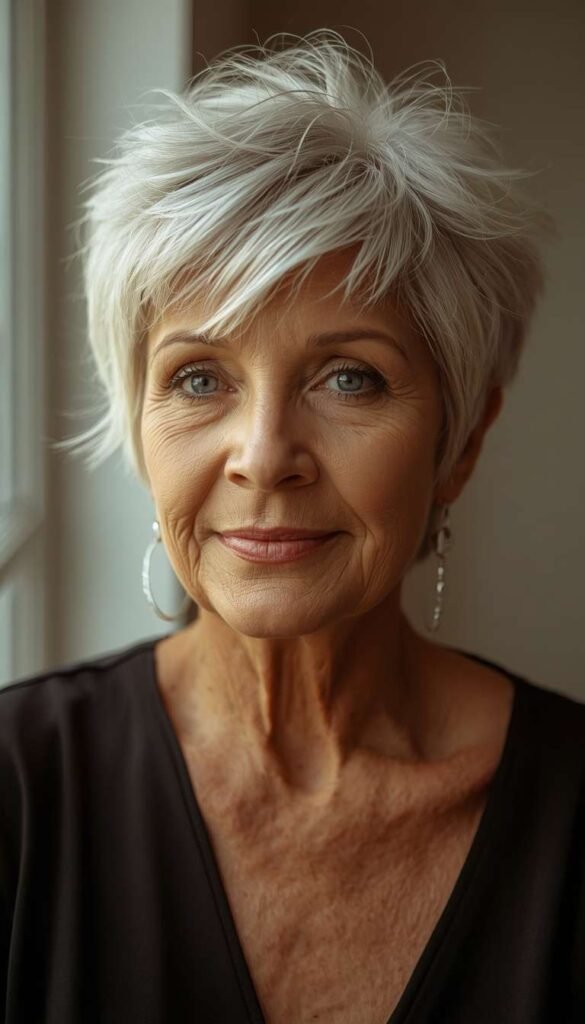
If temple thinning is your main concern, this is the style I would pull up on my phone and show your stylist immediately. The feathered pixie with wispy bangs is specifically designed to frame the face in a way that draws attention to your eyes and cheekbones, quietly redirecting focus away from the hairline altogether. It is one of those cuts that looks effortlessly soft rather than carefully constructed, which is exactly what you want.
The wispy bangs are the secret weapon here. They sit lightly across the forehead, never heavy or blocky, and they air dry in a way that most other bang styles simply do not. A quick finger-dry in the morning and they fall into place naturally. I have seen this cut completely change how women feel about their morning routine.
Gray hair responds especially well to feathering because the technique adds movement to strands that can sometimes feel wiry or stiff after going silver. The layers catch light differently and give the whole style a softer, more dimensional look without any heat styling required.
3. Wash and Wear Tapered Pixie
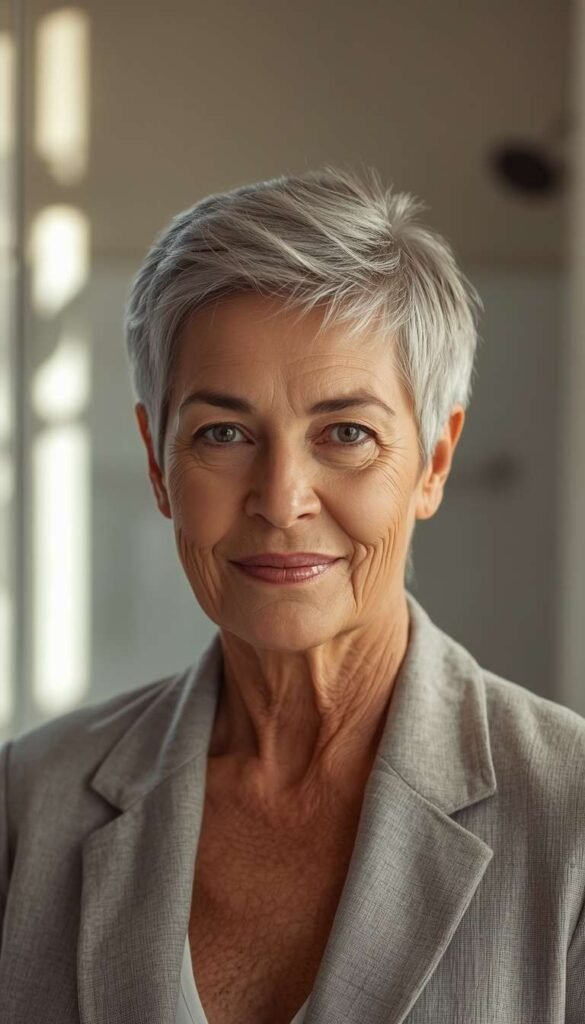
This one is for the women who mean serious business about low maintenance. The tapered pixie hugs the head cleanly through the sides and back, with just enough length and softness through the top to avoid looking severe. It is structured without being stiff, and it air dries in minutes because there is simply not much hair to deal with.
Where this cut really earns its place on this list is for women with very fine, low-density hair. Other styles can struggle when hair is truly thin, but the tapered pixie leans into it. The clean lines make the cut look intentional and polished, even on the thinnest of hair.
A quick trick I have learned over the years: ask your stylist to leave the very top slightly disconnected from the tapered sides. That small gap in layering creates the illusion of volume at the crown without adding any extra styling steps on your end. Finish with a light texturizing spray and you are walking out the door looking put together in under three minutes.
4. Choppy Pixie Bob (Bixie)
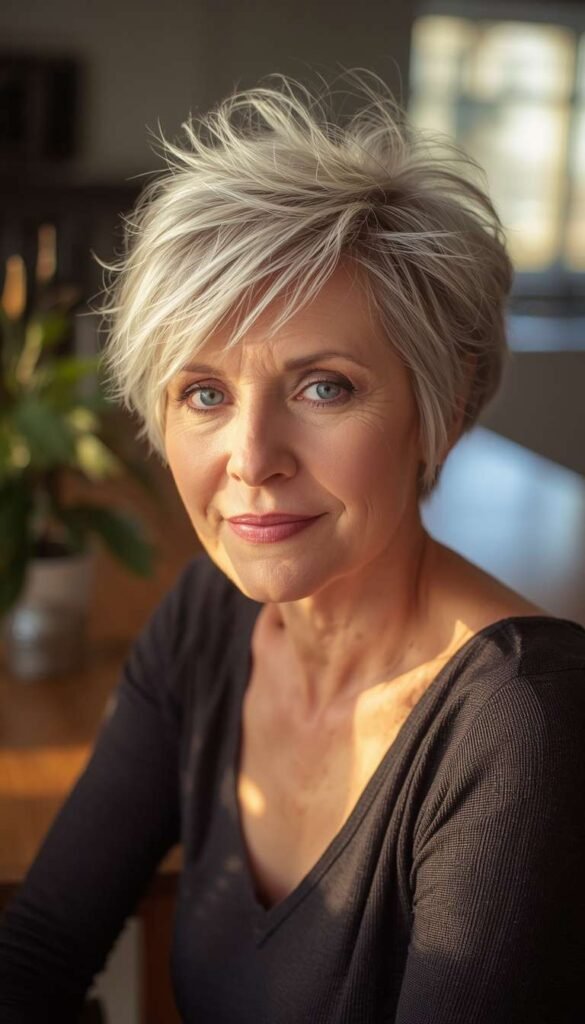
The bixie sits right in that sweet spot between a pixie and a bob, and honestly, for wash and wear purposes, it might be the most forgiving cut on this entire list. It is longer than a pixie, so there is more movement as it dries. But it is shorter than a traditional bob, so it does not have enough weight to go flat or limp on fine hair. That balance is everything.
The choppy element is what makes it wash and wear rather than wash and struggle. Blunt, smooth bixies need styling to look intentional. Choppy ones? They are supposed to look a little tousled. Fine hair airdrying unevenly actually works in your favor here because the result looks textured and deliberate.
- Perfect for women transitioning from longer hair who are not ready for a full pixie
- The choppy ends disguise uneven density beautifully
- Reality check: this style grows out quickly and will need a trim every 5 to 6 weeks to stay in its sweet spot
Top 6 ideas:
| Hairstyle | Estimated Cost Per Visit | Maintenance |
|---|---|---|
| Classic Textured Pixie | $45 to $85 | Low |
| Feathered Bob | $55 to $95 | Low |
| Short Layered Bob | $60 to $100 | Medium |
| Stacked Bob for Fine Hair | $65 to $105 | Medium |
| Short Shag with Curtain Bangs | $70 to $110 | Low |
| Modern Shaggy Crop | $75 to $120 | Low |
5. Short Layered Bob
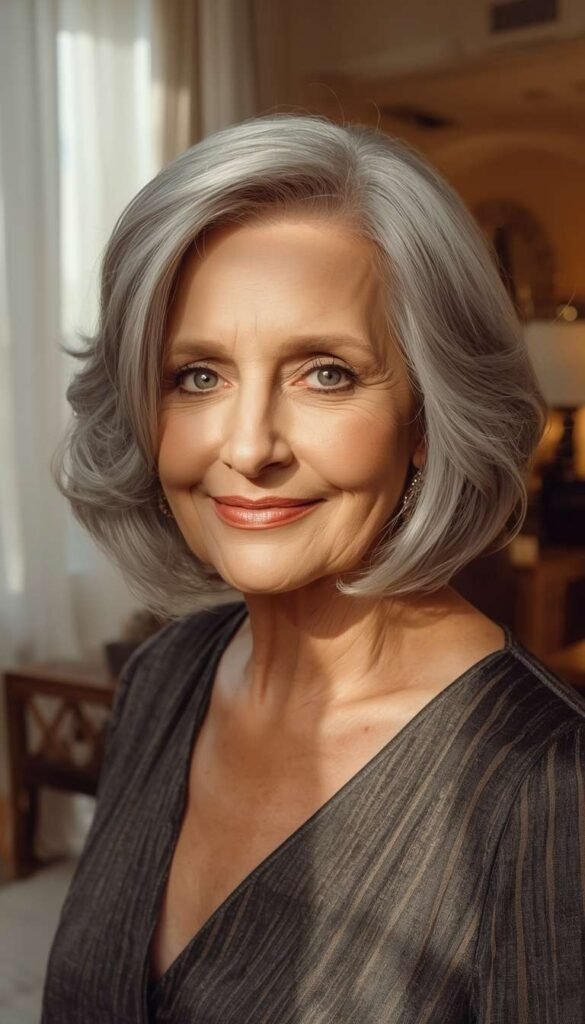
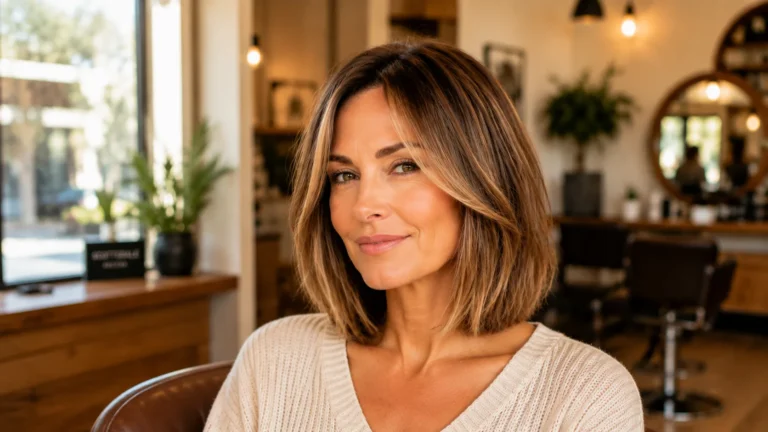
The short layered bob is the style I recommend most often to women who come into a consultation saying they want something easy but are nervous about going too short. It sits right around the jaw or just below, and when it is cut with the right layers, it air dries with actual shape. Not the flat, shapeless air dry that longer fine hair is notorious for. Real, honest-to-goodness shape.
The layering is everything with this cut. Too many layers and fine hair loses what little density it has. Too few and the whole thing falls flat by 10am. What you want is strategic layering, slightly shorter underneath to build a base, and softer longer layers on top to create movement. A good stylist will know exactly what I mean when you describe your hair as fine and thin.
I also love this cut for women with gray or silver hair specifically because the layered bob catches light in multiple directions, giving silver tones that gorgeous dimensional quality that single-process color or flat cuts simply cannot achieve.
- Flatters virtually every face shape, which is rare for any single cut
- Air dries beautifully when a small amount of leave-in conditioner is applied to damp hair
- Trim schedule every 6 to 8 weeks, which is gentler on the wallet than shorter pixie styles
6. Stacked Bob for Fine Hair
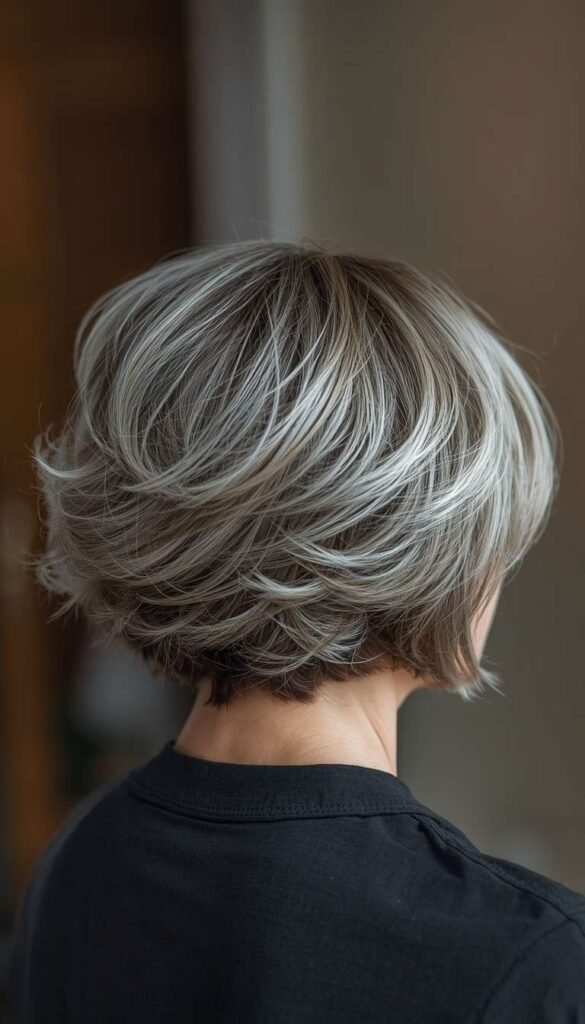
Here is something I want you to understand about the stacked bob before anything else: it creates volume through structure, not through product. That distinction matters enormously for fine hair because loading up on volumizing sprays and mousses can only do so much. The stacked bob builds fullness into the actual cut itself, with shorter layers stacked in the back that gradually get longer toward the front. The result is a naturally rounded shape that looks full from every angle.
For wash and wear purposes, the stacked bob performs exceptionally well. The structure holds even as hair air dries because the stacking gives the style its shape regardless of how the individual strands fall. Women with very fine hair often tell me this is the first cut they have ever had that looks the same at 8am and 4pm without any touch ups in between.
One thing to watch out for is the maintenance commitment. The stacked back grows out faster than the front, and when it does, you lose that rounded shape that makes the whole cut work. Plan for salon visits every 5 to 6 weeks rather than stretching it to 8. Budget wise, that is worth factoring in before you commit.
7. Blunt Bob for Ultra Fine Hair
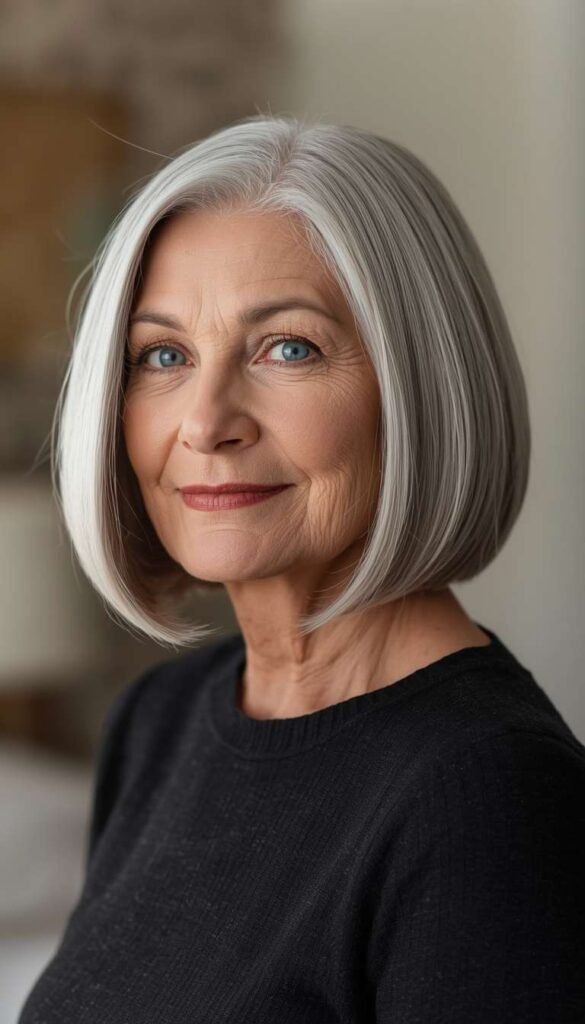
This one surprises people every single time I bring it up, and I understand why. The conventional wisdom says layers equal volume, so fine hair should always have layers. But for women whose hair is truly ultra fine, meaning very few strands overall rather than just thin individual strands, layers can actually remove so much weight from the ends that the hair looks even more sparse. The blunt bob flips that logic completely.
By cutting all the hair to one clean length, you concentrate every strand at the same point. The hemline looks dense and intentional. The ends appear thick because they literally are, relatively speaking, when nothing has been removed through layering. It is a counterintuitive approach that genuinely works on the right hair type.
A quick trick I have learned is to recommend the blunt bob at chin length specifically for this age group. Any shorter and it can look severe. Any longer and the weight of fine hair starts working against you again. Chin length is the precise sweet spot that keeps the cut looking polished without hot tools every single morning.
Which of these 14 styles feels like the one your morning routine has been waiting for the wash and go pixie or something with a little more length?
8. Asymmetrical Bob
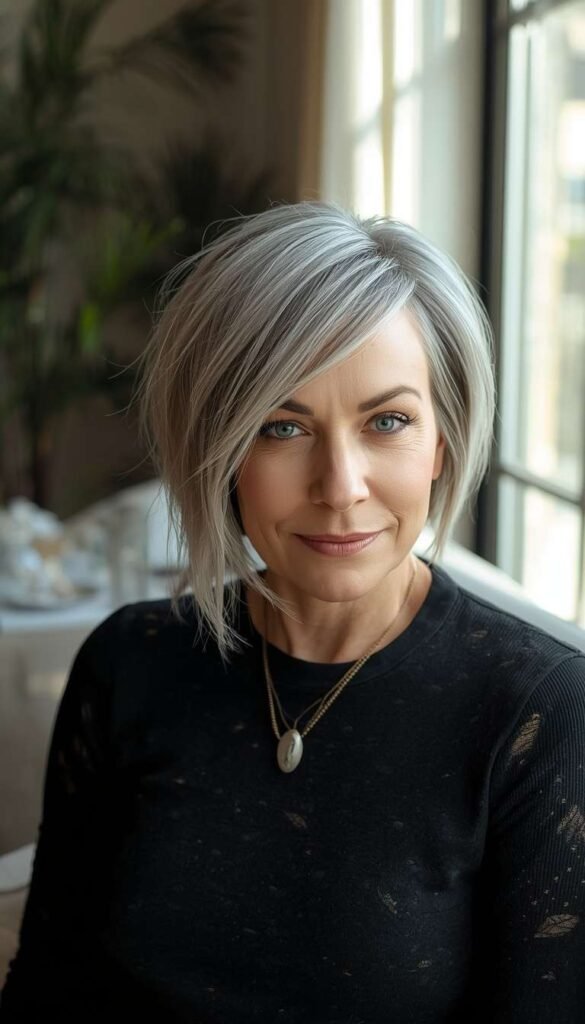
The asymmetrical bob is genuinely one of the most underrated wash and wear options for women over 70 with uneven thinning patterns. And here is what I mean by uneven: most women do not thin uniformly. One temple might be noticeably more sparse than the other. The crown might be thinner on one side. The asymmetrical bob works with that reality rather than fighting it.
The longer side naturally covers areas of greater thinning while the shorter side adds lift and lightness where the hair might be slightly denser. It creates visual balance that a symmetrical cut simply cannot achieve on hair that is not growing in evenly. And because the style is supposed to be uneven by design, any slight inconsistencies in how it air dries just add to the character of the cut.
What I appreciate most about recommending this style is the reaction women have when they realize their “problem” hair actually suits a genuinely modern, fashion forward cut. There is something really empowering about that.
- Longer side can be tucked behind the ear or left loose for two completely different looks
- Works especially well for women with glasses as the angles complement most frame shapes
- Requires a stylist with precision cutting experience since the angles need to be intentional and clean
9. Short Shag with Curtain Bangs
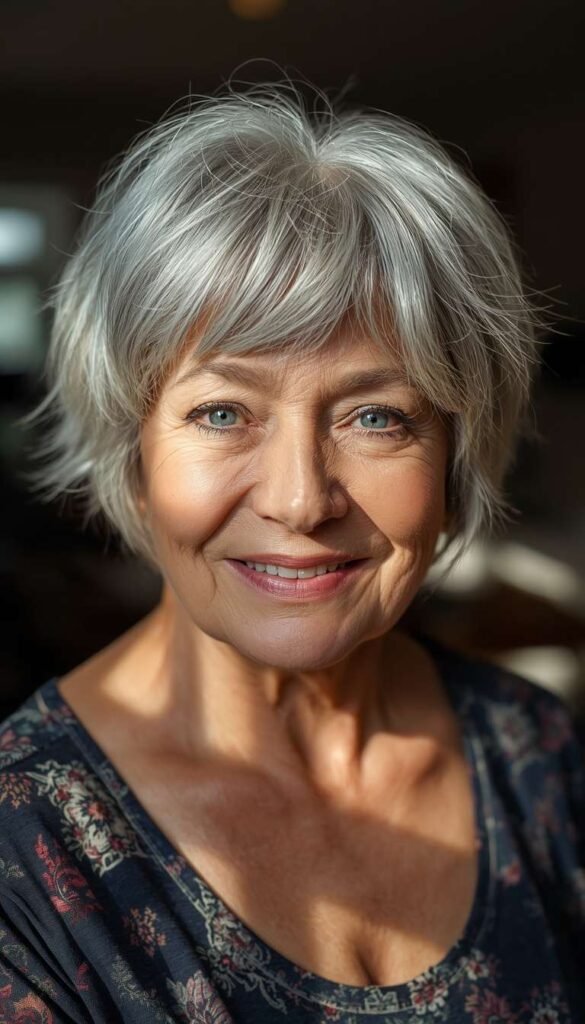
The short shag is having a serious moment right now, and I want to be very clear about something: this is not a young person’s haircut that older women can “get away with.” It is genuinely one of the most flattering wash and wear options for thin fine hair at any age, and the curtain bangs take it from trendy to truly timeless. The shag is built entirely on choppy, razored layers that create the illusion of thickness where there is very little. For fine hair, that is not just flattering. It is transformative in the most practical sense.
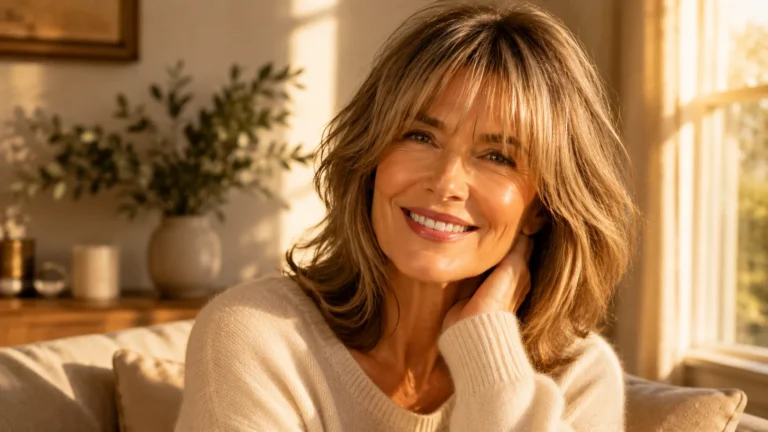
The curtain bangs are what make this cut particularly special for women over 70. They part naturally in the middle and sweep softly to each side, framing the face without sitting heavy on the forehead. They air dry with a gentle wave that looks intentional, and on gray or silver hair they catch light in a way that genuinely brightens the whole face.
Here is the honest reality though: the short shag does require a stylist who understands razor cutting specifically. A scissor only shag on fine hair can end up looking choppy in the wrong way, too blunt rather than feathery. When you book your appointment, ask specifically for a razor finished shag. Those three words will make all the difference in what you walk out with.
- Scrunch in a tiny amount of texturizing cream while hair is still damp and let it air dry completely
- Avoid brushing once dry as it separates the layers and kills the volume
- Curtain bangs grow out gracefully, meaning fewer awkward in between stages than traditional bangs
10. Feathered Bob
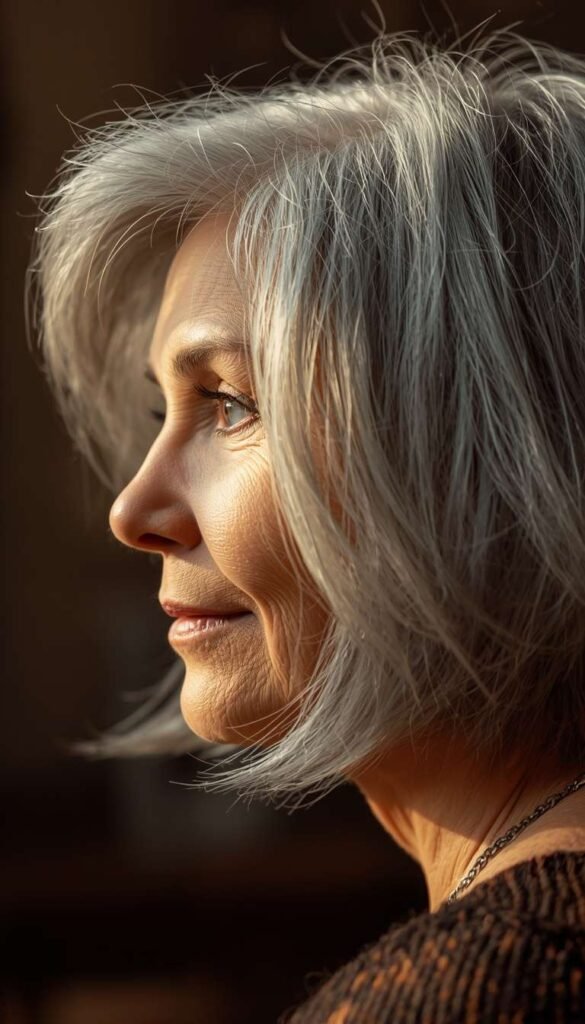
I have a deep personal fondness for the feathered bob, and I will tell you exactly why. It has been around since the 1970s, yes, but the reason it keeps coming back is simple: it works. Especially on fine hair. The feathering technique involves cutting the ends of the layers at an angle rather than straight across, which means each layer flicks outward slightly as it dries. On thin fine hair, those outward flicks create the appearance of significantly more volume than actually exists. It is one of the cleverest optical illusions in haircutting.
For wash and wear purposes, the feathered bob is practically unbeatable. The layers are designed to fall into place as they dry. You do not need a round brush or a blow dryer to achieve the shape. Wash it, run your fingers through it once or twice while it is damp to encourage the layers to separate, and walk away. By the time it is fully dry, the feathering has done its job.
Gray and silver hair responds particularly beautifully to this technique. The feathered ends catch light and give silver tones a softness and luminosity that blunt cuts simply cannot replicate. If you have been silver for a while and feel like your hair looks dull or heavy, a feathered bob might be exactly the refresh you have been looking for without any color commitment whatsoever.
11. Wispy Layered Lob
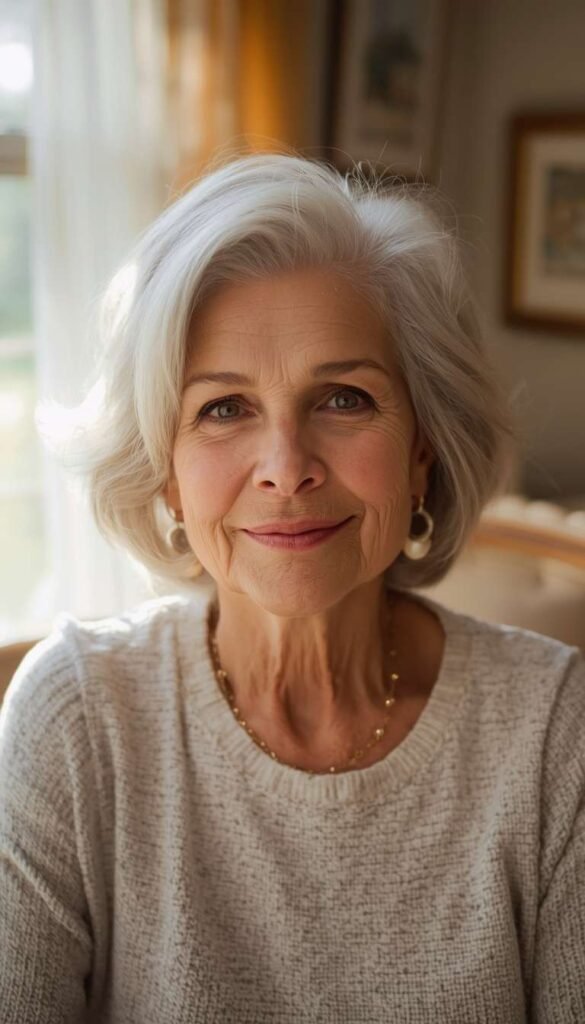
Not every woman over 70 wants to go short, and I respect that completely. The wispy layered lob is my answer for women who want genuine wash and wear ease without giving up their length. It sits just below the collarbone or at the shoulder, and when it is cut with wispy, feathered layers rather than heavy blunt ones, it air dries with a softness that longer fine hair rarely achieves on its own.
The word wispy is doing a lot of work in that name and intentionally so. Wispy layers are light, airy, and barely there at the ends. They do not remove density the way heavier layers do. Instead they soften the perimeter of the cut so that as your hair air dries, the ends have a natural, effortless movement rather than that flat, stringy look that fine hair at this length is often criticized for.
A quick trick I always share with clients considering this style: ask your stylist to keep the layers longer than they initially suggest. With fine hair, stylists sometimes over-layer trying to create volume, and the result is hair that looks thin at the ends rather than full. Fewer, longer, wispier layers almost always produce a better wash and wear result on fine hair at lob length.
- This is the ideal bridge cut for women transitioning from long hair who want to ease into shorter styles gradually
- Soft waves added with a large barrel iron take about eight minutes and make the lob look considerably fuller, though completely optional
- Reality check: at this length, fine hair will still have some flat days, especially in humidity, so a good dry shampoo is worth keeping in your bathroom cabinet
12. Short Soft Waves Style
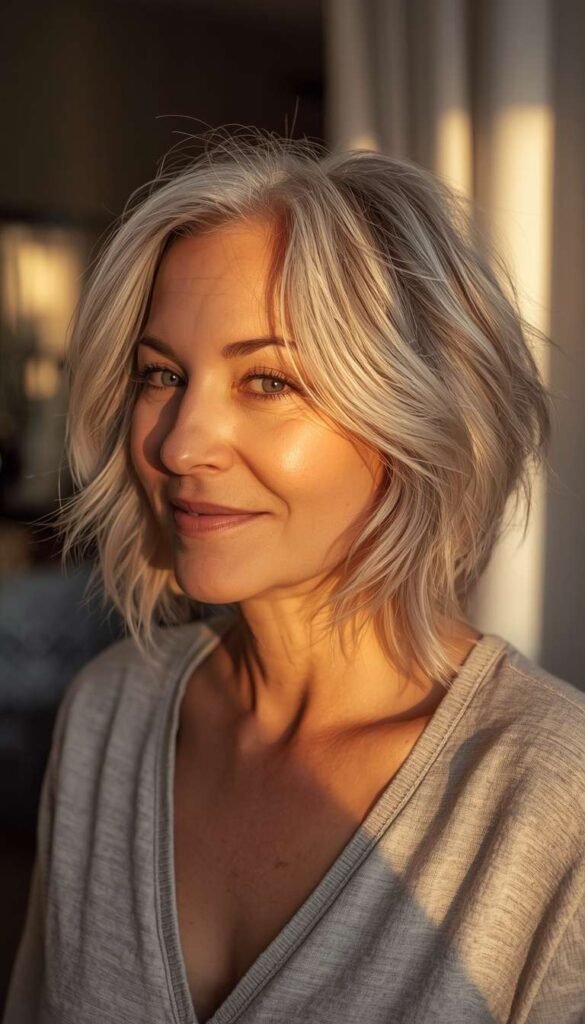
There is a version of effortless femininity that the short soft waves style captures better than almost anything else on this list. It sits at that ear to chin length range, and the waves are not tight curls or defined ringlets. They are loose, casual, barely there bends in the hair that give fine strands the appearance of body and movement without looking overdone or high maintenance.
What makes this genuinely wash and wear is the technique rather than the cut itself. The style works because fine hair, when it air dries without being touched too much, naturally develops a slight wave or bend especially at this length. A good stylist will cut the style specifically to encourage that natural movement, keeping layers soft and long enough that the wave has room to form rather than getting weighed down.
I always tell clients that the biggest mistake with this style is touching their hair too much while it dries. Scrunch a small amount of lightweight curl enhancing cream into damp hair, then leave it completely alone until it is fully dry. No touching, no adjusting, no checking on it. The less you interfere, the better the soft wave sets. It sounds counterintuitive but it is genuinely the single most effective styling advice I can give for this look.
13. Silver Blended Textured Cut
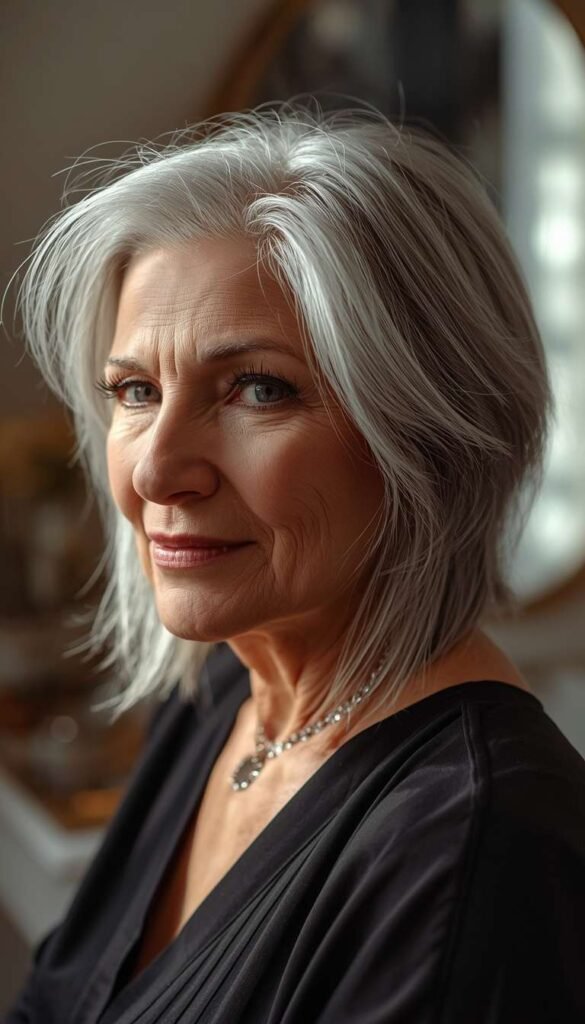
Silver blended hair and thin fine texture together create a very specific set of challenges that most hairstyle lists simply ignore, and I want to address that directly here. When hair goes gray or silver, the individual strand structure actually changes. It often becomes slightly coarser or wiry at the strand level, yet the overall density and volume decrease at the same time. That combination means you are dealing with hair that can feel stiff but look sparse, which is a genuinely frustrating paradox.
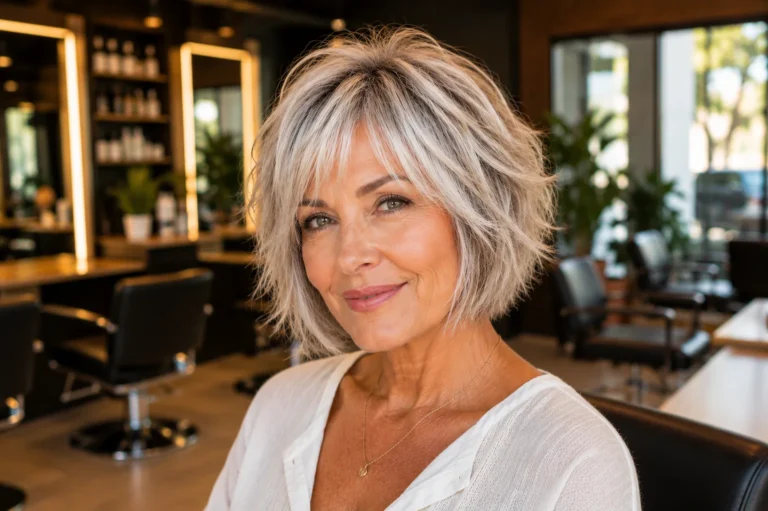
The silver blended textured cut is designed specifically for this reality. The cut itself uses razored or point cut ends to soften that coarser gray texture, while the blending technique at the color level creates dimension that makes the eye perceive more hair than is actually there. Silver blending involves working toners and subtle highlights through your natural gray to create variation in tone rather than one flat shade of white or steel. The result is hair that catches light differently across the head, which visually reads as thickness and fullness.
For wash and wear purposes this cut excels because the texture built into the cut through razoring means the style looks intentional whether your hair air dries perfectly or slightly unevenly. Silver hair can sometimes look dull when it air dries flat, but the textured ends and tonal variation in a silver blended cut give it life and movement even on the most minimal styling days.
A quick trick I have learned specifically for silver and gray hair: use a purple toning shampoo once every two weeks rather than every wash. Overusing it can make fine gray hair look ashy and flat. Once a fortnight keeps the tone bright and cool without stripping the natural luminosity that well maintained silver hair genuinely has.
- Ask your colorist for babylights rather than full highlights if you want dimension without a stark contrast
- Lightweight shine serums work beautifully on silver textured cuts, just one small drop through the ends after air drying
- This style photographs exceptionally well in natural light, something my clients over 70 always appreciate when it comes to family gatherings and occasions
And honestly, what is the one thing about your thin fine hair that you wish your stylist actually understood?
14. The Modern Shaggy Crop
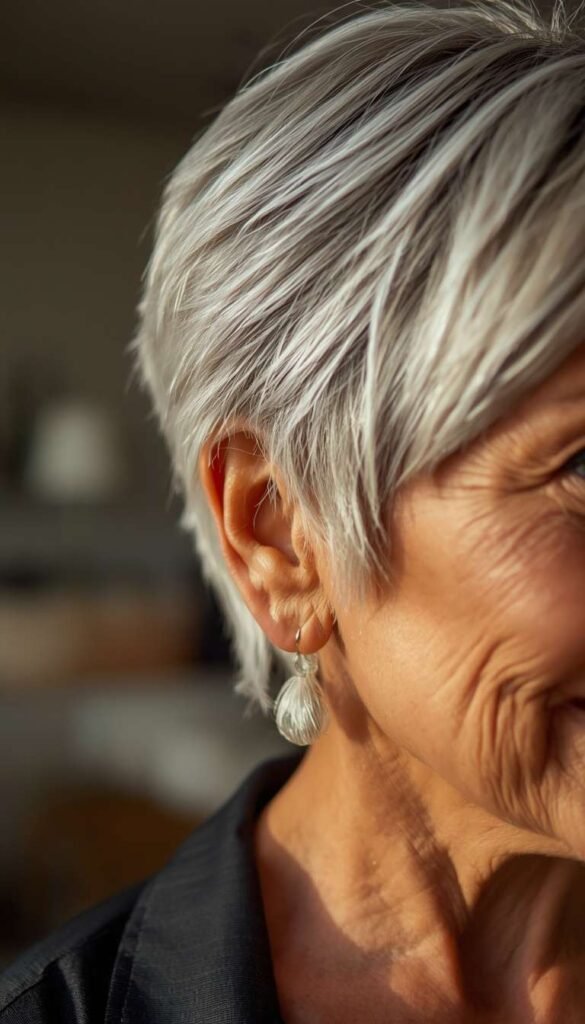
The modern shaggy crop is where wash and wear meets genuine personal style, and I saved it for last intentionally because it is the cut I recommend to women who have decided they are done playing it safe with their hair. It is short, it is textured, it has personality, and on thin fine hair it performs better than almost any other style on this list because every single element of its construction works in favor of low density hair.
The modern shaggy crop sits shorter than a traditional shag, typically around the ear to just below it, with choppy layers throughout the top and crown and a slightly longer, razored perimeter. The layers do not follow a neat pattern. They are deliberately disconnected and varied in length, which is precisely what makes fine hair look so much fuller in this cut. When there is no single uniform layer length, the eye cannot identify where the hair is sparse. It reads as intentionally textured rather than thinning.
What separates the modern version from older interpretations of the shag is the finish. Where vintage shags were often heavily feathered and required a blow dryer with a pick to achieve their volume, the modern shaggy crop is designed to air dry into its shape. The disconnected layers fall naturally into a tousled, lived in finish that looks like you spent time on it when you genuinely did not. For women over 70 with thin fine hair who want to wake up, wash their hair, and feel good about what they see in the mirror, this cut delivers that promise more consistently than almost anything else I know.
One thing to watch out for is finding the right stylist for this particular cut. The modern shaggy crop requires someone comfortable with razor work and disconnected layering techniques. It is not a cut every salon executes well. Before you book, ask to see examples of shaggy crops the stylist has done on fine or thin hair specifically. That single question will tell you everything you need to know about whether they are the right person for the job.
The 2 Minute Decision Map
By Budget
Salon Smart (Under $75 per visit)
- Classic Textured Pixie — most stylists can execute this confidently at any mid range salon
- Feathered Bob — a timeless cut that does not require specialist razor skills or premium pricing
- Short Layered Bob — widely available, consistently well executed across most US salon tiers
- Wispy Layered Lob — least frequent trim schedule on this list, stretches your budget furthest
Investment Worthy ($75 to $120 per visit)
- Modern Shaggy Crop — requires a razor specialist, worth paying for the right hands
- Silver Blended Textured Cut — color work plus cut in one session, but results last and grow out beautifully
- Short Shag with Curtain Bangs — razor finishing elevates the price but dramatically elevates the result
- Asymmetrical Bob — precision angled cutting commands slightly higher rates at quality salons
By Lifestyle
The True Minimalist (Under 5 minutes every morning)
- Tapered Pixie — shake it out and go, literally nothing else needed
- Classic Textured Pixie — scrunch, air dry, done
- Feathered Bob — finger dry only, no tools required
- Blunt Bob — air dries flat and polished with zero effort on ultra fine hair
The Effortlessly Put Together (5 to 10 minutes is fine)
- Stacked Bob — quick finger dry at the crown for shape
- Short Soft Waves Style — scrunch in cream, leave alone, done
- Short Shag with Curtain Bangs — tousle while damp, air dry completely
- Wispy Layered Lob — optional 8 minute wave with a large barrel iron when you feel like it
Frequently Asked Questions
What is the best wash and wear haircut for women over 70 with thin fine hair?
The textured pixie or feathered bob wins every time. Both air dry with shape, require zero hot tools, and work specifically with low density hair rather than against it.
How often should women over 70 with fine hair get a trim?
Ideally every 4 to 6 weeks for shorter styles. Fine hair loses its shape faster than thick hair, and an overgrown cut on thin strands looks flat almost immediately.
Can women over 70 with very thin hair pull off a shag cut?
Yes, and it is actually one of the smartest choices. The disconnected layers in a shag disguise sparse areas better than almost any other cutting technique available right now.
What products work best for wash and wear styles on fine gray hair?
Lightweight mousse or texturizing spray only. Heavy creams and serums weigh fine gray hair down within hours, killing whatever volume your cut worked hard to create.
Does hair color make thin fine hair look thicker for women over 70?
Yes, but strategically. Babylights or subtle tonal variation in your gray creates dimension that makes the eye perceive more density without committing to full color maintenance.
Conclusion
Your hair should work for you, not the other way around. At this point in your life you have earned mornings that feel easy, and the right wash and wear cut for your thin fine hair is genuinely the fastest way to get there. Book that consultation, show your stylist a photo or two from this list, and say exactly what you need: low maintenance, air dry friendly, and flattering on fine hair. That one conversation can change how you feel every single morning for years. So tell me, which of these 14 styles caught your eye first, and what has been your biggest struggle with thin fine hair so far?
Drop it in the comments below because I read every single one.