
Winter Hair Care Routine: How to Stop Dryness, Static and Hat Hair
Winter is the season when good hair suddenly stops behaving, and a simple winter hair care routine is what brings it back. One week your hair is soft and easy, the next it feels like straw, lifts into static every time you take off a hat, and falls flat the moment you step indoors. It is not your imagination, and it is not a sign that you need expensive products. Cold air outside and heated air inside pull moisture out of your hair day after day, and a few small habits make the damage worse without you noticing.
This guide gives you one simple winter hair care routine that actually works: a wash-day routine you can repeat every week, easy daily care between washes, real fixes for static, and a five-minute rescue for hat hair. No salon visit needed, no ten-product shelf required. Just the steps that protect your hair until spring.

Photo: GeniusBeauty
Why Winter Is So Hard on Your Hair
Cold outdoor air holds very little moisture. When you step inside, central heating dries the air even further, often to a level far below what healthy hair likes. Your hair loses water to the air around it, hour after hour, and the outer layer of each strand roughens up. That is why winter hair feels dry, looks dull, and breaks more easily than summer hair.
Then comes friction. Wool hats, scarves, coat collars, and even cotton pillowcases rub against dry hair and build up an electric charge. That charge is static: strands repel each other, fly away from your head, and cling to everything. Dry hair holds a charge far more than moisturised hair, which is why the whole winter routine below starts with moisture, not with styling tricks.
Heat makes it worse in a quiet way. Very hot showers feel wonderful on a freezing morning, but hot water strips the natural oils that keep your lengths soft. Daily washing does the same, and so does going outside with damp hair tucked under a hat: wet hair stretches more, snaps more easily, and dries into frizz you cannot shake out. Once you understand these three causes — dry air, friction, and stripped oils — every step of the routine makes sense.
Your Weekly Winter Hair Care Routine: Wash Day, Step by Step
Wash your hair two to three times a week in winter, not every day, unless your scalp truly needs more. Most straight and wavy hair does well on every two to three days; curly and coily hair often does well washed once a week. Stretching wash days lets your scalp’s natural oils travel down the lengths and soften them, instead of being washed away before they can help.

Photo: Prime Women
Step 1: Wash gently, in lukewarm water. Use a gentle, moisturising shampoo, ideally sulfate-free, and work the lather mainly on your scalp. The suds that rinse through are enough to clean your lengths. Keep the water comfortably warm, never steaming, and finish with a cool rinse for twenty to thirty seconds. The cool finish helps the outer layer of the hair lie flat, which means more shine and less frizz.
Step 2: Condition every single wash. Never skip conditioner in winter. Work it through your mid-lengths and ends, where dryness shows first, and leave it on for a couple of minutes before rinsing. If your hair is fine, use a lighter conditioner and keep it off your roots so your hair does not fall flat.
Step 3: Use a deep mask once a week. Once a week, swap your regular conditioner for a richer mask. After shampooing, squeeze out excess water so the mask is not diluted, work it through your mid-lengths and ends, and comb it through with a wide-tooth comb. Leave it on for the time on the label, usually five to twenty minutes. Colour-treated, highlighted, or bleached hair is more porous and loses moisture faster, so it can handle a mask twice a week. If your colour has gone flat this winter, our guide to winter hair colour ideas is a good place to find a shade that stays rich in cold weather.
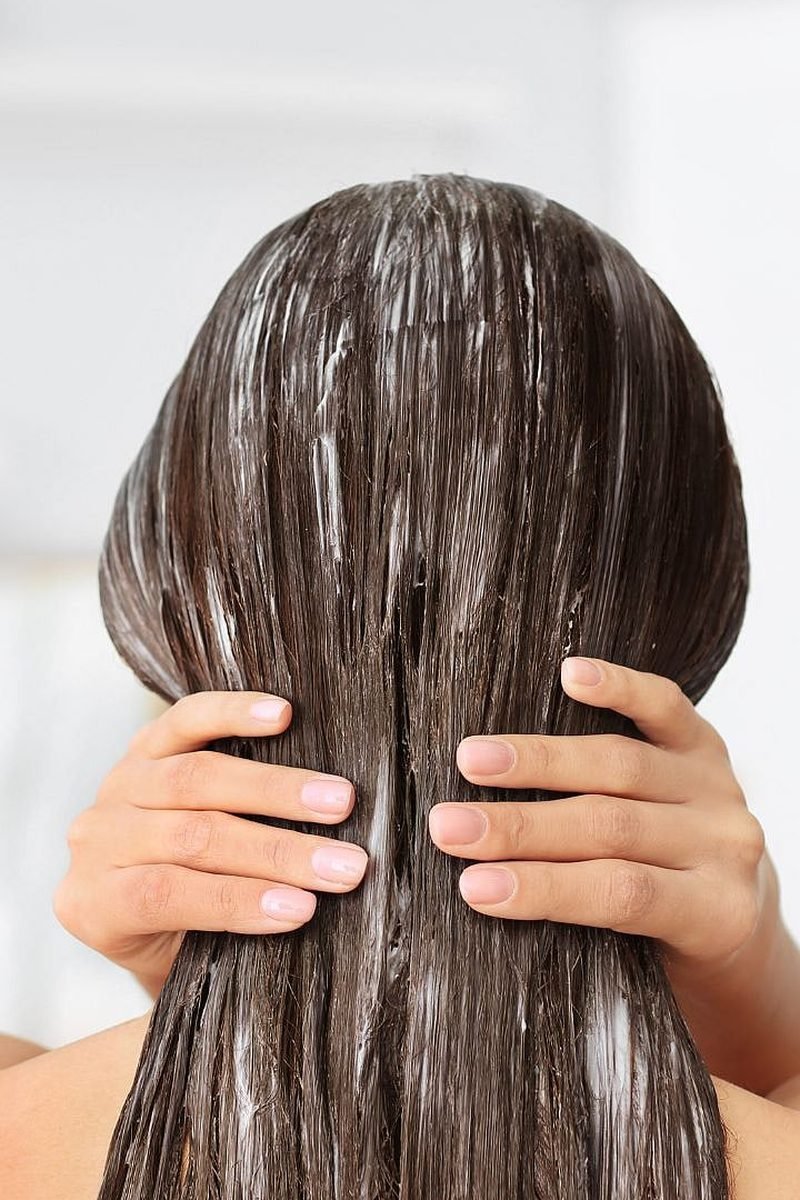
Photo: Sakal
Step 4: Seal with leave-in, then oil the ends. On damp — not dripping — hair, spread a leave-in conditioner from mid-lengths to ends and comb it through. Then warm two or three drops of a light oil, such as argan or jojoba, between your palms and press it onto the last few inches. Oil on its own adds no water, but it forms a thin film that slows moisture escaping into dry air. Fine hair needs only the last inch; richer hair can take a little more.
Step 5: Dry gently, and never go out with wet hair. Blot and squeeze with a microfiber towel or an old cotton T-shirt instead of rubbing, which roughens the hair surface. Let your hair air-dry most of the way indoors, then finish with a dryer on a medium setting if you need to, keeping the nozzle moving and pointing down the lengths. Check the nape of your neck — it is the last spot to dry — before you put on a hat and step into the cold.
Step 6: Keep your trims on schedule. Dry ends split more easily in winter, and a split end cannot be repaired by any product. A light dusting every eight to twelve weeks tidies the ends without costing you length. If your cut has grown out and no longer sits right, read our guide on how to choose a haircut for your face shape before your next salon visit, so you ask for a shape that works with your winter routine, not against it.
Daily Care Between Washes
A winter hair care routine is mostly what you do on the days you do not wash. On non-wash days, mist your ends lightly with a leave-in spray or smooth a single drop of oil over the surface to calm flyaways. Dry shampoo at the roots can carry you through an extra day, and it doubles as a volumiser under hats, which we come back to below.
At home, run a humidifier in the room where you spend the most time, ideally the bedroom. Aim for roughly 30 to 50 percent humidity, and clean the tank as the maker directs. You will know it is working when your hair is less staticky when you brush it in the morning. At night, sleep on a silk or satin pillowcase, or wear a satin bonnet or scarf, and keep night styles loose — a soft, low braid or twist held with a silk scrunchie, never a tight elastic that pulls on one spot for hours. Cotton pillowcases create friction all night and can soak up the leave-in and oil you just applied.
For curly and coily hair, this daily step matters even more, because scalp oil travels slowly along curls and coils. A richer cream leave-in and a little oil every day keeps curls soft and defined, while fine hair does best with a spray leave-in so it stays soft without going flat. The test is simple: your hair should feel soft for days after washing, not just for a few hours.
How to Stop Static for Good
Static is not a mystery once you know the cause: dry hair plus dry air plus friction. So the long-term fix is the moisture routine above, and the quick fixes below only work well on hair that is already reasonably hydrated. Start with moisture, then remove the friction.
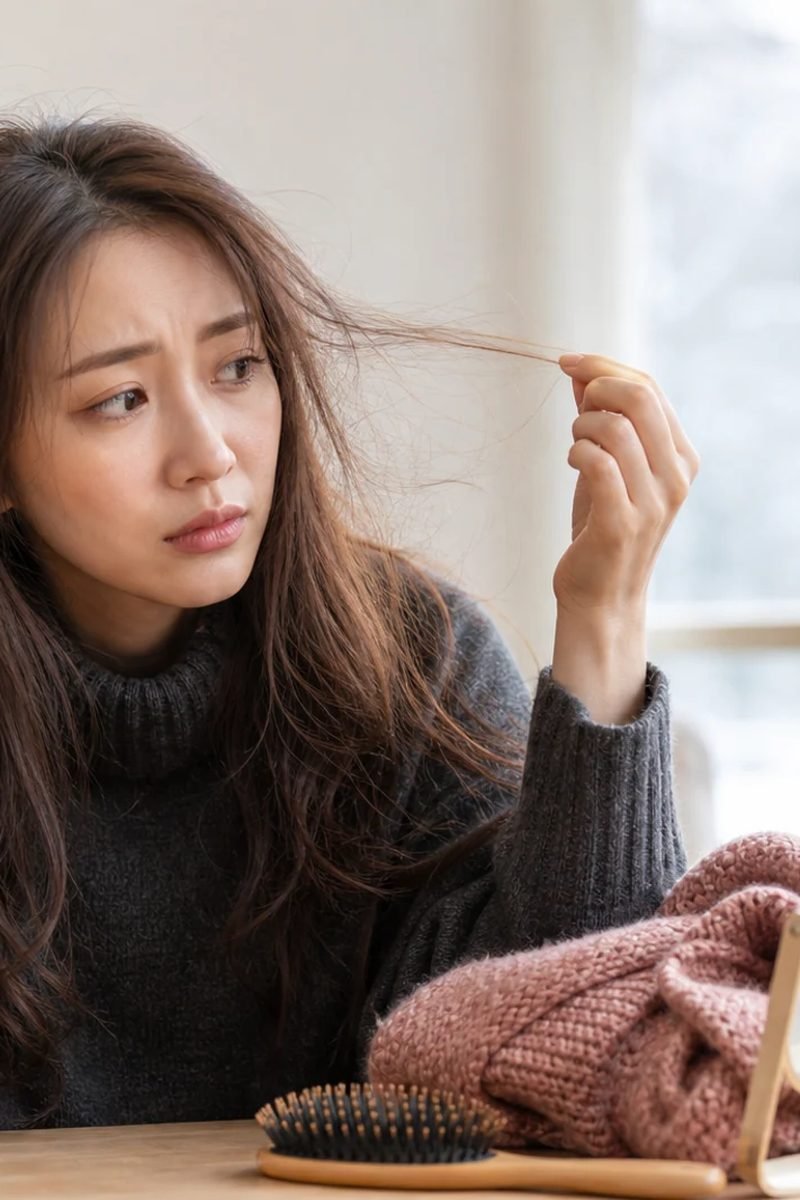
Photo: Maegami Mirror
Swap plastic combs and brushes for wood, bamboo, or boar bristle. Plastic picks up a charge with every stroke, while wood and boar bristle create far less of it, and boar bristles carry your scalp’s natural oils down the lengths. Brush less often, too: a few slow strokes to detangle and style beat dozens of fast ones, because every pass is friction.
Change what touches your hair. Choose hats lined with silk or satin, or tuck a thin silk scarf under a wool hat, so your hair slides instead of rubbing. The same goes for scarves: a silk or satin lining between your hair and a wool or acrylic knit cuts static dramatically. If flyaways appear during the day, rub a pea-sized amount of hand cream or a drop of oil between your palms until nearly dry, then smooth them lightly over the surface. A light mist of water mixed with a little leave-in conditioner works the same way. What does not work well is spraying dry hairspray at static to flatten it: a dry spray on a charged head often lifts flyaways more, not less.
One more habit helps more than people expect: keep a humidifier running and do not sit for hours right next to a direct heat vent with dry hair. Warm, dry air blowing straight onto your head is a static machine. Move a little further from the vent, and your hair will thank you.
How to Fix Hat Hair in 5 Minutes (and Prevent It)
Hat hair looks worse than it is. Nothing is actually wrong with your hair; it is only squashed and holding a charge. You can fix it in about five minutes with no wash at all, in this order. First, flip your head over and shake the roots for ten to fifteen seconds, then come back up slowly. Do not brush yet — brushing now only drags the volume flat again.
Next, find the dent where the hat sat, usually a pressed band around the crown, and scratch gently along it with your fingertips flat on your scalp, lifting the roots as you go. Then lift the top section and spray dry shampoo straight at the exposed roots from about six inches away. Dry shampoo soaks up the oil the hat pressed flat and leaves a light grit that props the roots up. No dry shampoo? Mist the roots lightly with water or press in damp fingertips instead, but do not soak them, or the crown falls flat again.
Now lock the lift with cool air: hold your roots up and blast the crown with the cool shot on a dryer for twenty to thirty seconds, or aim the car vents on cool at your head while you lift. Warm hair stays soft and drops; cool hair sets in place. Then glide a dryer sheet down the outside of your hair to kill the static, or smooth a pea of hand lotion over the surface. Finally, reshape your ends with damp fingers, twisting them back into the direction they normally fall, and if the crown still will not come back, twist everything into a low claw-clip bun — a style that hides a flat crown and looks deliberate.

Photo: HairClub
Prevention is even easier. Put your hat on only when your hair is fully dry, choose a looser, slouchy beanie over a tight ribbed one, and shift your part slightly before you pull the beanie on so the same section is not flattened every day. Styles that bounce back — loose braids, low ponytails, soft waves — survive a hat far better than a sleek blowout. For more ideas that hold up under winter hats, see our winter hairstyles for women list.
Mistakes to Avoid This Winter
Washing every day out of habit. Daily washing with a strong shampoo strips the oils your dry ends depend on. Stretch wash days, use a gentler shampoo, and condition every time.
Long, very hot showers with your hair under the stream. If you love a hot shower, clip your hair up and wash it separately at the sink in lukewarm water. Your scalp should not feel tight afterward.
Using oil as your only moisturiser. Oil seals moisture in, but it does not add water. On bone-dry hair with no leave-in underneath, oil just sits on top and looks greasy. Leave-in first, oil second, always in that order.
Going outside with damp hair under a wool hat. Damp hair is at its weakest, and a hat presses and rubs it for hours. Dry fully first, every time.
Piling on more masks when your hair feels rough and coated. That coated feeling is often hard-water or product buildup, not dryness. One gentle clarifying wash clears it; another mask only adds to the coating.
Brushing hat hair first. A brush drags flattened roots down again and spreads static. Shake, finger-lift, and cool-set before any comb touches your hair.
Skipping trims all winter. Split ends travel upward and make the whole length look rough. A small trim now saves length later.
Frequently Asked Questions
How often should I wash my hair in winter? Most people with straight or wavy hair can wash every two to three days, and curly or coily hair often does well once a week. If your scalp gets oily or itchy quickly, wash more often but keep the shampoo gentle and sulfate-free, use lukewarm water, and condition every time.
Does a humidifier really help hair? Yes. Heated indoor air is often far drier than the 30 to 50 percent humidity healthy hair likes, and a bedroom humidifier puts moisture back into the air you sleep in for hours. Less morning static is usually the first sign it is working.
Why is my hair so staticky in winter, even when I use conditioner? Conditioner helps, but static also comes from friction: plastic combs, wool hats, acrylic scarves, and very dry indoor air. Add a silk-lined hat, a wood or boar-bristle brush, and a humidifier, and the conditioner you already use will work much better.
Can I fix hat hair without any products? Yes. Flip and shake the roots, scratch the flattened hat line, fan the crown with your hand or cool car vents, and reshape the ends with damp fingers. It takes under three minutes and needs nothing but your hands, though dry shampoo makes the lift last longer.
Should I stop using heat tools completely in winter? You do not need to stop, just use less heat. Air-dry most of the way, use a heat protectant, keep tools on a medium setting, and only use flat irons or curling wands on completely dry hair. Never use them on damp hair.
See a stylist if your hair keeps snapping after a month of consistent care, because a trim or a bond-building treatment may be needed. See a dermatologist for heavy shedding, patchy hair loss, or a scalp that flakes, itches, or burns — those need more than a moisture routine. For help finding a board-certified dermatologist, see the American Academy of Dermatology.
Winter hair does not need a complicated routine. It needs moisture kept in, friction kept down, and a little patience on wash day. Follow this winter hair care routine for two weeks and you should feel the difference: softer ends, calmer mornings, and a hat you can take off without dreading the mirror.