30 Winter Hairstyles for Women to Beat Hat Hair and Static

Photo: japankuikigjgud.web.app
Winter hairstyles have one real job: survive the season. Between beanies that flatten everything, scarves that tangle your ends and bone-dry indoor heating that turns hair into a static cloud, the style you left the house with is rarely the one you arrive with. The fix is not more hairspray — it is choosing shapes that work with hats, cold air and friction instead of fighting them.
Below are 30 winter hairstyles built for everyday life: low styles that sit under a hat band, braids that protect your ends from wind and wool, and sleek finishes that refuse to frizz. Every idea comes with the exact how-to, so you can recreate it on a busy weekday morning — no salon trip required.
1. The Beanie-Friendly Low Bun
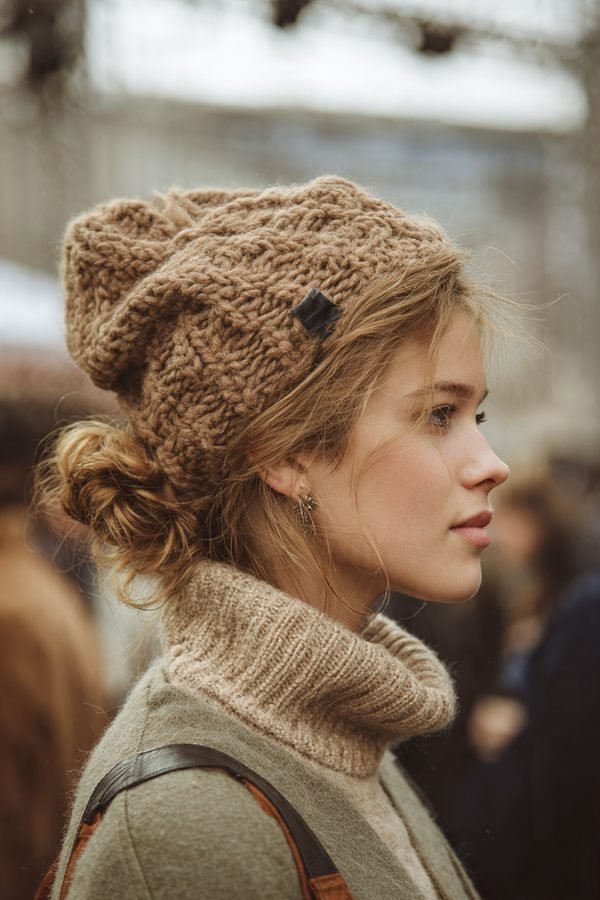
Photo: hairdolab.com
The single most hat-proof style in this list. A bun twisted at the very nape sits below the beanie band, so the hat slides on and off without crushing a bump on top — and when you take the hat off indoors, the bun is still intact instead of a dented mess.
How to: gather hair at the nape, twist it into a loose knot and pin or tie it low. Keep the front pieces soft. The golden rule: everything bulky must live below the hat line.
2. Loose Side Swept Braid
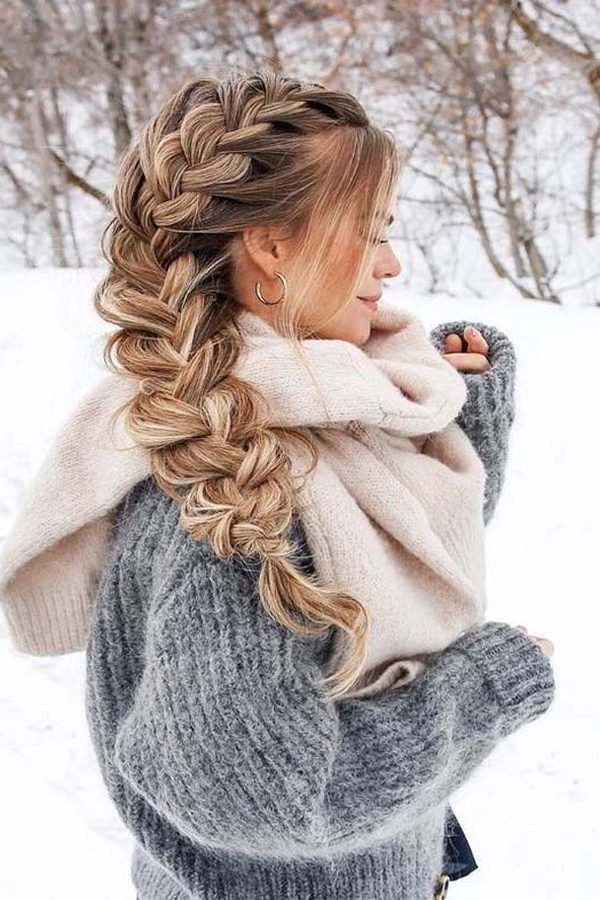
Photo: azureglam.com
A braid swept over one shoulder is winter’s hardest-working style: it stops long hair whipping around in the wind, keeps ends off scratchy coat collars, and looks deliberately romantic rather than practical. It works on second- or third-day hair, when lengths are misbehaving anyway.
How to: bring all your hair over one shoulder, braid loosely and secure with a small elastic. Gently pancake the braid — pull each loop outward — for a fuller, softer finish.
3. Sleek Low Ponytail
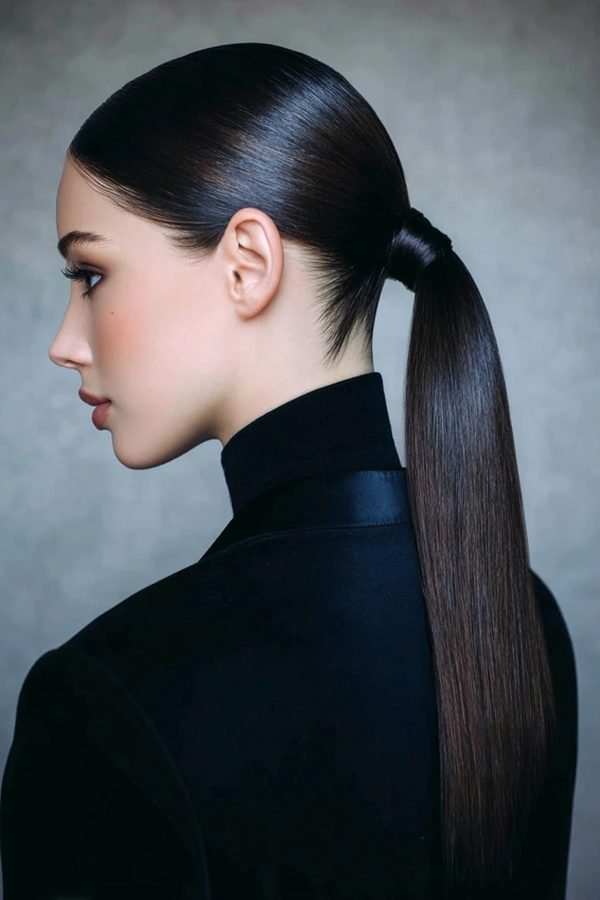
Photo: forthewardrobe.com
When static is at its worst, smoothness is the answer. A sleek low ponytail lies flat against the head, which gives flyaways nowhere to lift from, and the length hangs in one heavy curtain that friction cannot separate into a halo.
How to: smooth a pea-sized amount of anti-frizz serum through the mid-lengths, brush everything down to the nape and secure. Wrap a thin strand around the elastic for the polished, salon finish.
4. Twisted Crown Braid
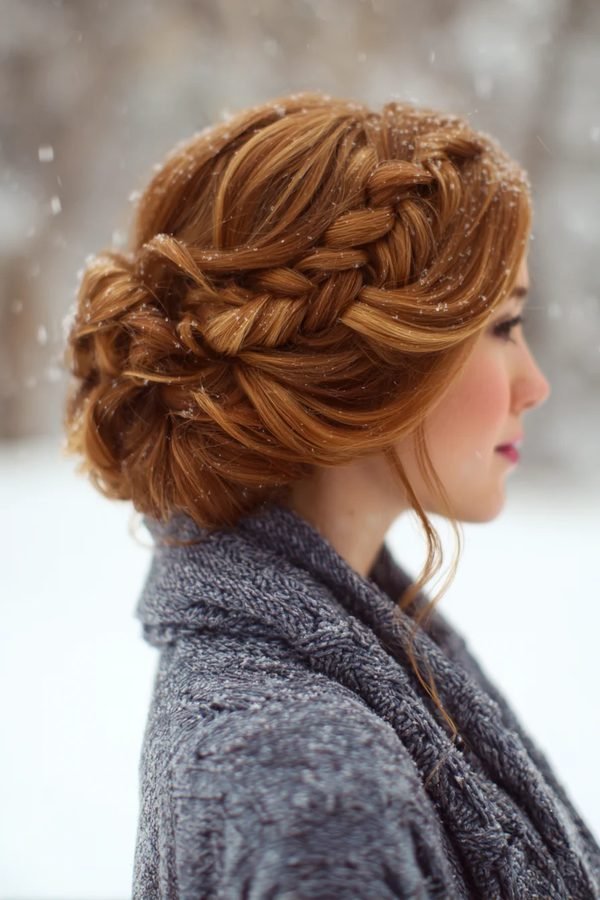
Photo: mardingezituru.com
A braid that travels around the head like a crown keeps every strand contained — nothing escapes into the wind, nothing rubs against a scarf. It is protective styling dressed up as something special, and it holds for two days if you sleep on a silk pillowcase.
How to: start a Dutch braid above one ear and work around the hairline, adding hair as you go, then pin the tail along the braid. Ask your stylist to show you the path once — it is easier than it looks.
5. The Sleek Tucked Low Bun
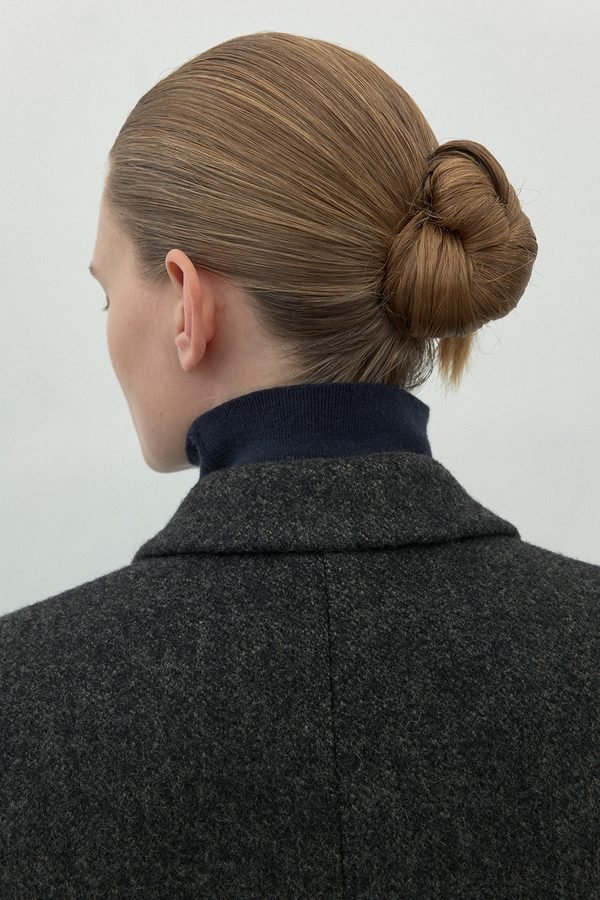
Photo: nain-en.com
Commuter-proof and quietly elegant: hair is smoothed straight back and tucked into a compact low bun that sits cleanly above a high coat collar. There is no volume on top for a hat to flatten and no loose ends for zips and scarves to shred.
How to: brush hair straight back with a drop of shine oil worked through the ends, twist into a tight low bun and pin flat. A soft boar brush is the secret to the glassy finish.
6. The Undone Messy Bun with Face-Framing Pieces
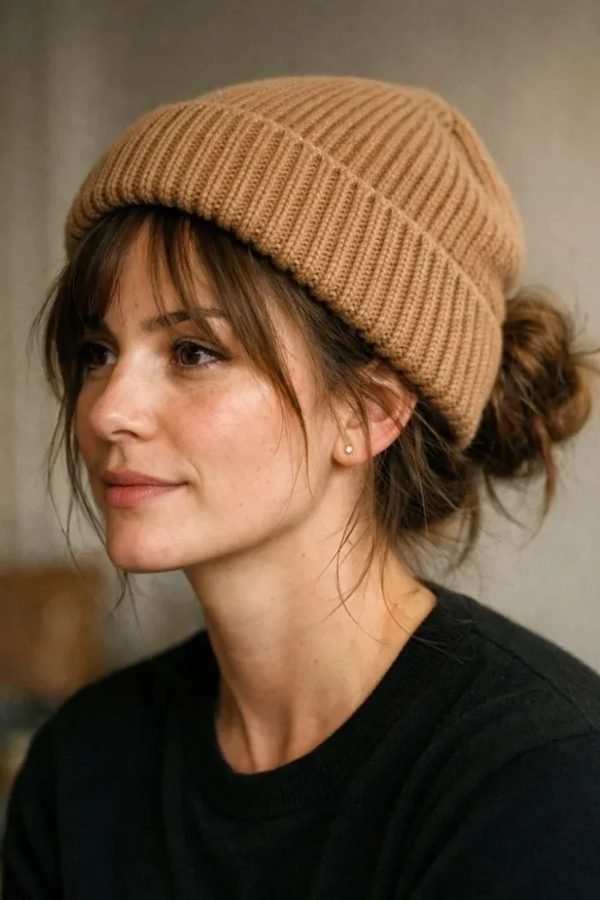
Photo: chicnstylish.com
For the hat-off moment. This bun is built loose and low, with two soft pieces left out at the front, so when the beanie comes off at the cafe your hair reads “effortlessly undone” instead of “just survived weather”. It is the most forgiving style here — mess is the brief.
How to: pull hair into a low, loose knot without brushing, letting the front sections fall free. Scrunch a little texture spray through the ends and leave it alone.
7. Double Dutch Braids
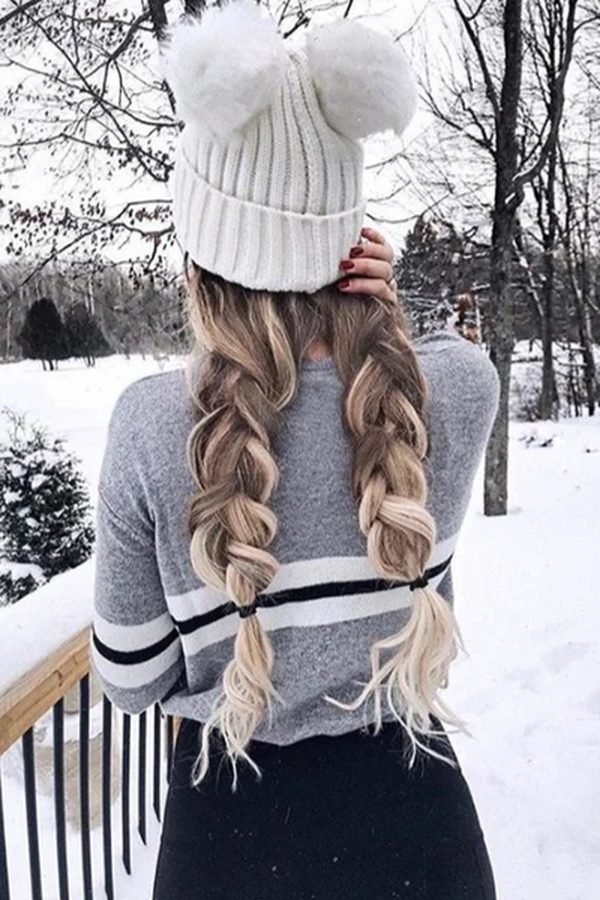
Photo: luxyhair.com
Two braids, zero problems. Dutch braids hug the head flat, so helmets, hoods and beanies all sit comfortably over them, and your ends are fully protected from wind-whipping for the whole day. On curly and coily hair they double as a protective style you can keep for days.
How to: part hair down the middle and braid each side close to the scalp, crossing sections under instead of over. Sleep in them and day two is a wavy braid-out.
8. Heatless Silk Waves
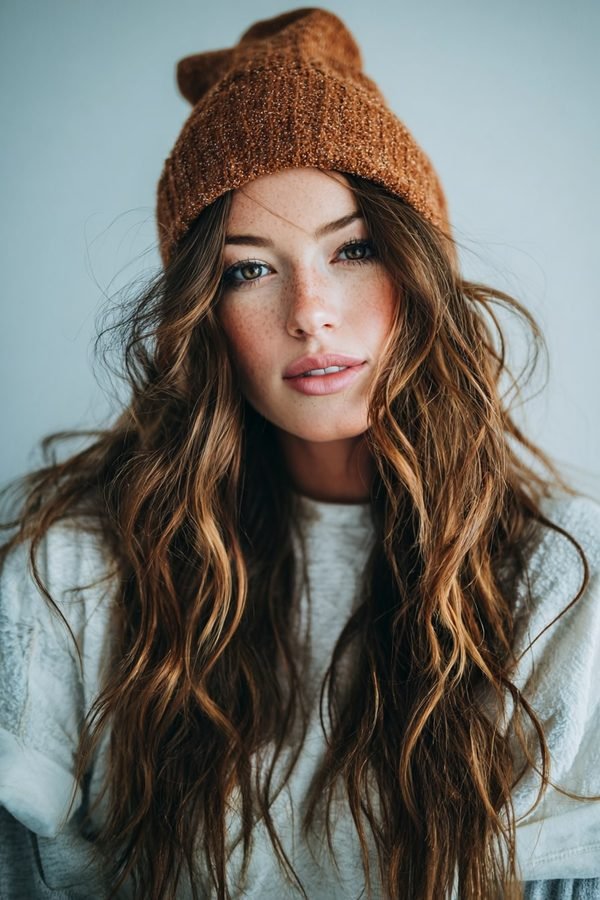
Photo: hairaide.com
Winter air is already drying your hair out; daily heat styling makes it brittle. These waves are made overnight with a silk wrap or a soft belt braid, so you wake up with movement and give your ends a full season of heat rest.
How to: on slightly damp hair, work in a curl cream, wrap sections around a silk scarf or robe belt and sleep on it. In the morning, shake out with oiled fingers — never a brush.
9. Low Twisted Chignon
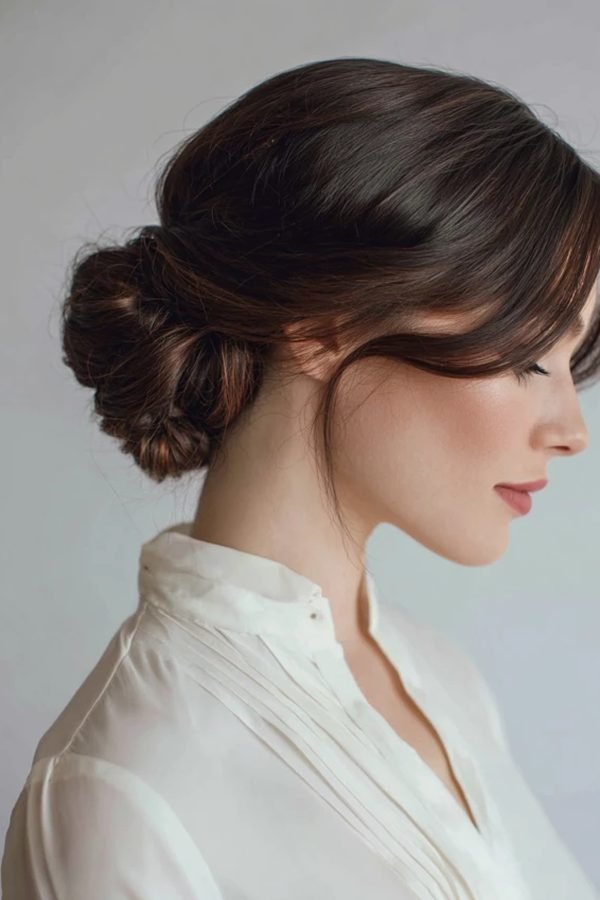
Photo: outfitarea.com
The everyday version of an updo: two twisted sections rolled into a low knot that looks tailored but takes four minutes. It keeps hair completely off your neck and collar — ideal under turtlenecks and high-neck coats where loose hair turns into a tangled bird’s nest.
How to: split hair into two low ponytails, twist each one, wrap them around each other at the nape and pin. Leave the front soft so it reads daytime, not bridal.
10. Half-Up Claw Clip Twist
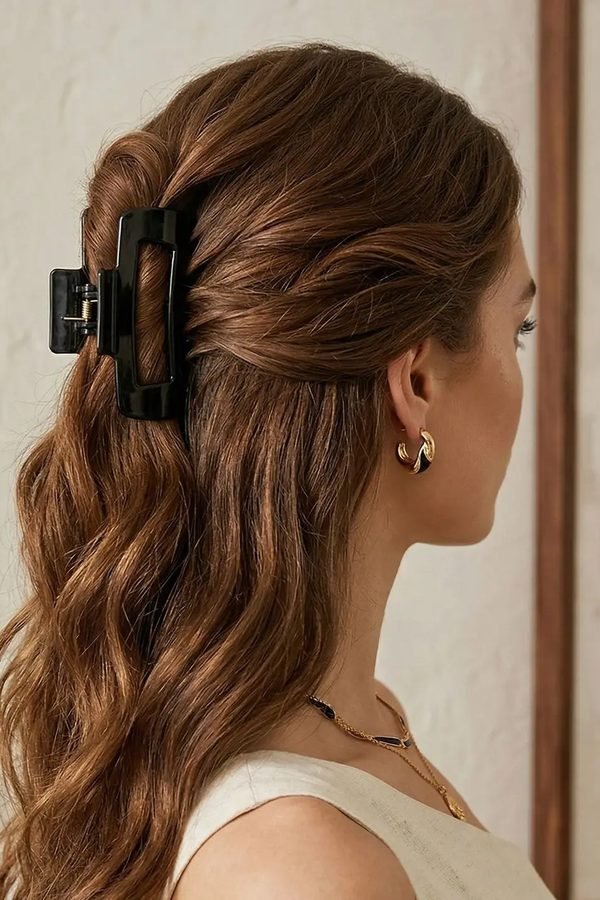
Photo: TikTok Shop
The 60-second fix for hair that is too staticky to wear down and too good to hide. A claw clip gathers the top half into a soft twist, keeping hair out of your face while the lengths stay loose — and unlike an elastic, the clip never leaves a hat-hair crease.
How to: gather the crown section, twist it once upward and clamp with a large claw clip. A matte clip grips fine, slippery winter hair best.
11. Bubble Ponytail
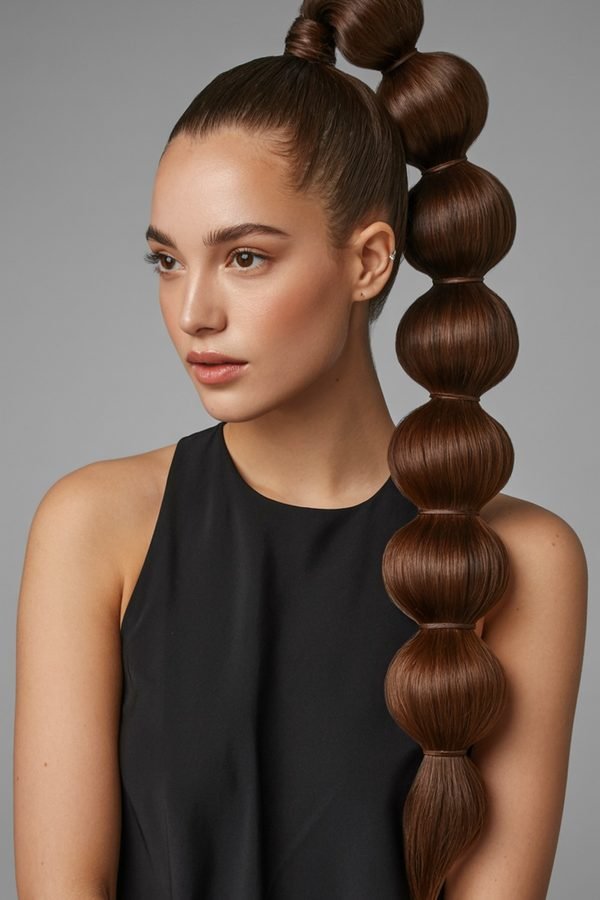
Photo: dailyhairflow.com
A ponytail with backup. The small elastics spaced down the length keep the tail gathered in sections, so wind cannot tease it apart into a frizzy plume — and if one section gets hat-squashed, the bubbles hide it. It reads playful and deliberate, not weather-beaten.
How to: secure a ponytail, then add a small clear elastic every 5–7 cm, gently tugging each section outward into a bubble. Smooth flyaways with a drop of serum first.
12. The Low Side Dutch Braid
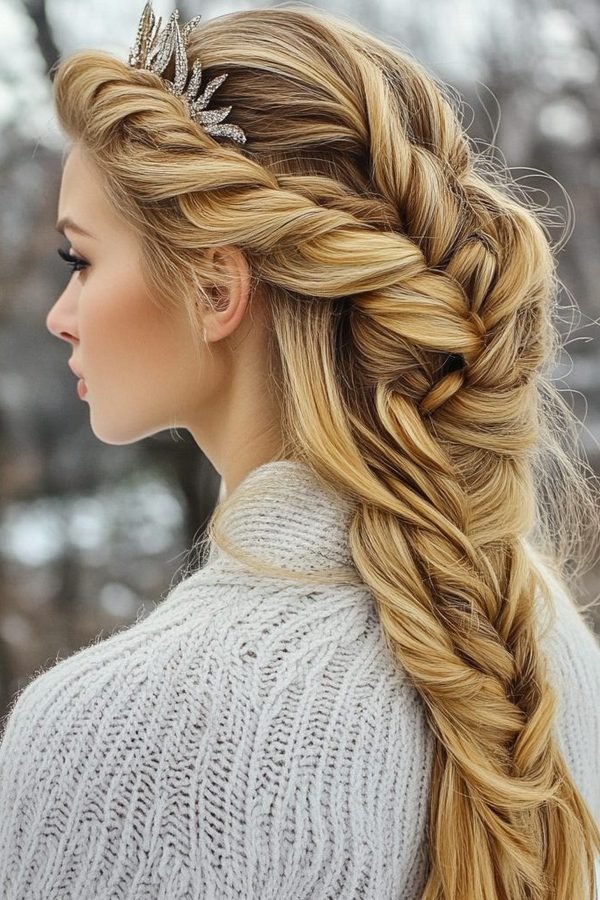
Photo: hairguru.net
A single Dutch braid that travels down one side of the head and finishes over the shoulder. Because the braid is woven tight and flat, it survives hoods, headrests and wool hats, and it keeps the neckline clear for scarves and chunky knits.
How to: start at the front hairline on your heavier side, Dutch-braid diagonally down and back, then finish in a regular three-strand braid over the shoulder.
13. Scarf-Wrapped Ponytail
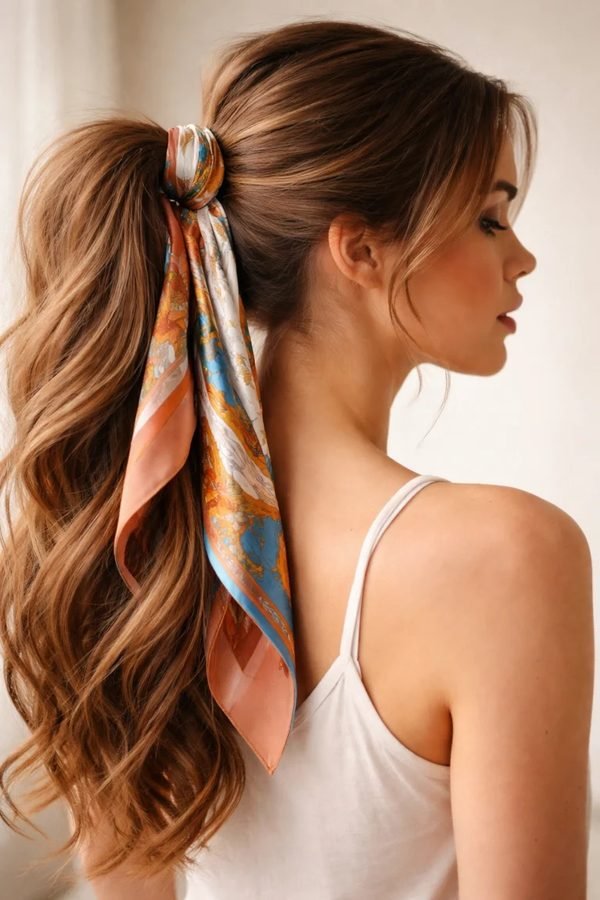
Photo: boldhairstyles.com
A silk scarf is not just decoration — silk is one of the kindest fabrics you can put against winter hair. It covers the elastic, reduces friction where the ponytail rubs your coat, and turns the plainest low pony into something that looks styled on purpose.
How to: tie a low ponytail, fold a silk scarf into a band, wrap it around the base and let the ends trail down the length. Bonus: the scarf shields the top of the tail from drizzle.
14. Loose Milkmaid Braids
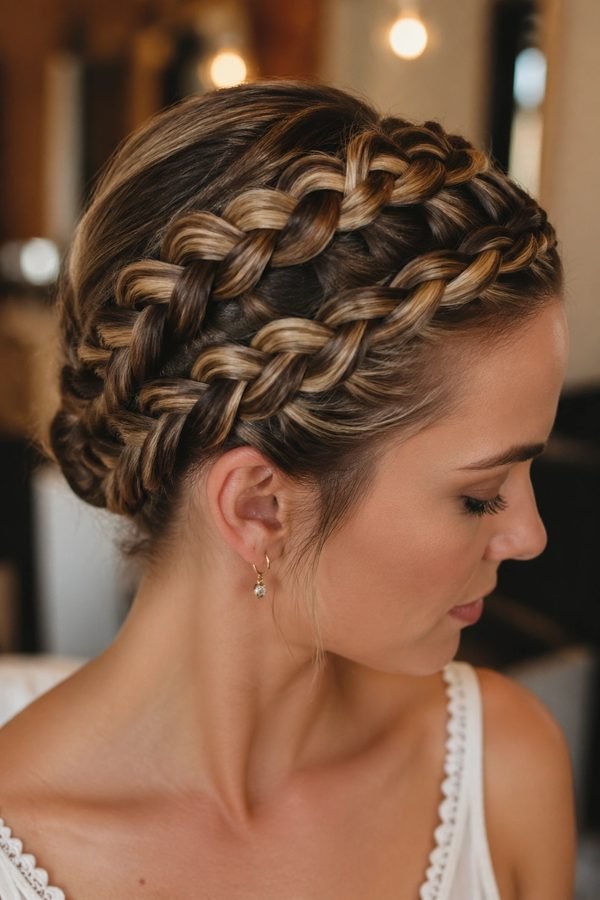
Photo: hairstyleloom.com
Two braids crossed over the crown like a headband you grew yourself. Milkmaid braids keep hair fully contained and off your neck, they sit flat enough for earmuffs and wide hat bands, and the soft, loosened finish keeps them modern rather than costume.
How to: braid two low pigtails, cross each one up and over the top of your head and pin the ends tucked behind the opposite braid. Pancake them gently for softness.
15. Slicked Anti-Static Bun
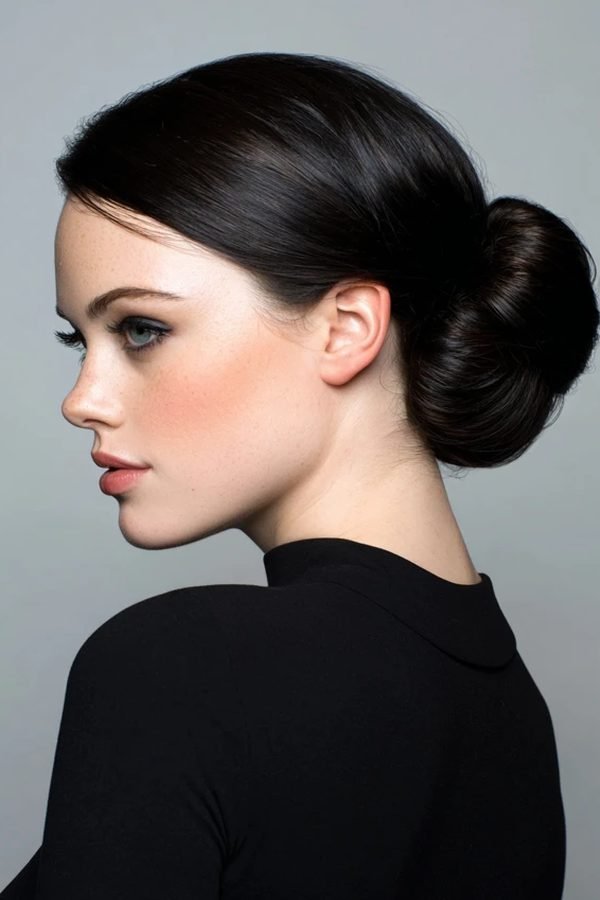
Photo: bicoupon.com
The nuclear option for static: hair slicked completely smooth and sealed into a bun, with every strand lacquered into place. There is simply nothing loose left to lift, cling or fly away, which makes it the most reliable style for dry, heated indoor air.
How to: work a strong-hold gel or smoothing cream through damp hair, brush it back tight with a boar brush, twist into a bun and finish with a light mist of anti-humidity spray.
16. Wispy Curtain Bangs with a Coat-Friendly Bob

Photo: yavmode.ru
Short hair has a winter superpower: it never gets trapped under collars, zips and scarves. A shaggy bob with wispy curtain bangs sits right at that sweet spot — long enough to feel soft and feminine, short enough to shake out and go after the hat comes off.
How to: ask your stylist for a textured bob that clears the shoulders, with curtain bangs that split at the brow. Style with a quick rough-dry and a pinch of matte paste on the ends.
17. The Coat Tuck Ponytail
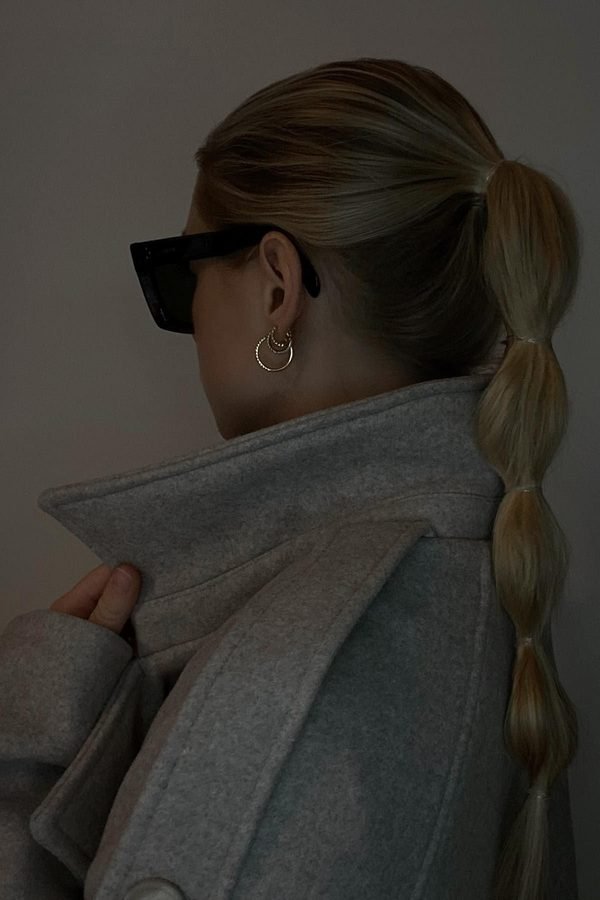
Photo: Pinterest
The street-style trick models live by in winter: hair gathered low and tucked inside a raised coat collar or chunky scarf. Your ends spend the commute warm, dark and untouched by wind, then spill out glossy when you arrive and unbutton.
How to: make a loose low ponytail, put your coat on, then gently push the tail down inside the collar. It only works with high collars, turtlenecks and big scarves — which is to say, all winter.
18. The Twisted Crown Ponytail
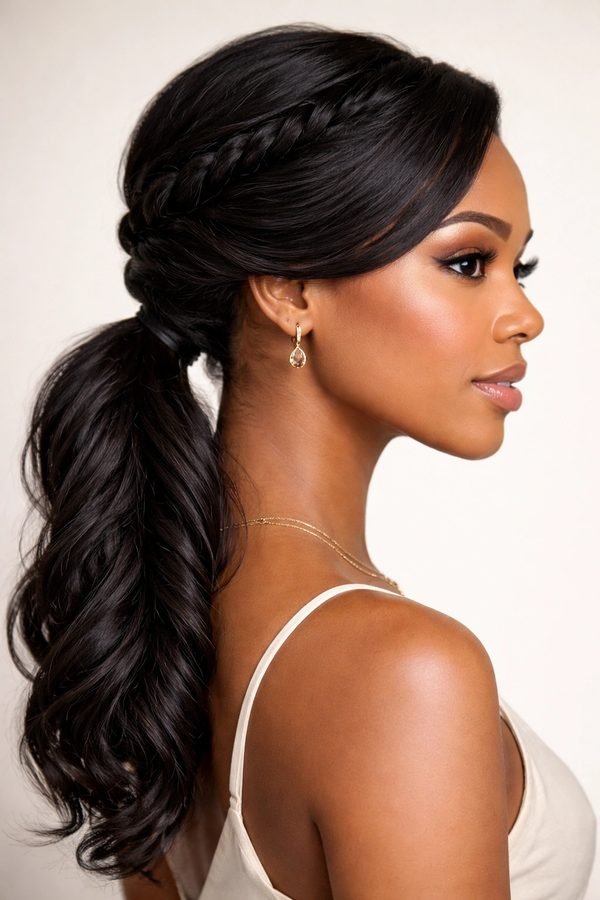
Photo: boldhairstyles.com
A ponytail with architecture. Twisting the front sections back before you tie everything off adds detail that survives a hat band — the twists sit at the sides, exactly where a beanie edge lands, so the style still looks intentional when the hat comes off.
How to: twist a section from each temple back toward the crown, pin them crossed, then gather everything into a low ponytail. Leave the tail wavy for contrast with the smooth twists.
19. The Fishtail-Braided Ponytail
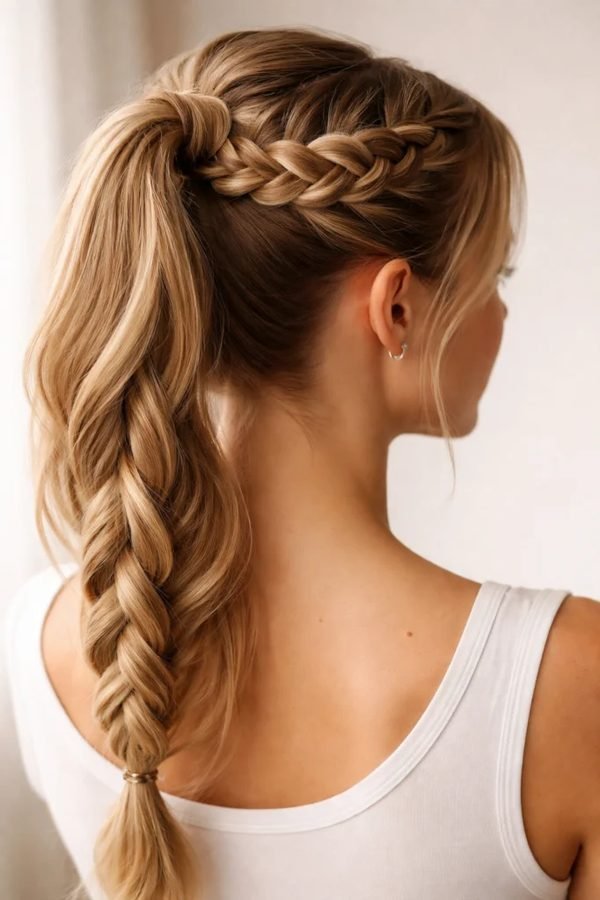
Photo: boldhairstyles.com
All the security of a ponytail, none of the loose-end chaos. Fishtail-braiding the length locks the tail into one woven rope that cannot frizz apart in the wind, and the fine, herringbone texture looks far more intricate than the effort it takes.
How to: tie a mid-height ponytail, split it in two and fishtail by crossing small outer pieces over alternately. Secure the end and tug the braid edges gently for a softer, fuller finish.
20. Double Top Buns
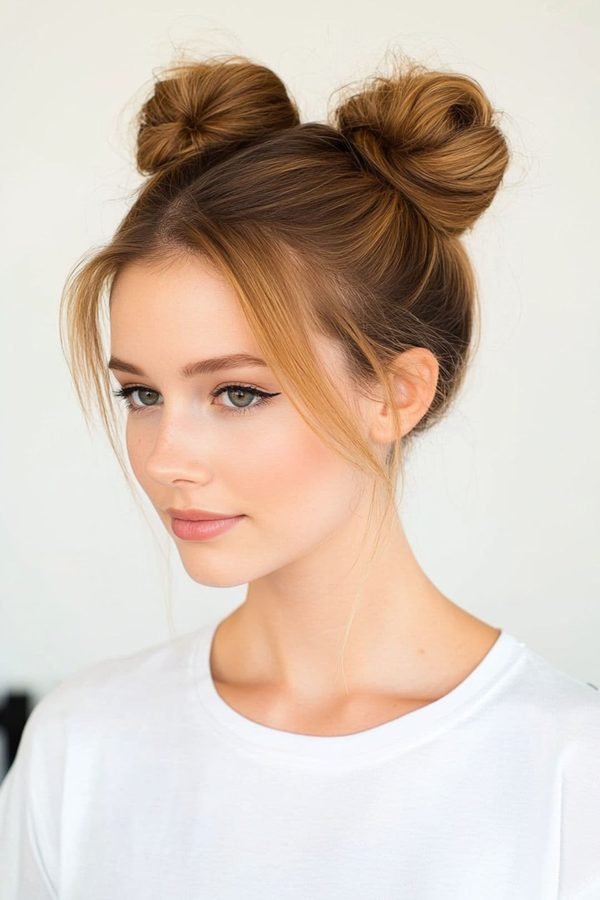
Photo: lookosm.com
The playful answer to a bad winter hair day. Two buns keep every strand off your face and neck, they take four minutes, and they read fun rather than formal — perfect for snow days, markets and weekends when a beanie is going on and off all day.
How to: part hair down the middle, twist each side up into a bun high on the crown and secure with pins or small elastics. Pull out two thin face-framing strands to keep it soft.
21. Deep Side Part Pixie
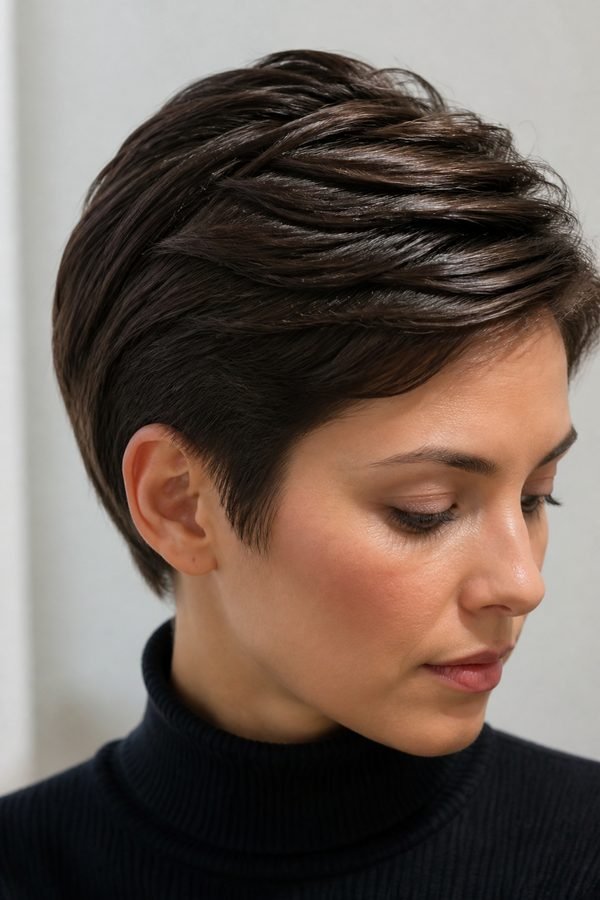
Photo: bestwomenhaircuts.com
The lowest-maintenance cut in this entire list. A pixie is too short to tangle in a scarf, too short to whip in the wind, and a deep side part gives it polish that a beanie cannot ruin — you just push it back into place with your fingers.
How to: ask your stylist for a pixie with longer length on top and a strong side sweep. A pea-sized amount of styling paste, worked in while hair is damp, is the whole routine.
22. Bob with a Velvet Headband
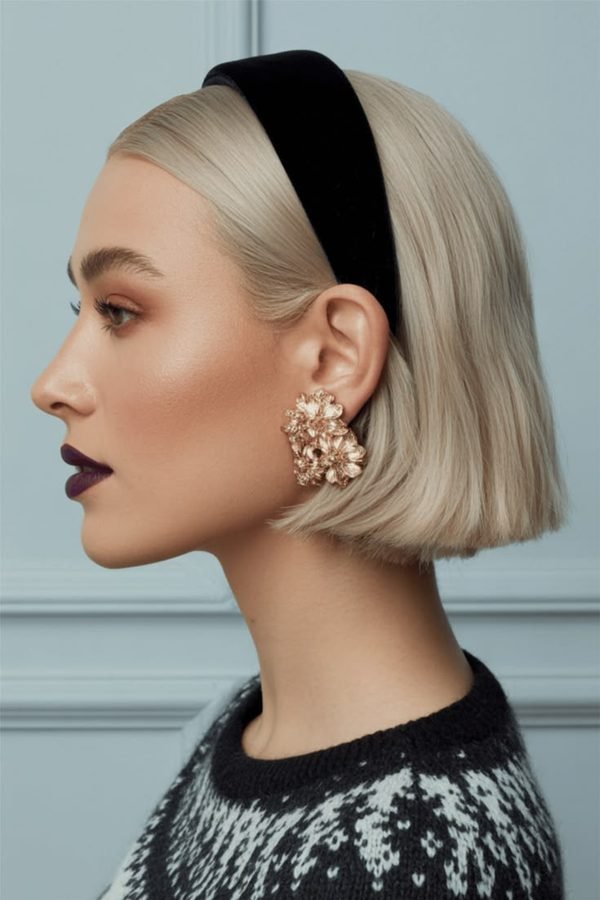
Photo: Pinterest
A padded velvet headband is winter’s smartest accessory: it presses down exactly the halo of flyaways that static creates at the crown, covers a flat hat-hair part line, and makes a plain bob look dressed in ten seconds flat.
How to: smooth hair back with a little serum, push the headband on from the front and settle it just behind the hairline. Velvet grips better than satin on fine hair and will not slide on a windy day.
23. Braided Headband over Loose Hair
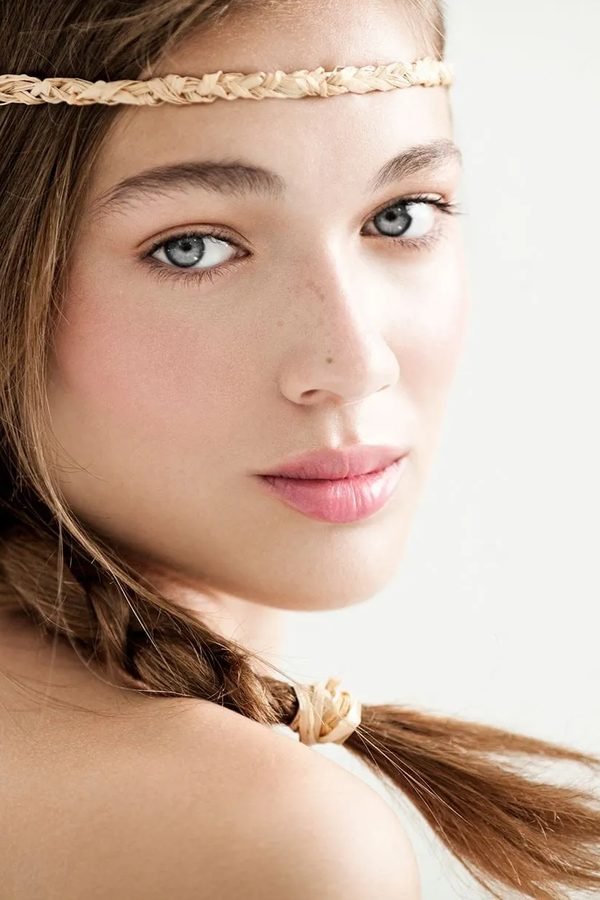
Photo: nivea.ro
For days when you want your hair down but winter wants it everywhere. A slim braid worn band-style across the front keeps the hairline tidy and the face clear, while the lengths stay loose — and the braid itself is protected from the friction that causes breakage.
How to: braid a thin section from behind one ear, bring it across the front hairline like a band and pin it behind the other ear. It works with hair you braided yourself or a pre-braided band.
24. Protective Box Braids with a Top Bun
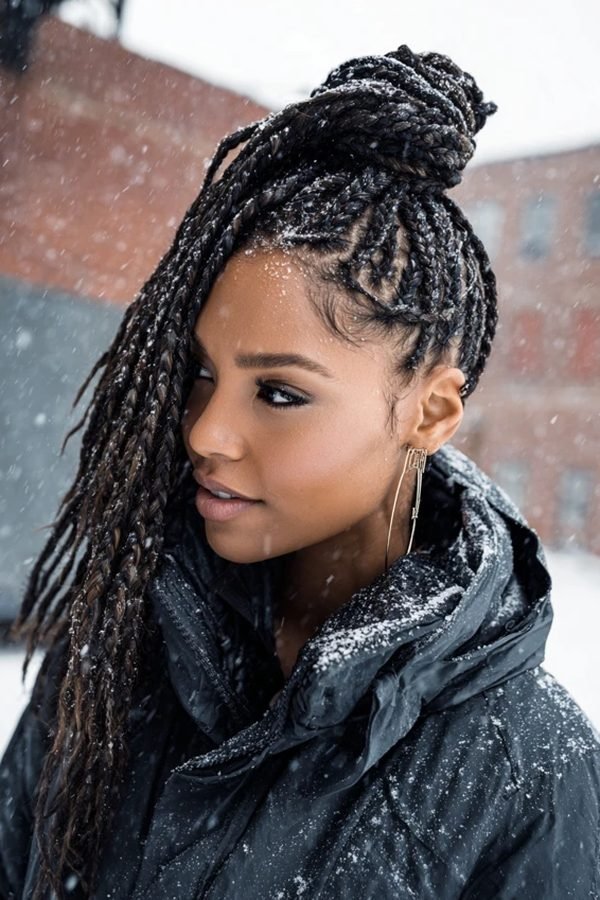
Photo: facialtasks.com
For natural and textured hair, winter is protective-style season: box braids tuck your real ends away from cold, dry air and coat friction for weeks at a time. Gathered into a top bun, they stay off collars and scarves while looking sharp in the snow.
How to: ask your stylist for medium box braids with clean parts, then pile them into a high bun or leave half down. Keep the scalp oiled weekly and sleep in a satin bonnet to make the style last.
25. The Modern Gibson Tuck
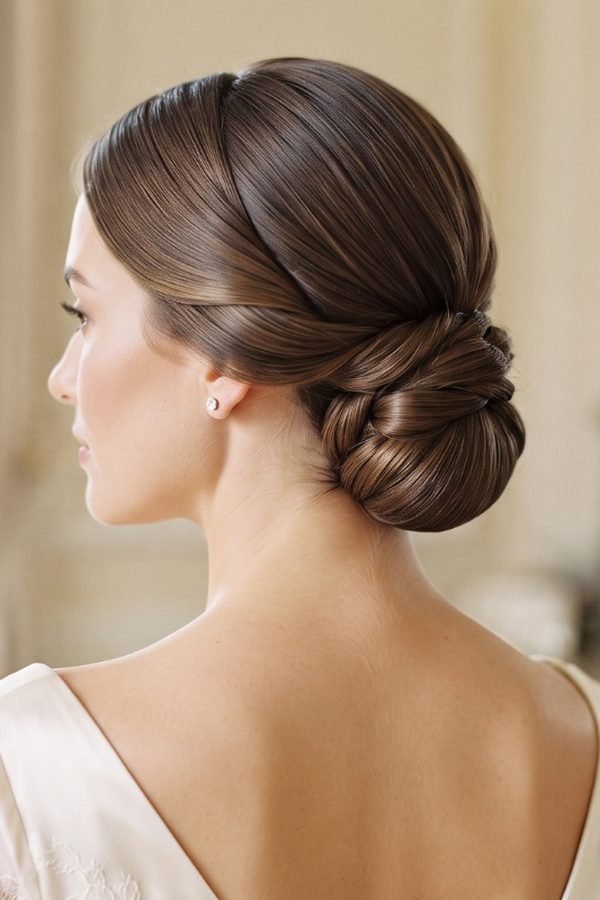
Photo: thecrownedbeauty.com
A vintage roll with a very modern job: the ends are tucked inside the style, hidden in a smooth pocket at the nape. Hidden ends cannot rub on wool, cannot split from the cold, and cannot tangle — it is protective styling disguised as an elegant low bun.
How to: make a low ponytail, push the elastic down a few centimetres to open a gap above it, then flip the tail up and tuck it into the gap. Pin the roll flat and smooth the surface.
26. High Ponytail with a Ribbon Bow
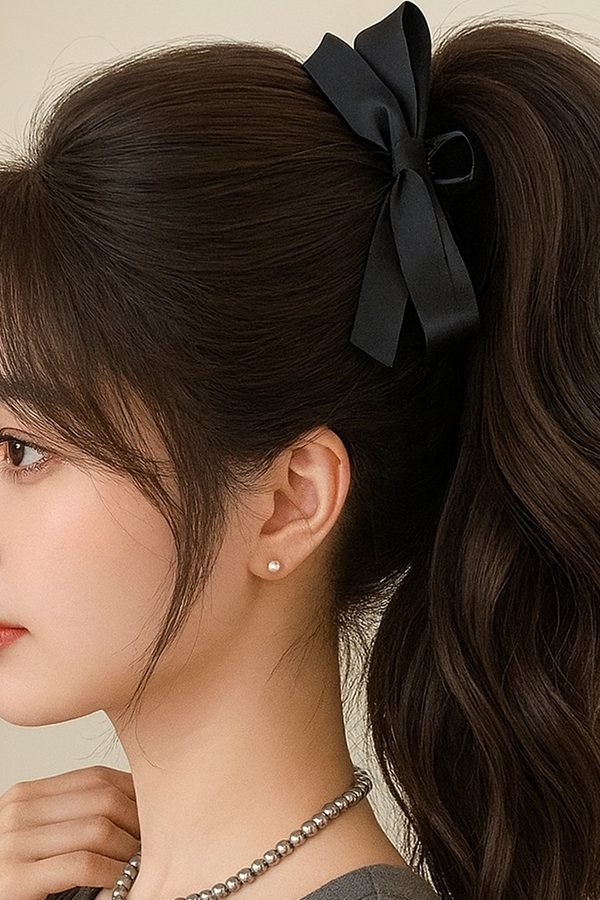
Photo: shop.cosmed.com.tw
The festive end of everyday winter hair: a high, smooth ponytail finished with a tied ribbon. Worn high, the tail swings clear of scarves and coat shoulders, and the bow covers the elastic and any flyaway halo at the base in one move.
How to: brush hair up to the crown and secure tightly, smoothing bumps with a fine brush as you go. Tie a length of ribbon or a pre-made bow clip over the elastic.
27. Loose Fishtail Braid
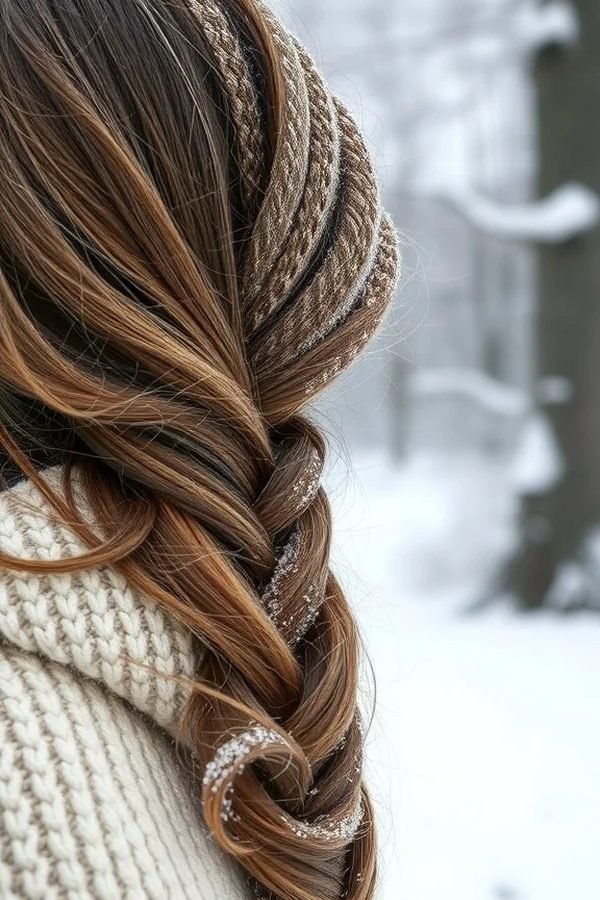
Photo: beautyoutfittrends.com
The braid that looks like it took an hour and takes eight minutes. A fishtail’s fine weave holds together better than a regular plait in gusty weather, and worn loose over one shoulder it is the natural partner of cream knits, big scarves and snowy photos.
How to: split hair into two sections and cross small outer pieces over alternately, keeping the tension relaxed. The messier it gets through the day, the better it looks — winter-proof by design.
28. Half-Up Top Knot
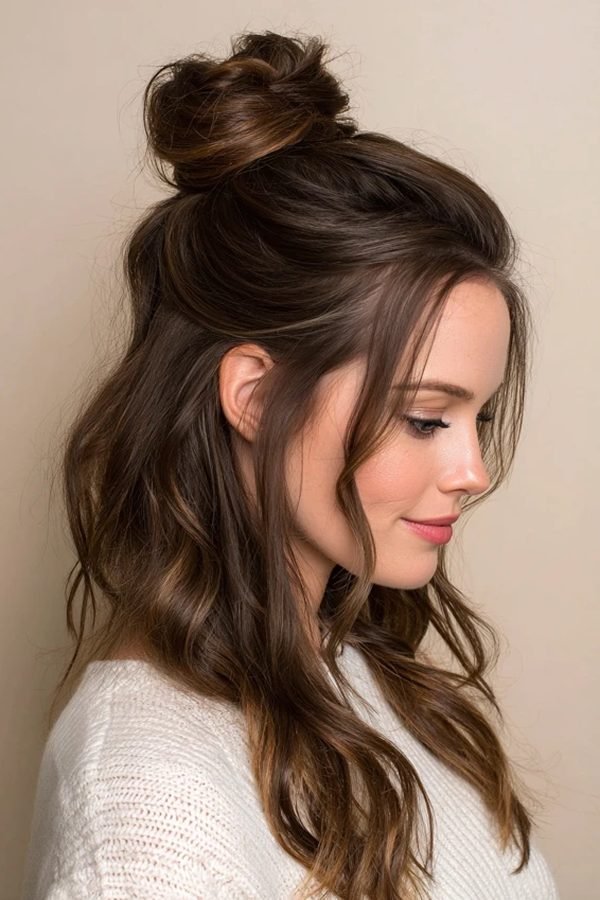
Photo: forthewardrobe.com
Half the commitment, all of the polish. The top knot lifts the front and crown — the exact zone hats flatten — into a shape that springs back, while the loose lengths keep the look soft. It is also the best style here for stretching a wash day.
How to: gather the top third of your hair, twist it into a small knot at the crown and pin. Refresh the loose lengths with a curl-reviving spray or a quick pass of a wide-barrel iron.
29. Romantic Low Updo with Pins
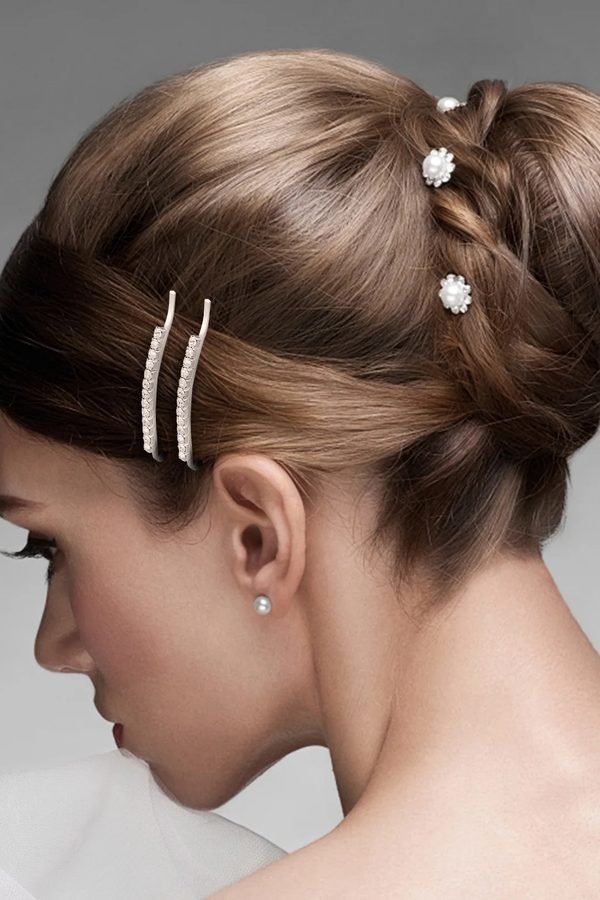
Photo: Pinterest
An everyday updo with a little jewellery in it. Hair is twisted low and crossed with decorative pins that do double duty — they hold the style together and they catch the light on dark winter afternoons. Save it for dinners, photos and days you want to feel finished.
How to: twist hair into a low knot, secure with plain pins first, then slide two or three pearl or crystal pins across the twist as the visible layer. Structure first, sparkle second.
30. Waves and Bangs Under a Chunky Knit Beanie

Photo: ayhairstyle.com
Our closing look is the one you will actually wear most: long, loose waves and a soft fringe arranged before the beanie goes on, so the hat becomes part of the hairstyle instead of its enemy. Style the front, let the hat do the rest.
How to: part and arrange your bangs and front waves first, then settle the beanie on the back two-thirds of your head, never dragging it forward. A silk-lined beanie keeps the fringe smooth instead of staticky.
Frequently Asked Questions
How do I stop hat hair in winter?
Style low and flat — buns, braids and ponytails that sit below the hat band survive best. Wear a silk- or satin-lined hat to cut friction, style your part slightly to the opposite side before the hat goes on (flip it back when you arrive for instant root lift), and revive roots with a shake of dry shampoo and the steam from a hot shower.
Why is my hair full of static in winter, and how do I fix it?
Cold air holds almost no moisture, and indoor heating dries it further, so hair loses water, turns light and flyaway, and picks up charge from wool hats and scarves. Fix it with moisture, not force: a leave-in conditioner after every wash, a drop of serum on dry ends, an ionic dryer, a wooden or boar brush instead of plastic, and — in a pinch — a dryer sheet smoothed over the crown.
What is the best hairstyle to wear under a beanie?
Anything low and smooth: a low bun at the nape, two Dutch braids, a low ponytail or loose waves arranged before the hat goes on. Avoid top knots, high ponytails and big volume at the crown — that is exactly where the beanie presses, and it never springs back the same.
How often should I wash my hair in winter?
For most hair types, two to three washes a week is the winter sweet spot. Over-washing strips the oils your hair desperately needs in dry air. Use lukewarm water (hot water strips more), always condition, and add a deep-conditioning mask once a week.
How do I protect my hair from cold, dry air?
Keep ends covered: tuck them into coats and scarves, choose styles that hide the ends like braids, buns and the Gibson tuck, and line hats with silk or satin so wool does not rough up the cuticle. A weekly oil treatment and regular trims stop dry ends from splitting their way up the strand.
Can I refresh my hair after wearing a hat or hood all day?
Yes — flip your part to the other side for instant volume, shake the roots with your fingertips, smooth a pea-sized drop of serum over the surface, and if you can, stand near shower steam for two minutes: the humidity resets static and relaxes the hat dent.
You May Also Like
Planning a dressier winter evening? Our winter formal hairstyles take these same cold-weather tricks into polished, party-ready territory. And to complete the look from head to toe, browse our winter outfit ideas for women — the coats, knits and layers these hairstyles were styled with.
Final Thoughts
Winter hairstyles are not about finding one perfect look — they are about having a small rotation that respects the weather: something low for hat days, something braided for windy days, something sleek for static days. Pick three from this list, practise them once on a quiet evening, and hat hair stops being a season-long problem. Stay warm, keep your ends tucked in, and let the beanie be part of the outfit.