30 French Bob Hairstyles for Effortless Parisian Chic
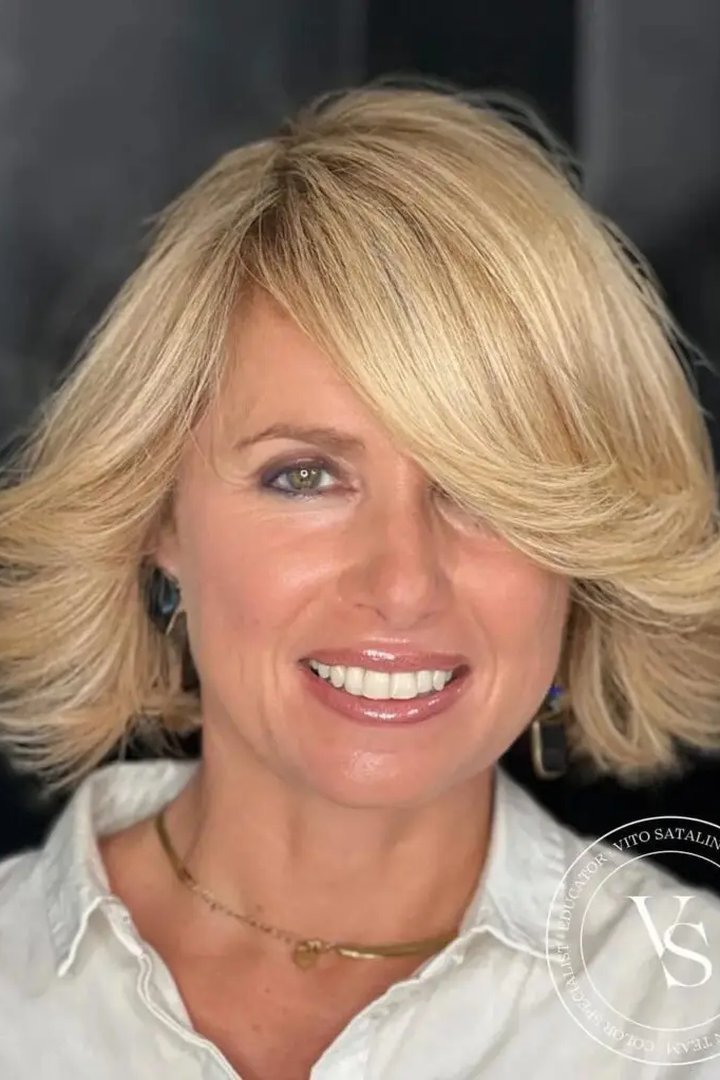
Photo: mavipic.com
French bob hairstyles are the rare short cut that looks better the less you fuss over it. Born in 1920s Paris and sharper than ever right now, the French bob sits at the chin or just above it, with minimal layering and soft, lived-in texture instead of a stiff salon finish. It frames the jaw, opens up the eyes, and asks for about five minutes of styling on a busy morning.
Below are 30 French bob ideas for every hair texture, face shape, and mood — from the classic wispy-bang version to curly, copper, and evening-ready takes. Every idea includes exact wording to use with your stylist, so you leave the salon with the cut you actually pictured.
1. The Classic Chin-Length French Bob
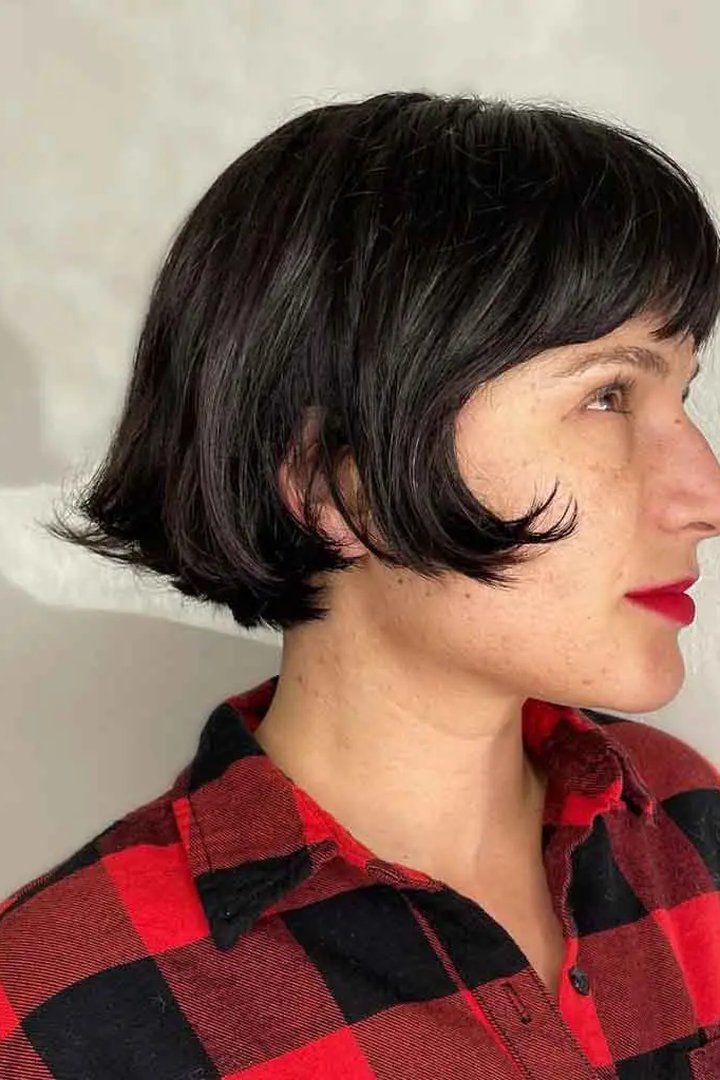
Photo: mavipic.com
The one that started it all: chin-grazing length, a blunt-ish perimeter softened at the very ends, and short wispy bangs that sit above the brows. It reads polished without looking done, which is the whole Parisian trick.
Best for: straight to wavy hair; oval, heart, and diamond faces.
Styling tip: rough-dry upside down for lift, then smooth just the bangs with a small round brush. A pea-sized dab of styling cream on the ends keeps them soft, not sharp.
Ask your stylist: “a chin-length French bob with minimal layering and soft wispy bangs — textured ends, not razor-sharp.”
2. French Bob with Curtain Bangs
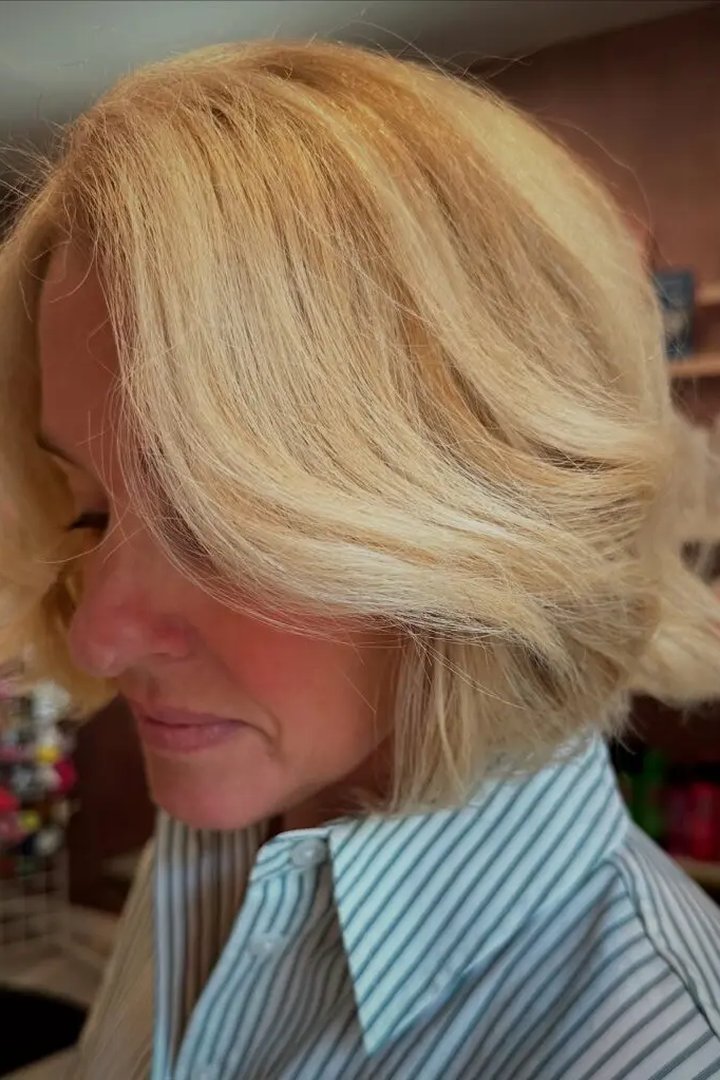
Photo: mavipic.com
Curtain bangs melt into the cheekbones and make the French bob feel softer and more grown-up. The center part draws the eye down the middle of the face, which flatters rounder cheeks.
Best for: round and square faces; medium-density hair.
Styling tip: blow-dry the bangs forward with a round brush, then split them with your fingers once cool. Dry shampoo at the roots on day two keeps the part piecey.
Ask your stylist: “curtain bangs that blend into a chin-length French bob — keep them long enough to tuck.”
3. Blunt French Bob, No Bangs
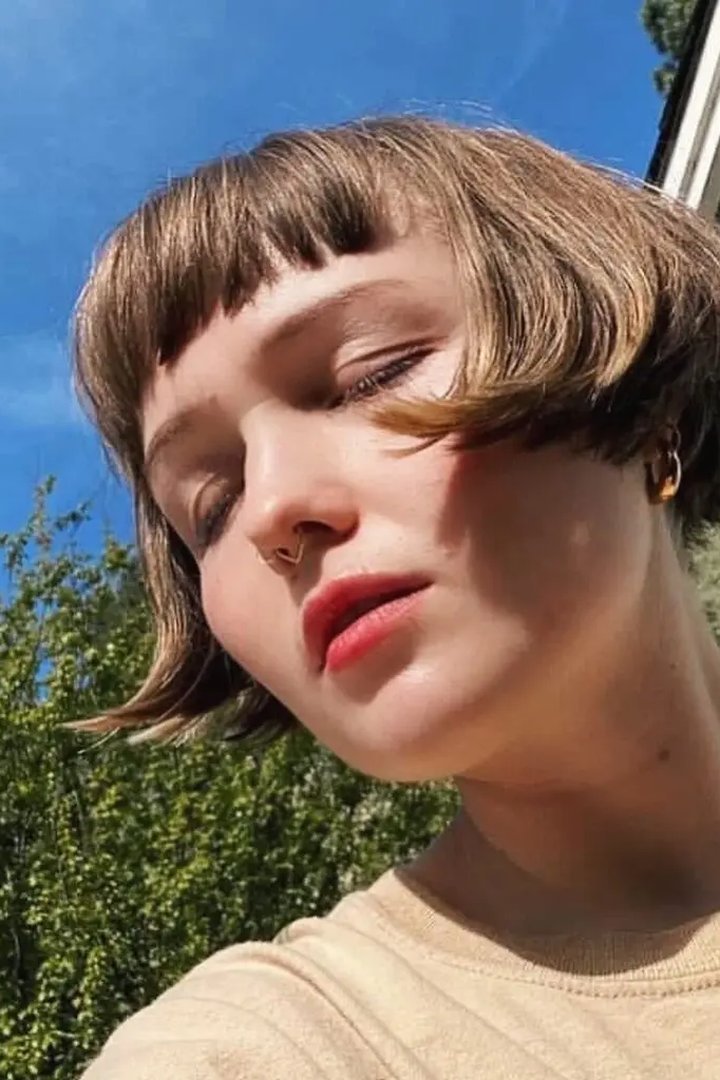
Photo: baamboozle.com
Skip the fringe entirely and let the cut do the talking. A clean, blunt perimeter at the jawline looks architectural and modern, and it grows out more gracefully than a bang version.
Best for: straight, thick hair; strong jawlines you want to show off.
Styling tip: flat-iron in small sections for a glassy finish, or tuck one side behind the ear for instant asymmetry. Shine serum on the mid-lengths only — never the roots.
Ask your stylist: “a blunt jaw-length bob with zero bangs and a clean perimeter — I will style the part myself.”
4. Textured French Bob with Micro Bangs
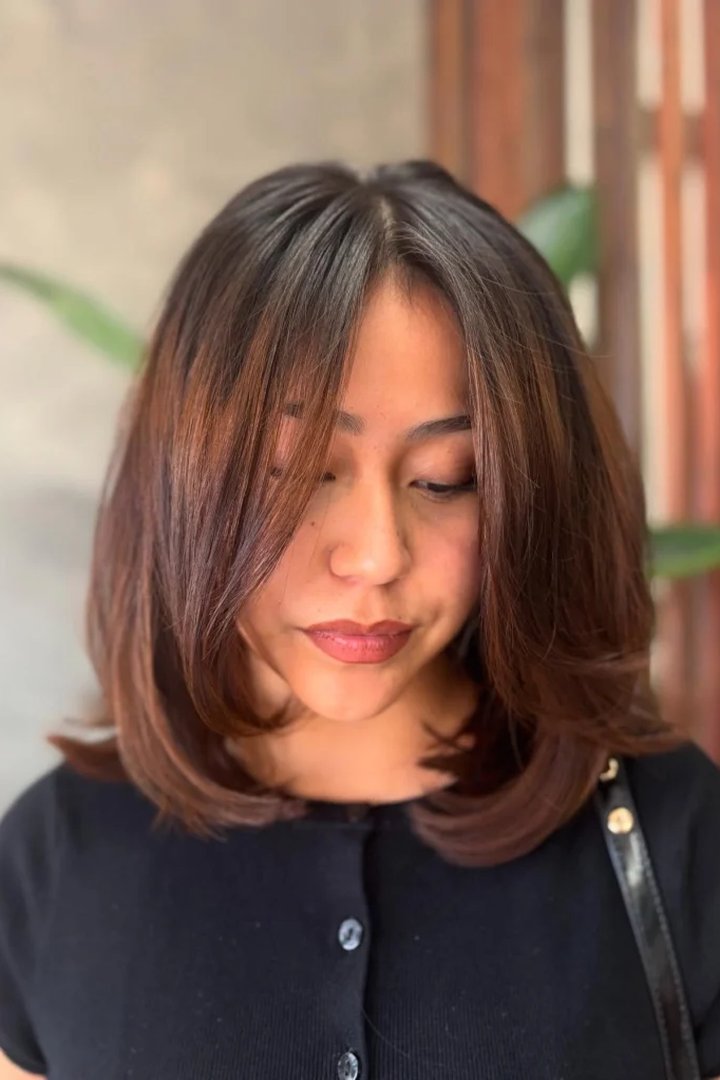
Photo: doitong.com
Micro bangs — cut well above the brows — give the French bob an edgy, editorial feel. Paired with choppy texture through the ends, it is the coolest version on this list and the one strangers ask about.
Best for: small to medium foreheads; confident dressers; straight or slightly wavy hair.
Styling tip: micro bangs need a 30-second touch-up most mornings — a mini flat iron or just damp fingers and a blow-dryer. Texture spray through the ends finishes it.
Ask your stylist: “micro bangs with a textured, piecey French bob — keep the bangs piece-y, not a solid shelf.”
5. Wavy French Bob with a Side Part
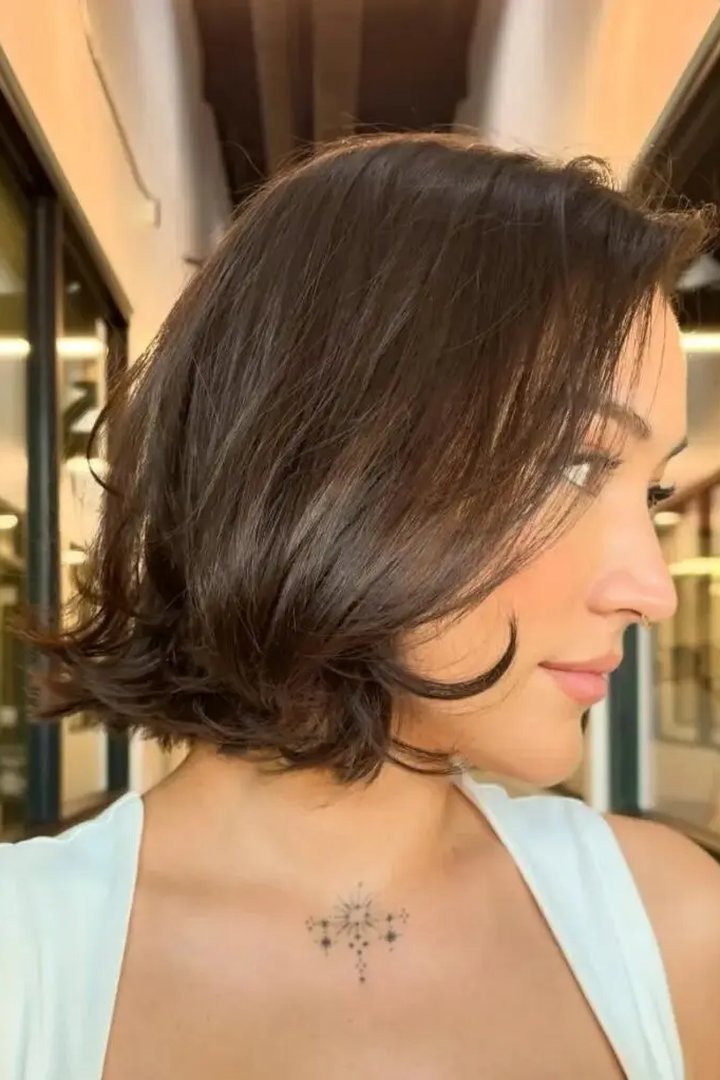
Photo: tressnails.com
A deep side part throws the whole cut off-balance in the best way, adding volume at the crown and a sweeping fringe effect without committing to bangs. Natural wave does most of the work here.
Best for: wavy hair; anyone wanting volume without layers.
Styling tip: scrunch sea-salt spray into damp hair and air-dry. Flip the part to the other side on day three for instant root lift.
Ask your stylist: “a French bob cut to work with a side part — slightly longer on the heavy side.”
6. Curly French Bob
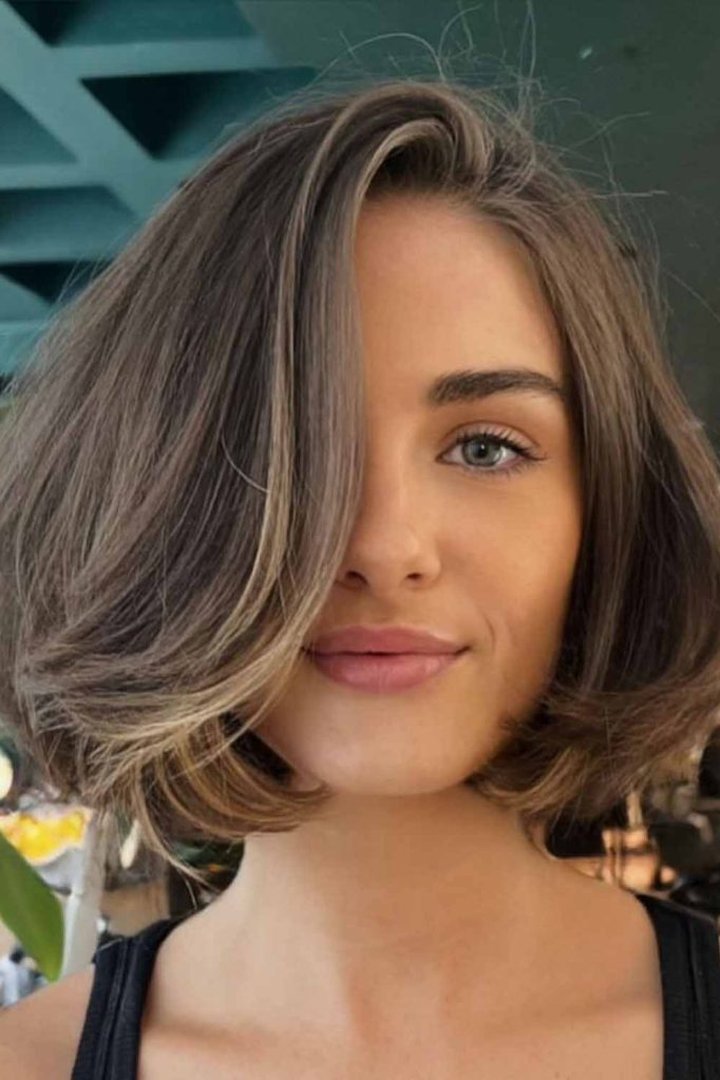
Photo: cleodiva.com
Curls turn the French bob into a halo of texture — bouncy, rounded, and full of movement. The key is a dry cut so the stylist can see exactly where each curl lands, plus length planned around shrinkage.
Best for: 2B to 3C curl patterns; thick hair that needs shape, not bulk.
Styling tip: apply curl cream to soaking-wet hair, scrunch, and diffuse or air-dry. Never brush dry — separate curls with oiled fingers instead.
Ask your stylist: “a dry-cut French bob shaped for my curl pattern — internal shaping, not heavy layers, and cut long enough for shrinkage.”
7. French Bob with Bottleneck Bangs
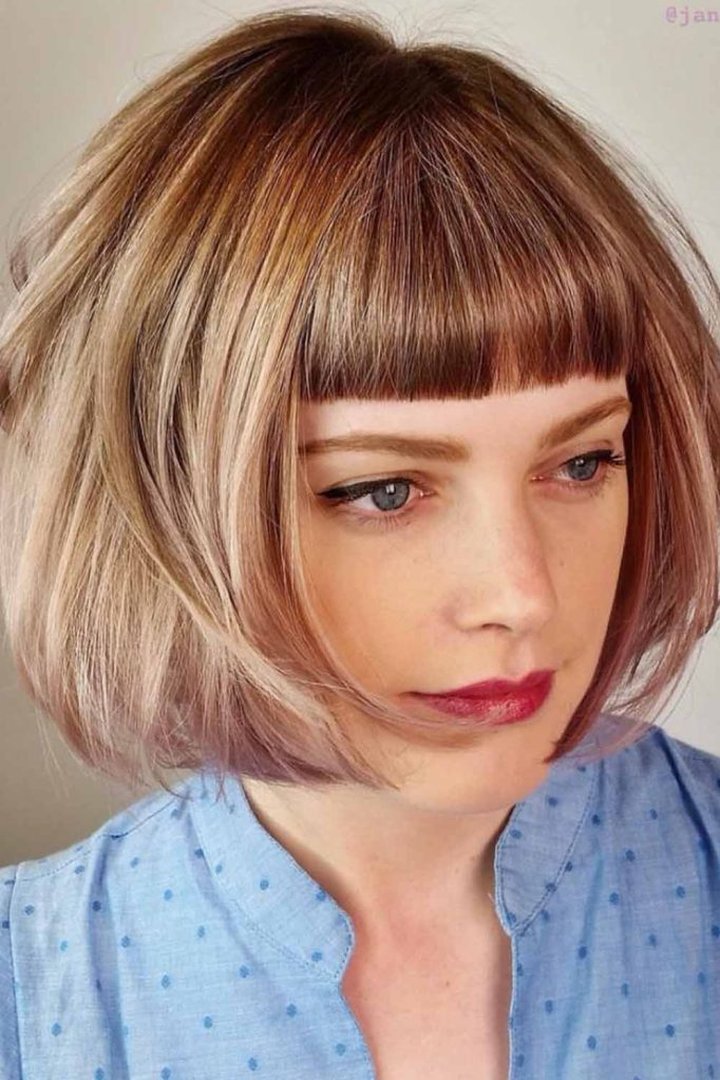
Photo: righthair.ai
Bottleneck bangs — narrow at the top, widening toward the temples — frame the eyes like a picture frame. They are the most face-slimming fringe you can pair with a French bob.
Best for: round and heart-shaped faces; anyone who wants bangs without the maintenance of a blunt fringe.
Styling tip: blow-dry with a round brush, rolling the ends under slightly. They grow out into curtain bangs gracefully, so trims can stretch to 5–6 weeks.
Ask your stylist: “bottleneck bangs blended into a French bob — slim through the middle, longer at the temples.”
8. Sleek Straight French Bob
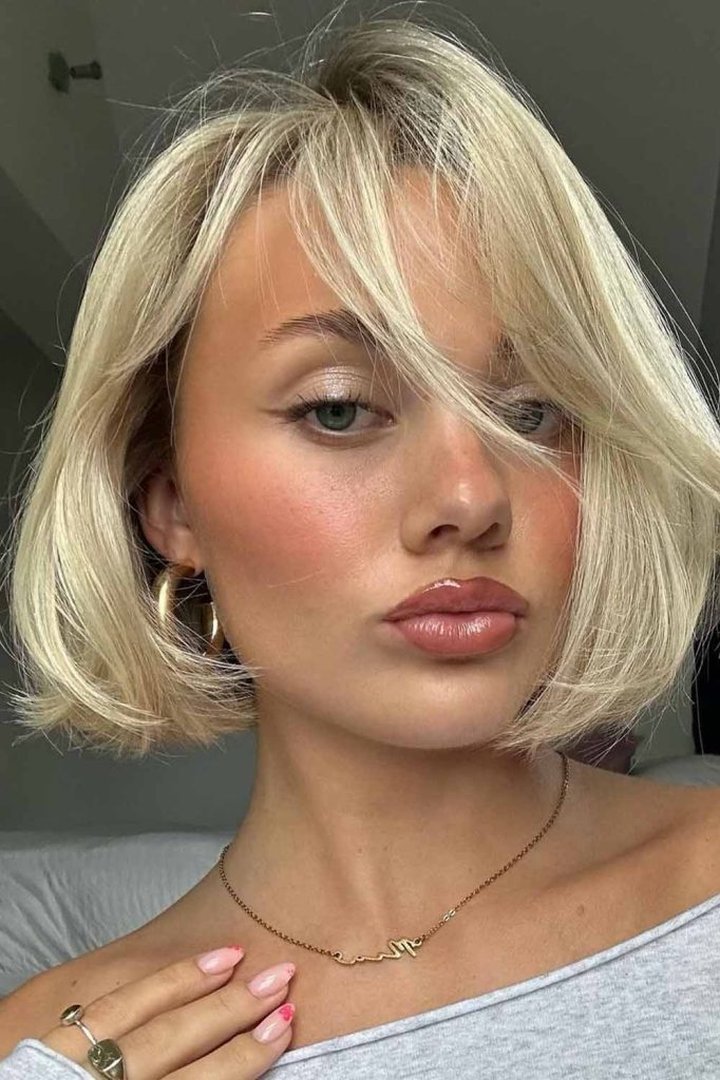
Photo: veluxehair.com
When the French bob goes sleek, it turns minimalist and expensive-looking. Bone-straight strands, a mirror shine, and a razor-clean jawline — this is the boardroom version of the cut.
Best for: naturally straight hair; fine hair that looks thicker with a blunt edge.
Styling tip: heat protectant first, then flat-iron in thin sections. Finish with a drop of lightweight oil pressed between palms and smoothed over the surface.
Ask your stylist: “a sleek jaw-length French bob with a sharp perimeter — I will wear it straight and polished.”
9. Tousled Undone French Bob
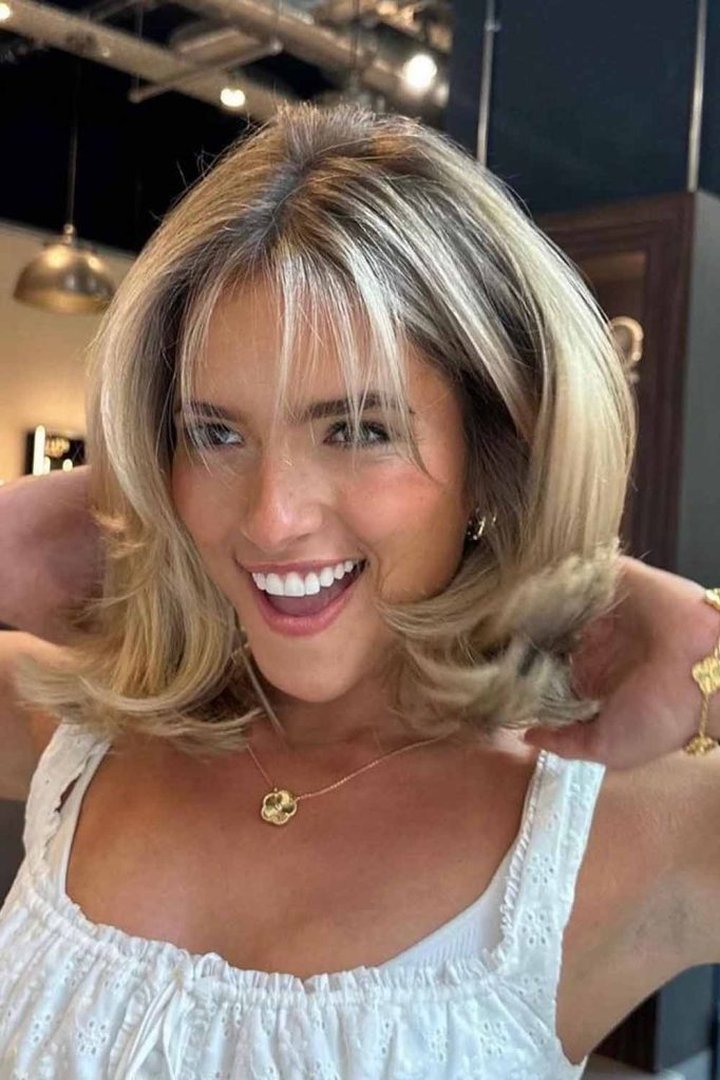
Photo: i.pinimg.com
This is the “I woke up like this” French bob — air-dried, finger-tousled, and deliberately imperfect. It suits the cut’s whole philosophy: effort over precision.
Best for: wavy hair; low-maintenance routines; second-day hair lovers.
Styling tip: work a small amount of matte paste through dry hair, twisting random sections. The messier it looks, the more correct it is.
Ask your stylist: “a French bob with invisible layers for movement — I want to air-dry and go.”
10. French Bob with a Full Blunt Fringe
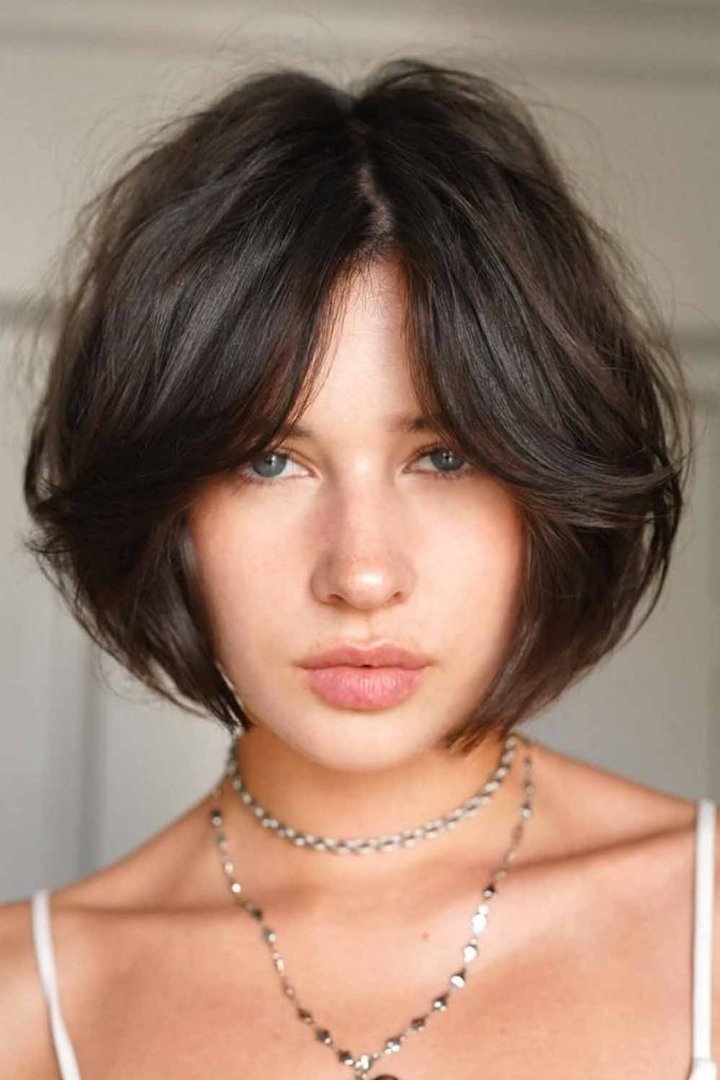
Photo: outfitarea.com
A full, straight-across fringe is the boldest bang pairing — graphic, Parisian, and unmistakable. It shortens a long forehead and puts all the attention on the eyes.
Best for: oval and long faces; thick, straight hair that holds a line.
Styling tip: trim the fringe every 3–4 weeks (or learn the twist-and-snip method at home). Blow-dry straight down with a paddle brush for that crisp edge.
Ask your stylist: “a full blunt fringe with a French bob — cut the fringe dry so it sits exactly right.”
11. Layered French Bob for Fine Hair
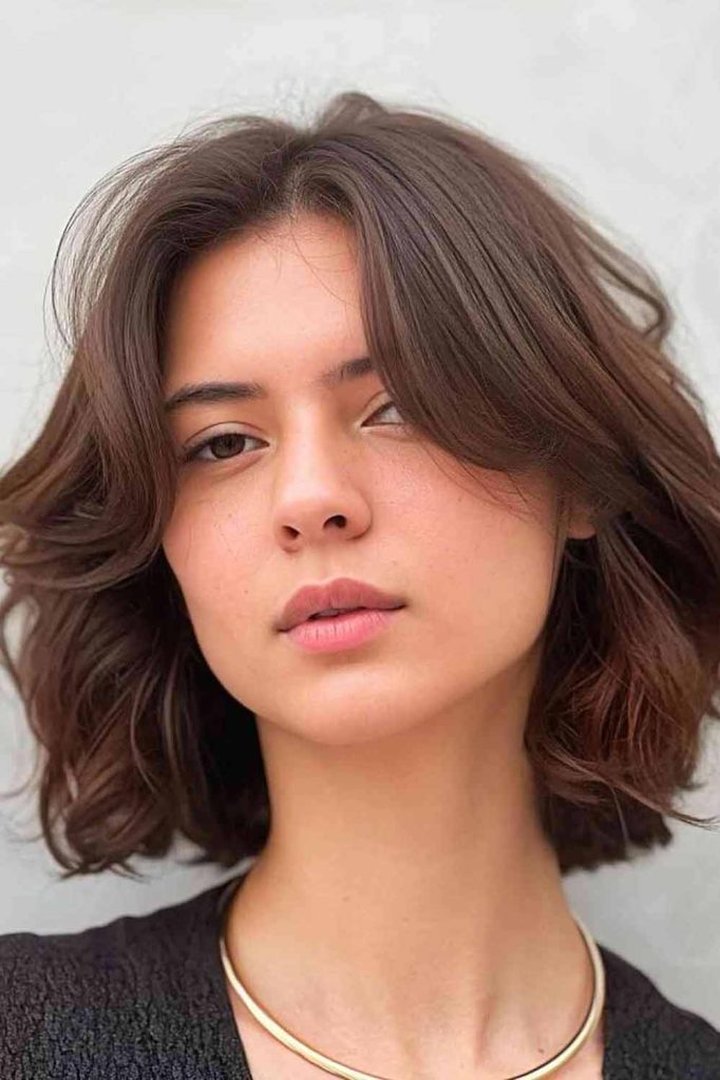
Photo: facialtasks.com
Fine hair and French bobs are a natural match — but only with the right internal layering. Subtle, hidden layers remove weight from underneath so the surface stays full and the ends do not go stringy.
Best for: fine or thinning hair; anyone whose bobs usually fall flat by noon.
Styling tip: mousse on damp roots before blow-drying upside down. A blunt perimeter is non-negotiable for fine hair — it creates the illusion of density.
Ask your stylist: “invisible internal layers in a French bob for fine hair — keep the perimeter blunt and solid.”
12. French Bob with Face-Framing Layers
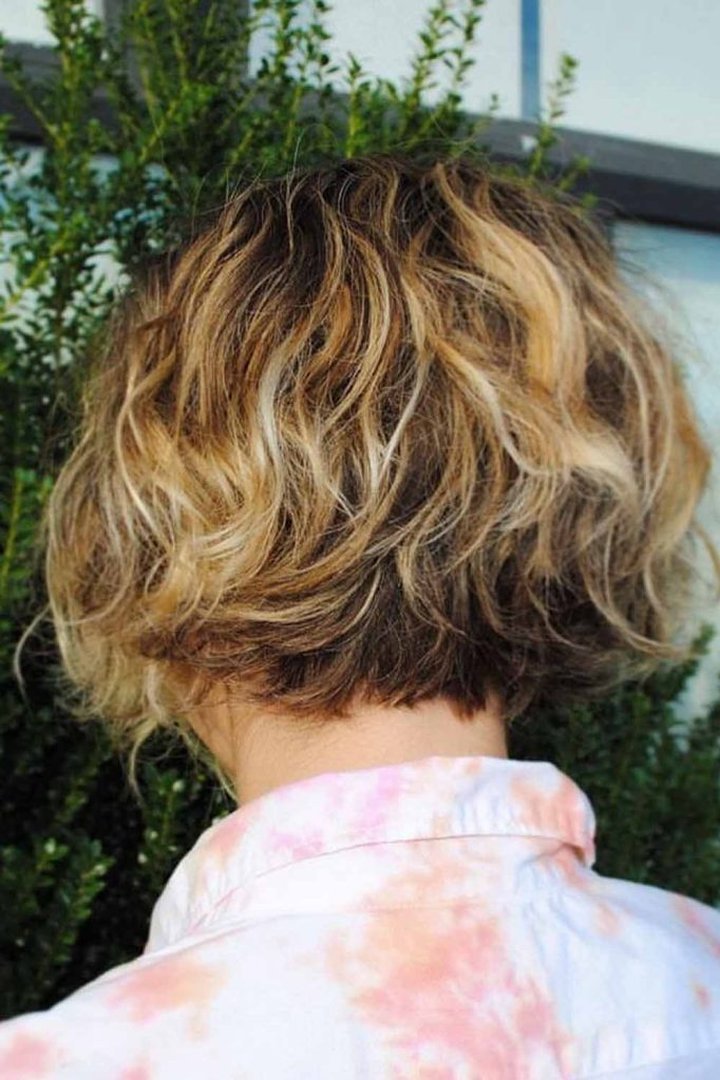
Photo: chicnstylish.com
Shorter pieces around the face soften the French bob’s graphic edge and draw light to the cheekbones. It is a small change with a big payoff, especially in photos.
Best for: square jawlines; anyone growing out bangs.
Styling tip: curl the face-framing pieces away from the face with a 1-inch iron for a soft, open effect. One bend is enough — more looks overdone.
Ask your stylist: “face-framing layers starting at the cheekbone, blended into a French bob.”
13. Asymmetric French Bob
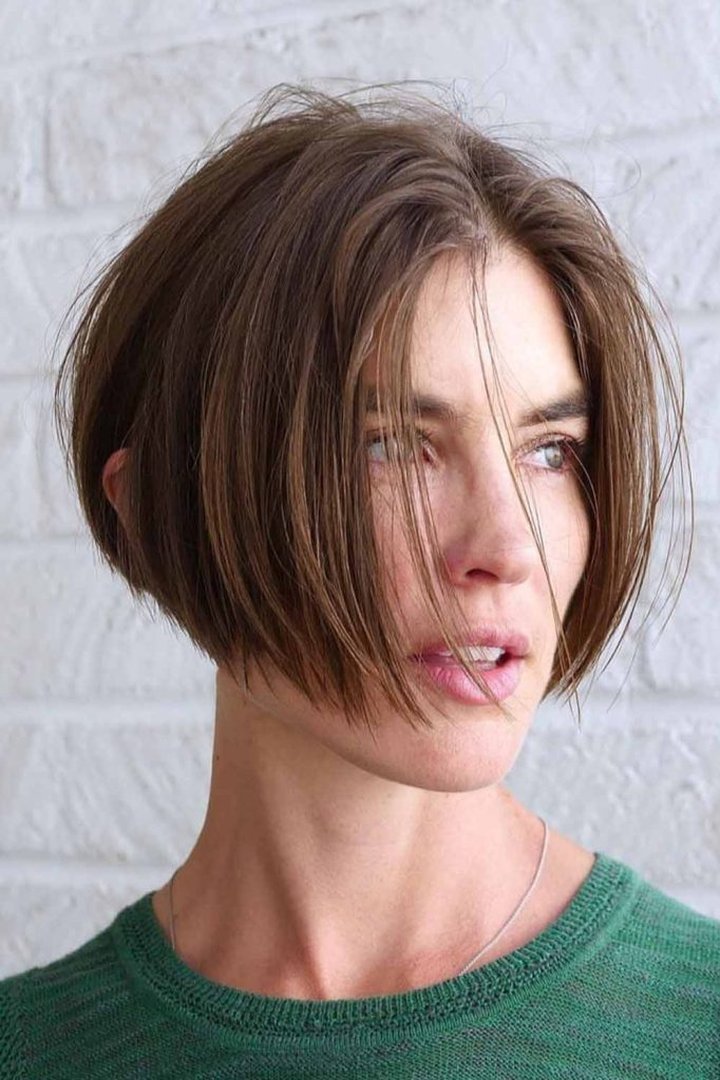
Photo: idress-fi.techinfus.com
One side sits at the chin, the other grazes a touch longer — the asymmetry adds edge to an otherwise classic cut. It is subtle enough for work and interesting enough for compliments.
Best for: straight hair (the line shows best); oval faces.
Styling tip: wear it with a deep side part to emphasize the difference. Tuck the shorter side behind the ear to show off earrings.
Ask your stylist: “an asymmetric French bob — about an inch difference side to side, clean perimeter.”
14. French Bob with Soft Balayage
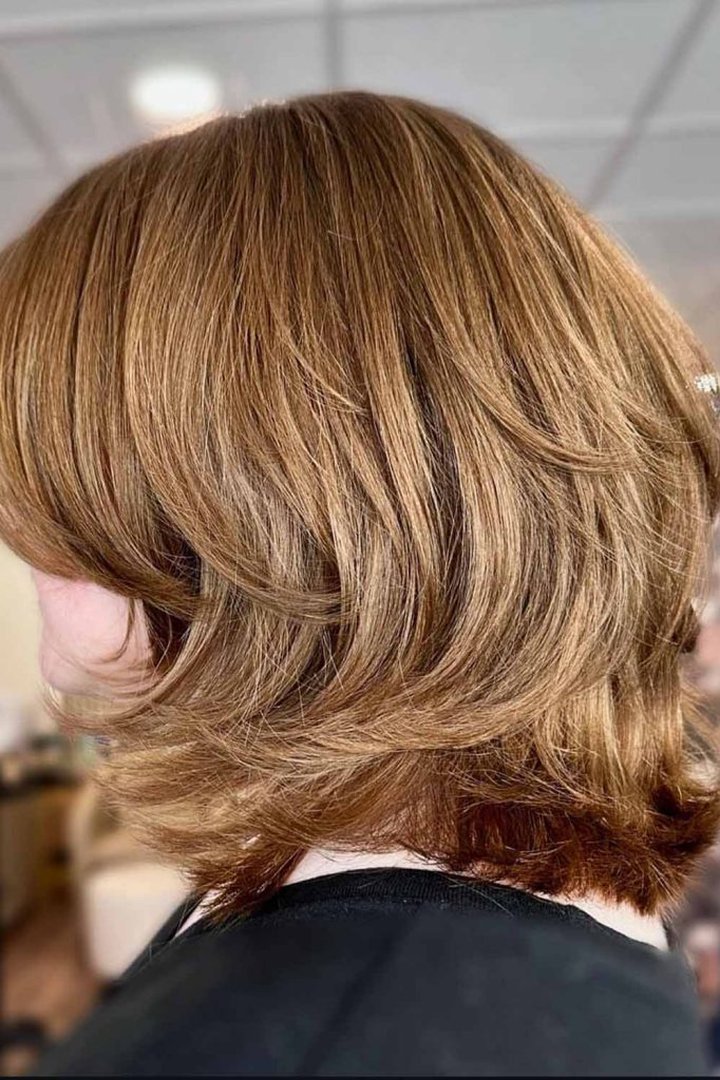
Photo: herstylepulse.com
Hand-painted balayage through a French bob adds dimension without a harsh grow-out line. Caramel and honey tones through the mid-lengths make the texture pop.
Best for: medium to thick hair; anyone wanting color that lasts 3–4 months between appointments.
Styling tip: waves show off balayage best — a quick pass with a flat iron, bending alternate sections, creates the dimension. Purple shampoo is unnecessary; use a color-safe sulfate-free wash.
Ask your stylist: “soft balayage through a French bob — keep the roots natural for a low-maintenance grow-out.”
15. Copper Red French Bob
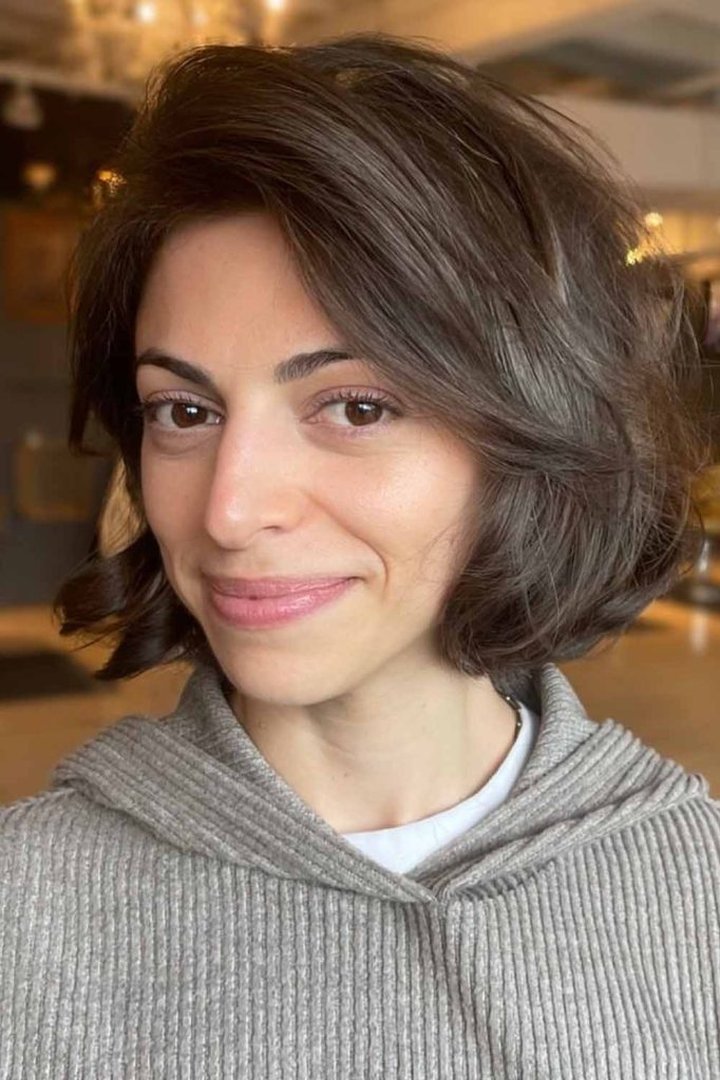
Photo: pinterest.jp
Copper on a French bob is pure autumn — rich, warm, and impossible to ignore. The short length keeps the bold color wearable instead of overwhelming.
Best for: fair to medium skin with warm undertones; green and hazel eyes.
Styling tip: copper fades fast — wash in cool water and refresh with a color-depositing mask every two weeks. Heat protectant is mandatory; copper and hot tools are a fading combination.
Ask your stylist: “a rich copper all-over color on a French bob — slightly deeper at the roots for dimension.”
16. Dark Brunette French Bob
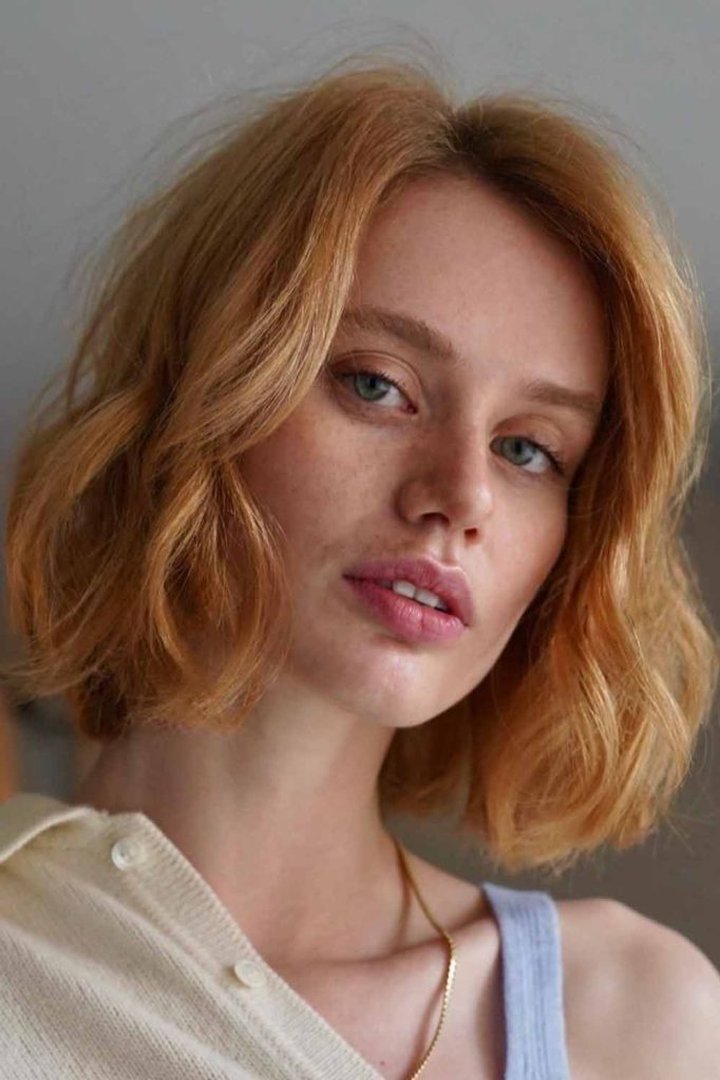
Photo: forhairstylesinspo.com
Deep espresso brown gives the French bob a sleek, expensive depth — the shine reads like glass on a blunt cut. It is the lowest-maintenance color pairing on this list.
Best for: all skin tones; anyone wanting richness without upkeep.
Styling tip: a clear gloss treatment every 6–8 weeks keeps brunette reflective. Blow-dry with a paddle brush for maximum sleekness.
Ask your stylist: “a rich, single-process brunette on a French bob — no highlights, just depth and shine.”
17. Platinum Blonde French Bob
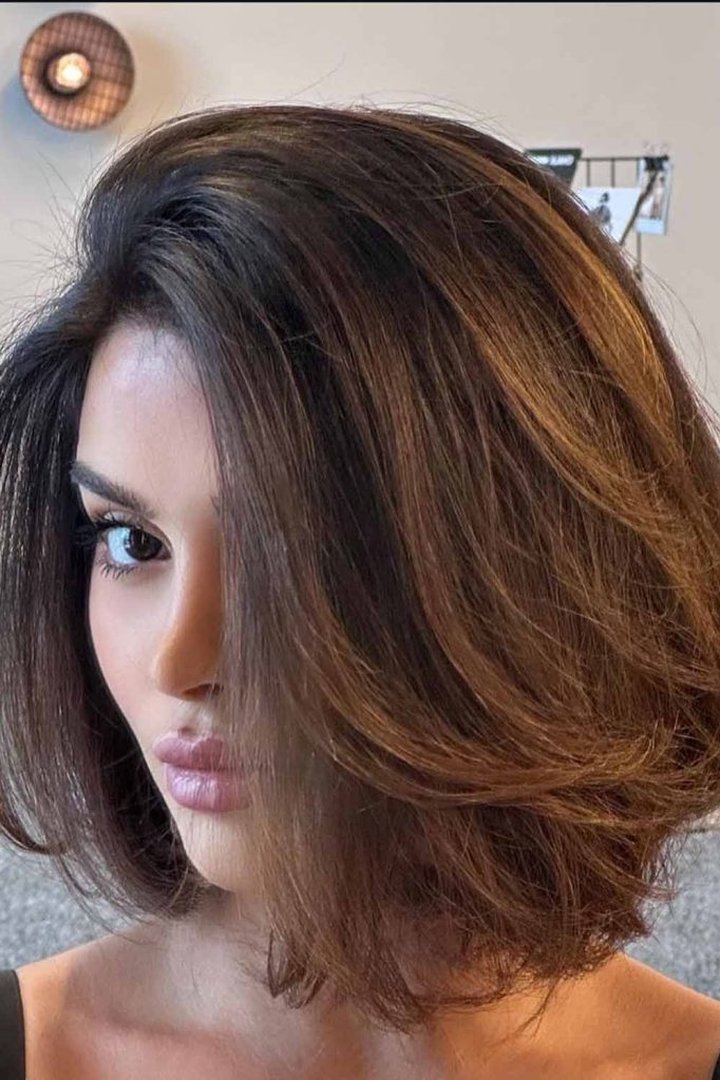
Photo: outfitarea.com
Platinum takes the French bob from chic to striking. The pale color against the graphic jawline shape is a high-contrast look that photographs beautifully.
Best for: cool undertones; naturally light hair (less lifting = less damage).
Styling tip: purple shampoo once a week, deep conditioner every wash — platinum is high-maintenance by nature. Sleep on silk to reduce breakage on bleached ends.
Ask your stylist: “platinum blonde on a French bob — keep some root shadow so the grow-out is soft.”
18. French Bob for Thick Hair
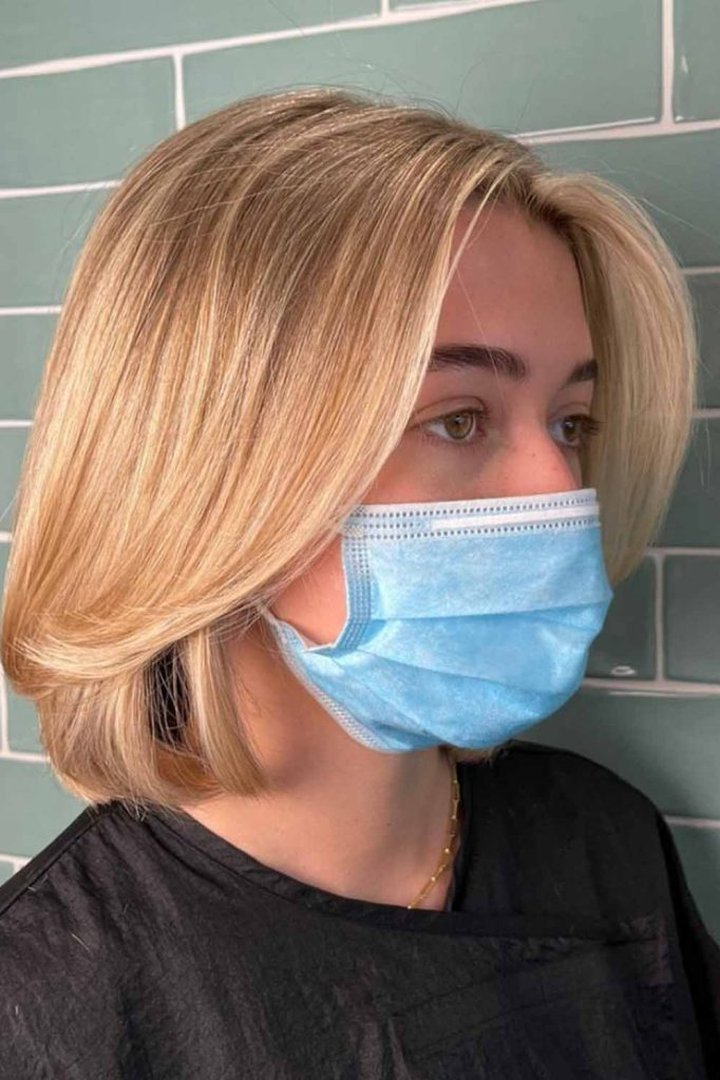
Photo: facialtasks.com
Thick hair gives the French bob incredible body — but it needs internal weight removal or the cut turns into a triangle. Done right, it is the fullest, most dramatic version here.
Best for: thick, dense hair; anyone whose bobs usually puff out.
Styling tip: a smoothing cream on damp hair tames the silhouette. If it still triangles, ask for more internal thinning at your next appointment — not shorter layers on top.
Ask your stylist: “a French bob with serious internal weight removal for thick hair — I want the shape, not the bulk.”
19. French Bob for Round Faces
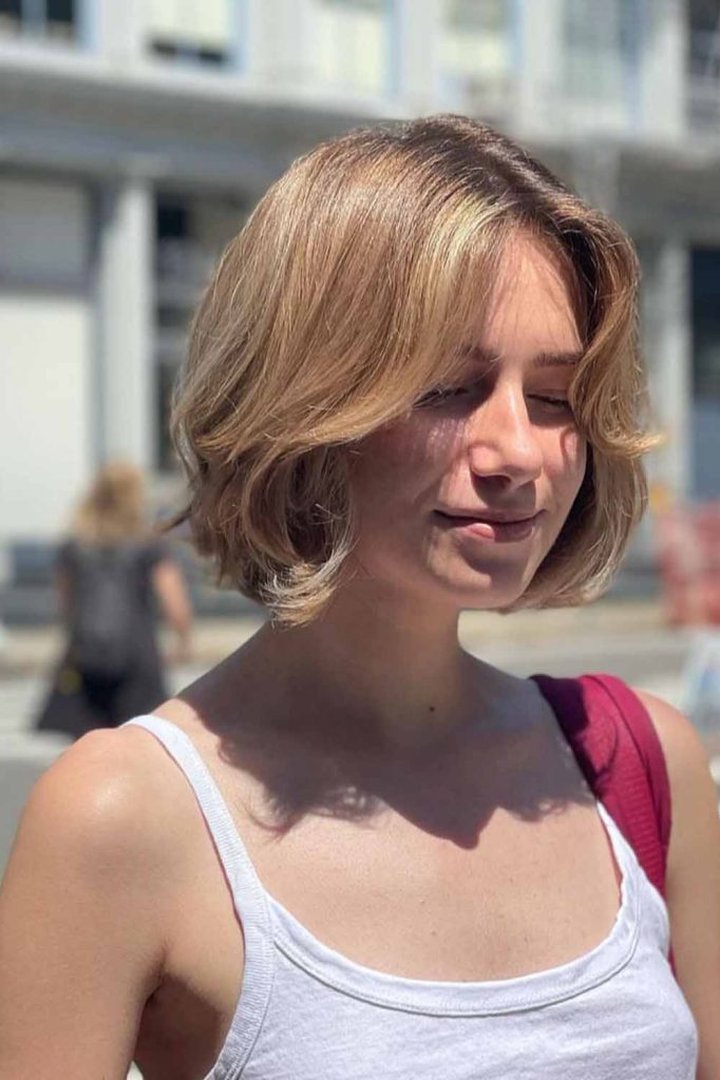
Photo: hairstylepicks.com
Round faces wear the French bob beautifully with two tweaks: keep it slightly longer (grazing the jaw, not above it) and pair it with curtain or side-swept bangs to create diagonal lines.
Best for: round and full faces.
Styling tip: height at the crown elongates — tease gently or use a root-lift spray. Avoid a center part with no bangs, which can widen the face.
Ask your stylist: “a French bob on the longer side with curtain bangs — I want length past the chin to slim my face.”
20. French Bob with Glasses
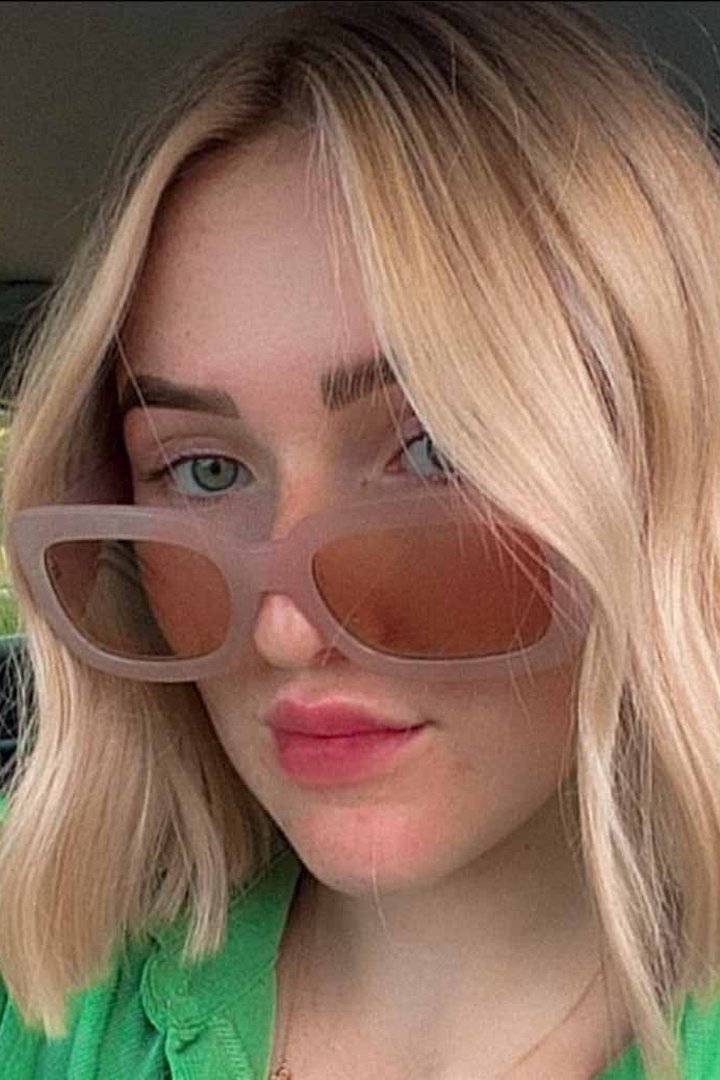
Photo: pinterest.fr
Glasses and a French bob are a match made in Paris — the frames echo the cut’s graphic lines. Keep bangs above the frames or go bang-free so the glasses stay the focal point.
Best for: glasses wearers; bold frame styles.
Styling tip: if you wear bangs, trim them to sit just above your frames. Tuck hair behind the ears to keep the frames visible and the look intentional.
Ask your stylist: “a French bob that works with glasses — bangs above the brow line or none at all.”
21. Grown-Out French Bob (French Lob)
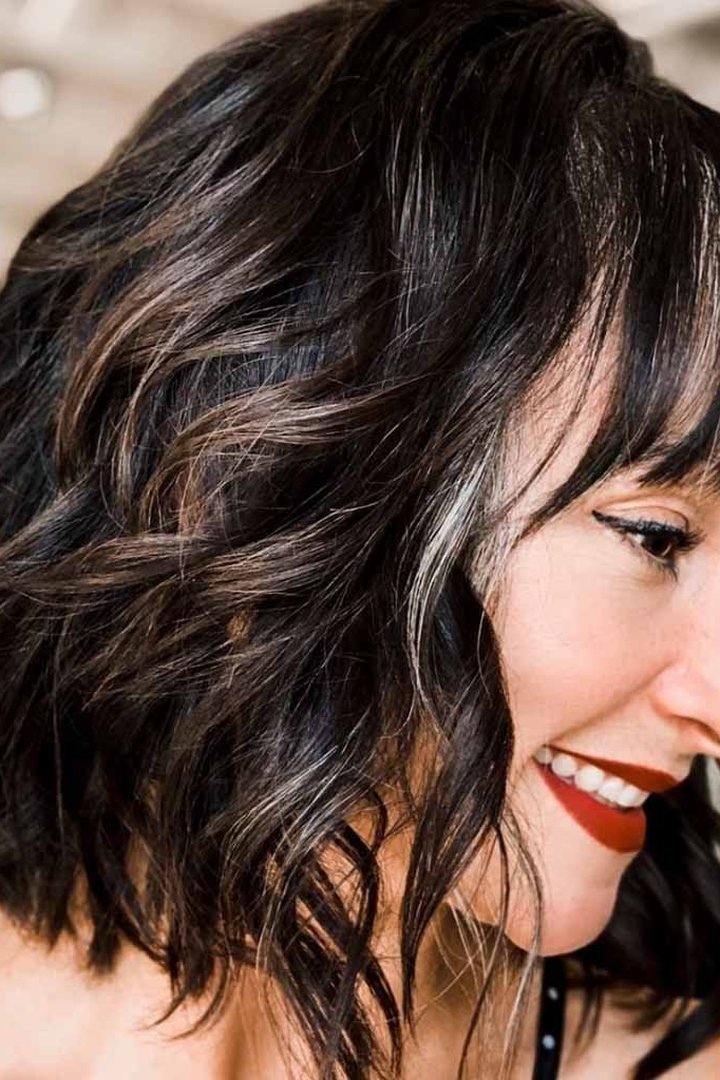
Photo: nextstyleideas.com
Between appointments, the French bob relaxes into a French lob — collarbone-skimming, soft, and still chic. This is the grow-out phase you do not need to rush through.
Best for: anyone growing out a French bob; low-commitment short hair.
Styling tip: loose waves keep the longer length from looking straggly. A tiny trim every 10–12 weeks maintains the shape while you grow.
Ask your stylist: “clean up the shape but keep the length — I am growing my French bob into a lob.”
22. French Bob with a Beret
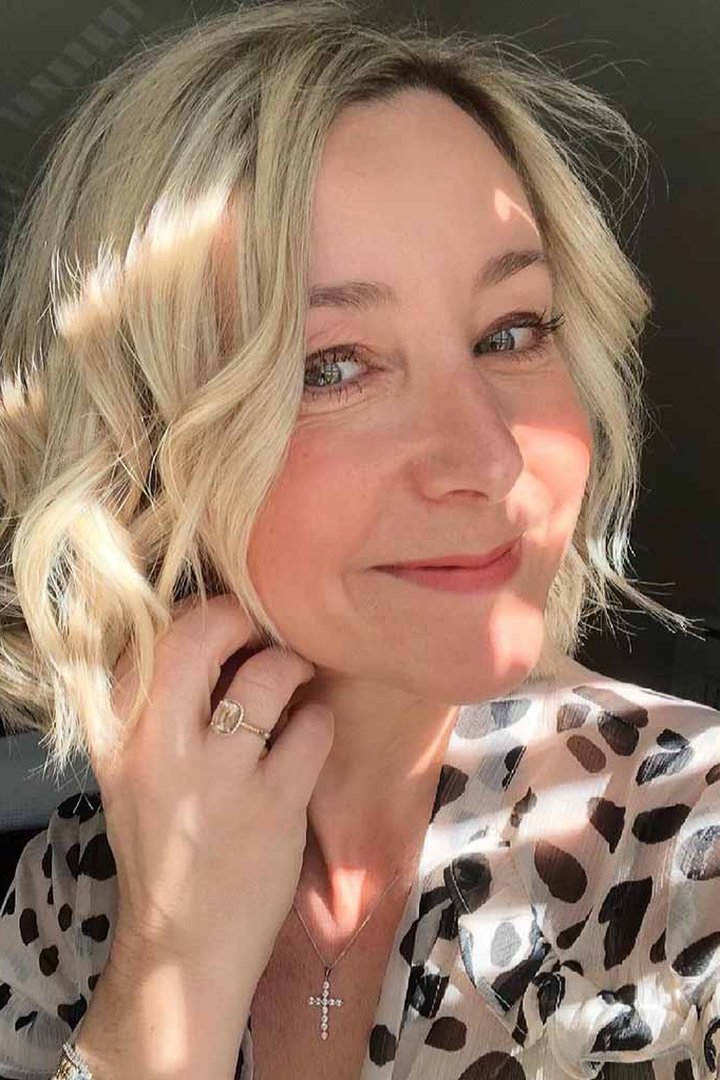
Photo: atescapes.com
Nothing says Paris like a French bob under a beret. The hat sits back on the crown, the bangs peek out in front, and the whole thing takes ten seconds.
Best for: second-day hair; cold weather; anyone leaning into the theme.
Styling tip: tilt the beret slightly to one side — dead-center reads costume. Pull a few face-framing pieces loose in front of the ears.
Ask your stylist: n/a — this one is all styling. Any French bob on this list works under a beret.
23. Wet-Look French Bob for Evening
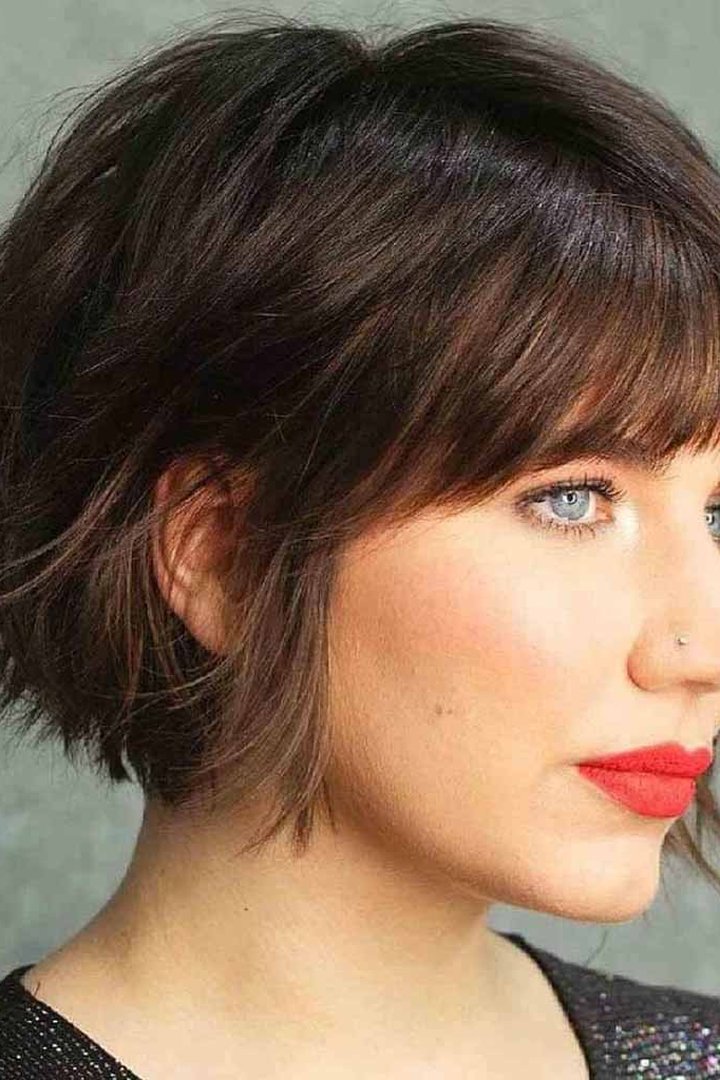
Photo: hairstyleay.com
Slick it down with gel and the daytime French bob turns into evening armor — glossy, sculpted, and dramatic. It is the fastest day-to-night switch in short hair.
Best for: evenings out; straight to wavy hair; bold makeup looks.
Styling tip: apply strong-hold gel to damp hair, comb straight back or into a deep side part, and let it set without touching. A little shine spray on top adds the glass effect.
Ask your stylist: n/a — styling only. Keep the cut’s perimeter sharp so the wet look reads clean.
24. French Bob with a Deep Side Part
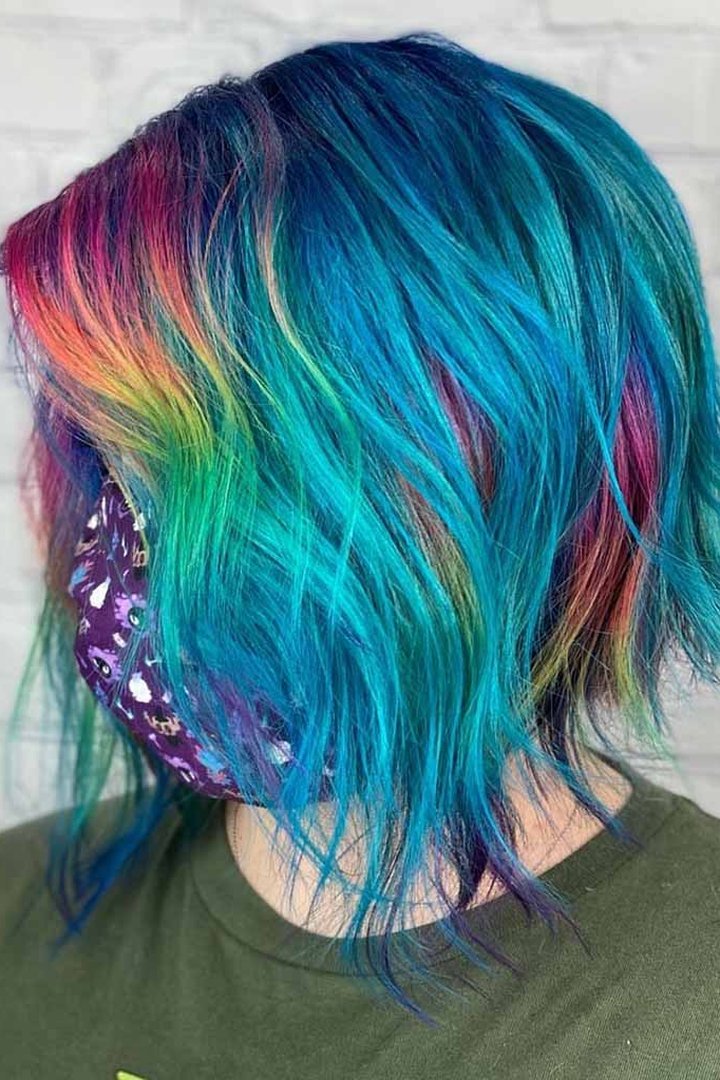
Photo: baamboozle.com
Moving the part inches to the side transforms the French bob’s whole geometry — instant volume on top, a sweeping fringe effect, and an Old Hollywood tilt.
Best for: fine hair needing lift; square faces (the diagonal softens angles).
Styling tip: set the part while hair is damp — dry hair resists. A clip at the crown for ten minutes trains the new part to stay.
Ask your stylist: “a French bob cut to fall naturally into a deep side part.”
25. Shaggy French Bob
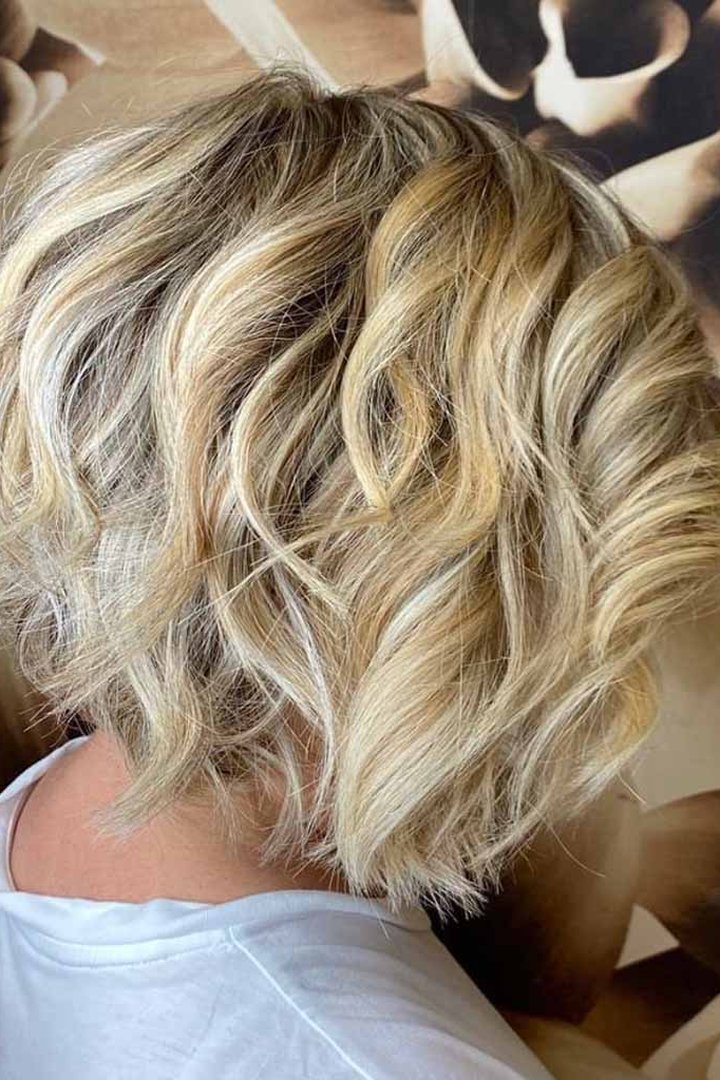
Photo: pinterest.es
Borrow the shag’s choppy layers and put them on a French bob’s jawline length — the result is rock-and-roll Parisian, all movement and attitude.
Best for: thick or wavy hair; anyone bored of polished bobs.
Styling tip: this cut lives on texture spray. Scrunch it in, shake your head, and stop — over-styling kills the shag.
Ask your stylist: “a shaggy French bob — choppy layers through the ends, keep the jawline length.”
26. French Bob with Choppy Piecey Ends
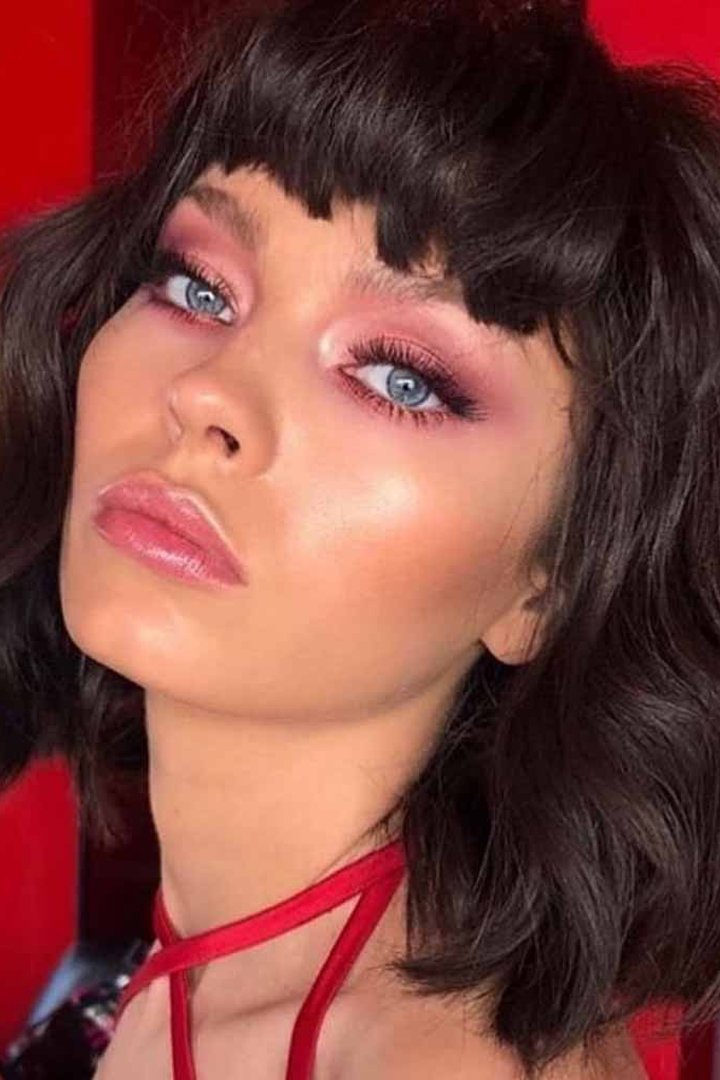
Photo: pinterest.jp
Point-cut ends that separate into pieces give the French bob a feathered, airy finish — less graphic than blunt, more modern than sleek. It moves when you move.
Best for: medium-density hair; anyone who finds blunt cuts too severe.
Styling tip: a tiny amount of wax on just the very ends defines the pieces. Too much product and they clump — start with less than you think.
Ask your stylist: “point-cut, piecey ends on a French bob — I want separation, not a solid line.”
27. Vintage 1920s Finger-Wave French Bob
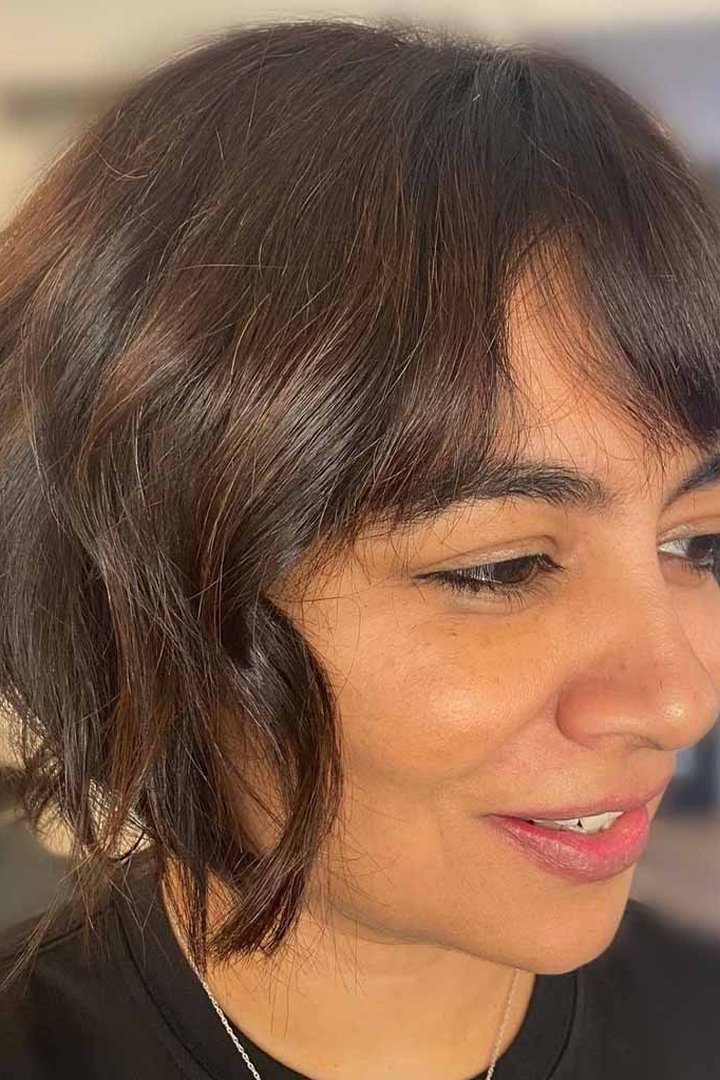
Photo: gardner.cipherdaily.com
Go back to the source: sculpted finger waves on a jaw-length bob, exactly as Paris wore it a century ago. It is a special-occasion style now, but it honors the cut’s origins.
Best for: themed events, weddings, photoshoots; straight hair that holds a set.
Styling tip: set waves with gel and clips on damp hair, then diffuse or air-dry. This is a stylist job for most people — book a blowout bar and show them this photo.
Ask your stylist: “a vintage finger-wave set on my French bob for an event.”
28. Parisian Street-Style French Bob
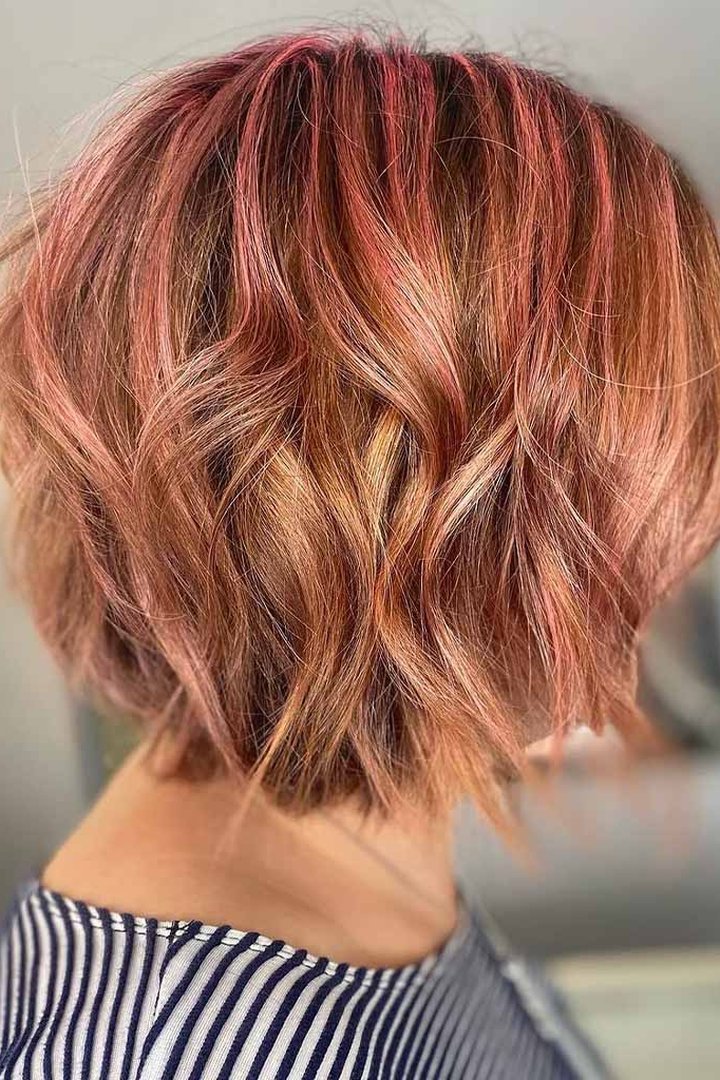
Photo: slaysofbeauty.com
The real-world Parisian French bob: air-dried, a little windswept, paired with a trench coat and red lipstick. No salon finish — just the cut living its life.
Best for: everyone; this is the cut’s natural state.
Styling tip: the secret is doing almost nothing. Wash, a little leave-in, air-dry, go. Confidence does the rest.
Ask your stylist: “the classic French bob — I want the version that looks good with zero effort.”
29. Elegant French Bob for Mature Women
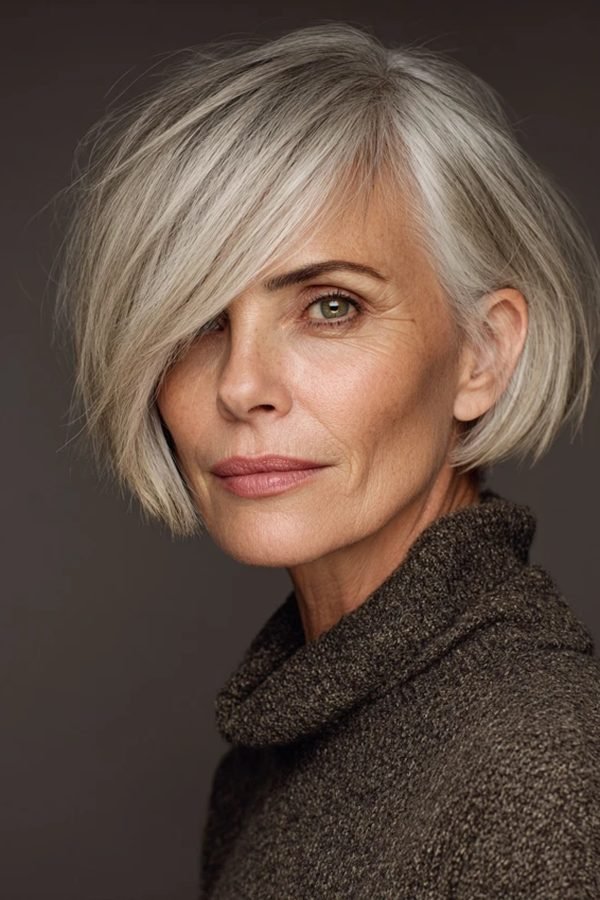
Photo: hairandtattoo.com
The French bob is ageless, but on mature women a slightly softer edge works best — feathered ends, a gentle fringe, and movement that flatters rather than sharpens.
Best for: women over 50; fine or graying hair that needs softness.
Styling tip: avoid severe blunt lines, which can read harsh. A round-brush blowout with the ends curved under keeps it polished and kind.
Ask your stylist: “a soft French bob with feathered ends — flattering and easy, nothing severe.”
30. French Bob with an Undercut Nape
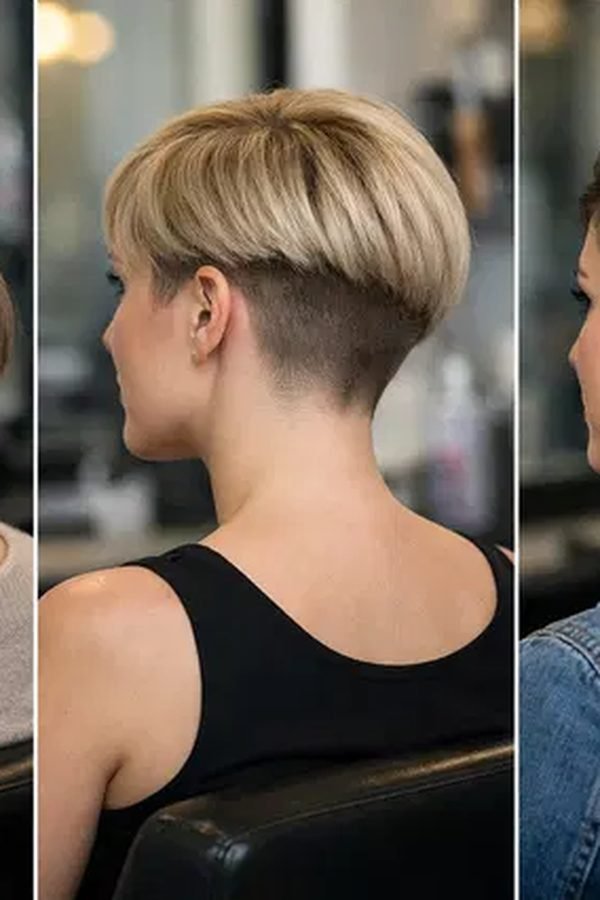
Photo: pandami.com.br
A hidden undercut at the nape removes bulk where thick hair puffs out most — invisible when hair is down, practical always. It is the French bob’s best-kept secret for dense hair.
Best for: very thick hair; hot climates; anyone fighting the triangle effect.
Styling tip: the undercut needs a tidy-up every 4–6 weeks or it grows into a shelf. Between visits, it is completely wash-and-go.
Ask your stylist: “a hidden undercut at the nape under my French bob — take the weight out but keep it invisible.”
French Bob FAQs
What is the difference between a French bob and a regular bob?
A French bob is shorter — chin-length or just above — with minimal layering and soft, undone texture. A regular bob can fall anywhere from chin to shoulder and is often sleeker or more polished. The French version prioritizes effortlessness: it should look good air-dried, while many classic bobs need heat styling to sit right.
Do I need bangs with a French bob?
No — bangs are traditional but optional. The classic 1920s version has short wispy bangs, but blunt no-bang, curtain-bang, and side-part versions all count as French bobs. Choose based on your forehead and how much morning styling you will actually do: bangs need daily attention, bang-free versions do not.
Does a French bob work on curly hair?
Yes, beautifully — but it must be cut dry. Curly hair shrinks as it dries, so a wet cut ends up much shorter than planned. Ask for internal shaping instead of heavy layers, and plan the length around your shrinkage. Waves through 3B curls get the classic swing; tighter coils become a rounded, sculpted shape.
How often does a French bob need trimming?
Every 6–8 weeks to keep the jawline shape crisp. Bangs need more frequent touch-ups — every 3–4 weeks for blunt or micro bangs, 5–6 for curtain styles. The good news: a French bob grows out gracefully into a lob, so an overdue appointment never looks terrible.
Is the French bob high maintenance?
Surprisingly, no. It is one of the lowest-maintenance short cuts — it often looks better air-dried on day three than freshly styled, needs minimal heat, and the undone texture is the point. The exception is the fringe: if you choose bangs, budget a minute each morning for them.
What face shapes suit a French bob?
Most of them, with adjustments. Oval faces take the classic version as-is. Round faces do best with a slightly longer length and curtain bangs. Square faces soften with texture and a side part. Heart-shaped faces balance with volume at the jawline. Bring photos of your face shape to the consultation and point at what you like.
You May Also Like
If you love short, chic cuts, keep exploring: our 34 long layered bob haircuts for effortless volume picks up where the French bob leaves off, and short layered bob haircuts add movement if you want more texture than the classic French version allows.
Final Thoughts
The French bob endures because it asks so little and gives so much — five minutes, a little texture, and you look like you summer in the 6th arrondissement. Whether you go classic with wispy bangs, bold with copper, or undone with air-dried waves, the formula stays the same: chin-length, soft edges, and confidence. Save your favorite, show your stylist the photo, and enjoy the easiest chic you will ever wear.