
How to Find Your Color Season at Home: Undertone, Vein & Drape Tests
You do not need a studio appointment, a ring of professional drapes or a paid app to find your color season. You need a mirror, a window, a bare face and about forty minutes. This guide walks you through the method analysts use — undertone tests, a value test, a chroma test and a proper drape test with fabrics you already own — narrowing twelve seasons down to yours. Here is how to find your color season, step by step, with things you already own.
A quick honesty note. This is the hands-on half of seasonal color analysis, and it works because it is comparison, not guesswork: you never judge a color alone, only against its opposite. Apps and quizzes guess from one selfie, and phone cameras quietly change colors — which is why app results so often feel wrong. Trust the mirror in daylight over any screenshot. That comparison is the core of how to find your color season at home.

Photo: KoolShooters / Pexels
Before You Start: The Setup That Makes or Breaks the Test
Get these five things right and the tests below become surprisingly clear.
- Light: sit facing a window in indirect daylight, late morning to mid-afternoon. Bright overcast light is perfect. Switch off every lamp — warm bulbs tint skin gold and make cool types test “warm.”
- A bare face: no foundation, tinted moisturizer, blush, bronzer or lip tint, and ideally no fresh self-tan. Makeup is colored correction; it hides exactly what you are trying to read. Tie hair back.
- Cover dyed hair: if your hair is dyed far from your natural color, wrap it in a plain white or light grey towel. Your season comes from your natural coloring, and a copper dye job has talked many natural Summers into Autumn.
- A neutral stage: wear a white or grey top (or a white towel across your shoulders) against the plainest wall you have. A bright top reflects its color up onto your chin.
- Your test kit: a gold and a silver piece of jewelry, a sheet of pure white printer paper, an ivory or cream fabric, and a pile of household fabrics — T-shirts, scarves, towels, pillowcases — sorted roughly into bright, dusty, warm and cool. You will use them in Steps 1 to 4.
Step 1: Find Your Undertone — Warm or Cool (12 Seasons Down to 6)
Undertone is the temperature under your skin: golden, yellow or peachy if warm; pink, rosy or blue-ish if cool. It has nothing to do with how light or deep your skin is — deep skin can be cool and fair skin can be warm. It is also the biggest split in the system: warm puts you in the Spring/Autumn half, cool in the Summer/Winter half. No single test is proof; run all three and take the majority.
Test 1: The vein test
In daylight, turn your inner wrist to the window and look at the veins without pressing the skin. Veins that read clearly green or olive point warm; blue or purple point cool; a blue-green mix you cannot call either way points neutral — note it and move on, because the drape test in Step 4 will settle it. Know the limits: this is the least reliable of the three tests. On deep skin the veins can be hard to see at all (try the lighter inner forearm or palm), and a summer tan pushes any wrist temporarily “warm.” If yours are unreadable, score it zero rather than guessing.
Test 2: The jewelry test
Hold a gold piece against one side of your jaw and a silver piece against the other, and look at the skin next to the metal — not at the jewelry. The right metal makes your skin look even and clear and your eyes brighter. The wrong one makes skin look slightly grey or sallow and can bring out redness you did not know you had. Gold winning points warm; silver winning points cool.
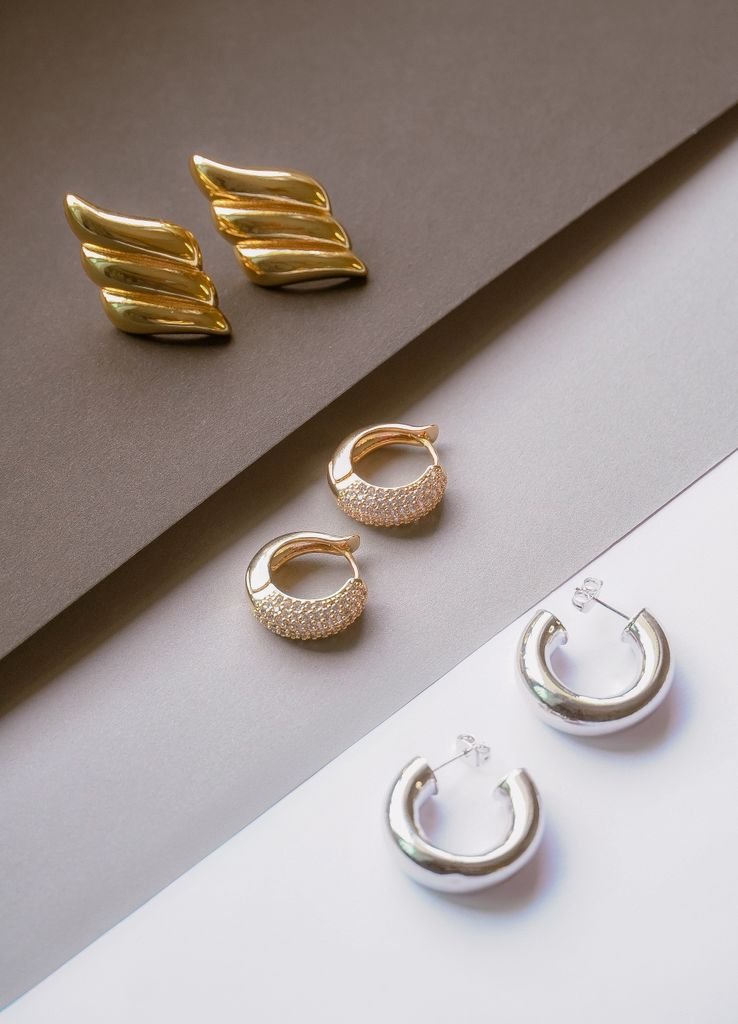
Photo: Raúl Torres / Pexels
Test 3: The white paper test
Hold the sheet of pure white printer paper under your chin, then swap it for the ivory or cream fabric, and watch your face, not the paper. Read two things. First, against pure white, warm skin tends to look yellow or golden and cool skin pink or rosy. Second — more useful — one of the two whites will make your whole face look clearer and your eyes brighter. If that is the pure white, you lean cool (Winters wear it best of all); if the ivory or cream, you lean warm. Score all three tests: a majority is your undertone. A split verdict means you are likely neutral-leaning, and your dominant trait in Steps 2 and 3 will matter more than your temperature.
Step 2: The Value Test — Light or Deep
Value is the overall lightness or depth of your coloring — skin, hair and eyes read together, as one picture. Take a selfie in your test setup, convert it to black and white (every phone has a mono filter), and squint at it. Do your features sit in the light third of the picture, close together in depth? That is light value, pointing to the Light seasons. Do hair and eyes read deep and dramatic against your skin? That is deep value, pointing to the Deep seasons and most Winters. Somewhere in the middle is the most common result; it simply means value is not your dominant trait and Step 3 will do more of the deciding.

Photo: Dylann Hendricks / Pexels
Step 3: The Chroma Test — Bright or Soft
Chroma is whether your coloring is clear and vivid or blended and muted — and the fastest way to read it is one head-to-head pair. Hold a bright fuchsia or clear hot pink fabric under your chin for ten seconds. Swap it for a dusty rose or muted mauve of similar depth. If the bright one makes you look awake while the dusty one makes you look tired and grey, your chroma is bright. If the dusty rose looks calm and expensive on you while the fuchsia seems to walk into the room before you do, your chroma is soft. If the first pair is unclear, repeat with a second — cobalt against slate blue, or clear tomato red against brick — and trust the fabric over subtler clues like eye clarity.
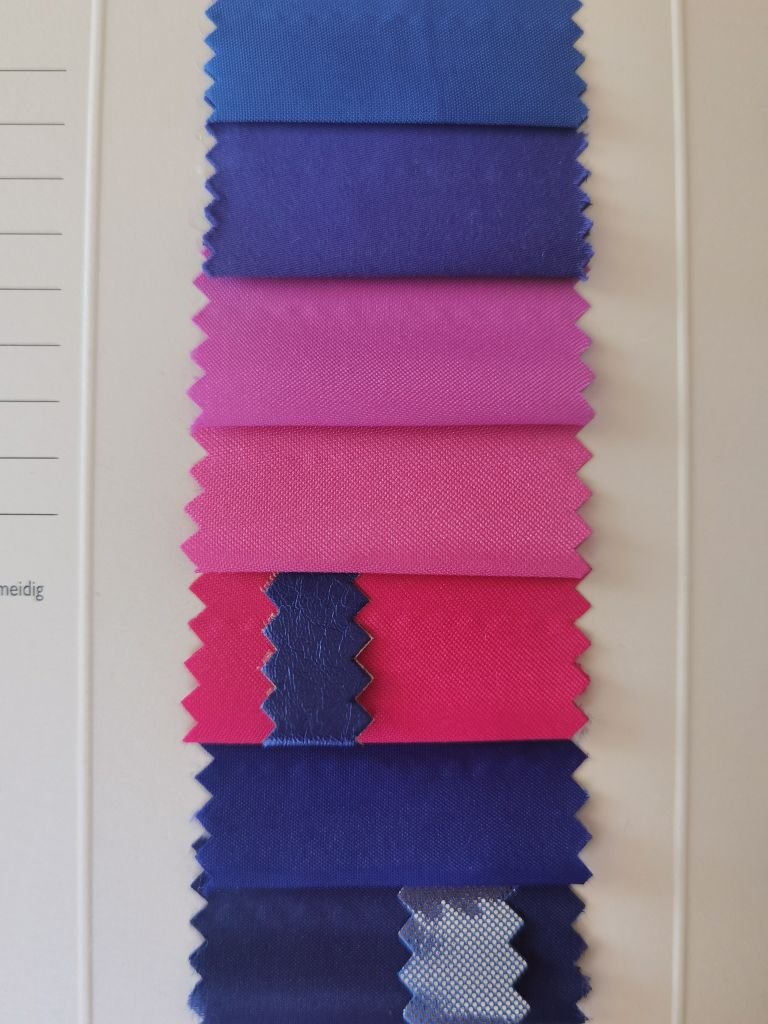
Photo: Vero Lova / Pexels
Step 4: The Drape Test — Confirm It With Real Fabric
This is the test professionals are actually paid for, and the one that overrules everything above. Quizzes read your answers; drapes read your skin. In colour analysis, draping is how a season is confirmed in person. Build four small bundles from your wardrobe and linen closet — each one is a family’s calling card:
- Spring bundle: peach, coral, warm aqua or light warm green, light camel.
- Summer bundle: powder blue, dusty rose, lavender, soft grey.
- Autumn bundle: olive, rust or mustard, warm burgundy, chocolate brown.
- Winter bundle: black, pure white, fuchsia, cobalt or emerald.
Round 1 — check your temperature. Drape the coral (warm) under your chin, look for five seconds, then swap in the fuchsia (cool). Alternate two or three times. If the drapes flatly contradict your three tests, believe the drapes and redo your undertone score — this is exactly the situation the drape test exists for.
Round 2 — pick your family. If warm won, drape your best Spring color against your best Autumn color — say, peach against olive. If cool won, drape Summer against Winter — powder blue against cobalt. The right family makes your skin look even and smooth, softens shadows under your eyes, and makes your eyes look brighter and your jawline cleaner. The wrong family does the opposite: a yellow or grey cast, redness stepping forward, deeper under-eye shadows, and the odd effect that you see the color before you see the face.
Round 3 — the final. Drape the full bundle of your winning family, one color at a time, then the runner-up’s bundle. Rest your eyes on a white wall for ten seconds between colors so each gets a fair look. Photograph the finalists in the same spot, flash off, no filter, and compare side by side — small differences you missed live often jump out in pictures. Still genuinely close? Repeat tomorrow morning with fresh eyes. Close is information, not failure: it means your finalists are sister seasons, which Step 5 explains.
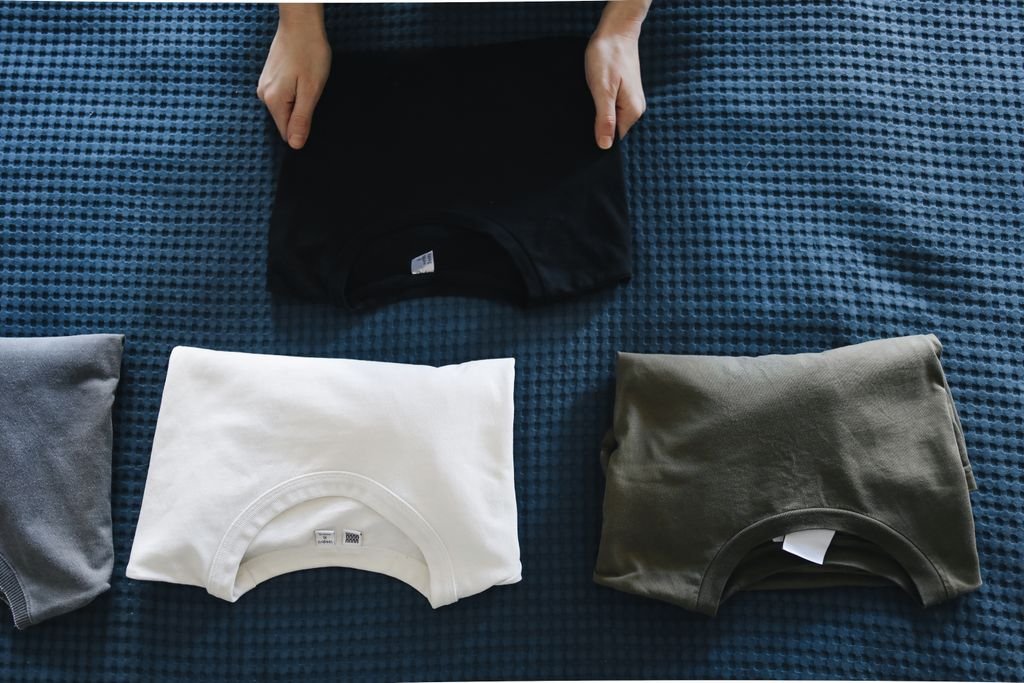
Photo: Polina Tankilevitch / Pexels
Step 5: Name Your Season — Then Check Your Sister
Now assemble your three answers. Your undertone picks your half (warm: Spring or Autumn; cool: Summer or Winter). Value and chroma pick the family, and whichever trait is strongest in you names your sub-season: This is where learning how to find your color season pays off: three small answers narrow twelve seasons down to one.
- Spring: light-dominant = Light Spring; warm-dominant = Warm Spring; bright-dominant = Bright Spring.
- Summer: light-dominant = Light Summer; cool-dominant = Cool Summer; soft-dominant = Soft Summer.
- Autumn: soft-dominant = Soft Autumn; warm-dominant = Warm Autumn; deep-dominant = Deep Autumn.
- Winter: deep-dominant = Deep Winter; cool-dominant = Cool Winter; bright-dominant = Bright Winter.
Then run the sister-season check. Sisters share your dominant trait across the temperature line — Soft Summer with Soft Autumn, Deep Winter with Deep Autumn, Bright Winter with Bright Spring. Wear each finalist’s colors as tops for a few days, with your normal makeup. The season needing the least correcting — less blush to look alive, less concealer under the eyes — is your home season. The other is not a wrong answer: borrow its best colors freely, especially away from your face.
Photo: cottonbro studio / Pexels
7 Common Mistakes That Give the Wrong Result
- Testing under yellow bathroom light. Warm bulbs add a golden cast to every face, so cool types keep “discovering” they are Autumns. Daylight by a window, lamps off — or do not test at all.
- Keeping makeup or self-tan on. Foundation neutralizes your undertone, bronzer adds fake warmth, self-tan deepens your value for a week. Test bare-faced or expect a season that is not yours.
- Reading your dyed hair as your coloring. Hair dye does not change your season, but it changes every test it appears in. Cover dyed hair with a white towel and test the coloring you were born with.
- Trusting one test alone. The vein test by itself misleads deep skin, tanned skin and anyone under bad light. Three tests vote here; the drape test breaks ties.
- Testing with colors you love instead of true pairs. That tells you your taste, not your season. Pairs must differ in one quality at a time — coral vs fuchsia (temperature only), fuchsia vs dusty rose (chroma only).
- Deciding from one selfie or one app result. Phone cameras auto-correct white balance differently for every shot, and beauty mode smooths the very skin texture you need to read. App vs daylight mirror disagree? The mirror wins.
- Testing while flushed or dressed in brights. After a hot shower, workout or sun, every skin reads warmer and redder — and a bright top reflects color onto your jaw. Test calm and cool-skinned, in white or grey.
HOW TO FIND YOUR COLOR SEASON: YOUR FIRST 3 WARDROBE STEPS
Do not start by shopping. Start by using what the result changes today — now that you know how to find your color season, put that result to work.
Step 1 — Save your palette and audit your tops. Save your season’s palette somewhere you will see it while shopping. Then spend fifteen minutes with your wardrobe: pull the tops, scarves and dresses you already own in your palette to the front. Colors matter most near your face, so audit tops first; bottoms and shoes can wait.
Step 2 — Fix your neutrals before your colors. Your season comes with a best white and a best dark (ivory and chocolate for Autumns, pure white and black for Winters). Next time a basic needs replacing — a tee, a coat, trousers — buy it in your version. Basics in one palette all match each other; that is why palette wardrobes feel like they style themselves.
Step 3 — Pick one signature color and your metal. Choose the palette color you loved most in the drape test, plus the metal that won your jewelry test, as your defaults. Buy one good top in the signature color. From now on, “is it in my season, or my sister’s?” is your two-second filter for every sale rail and impulse buy.

Photo: Vitaly Gariev / Pexels
Frequently Asked Questions
My three undertone tests disagree with each other. What do I trust?
Trust them in this order: drape test first, jewelry second, vein last. Split results usually mean a neutral-leaning undertone, where temperature is not your dominant trait — let value and chroma lead, drape the two finalist families, and expect a “bridge” season (Soft, Light, Deep or Bright) rather than a Warm or Cool one.
I cannot see my wrist veins clearly. Does the method still work?
Yes — it is the most optional of the three, and genuinely hard to read on deep skin and tanned wrists. Try the lighter skin of your inner forearm or palm in daylight once; if it is still unclear, score it as no-vote and lean on the jewelry test, the white paper test and the drape test.
Will dyed hair or going grey change my color season?
No. Your season is set by your natural coloring, and your undertone does not change with hair color or age. Dye can disguise your season (a cool Summer in copper hair will keep testing as Autumn unless she covers the dye), and grey hair can soften your contrast, shifting which colors within your family you lean on. The family itself stays put.
Are online quizzes and AI color analysis apps accurate?
A reasonable first guess, a poor final answer. A selfie passes through your camera’s automatic white balance, your screen’s color settings and room light before any app sees it — and chroma, the bright-vs-soft call that separates half the seasons, is exactly what phone cameras distort most. Treat an app result as a hypothesis, then confirm or overrule it with the Step 4 drape test. When the two disagree, believe the mirror.
I seem to fall between two seasons. Is that normal?
Completely normal — arguably the most common result. One trait dominates your coloring and a second runs it close, so you sit on the border between sister seasons (Soft Summer and Soft Autumn, Deep Autumn and Deep Winter, Bright Spring and Bright Winter). Take the drape-test winner as your base palette and borrow from the sister without guilt; neighbors share the trait that matters most on you.
You May Also Like
How to Mix Gold and Silver Jewelry — Step 1 told you which metal flatters your undertone; here is how to wear it every day, and how to mix the two metals on purpose.
Winter Capsule Wardrobe Outfit Ideas — a capsule built from a few key pieces in one palette is the easiest wardrobe to dress from — and now you know which palette yours should be.