32 Curly Shag Hairstyles for Bouncy, Face-Framing Curls
The curly shag is the haircut that finally lets curls do what they want to do. Short layers at the crown lift the roots, longer layers around the face frame the cheeks and jaw, and the ends stay light enough to spring instead of dragging. Below you will find 32 curly shag hairstyles, from the classic shoulder-length version to short bobs, long curtain-bang cuts, bold wolf-shag shapes, and colour ideas, each with a real photo, who it suits best, and a tip you can use right away.
A curly shag is not the same as a regular layered cut. The layers are shorter and more visible, the crown is fuller, and the shape is built around your real curl pattern instead of fighting it. Compared with a curly wolf cut, which has a sharper contrast between the short top and the long back, the curly shag stays softer and rounder. And unlike a French bob, which is short and neat, the curly shag is made to look a little undone. Read through the ideas, save the ones that match your curl type, and take your favourite of these curly shag hairstyles to a stylist who cuts curls dry.
Why Curly Shag Hairstyles Work So Well
A curly shag hairstyle works because it removes weight from exactly the right places. Curls that are all one length tend to fall flat at the roots and widen into a triangle at the ends. The shag takes weight out of the interior, so the crown lifts, the curls clump into defined groups, and the ends curl instead of hanging. That is why these curly shag hairstyles air-dry into shape so well, and why it suits loose waves, tight spirals, and coily hair alike.
It is also one of the most forgiving cuts you can choose. The shape lives in the curl pattern as much as in the cut, so it grows out softly, and a fringe that is a little long still looks good because the layers blend it in. You can wear it polished with a diffuser, or rough-dried with your fingers for a lived-in finish. Few curly shag hairstyles give you that much range with so little morning effort.
How to Choose the Right Curly Shag for You
Start with your curl type. Loose waves (2A to 2C) need longer, connected layers, because very short layers can make the top puffy while the ends stay flat. Medium curls (3A to 3B) are the easiest match for a classic shag, since they spring up naturally from the layers. Tight curls and coils (3C to 4C) need a dry cut and careful layer placement, because shrinkage changes the length by a lot, and the shortest pieces should be checked while the curls sit naturally. A butterfly haircut uses similar face-framing layers, but among curly shag hairstyles, this cut is the better pick when you want more texture and less polish.
Next, think about your face shape. Round faces suit a longer shag with layers that start below the widest part of the face, while long faces suit a fuller fringe and width at the cheeks. Oval faces can wear almost any version, and square faces look softer with face-framing pieces that round the jawline. If you are not sure, bring photos of your curl type, not just the style, because a shag on loose waves is a different haircut than a shag on tight coils.
Finally, be honest about your routine. A curly shag with full bangs needs the fringe wet and reshaped most mornings, while a no-bang shag or a curtain fringe is nearly wash-and-go. Short versions need trims every six to eight weeks to hold the shape, while long versions can go ten to twelve weeks. Pick the version that matches the time you actually have, and your curly shag will look good every day instead of only on salon day.
Classic Curly Shags That Always Work
1. Classic Shoulder-Length Curly Shag
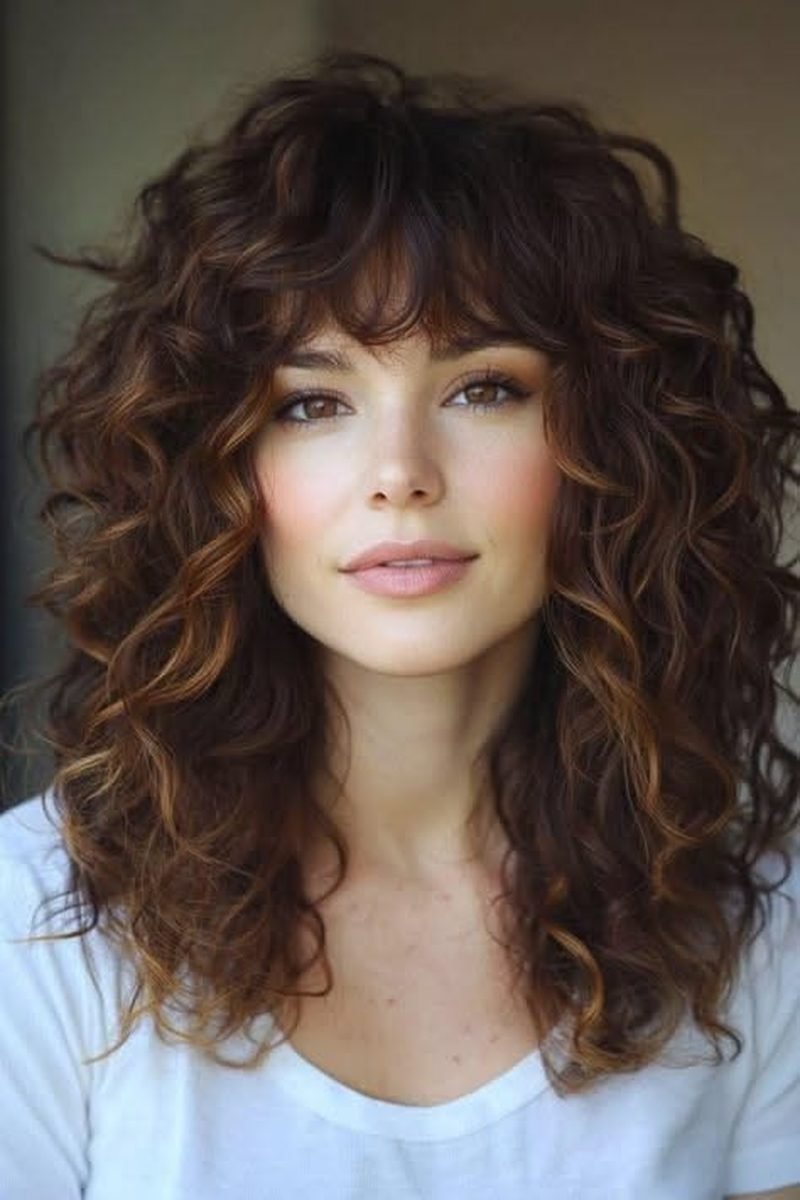
Photo: Pinterest
The reference version, and still the safest first choice. Rounded layers lift the crown and reduce heaviness near the ends, while the lower layers stay long enough to keep the shape balanced. It works for loose curls, medium curls, and mixed curl patterns, and it can help hair that looks flat at the top but wide near the shoulders. You can wear it with soft bangs or keep the forehead open.
Best for: medium-length curls that feel heavy or flat. Styling tip: apply curl cream to soaking-wet hair, diffuse on low heat, then scrunch out the crunch once fully dry. Ask your stylist: a classic shoulder-length curly shag, rounded crown layers, enough weight left around the ends.
2. Tight-Curl Shag with Face-Framing Layers
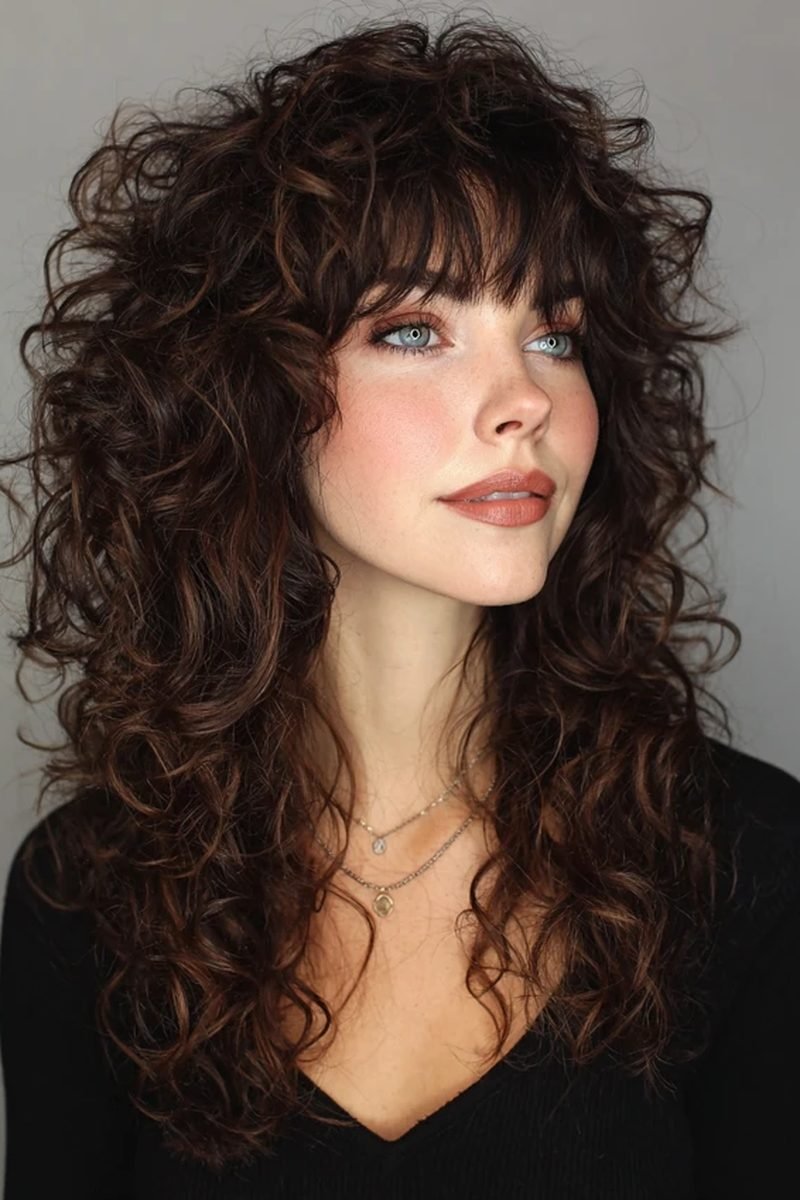
Photo: Fitsbydee
Tight curls can make a beautiful shag, but the shortest pieces must be placed with care. Face-framing curls can begin around the brow, the cheekbone, or the jaw, and the best starting point depends on how much your curls shrink. The back and sides stay longer to balance the volume at the top, and the cut can be worn with short bangs or an open forehead.
Best for: tight curls that need shape around the face. Styling tip: cut and style the fringe dry, curl by curl, since curly bangs shrink dramatically and wet-cutting almost always goes too short. Ask your stylist: face-framing pieces checked while the curls sit naturally, shortest layer planned for shrinkage.
3. Soft Curly Shag for Fine Hair
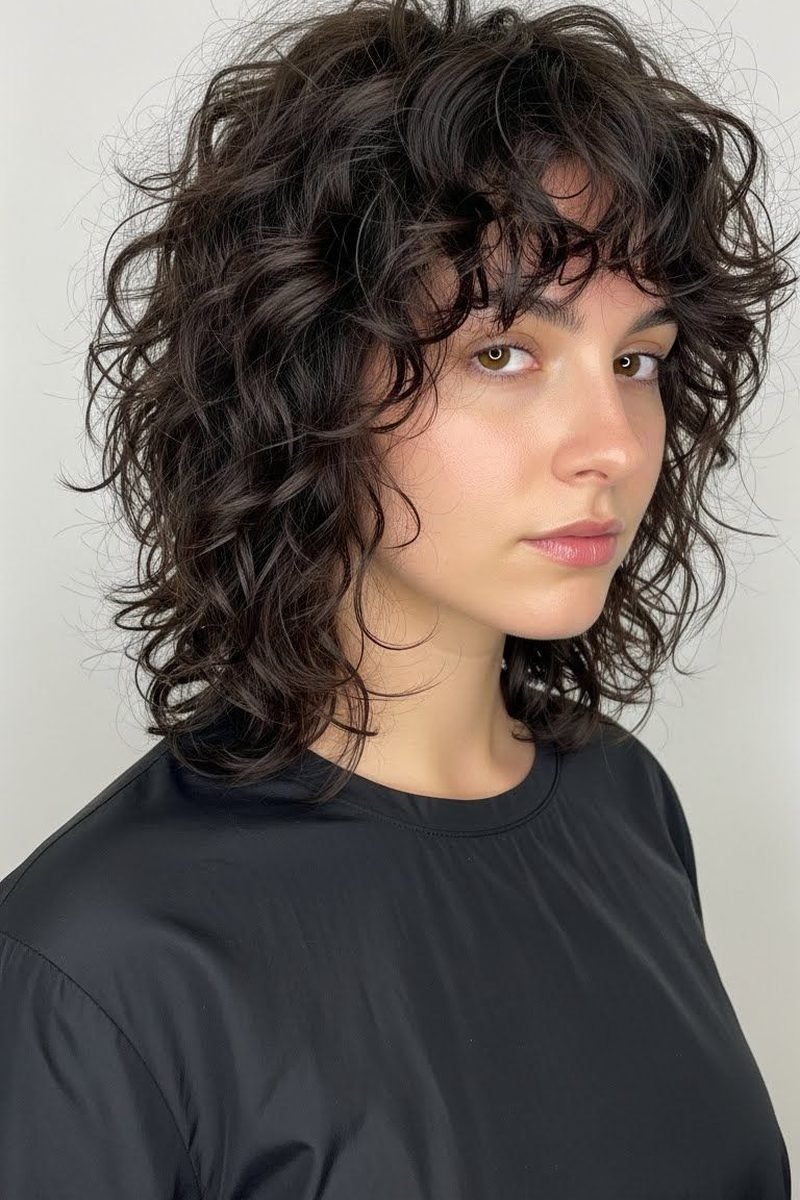
Photo: Artofit
A curly shag for fine hair needs soft layers. Too many short pieces can make the lower half look thin, so the goal is lift around the crown while keeping a full edge near the bottom. Longer layers often work better than heavy, choppy layers here, and a light mousse adds body without weighing the curls down. This style can work at chin, shoulder, or collarbone length.
Best for: fine curls that look flat but lose fullness easily. Styling tip: use a light mousse on damp hair and diffuse upside down for root lift, then finish with a pea-sized amount of lightweight curl cream on the ends. Ask your stylist: a few longer crown layers with a strong lower edge, no heavy thinning.
4. Rounded Curly Shag for Thick Hair
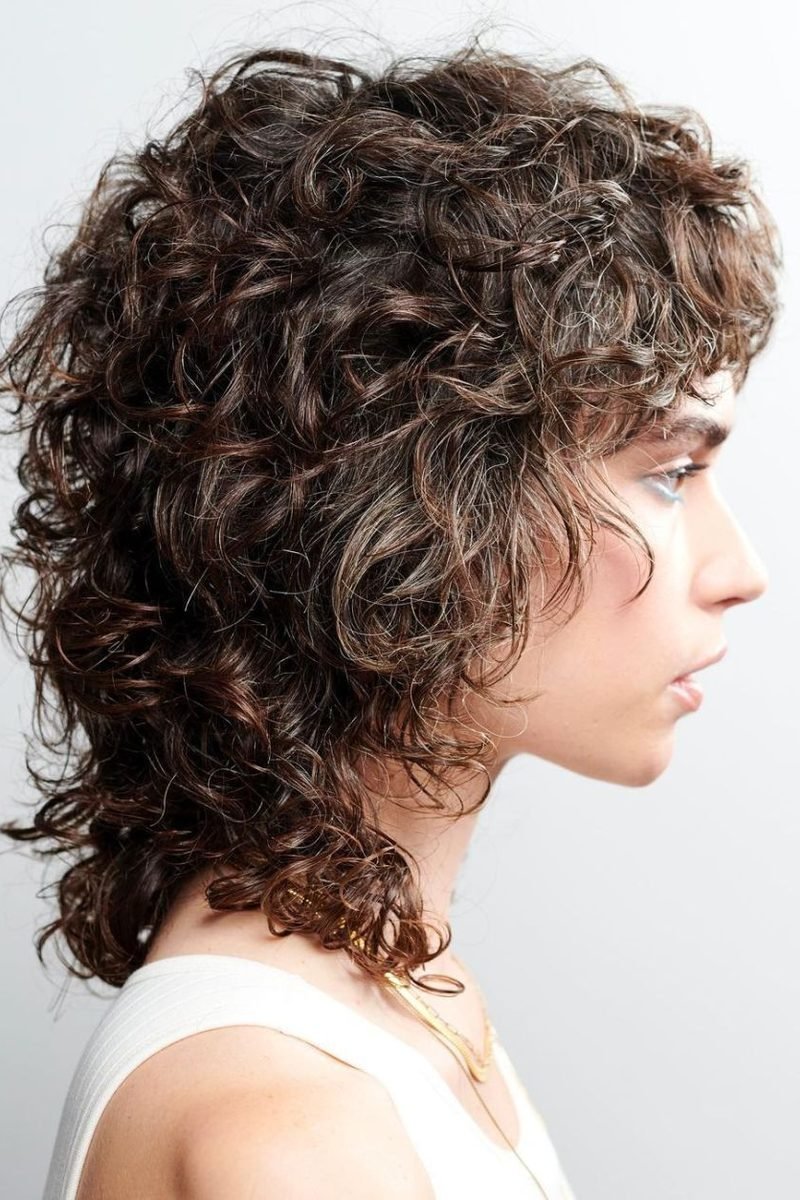
Photo: Pinterest
Thick curly hair can feel heavy and hard to shape, and a rounded curly shag removes selected weight while keeping the outside shape full. The crown has lift, but the sides do not need to become huge, and internal layers can reduce bulk without making the ends look thin. This cut works especially well for dense curls that form a triangle shape when left at one length.
Best for: thick curls that feel bulky or bottom-heavy. Styling tip: ask for weight removal inside the cut, not at the ends, and keep the ends solid so the shape stays full. Ask your stylist: weight removal inside the cut with solid-looking ends, layers placed for my curl pattern.
Curly Shags with Bangs and Fringes
5. Long Curly Shag with Curtain Bangs
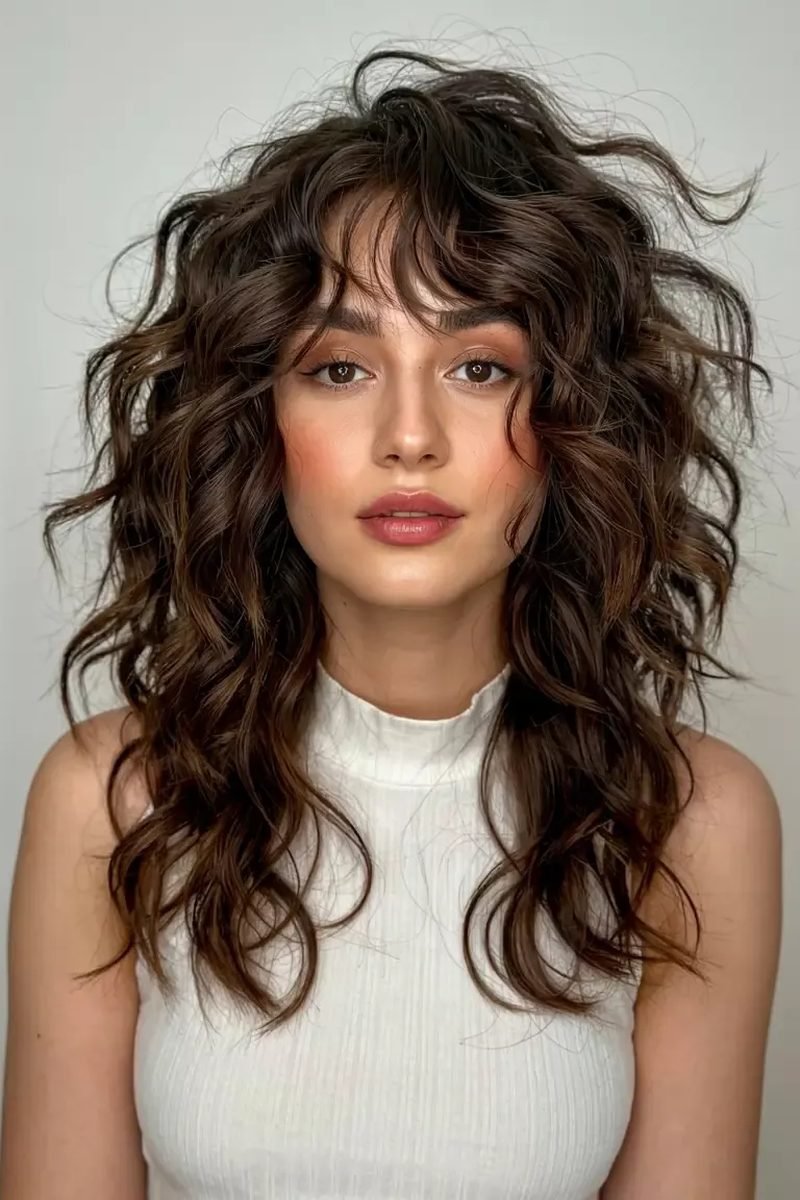
Photo: Pinterest
A long curly shag is a good choice when you want movement but do not want a major chop. The longest pieces stay below the shoulders, while shorter layers around the crown, cheeks, and jaw stop the hair from hanging in one heavy shape. Curtain bangs part near the centre and become longer at the sides, so they blend into the rest of the cut and can often be tucked back. This style can still work with ponytails and loose updos.
Best for: long, heavy curls that need more movement. Styling tip: style the curtain fringe separately with a little extra curl cream on the front pieces, twisted into shape while damp. Ask your stylist: long curtain bangs with face-framing layers that blend into the length.
6. Short Curly Shag with Full Bangs
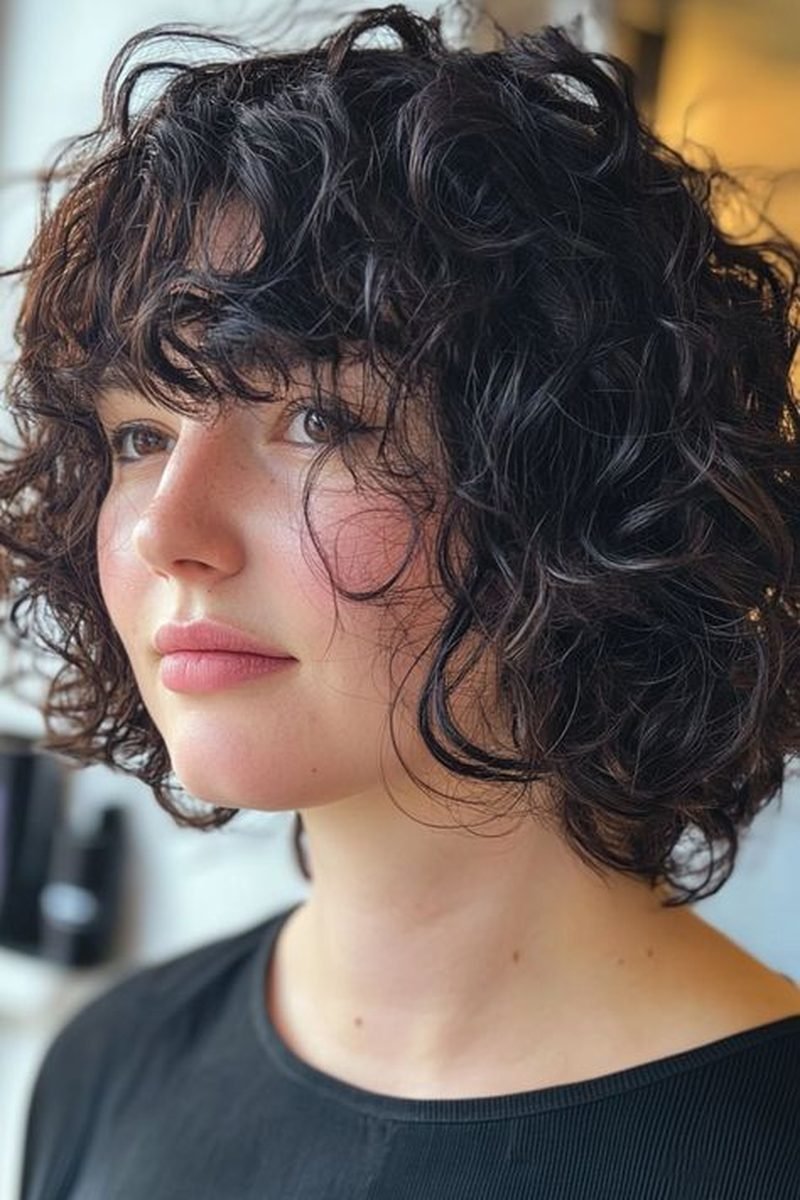
Photo: Pinterest
A short curly shag gives you strong shape and plenty of crown volume, with the length sitting between the ears and the neck. Full curly bangs cover most of the forehead and blend into the side layers, which gives the haircut a soft, rounded finish. The style works best if you like wearing your curls down, since short side pieces may fall out of clips and ponytails, and the bangs need regular styling.
Best for: short curls that need height and face framing. Styling tip: wet and reshape the bangs between wash days, and use a diffuser on low heat to keep the crown lifted. Ask your stylist: full bangs cut long enough to allow for shrinkage, short layers at the crown.
7. Chin-Length Curly Shag Bob
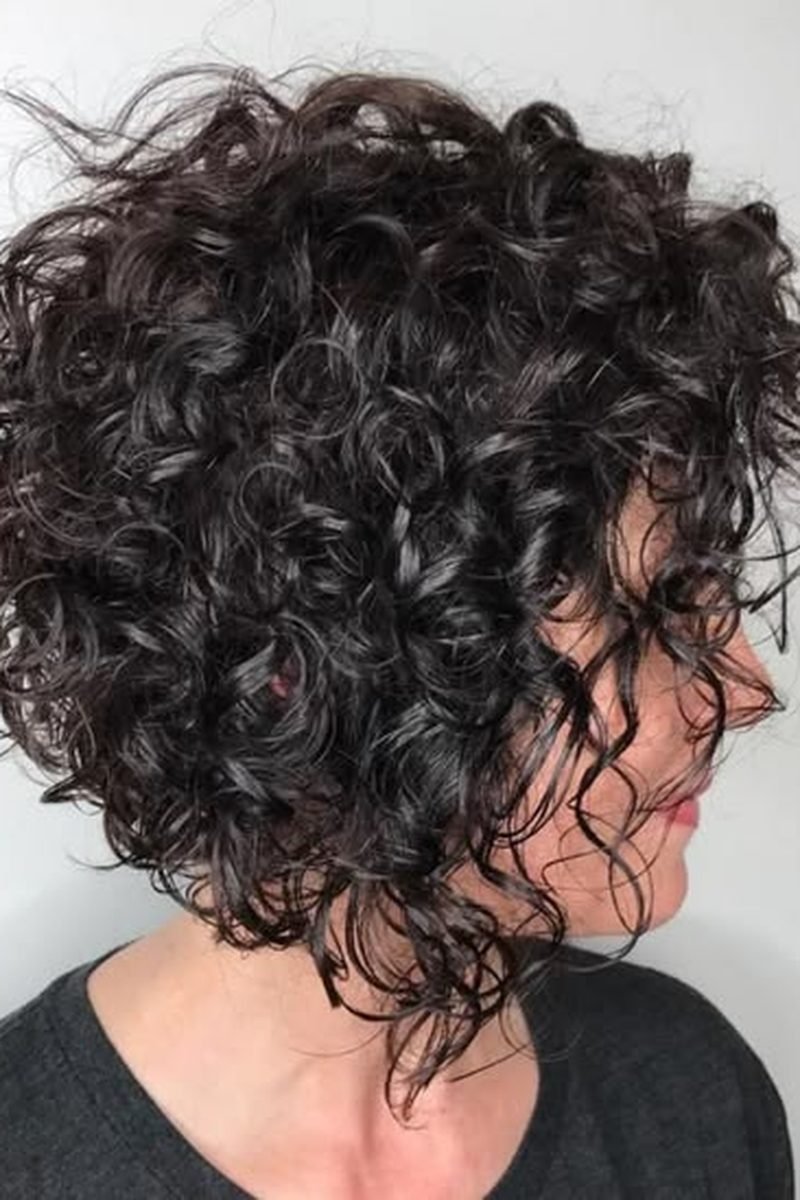
Photo: Pinterest
A curly shag bob gives a normal bob more movement. Instead of one thick line at the bottom, it uses soft internal layers to shape the curls, and the length usually falls around the chin or jaw. The crown stays light, while the lower edge keeps enough weight to stop the cut from looking too round. This option can help curls that become bulky when cut to one length, and you can pair it with side-swept bangs, short bangs, or no bangs.
Best for: short curls that look wide or heavy in a blunt bob. Styling tip: scrunch curl cream into soaking-wet hair and diffuse, then break up the roots with your fingers for lift. Ask your stylist: shaggy internal layers with a fuller lower edge, cut dry so the length is true.
8. Curly Shag with Micro Bangs
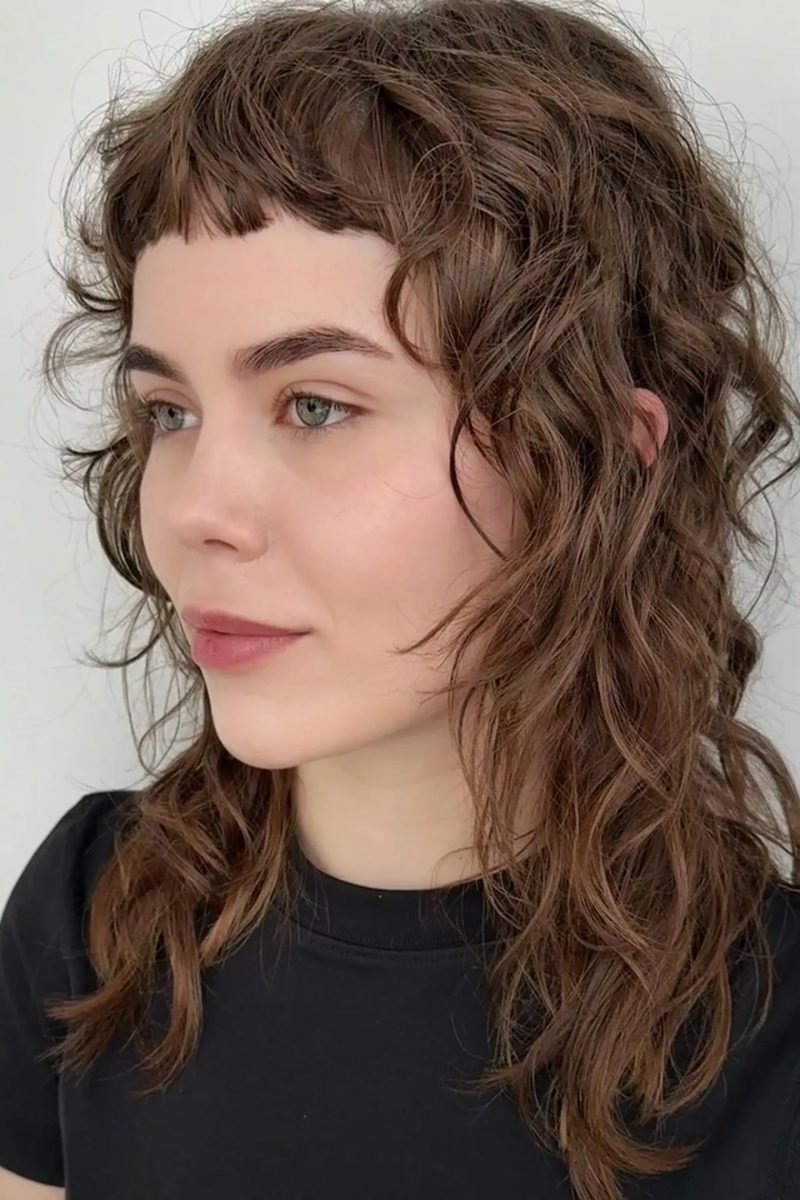
Photo: Hairdolab
Micro bangs sit above the eyebrows, and on curly hair they create a bold and playful look. This style works best when the rest of the cut also has clear, short layers, because a full crown and textured sides help the small fringe feel connected to the haircut. Micro bangs show more of the forehead than full bangs, and they can draw attention to the eyes and brows, but the length must be planned with care because curls rise as they dry.
Best for: people who want a strong, creative haircut. Styling tip: check the fringe in its natural dry position before leaving the salon, and trim it every three weeks to hold the line. Ask your stylist: short bangs checked in their natural dry position, cut slightly longer than you think.
9. Curly Shag with Bottleneck Bangs
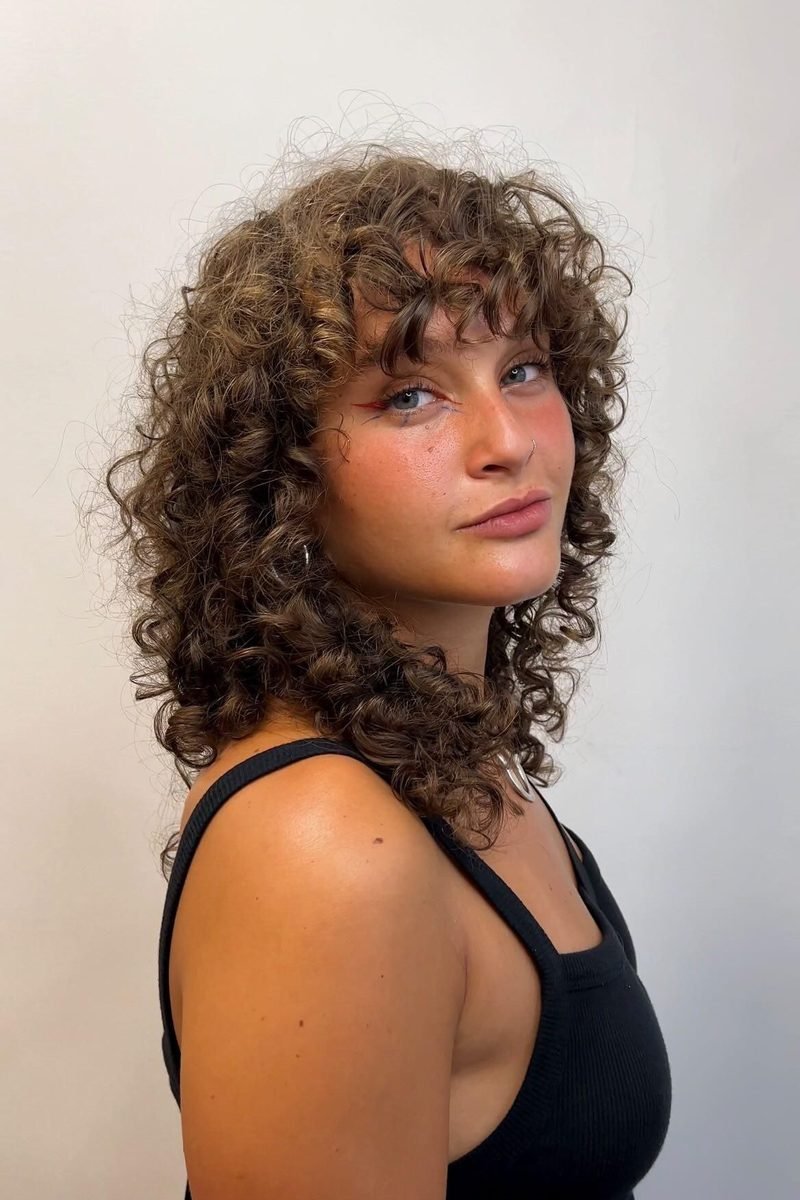
Photo: Pinterest
Bottleneck bangs are shorter in the centre and longer near the sides, and their curved shape opens the face while still giving you a clear fringe. This curly shag with bangs works well when full, straight-across bangs feel too heavy, because the longer side pieces blend into cheekbone layers and create a smooth link between the fringe and the rest of the haircut. The final shape looks soft and relaxed rather than sharp.
Best for: curls that need light face framing. Styling tip: twist the centre pieces into shape while damp so the curve holds, and refresh them with a quick wet-and-scrunch each morning. Ask your stylist: a curved fringe that is shorter in the centre and longer at the edges.
10. Curly Shag Without Bangs
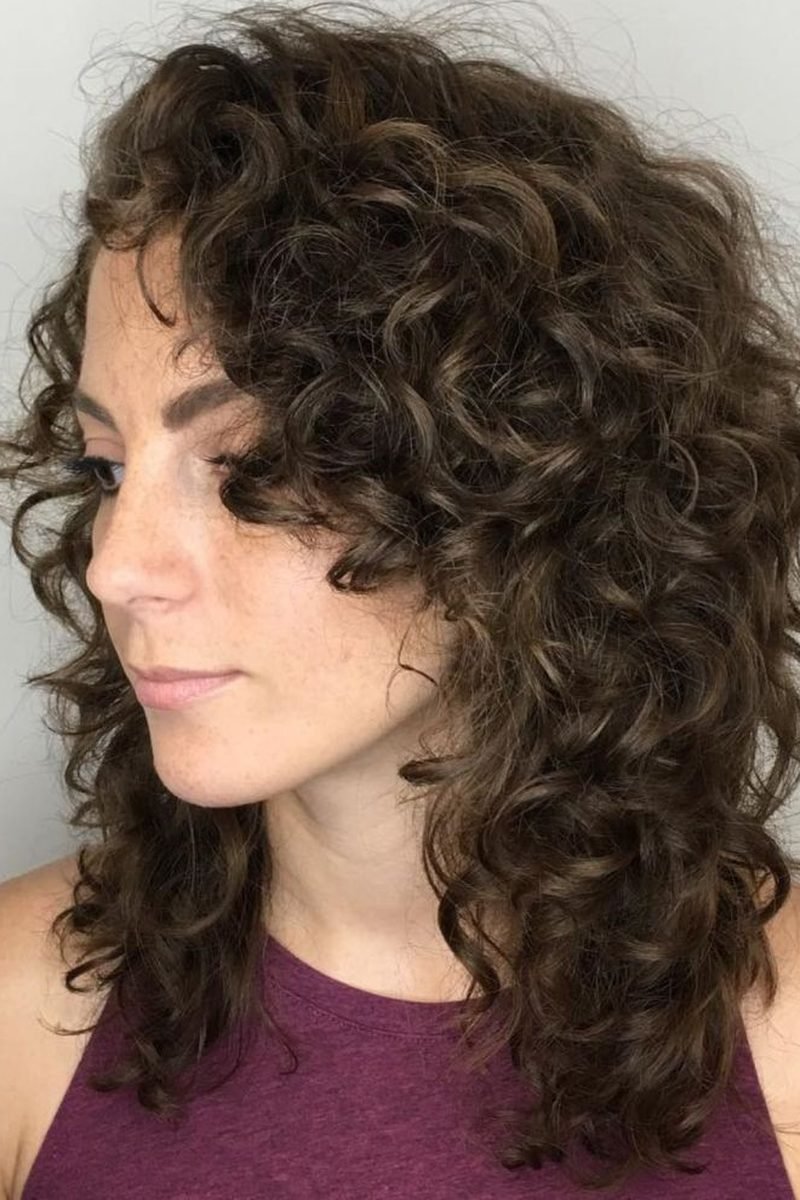
Photo: Dishcuss
You do not need bangs to get a clear shag shape. A curly shag without bangs uses face-framing layers instead, with the shortest pieces beginning near the cheekbones or jaw. This keeps the forehead open and gives you more freedom to change your part, and it is also a smart option if you have a strong cowlick or do not want to style a fringe each morning. The cut can work at short, medium, or long lengths.
Best for: anyone who wants a lower-care shag. Styling tip: flip the part from side to side while the hair dries to build root lift without any heat. Ask your stylist: face-framing layers that begin at a safe length after shrinkage, no fringe.
Parts, Volume, and Lengths
11. Side-Parted Curly Shag

Photo: Pinvibe
A side-parted curly shag creates uneven volume in a planned way. One side looks fuller, while the longer fringe sweeps across the forehead, and the longer front pieces blend into the cheek and jaw layers. This option is useful if you do not like a centre part, and it can also work well with a natural side part or a cowlick. Tell your stylist where you usually part your hair before the cutting starts.
Best for: curls that naturally fall to one side. Styling tip: part the hair while it is still wet, then diffuse with the head flipped to one side for extra root lift. Ask your stylist: layers shaped around my normal part, longer fringe sweeping across the forehead.
12. Deep Side-Part Curly Shag with Off-Balance Volume
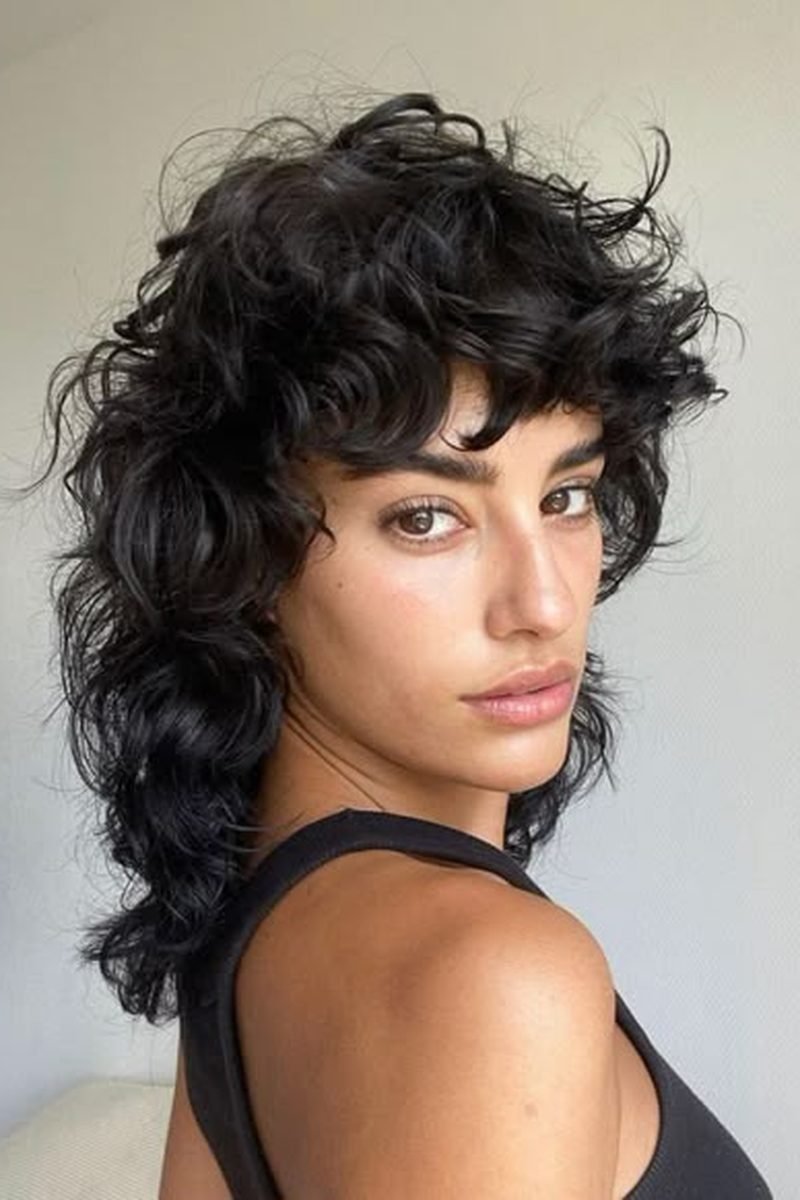
Photo: Pinvibe
A deep side part pushes curls into dramatic, heavier volume on one side, giving the shag a deliberately wide profile. The perimeter is layered and uneven rather than blunt, with face-framing curl pieces around the cheekbones, and the cut reads fluffy and touchable, especially through the sides. It is a strong choice when you want the shag to feel glamorous rather than casual.
Best for: medium to thick curls that can hold volume on one side. Styling tip: use a pick at the roots only, never through the curls, to direct the volume sideways, then set it with a light-hold hairspray. Ask your stylist: a deep side part with layers that build volume on the heavier side.
13. Loose-Curl Shag with Long Layers
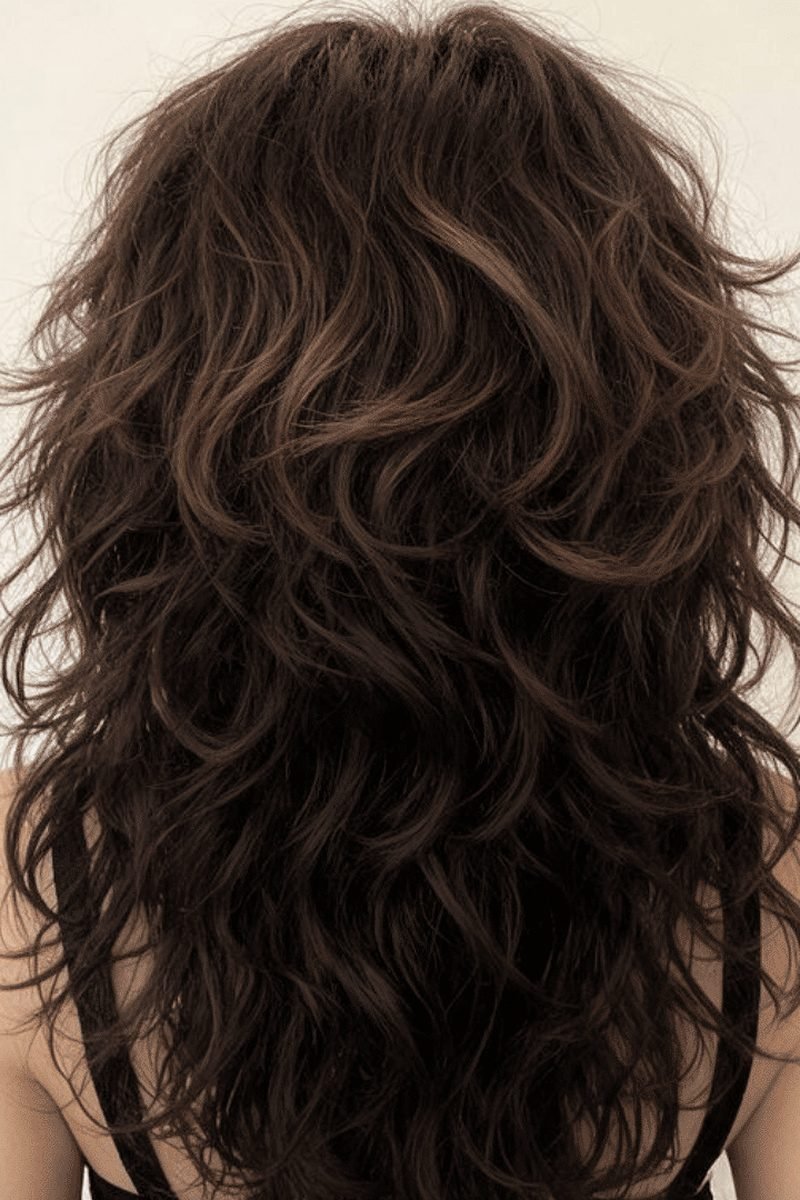
Photo: Stellaswardrobe
Loose curls and strong waves may need longer layers to keep the haircut soft, because very short layers can make the top look puffy while the ends stay flat. A loose-curl shag uses connected layers that move from the crown into the lower length, and the result looks relaxed rather than choppy. It can also be easy to air-dry when the cut follows the natural wave pattern, and long curtain bangs can add more shape without creating a heavy fringe.
Best for: strong waves and loose spiral curls. Styling tip: apply a styling foam and diffuse until 80 percent dry, then air-dry the rest and scrunch in sections to bring out the curl pattern. Ask your stylist: long, connected layers with gentle crown lift, no short top layers.
Curly Shags for Every Curl Type
14. Coily Shag with a Rounded Halo
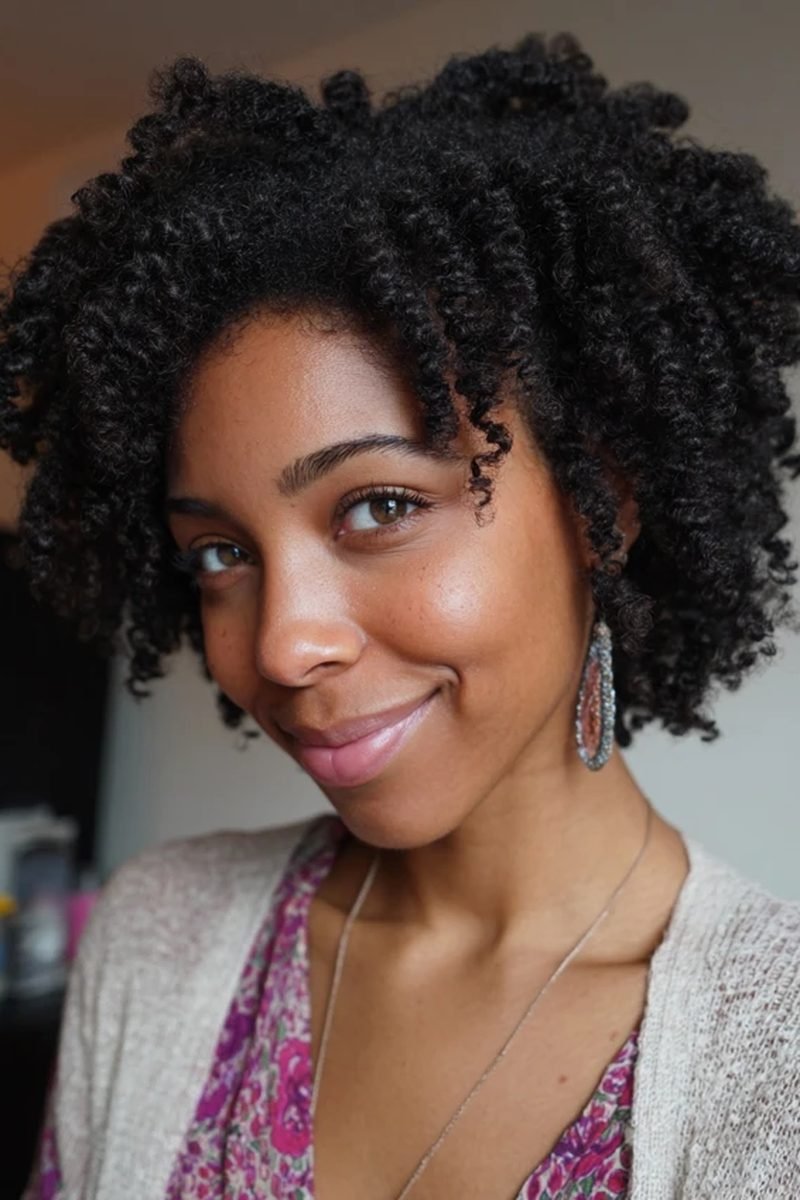
Photo: Yournextinspo
A rounded coily shag creates a clear shape from every angle. It uses lift at the top, balanced width at the sides, and a soft taper near the ends, and the haircut should work with the natural direction of the coils instead of depending on constant stretching or heat styling. A soft fringe can be added, but it needs enough length for shrinkage, and the side and back views matter as much as the front.
Best for: coily hair that needs a fresh outline and balanced volume. Styling tip: wash and condition in sections, apply a hydrating curl cream, and let the hair air-dry in twists for defined shrinkage. Ask your stylist: a rounded shape with a controlled taper and full edges, cut dry.
15. 3C Curly Shag with Crown Lift
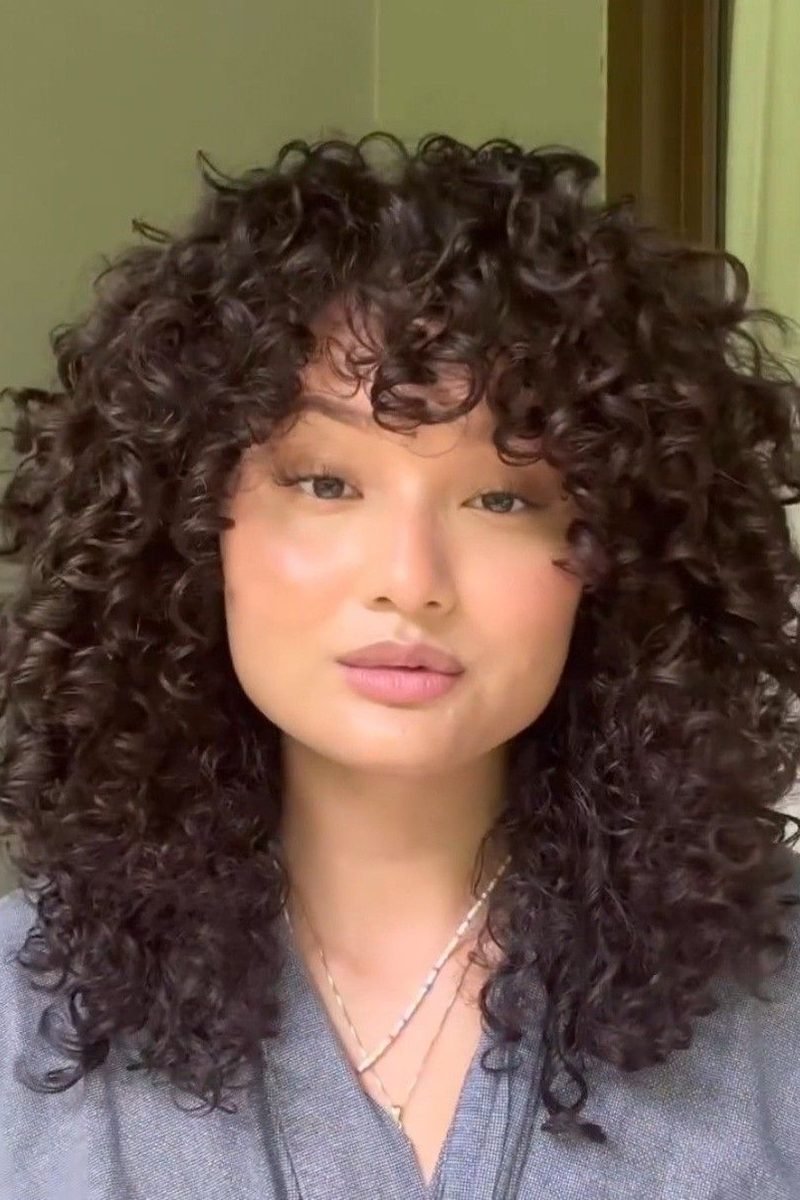
Photo: Pinterest
Short layers can lift the crown, and on 3C curls that lift is the whole point of the cut. The top layers are kept short enough that each curl springs upward, giving you height that no product can fake on longer hair, while the sides stay full enough to balance the shape. This is the version to choose when your curls look flat at the roots but full everywhere else.
Best for: 3C curls that need height at the crown. Styling tip: flip your head upside down while diffusing, then blast the curls with cool air to set the lift. Ask your stylist: short crown layers for lift, length kept through the sides, cut curl by curl.
16. Wavy-Curly Shag with Curtain Fringe
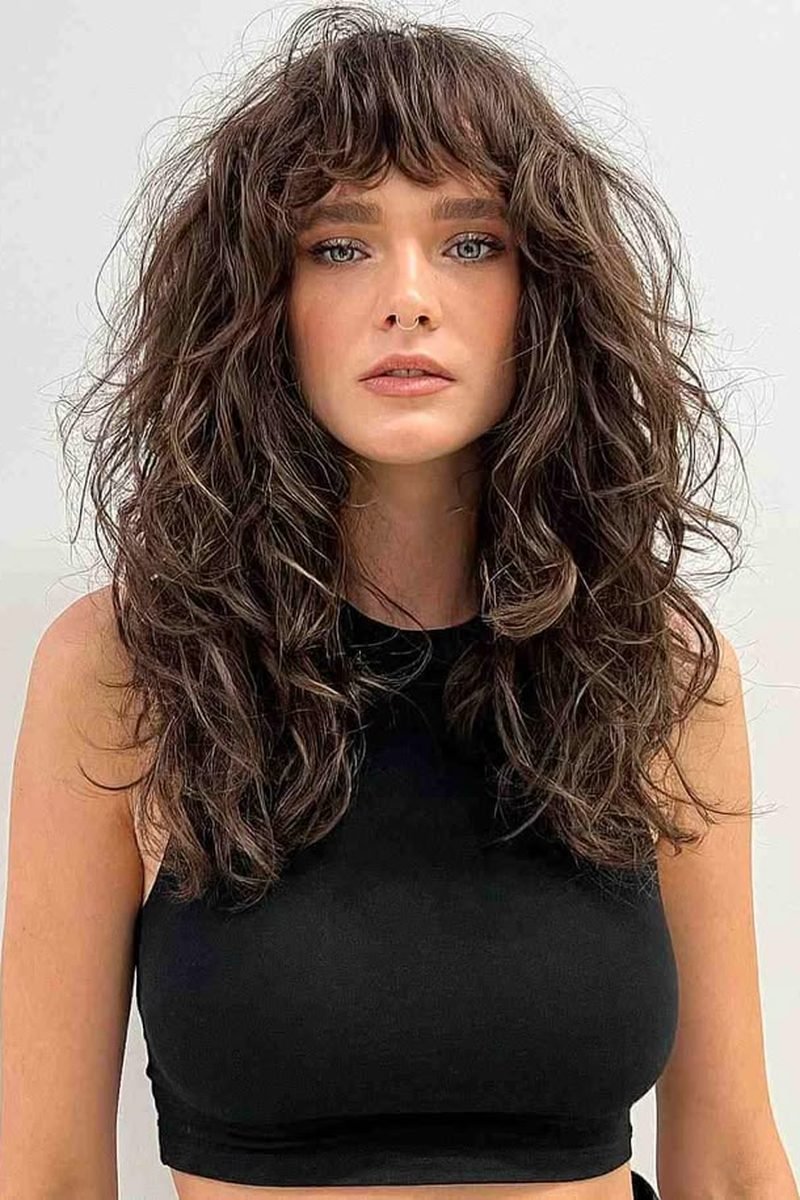
Photo: London School
Not-quite-curly hair, the in-between wave, often gets ignored by curl-specific cuts, but the shag loves it. The layers encourage the wave to bend more decisively, and curtain bangs blend the front into the sides so nothing looks stringy. This is the lowest-maintenance curly shag on the list, because waves do not need the precise moisture routine that tighter curls demand.
Best for: 2B to 2C waves that want more shape without a big chop. Styling tip: a salt spray on damp hair, a quick scrunch, and the layers do the rest. Ask your stylist: a wavy-curly shag with a curtain fringe, layers that encourage the wave to bend.
Bold Curly Shag Shapes
17. Curly Wolf-Shag
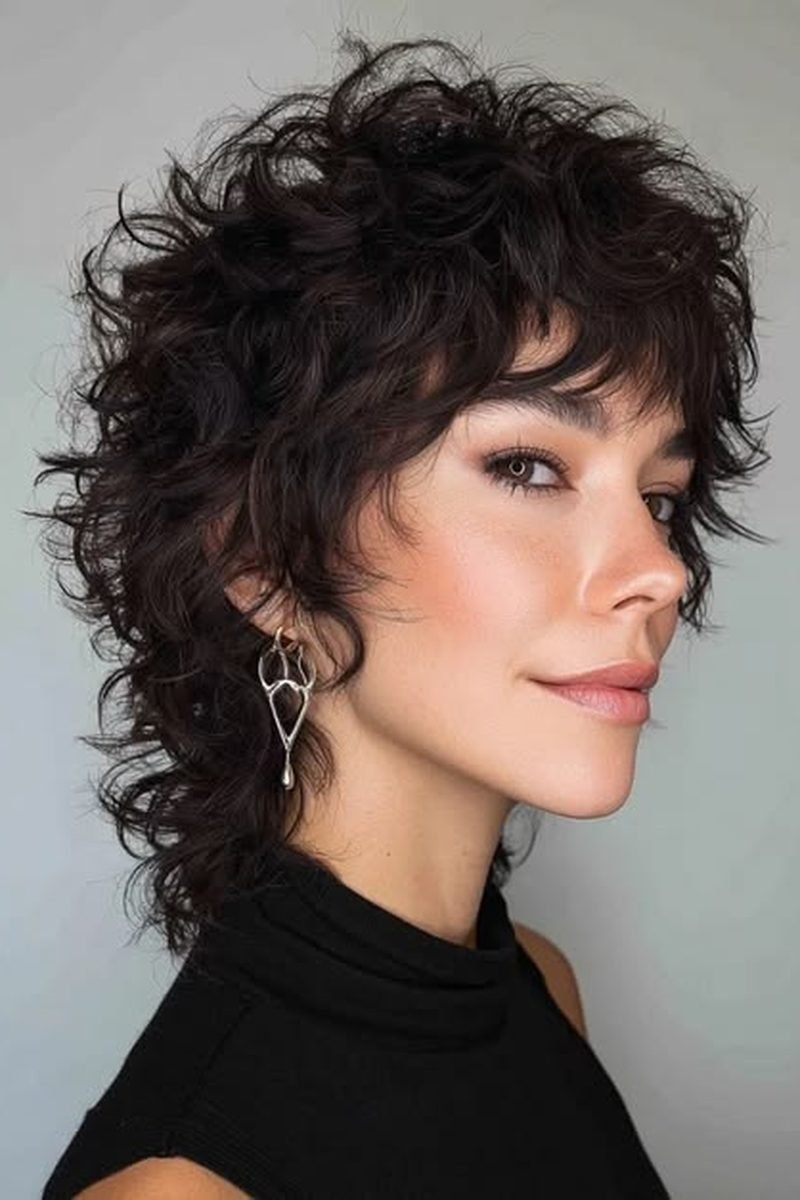
Photo: Pinvibe
A curly wolf-shag has a shag base with a stronger change between the top and bottom. The crown is shorter and fuller, the lower section stays longer and may look more separated, and the style is bolder than a classic shag. It works well if you want visible texture and do not mind shorter pieces around the face, but the ends still need enough fullness to stop the haircut from looking weak.
Best for: medium or long curls that need a bold shape. Styling tip: rough-dry with a texture spray and break up the ends by gently pulling pieces apart for a piecey finish. Ask your stylist: strong crown layers with enough lower weight to keep the cut balanced.
18. Curly Shullet with a Longer Back
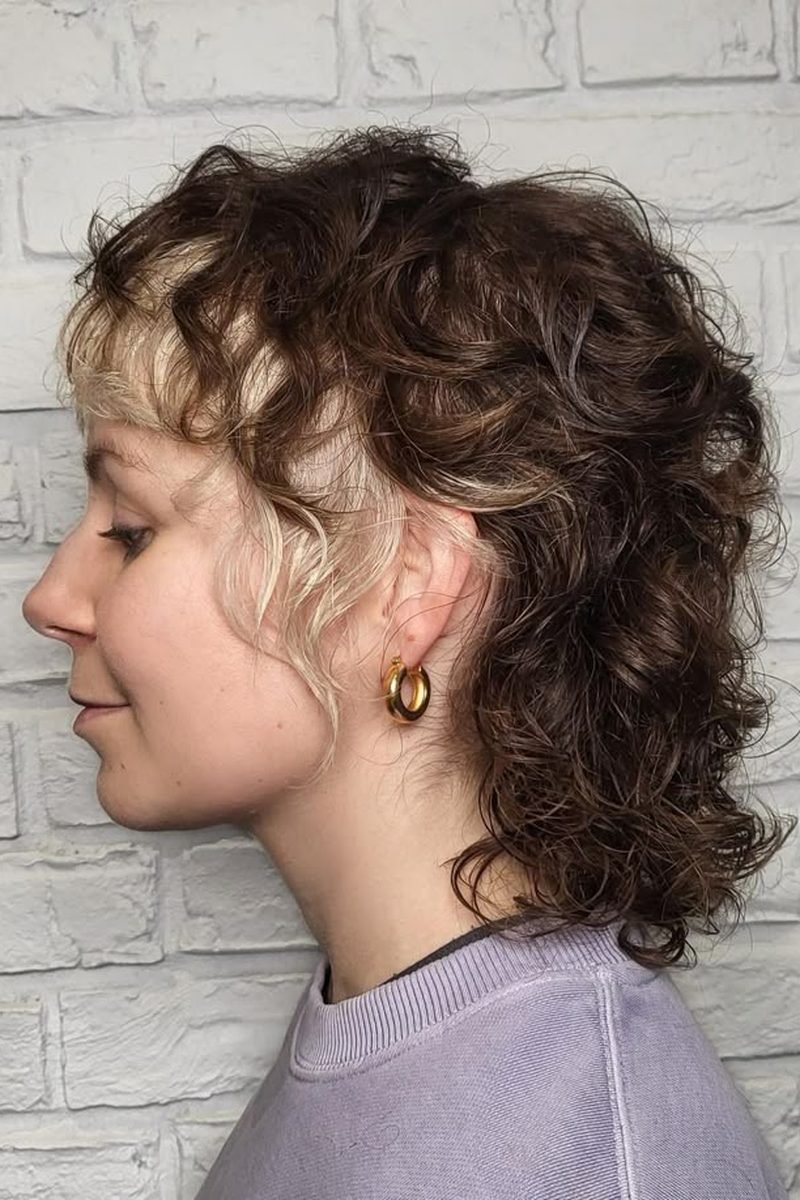
Photo: Pinterest
A curly shullet mixes the shape of a shag with the longer back of a mullet. The front and side layers stay short and textured, while the back remains clearly longer, and this is the boldest option on the list. It creates a strong side view and works best when you want the length difference to be easy to see, so bring several reference photos, because shullets can vary a lot.
Best for: anyone who wants an edgy, high-contrast cut. Styling tip: keep the front pieces piecey with a little curl cream, and let the back air-dry for a soft, tousled finish. Ask your stylist: short front layers with a clear but balanced longer back.
19. Curly Shag with Flipped Ends
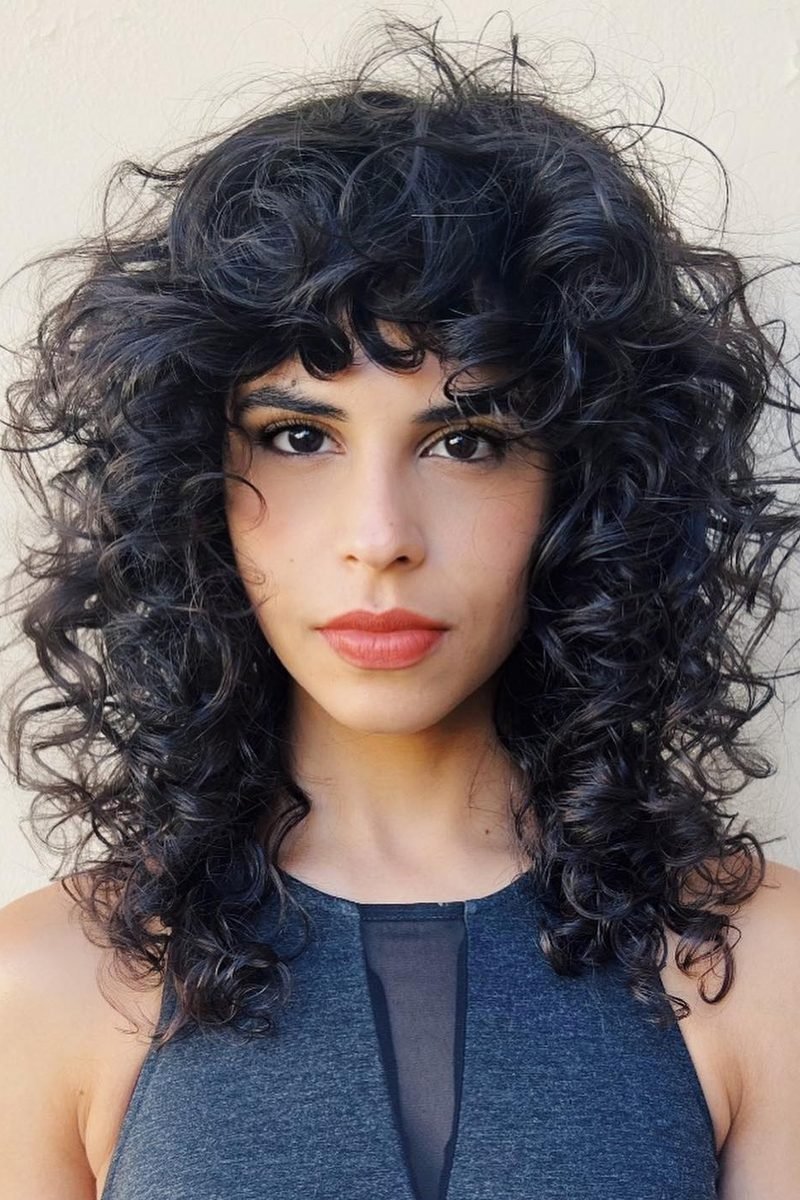
Photo: Artofit
Full curly bangs graze the eyebrows and set a strong front line, while the sides are layered to flick outward near the cheeks. The shape stays medium length, and the crown is softly lifted so the cut does not feel heavy. If you like a rounded shag but want visible movement at the edges, the flipped ends show that effect clearly, and the flick makes the whole cut look lighter and more playful.
Best for: medium curls that want movement at the perimeter. Styling tip: blow the ends out with a round brush for the flick, or rough-dry for a messier finish. Ask your stylist: layered sides cut to flick out, full bangs that graze the eyebrows.
Curly Shags with Colour
20. Caramel-Highlighted Curly Shag with a Full Fringe
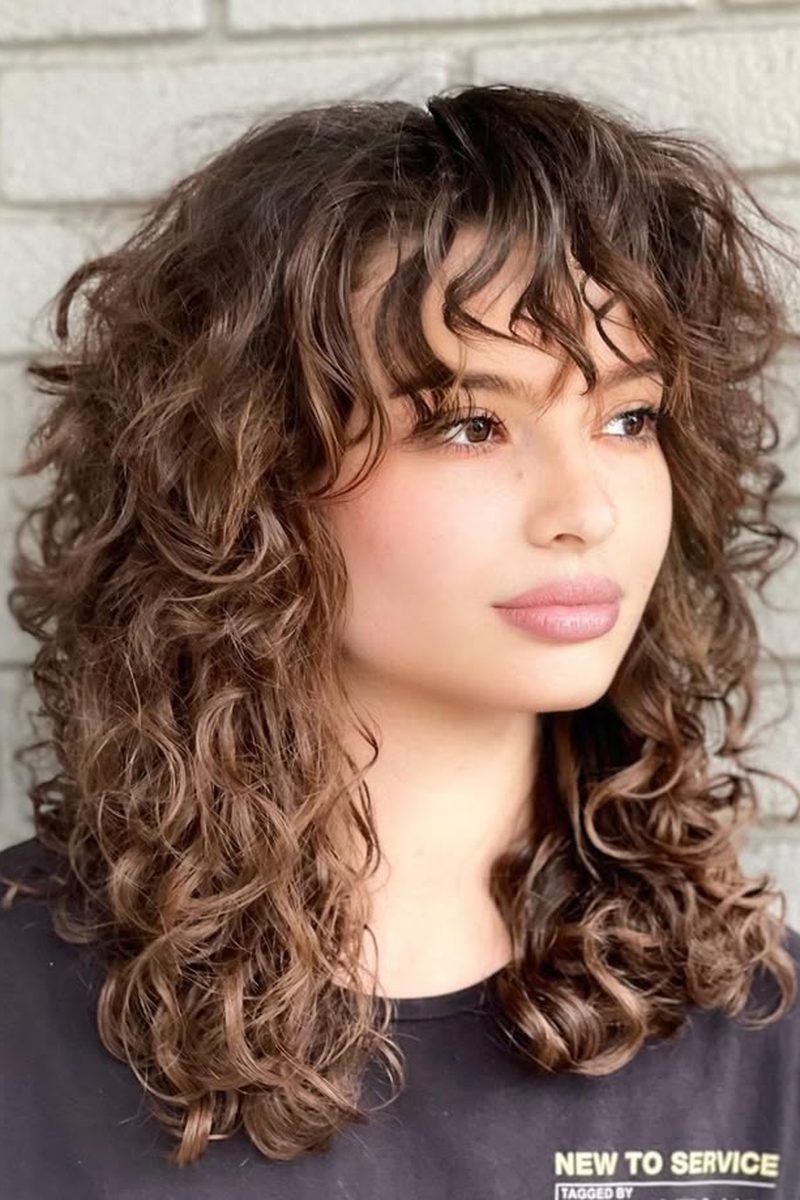
Photo: Pinvibe
A full curly fringe falls onto the forehead and blends into face-framing layers that widen from cheek to jaw, while the cut stays around shoulder length with lift at the crown and airy ends. Dark brown colour is broken up by warm caramel highlight ribbons, especially through the front and mid-lengths, which makes the curl pattern pop and shows off every layer.
Best for: dark brown curls that want warmth and dimension. Styling tip: use a colour-safe shampoo and wash in cool water to keep the caramel ribbons from fading. Ask your stylist: caramel highlights painted through the front and mid-lengths, full fringe blended into the layers.
21. Copper Curly Shag Bob with a Full Fringe
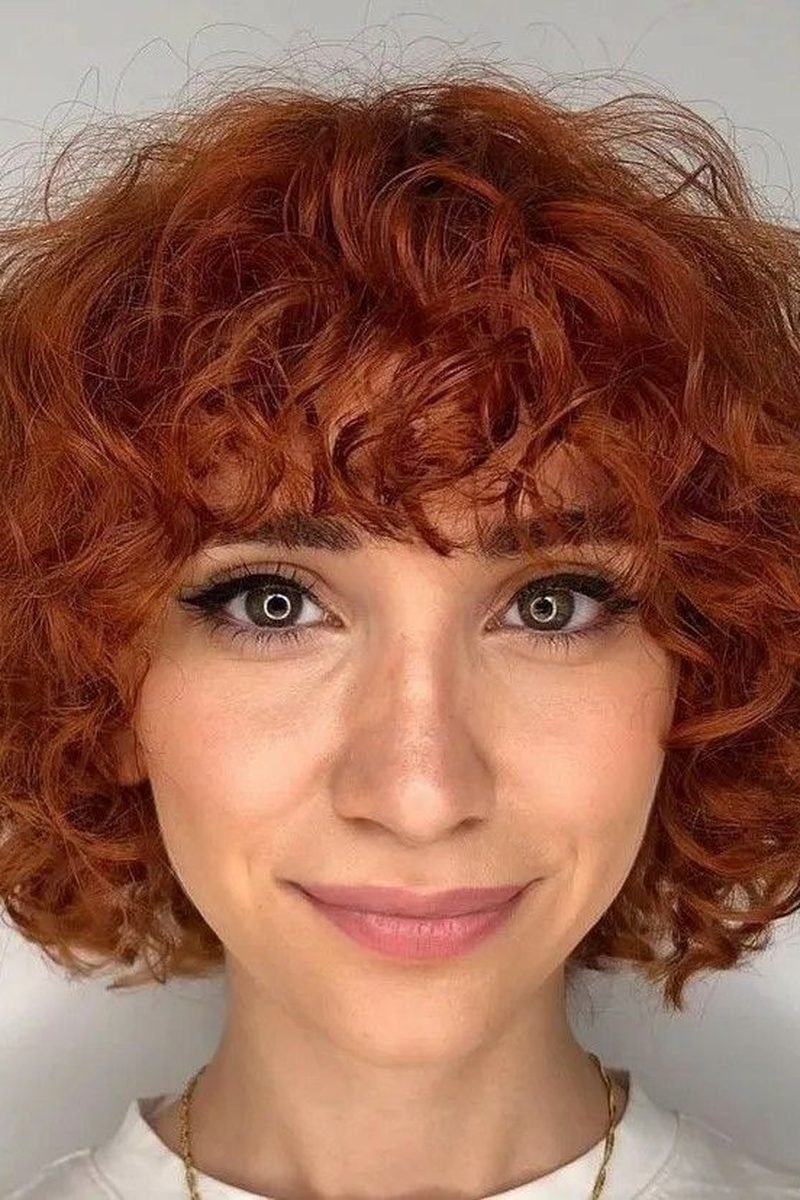
Photo: Pinterest
Full curly bangs frame the forehead, and bob-length layers build an even, halo-like roundness around the head. The sides flare outward slightly, with ringlets that stay defined and separated for an airy edge at the perimeter. In warm copper, the curl pattern becomes the main detail, so this is a clear reference for a curly shag that stays firmly in bob territory.
Best for: warm skin tones and anyone who wants colour to do the talking. Styling tip: scrunch in a curl cream on soaking-wet hair and diffuse, then leave the curls alone until fully dry for maximum definition. Ask your stylist: a copper bob-length shag with a full fringe and rounded halo layers.
22. Rooted Blonde Curly Shag with a Wispy Fringe
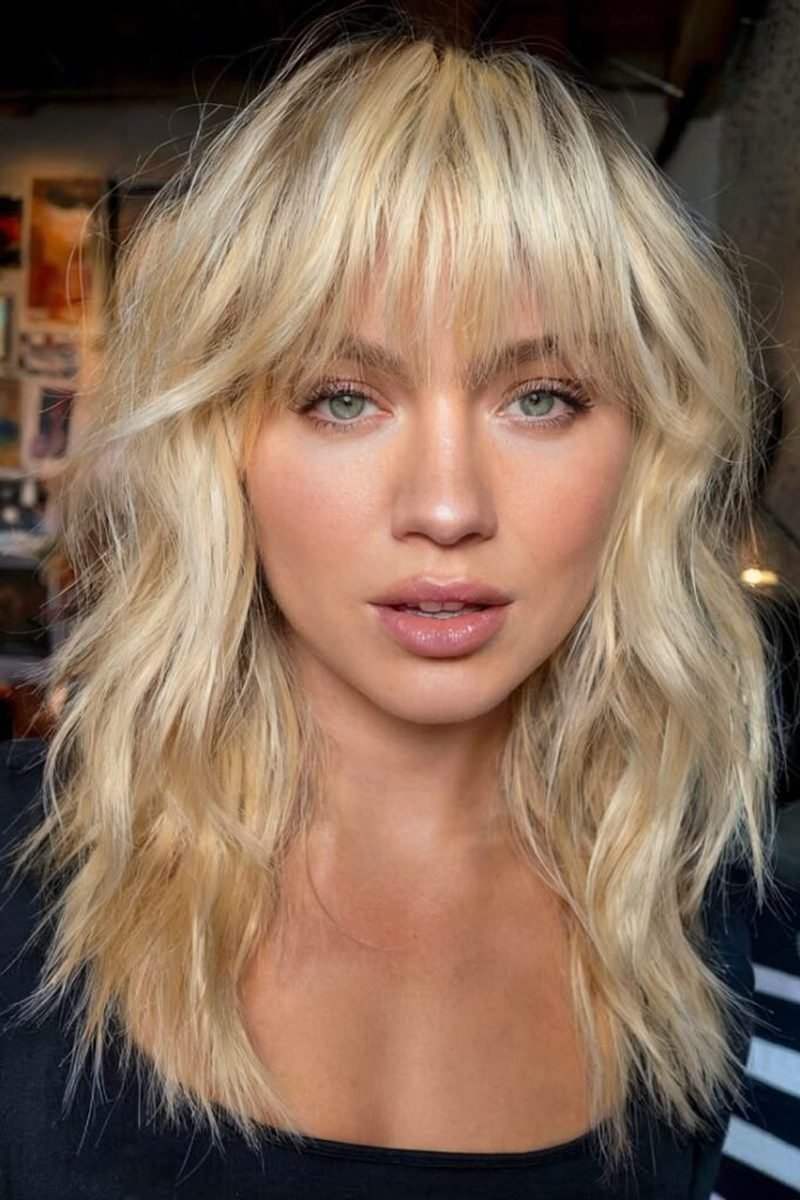
Photo: Funnysydney
A wispy curly fringe and short face-framing pieces give the forehead a soft, open feel, while loose ringlets continue into longer lengths that trail behind the shoulders. The crown looks light and airy, and the perimeter stays layered rather than blunt. Blonde hair with darker roots adds visible tonal variation, which helps each curl clump stand out from the next.
Best for: blonde curls that want dimension without constant root touch-ups. Styling tip: use a purple-tinted conditioner once a week to keep the blonde bright instead of dull. Ask your stylist: rooted blonde with a wispy curly fringe and an airy crown.
23. Blonde Curly Shag with Curtain Bangs and Root Shadow
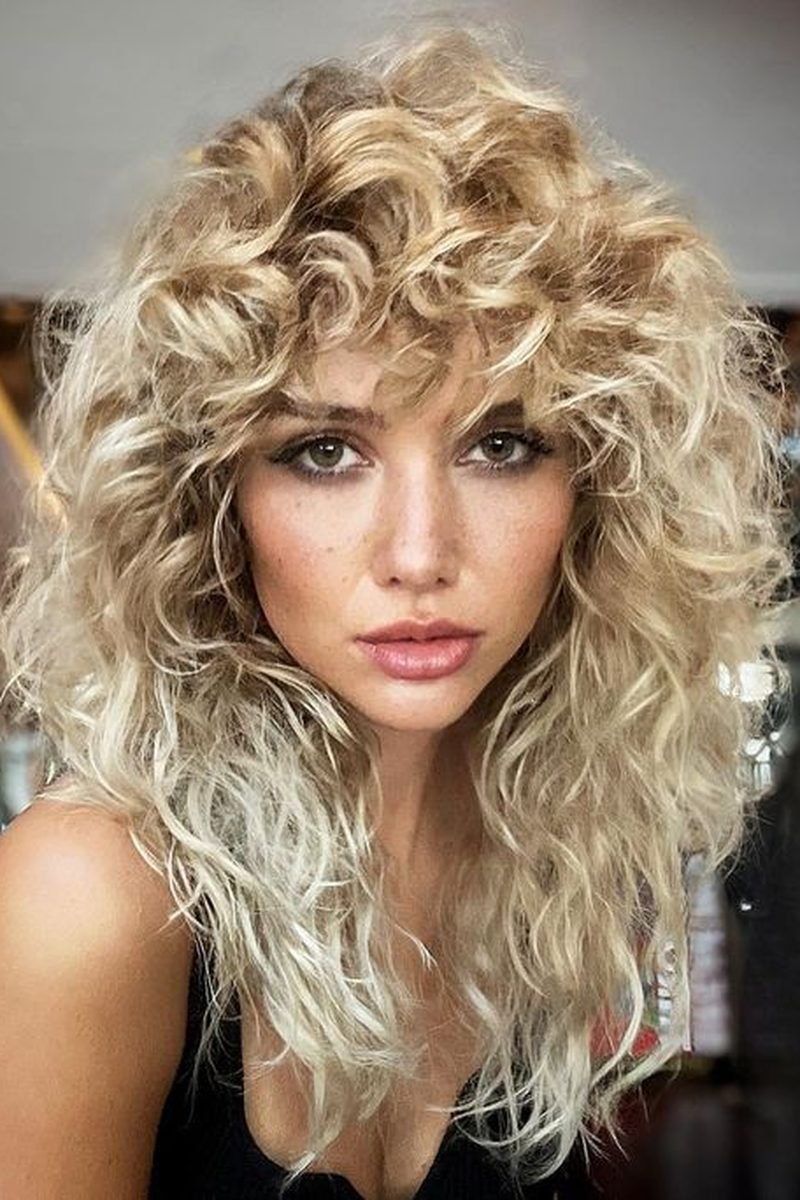
Photo: Pinterest
Curly curtain bangs split near the centre and curl under toward the cheeks, blending straight into layered sides. Loose ringlets build a rounded, bouncy outline from chin to shoulder length, with volume concentrated through the mid-lengths. The light blonde colour paired with darker roots gives high-contrast dimension, making the fringe separation and face-framing curl clumps easy to pick out.
Best for: blonde curls that want a soft grow-out and clear layer definition. Styling tip: diffuse with the head flipped for maximum root lift, then use a pick at the roots only to direct the volume. Ask your stylist: blonde with a root shadow and centre-part curtain bangs that blend into the layers.
24. Salt-and-Pepper Curly Shag Bob
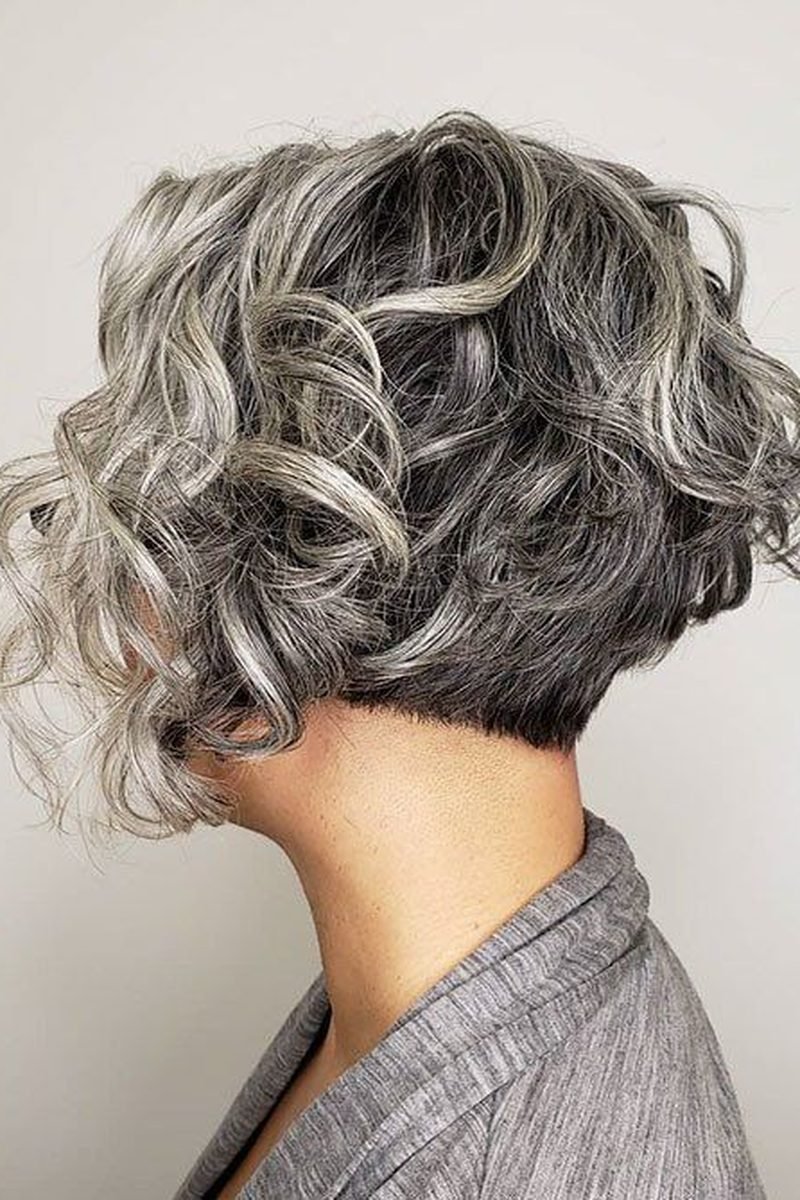
Photo: Amplang
Soft curls and waves are shaped into a compact shag-bob that ends around the chin to upper neck, with gentle lift at the crown and feathered, lightly flipped ends. The salt-and-pepper mix of silver and dark tones keeps the look crisp and defined without relying on sharp edges, and every twist of the curl shows a different mix of tones, which creates depth no single-process colour can match.
Best for: natural grey blend and anyone growing out colour with curls. Styling tip: a purple-tinted conditioner once a week keeps the silver strands bright instead of dull. Ask your stylist: a compact shag-bob with soft, piecey bangs and a natural salt-and-pepper blend.
25. Silver Curly Shag with Defined Curls
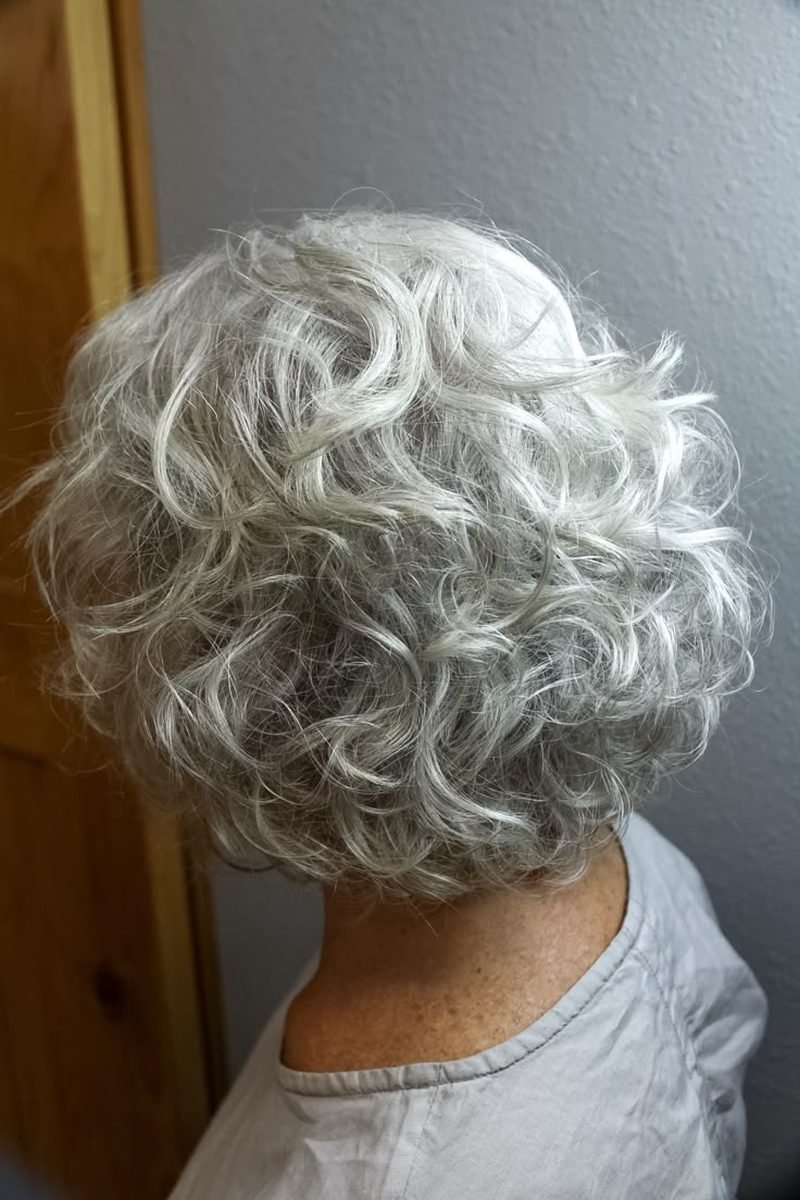
Photo: Jybman
Silver curls are a statement, and defined layers make them look intentional rather than accidental. The shag cutting removes the internal bulk that makes curly hair expand sideways, so each curl keeps its own shape, and smoky grey tones make every curl definition visible, which is why this combination photographs so well. Style with curl cream scrunched into soaking-wet hair, then diffuse or air-dry without touching.
Best for: silver and grey curls that want definition and shape. Styling tip: apply leave-in conditioner and a light gel to very wet hair, scrunch upward, and do not touch until fully dry, then scrunch out the gel cast. Ask your stylist: defined layers with internal bulk removed, a rounded shape that shows the silver.
26. Copper-Red Curly Shag with a Short Fringe

Photo: Pinvibe
A short curly fringe gives a micro-bang feel, contrasted with longer layered lengths that extend past the shoulders for a more elongated outline. The curl pattern looks loose-to-defined with a piecey separation that emphasises the cut’s shaggy movement, and the copper-red colour shifts brighter toward the ends, adding a clear two-tone effect through the layers.
Best for: warm skin tones and anyone who wants a bold colour with a soft cut. Styling tip: use a colour-safe, sulphate-free shampoo and avoid heavy oils near the roots, which flatten the crown lift. Ask your stylist: copper-red with brighter ends and a short fringe cut curl by curl.
Shape Details That Change Everything
27. Curly Shag with a Tapered Nape
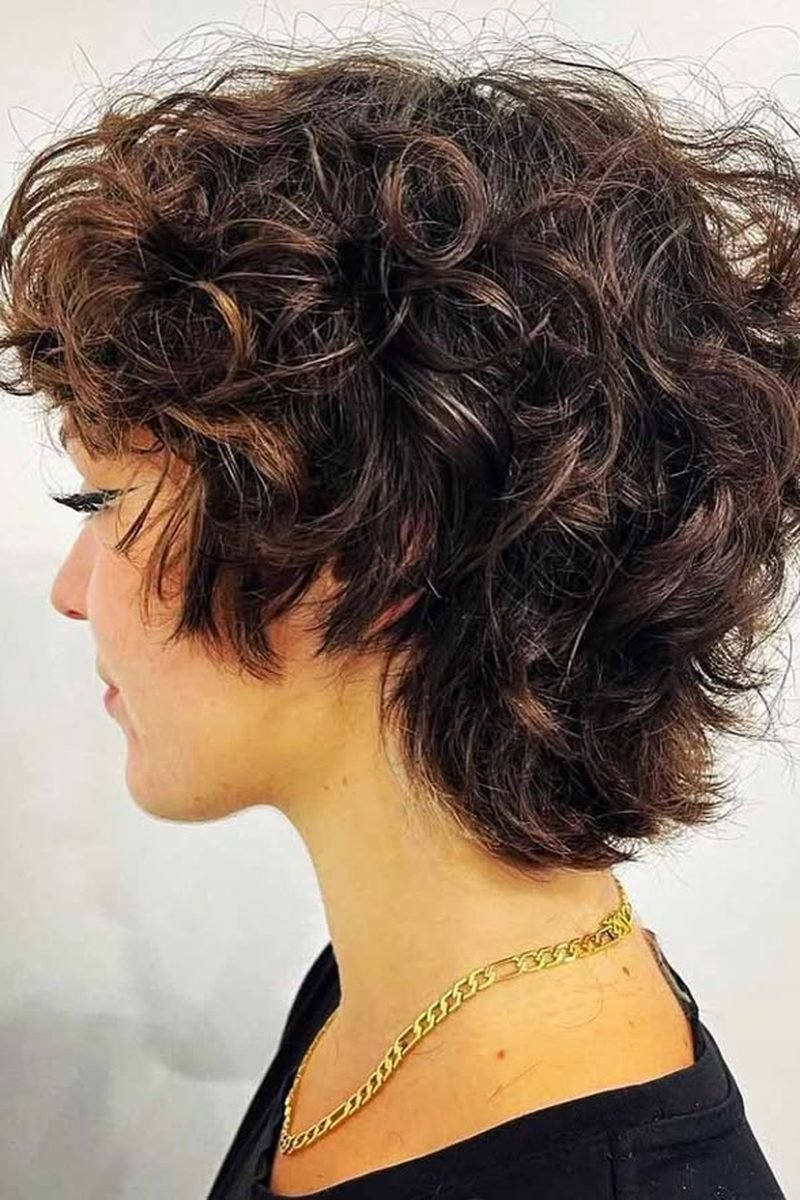
Photo: Mungfali
Tapering the nape on curly hair is a small change with an outsized effect. It removes the bulk that pushes curls outward at the neckline, so the silhouette narrows where you want it narrow and the crown keeps all the drama. This cut is a gift in humid weather, since the neck stays clear and the shape holds, and the short, textured top keeps the whole look modern.
Best for: thick curls that puff out at the neckline, and anyone who wears their hair up often. Styling tip: keep the nape tidy with a trim every six to eight weeks, since a grown-out nape is the first thing to lose the shape. Ask your stylist: a tapered nape shaped while the hair is dry, with the crown kept full.
28. Curly Shag with Stacked Crown Layers
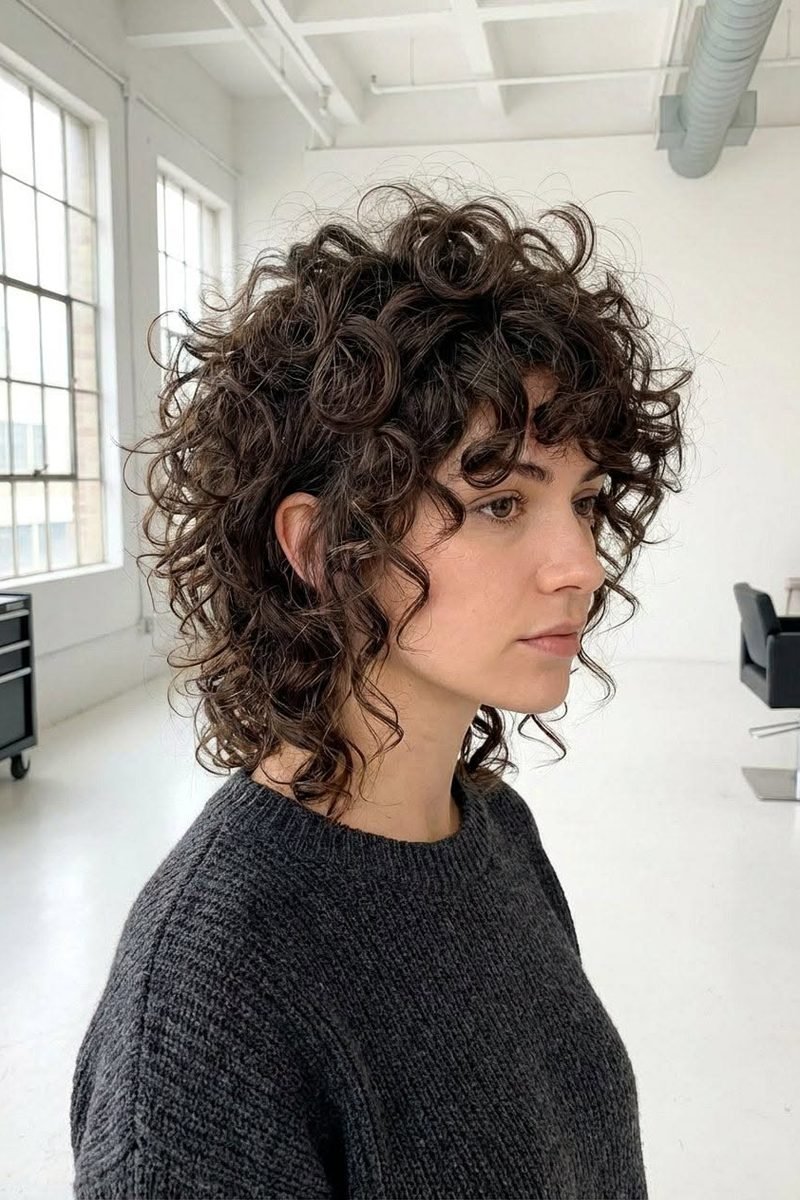
Photo: Pinterest
A longer curly fringe falls toward the eyes and merges into face-framing layers, while stacked curls at the crown create noticeable height from the side. The length lands around the jaw to upper neck, but the outline looks shaggy and lightly elongated rather than like a strict bob. The piecey, tousled finish helps the layered structure show clearly in profile, which is exactly what this version is for.
Best for: anyone who wants height at the crown without going short. Styling tip: lift the crown with your fingers while diffusing, and finish with a light-hold spray so the stack holds its shape. Ask your stylist: stacked crown layers with a longer fringe that blends into the face frame.
Finishing Ideas Worth Saving
29. Disco Halo Curly Shag with Big Rounded Volume
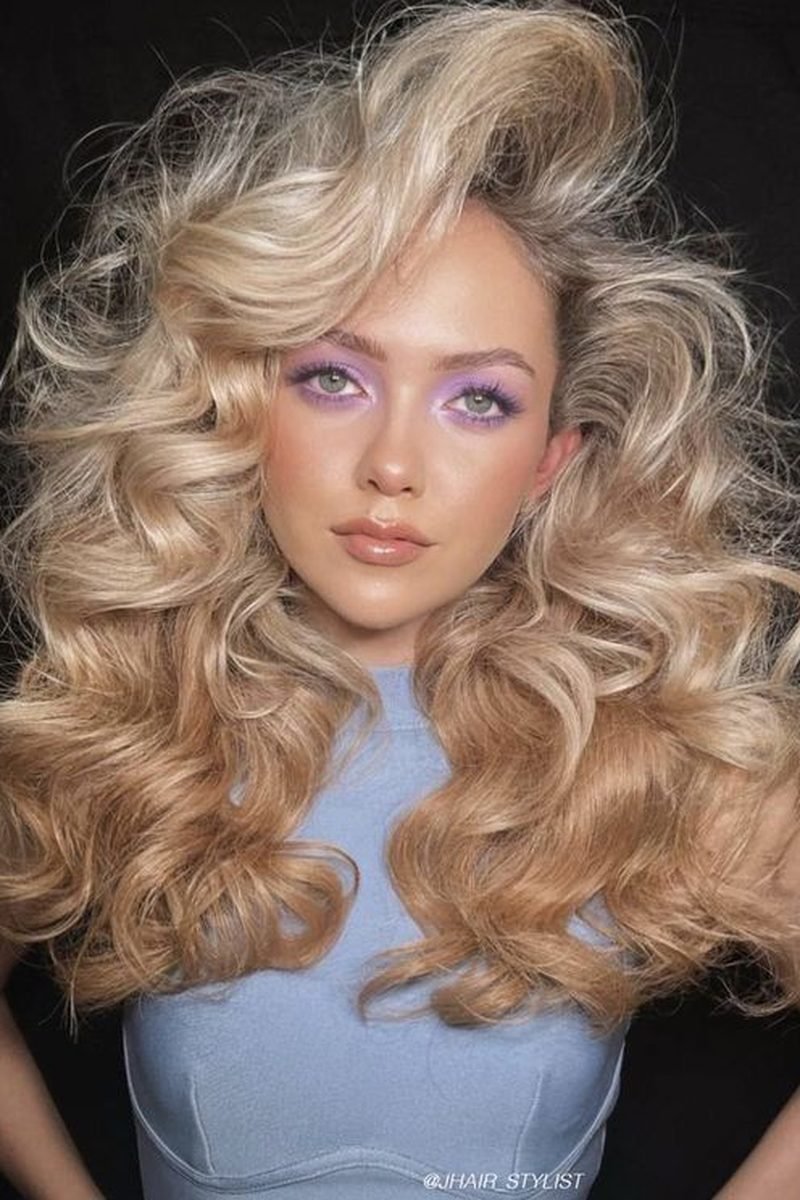
Photo: Marylandsummerjazz
A curly disco shag makes a full, face-framing shape part of the haircut. The shorter layers free the curls to spring, while the longer layers keep the ends visible and full, and the disco part refers to the broad, buoyant finish. The volume is fullest beside the temples and cheekbones, and the shape stays round instead of tapering into a narrow tail, which is what sets it apart from a wolf cut.
Best for: special occasions and anyone who loves big hair. Styling tip: pick the roots out into a full shape once dry, and use a volumising mousse at the roots before diffusing. Ask your stylist: a rounded halo shape with volume at the temples and cheekbones, no narrow tail.
30. Curly Shag for Women Over 50 with a Soft Fringe
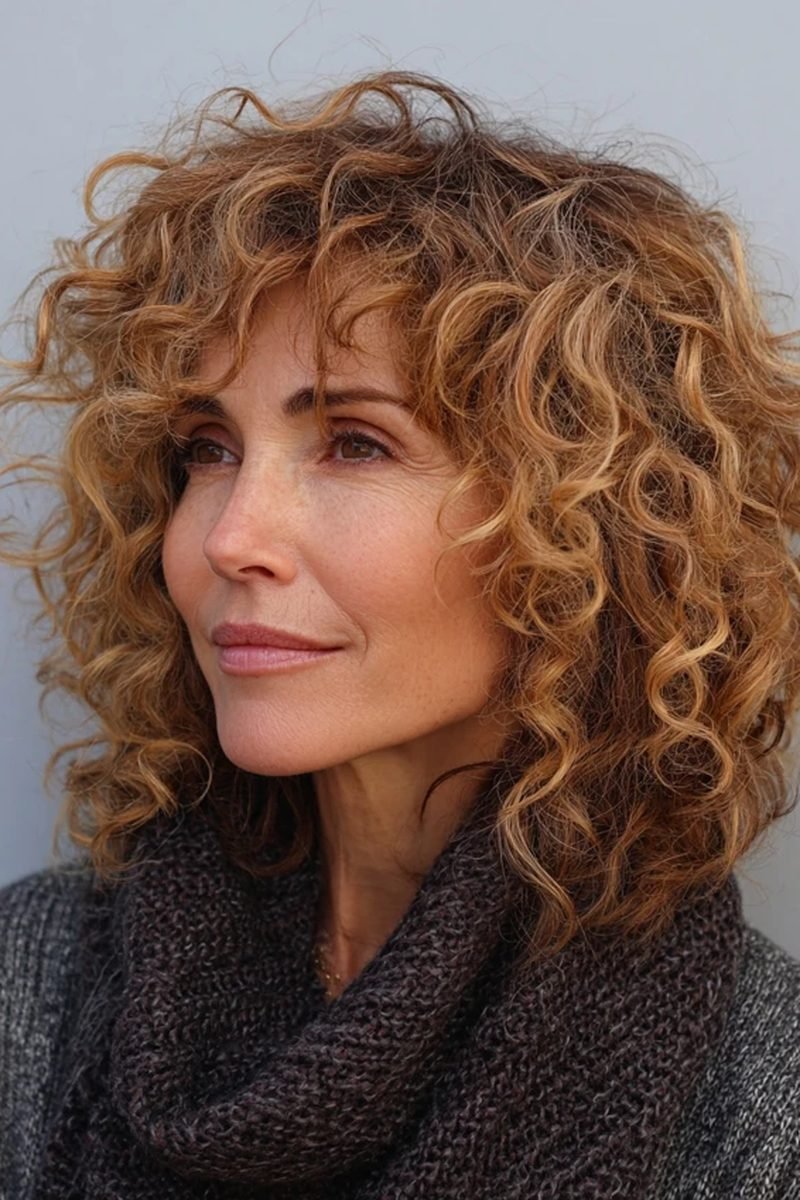
Photo: Samhairstyles
Shoulder length is the sweet spot for curly shags after 50: long enough that the curls have room to form their natural pattern, short enough that the layers can actually lift the crown instead of being dragged down. A soft curly fringe finishes it, with curls across the forehead breaking up the hairline and drawing attention to the eyes, and the face-framing layers are cut slightly shorter so they spring up around the cheekbones.
Best for: women over 50 who want bounce without high maintenance. Styling tip: ask for the fringe cut dry, curl by curl, since curly bangs shrink dramatically and wet-cutting almost always goes too short. Ask your stylist: a shoulder-length curly shag with a soft fringe, cut dry, with face-framing layers at the cheekbones.
31. Tousled Curly Lob
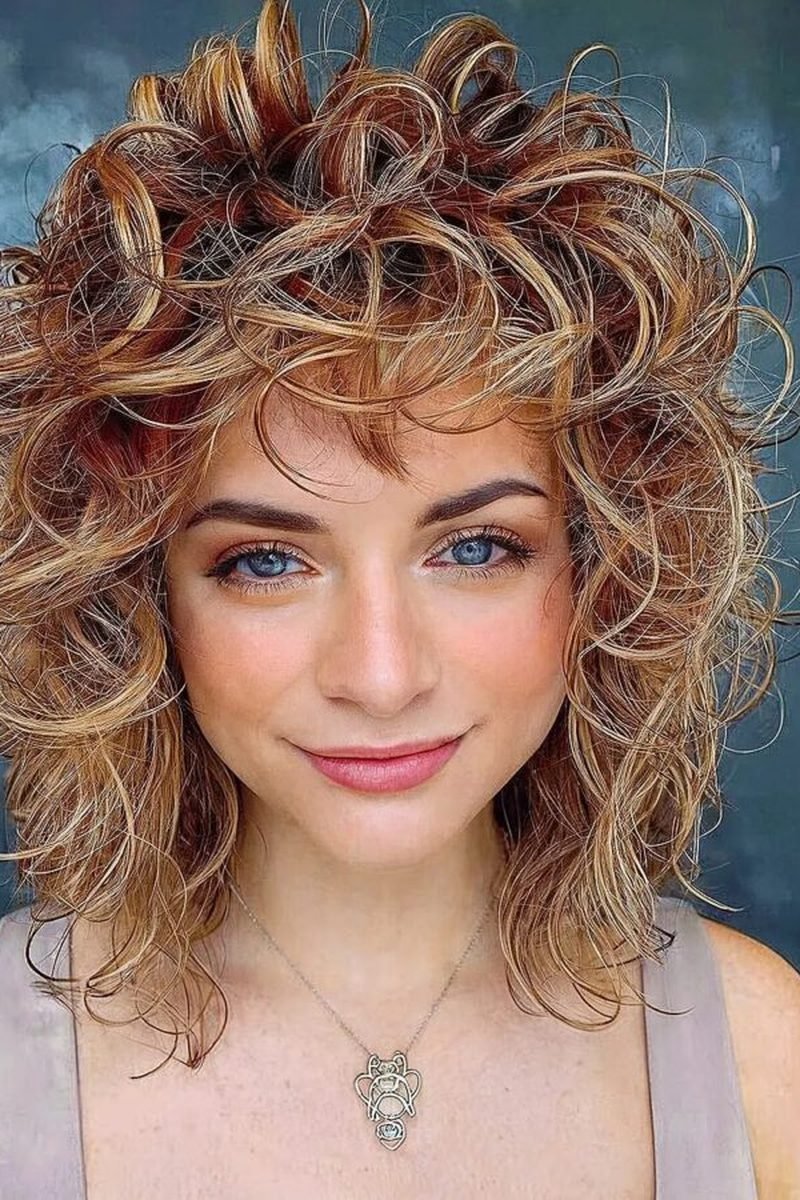
Photo: Latest Hairstyles
The next cut is a tousled curly lob, ending past the shoulders. The layers start subtly from the cheekbone area and get more defined through the ends to remove weight, and the touchable lengths soften tighter coils while still encouraging bounce and movement. It is a great option for low-maintenance days when you still want styling versatility.
Best for: loose waves to tight spirals that want length with movement. Styling tip: apply a styling foam and diffuse until 80 percent dry, then air-dry the rest, scrunching in sections to bring out the curl pattern. Ask your stylist: a tousled curly lob past the shoulders, layers from the cheekbones down.
32. Curly Shag with a Centre Part and Face-Framing Ringlets
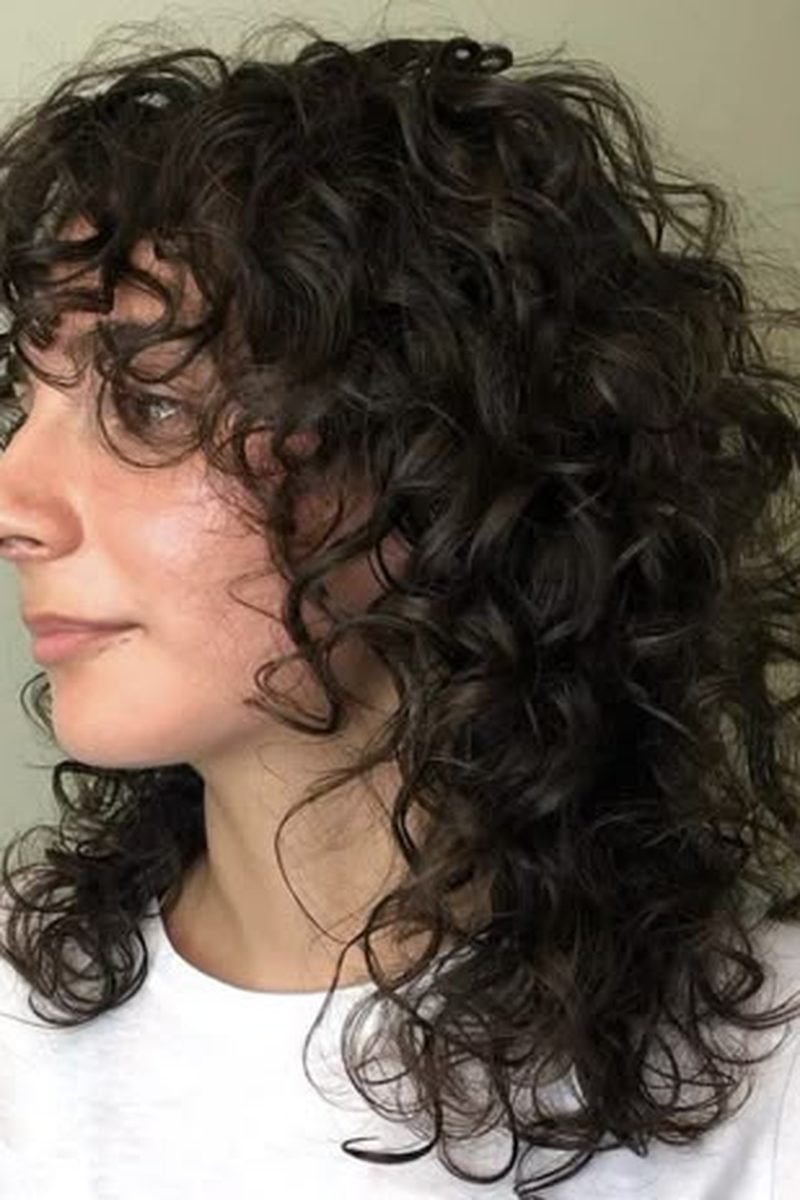
Photo: Pinvibe
A soft part near the centre replaces bangs, letting face-framing curls start high on the sides and fall around the cheeks and jaw. The shoulder-grazing length stays shaggy through the perimeter, with loose ringlets and curl clumps breaking up the outline. This is a helpful contrast to the fringe-heavy looks in this list, showing how a curly shag can rely on layered framing instead.
Best for: anyone who wants the shag shape without any fringe to maintain. Styling tip: part the hair while wet and let the front pieces fall naturally, then scrunch a little curl cream into the face-framing ringlets. Ask your stylist: a soft centre part with face-framing ringlets and a layered, shaggy perimeter.
How to Care for a Curly Shag in Winter
Curly shag hairstyles are easy to care for, but winter asks a little more of them. Cold air and indoor heating dry curls out, and hats flatten the crown lift the cut is built on, so moisture matters more in winter than in any other season. Wash with a moisturising, sulphate-free shampoo and conditioner, deep-condition once a week, and apply leave-in conditioner and curl cream to very wet hair so the curls clump into defined groups instead of frizzing into a halo. Our winter hair care routine covers the full wash-day plan, including how to stop static and hat hair.
Book trims for these curly shag hairstyles every eight to twelve weeks, because the shape depends on the layers staying short at the crown and full at the ends, and waiting longer lets the layers grow into one heavy length. Fringe versions need a quick fringe tidy every three to four weeks. Sleep in a loose pineapple or a satin cap to protect the shape overnight, and revive second-day curls with a curl reviver spray instead of re-wetting the whole head. On days you wear a hat, lift the roots with your fingers once you take it off, and a little dry shampoo at the crown brings the volume straight back.
Frequently Asked Questions
What is a curly shag hairstyle?
A curly shag is a layered haircut for curly hair, with short layers at the crown, longer layers around the face, and light, textured ends. The layers remove weight from inside the cut so the curls can spring up, which gives the hair bounce, movement, and a rounded shape instead of a flat top and a wide, triangular bottom.
Does a curly shag suit all curl types?
Yes — curly shag hairstyles suit all curl types, but the layering changes with the curl type. Loose waves need longer, connected layers, medium curls suit the classic shag best, and tight curls and coils need a dry cut with careful layer placement because of shrinkage. The key is a stylist who cuts curls dry or curl by curl, so the shape is built at your real length.
Should curly hair be cut wet or dry?
Dry, or at least in its natural curl state. Wet-cutting curly hair is guesswork, because every curl shrinks a different amount when it dries, and what looks even wet can spring up unevenly. A stylist who cuts curls dry or curl by curl can see the true shape as they work, and for curly shags specifically, this is non-negotiable.
Will layers make my curly hair frizzier?
Bad layers will, but good layers will not. Frizz on curls usually comes from thinning shears or razor-cutting, which shred the curl pattern, not from layering itself. A curly shag cut curl by curl with clean shears actually reduces frizz, because separated, well-hydrated curls clump into defined groups instead of rubbing into a halo.
How often should I trim a curly shag?
Every eight to twelve weeks is the right rhythm for most versions. The cut grows out more gracefully than straight cuts, because the shape lives in the curl pattern as much as in the cut. Short versions need trims every six to eight weeks, fringe versions need a quick fringe tidy every three to four weeks, and undercut or tapered-nape versions need the nape tidied every four to six weeks.
Can I wear a curly shag with fine hair?
Yes. Curly shag hairstyles work with fine hair as long as the layers stay soft and long. Too many short pieces can make fine ends look thin, so ask for a few longer crown layers with a strong lower edge, and use a light mousse instead of heavy creams. The lift at the crown makes fine curls look fuller, while the full edge keeps the ends from looking sparse.
Final Thoughts
The curly shag is a rare cut that manages to be both timeless and right on trend. Few hairstyles make such a clear statement with so little effort, and few are as easy to make your own, whether you keep the classic shoulder-length version, add a fringe, go bold with a wolf-shag, or warm it up with caramel or copper. Of all the curly shag hairstyles in this list, the key is choosing the version that fits your curl type, your face, and your daily routine, and then keeping the layers fresh with regular trims.
Save the curly shag hairstyles you love from this list, take a photo to your stylist, and be clear about the length, the fringe, and the finish you want. With the right cut and a little daily care, the curly shag can be the hairstyle that finally feels like you.
You May Also Like
If you liked these curly shag ideas, these two are worth a look next: Curly Wolf Cut Ideas for a bolder, more separated take on layered curls, and French Bob Hairstyles for a shorter, Parisian take on bobs and fringes.