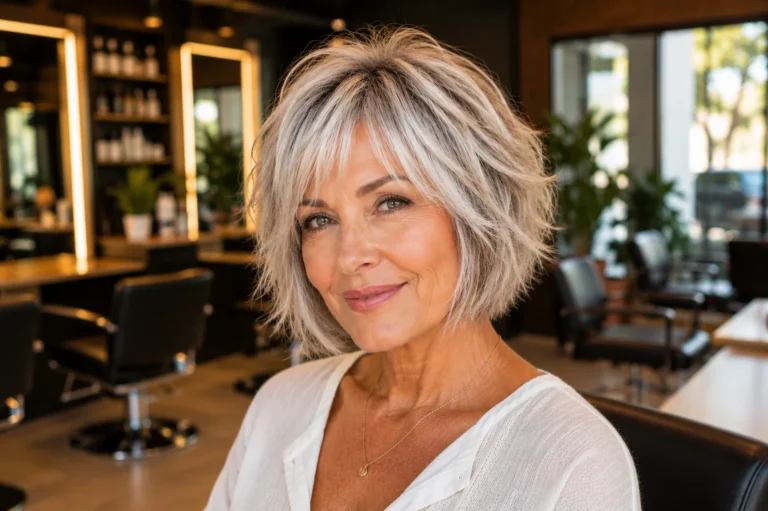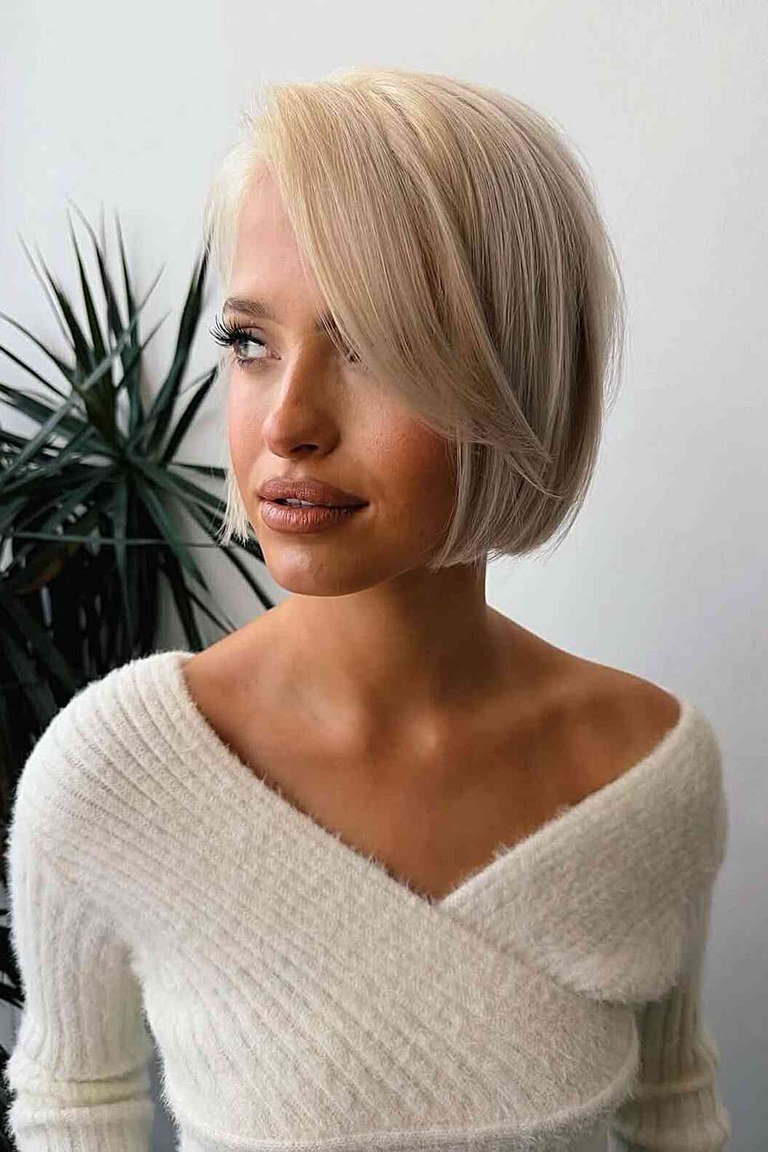
28 Italian Bob Haircuts for a Chic, Voluminous Look
The Italian bob is having a big moment, and it is easy to see why. Cut somewhere between the chin and the collarbone, with the weight kept in the ends and just enough softness inside to make the hair bend and swing, it looks expensive without looking overdone. Below you will find 28 Italian bob haircuts, from the classic chin-length version to soft modern twists, bangs, colour, and easy ways to style it at home. Each one comes with a real photo, who it suits best, and a tip you can use right away.
What makes this cut different from a French bob or a blunt bob is the finish. The French bob sits higher and shorter, while a French bob leans on a fringe for its charm. The Italian bob is longer, fuller at the bottom, and the ends curve under or flick out instead of sitting dead straight. Whether you love a polished blowout or a wash-and-go wave, there is an Italian bob here for you. Read through the ideas, save the ones that catch your eye, and take your favourite to your stylist with a clear picture of what to ask for.
Why the Italian Bob Works So Well
The Italian bob works because its shape does the styling for you. The heavy, rounded perimeter keeps the ends full, so the hair holds a bend instead of falling flat, and the soft interior shaping stops it from looking like a helmet. That combination is why Italian bob haircuts photograph so well and why they keep showing up on everyone from women in their twenties to women in their fifties. It is a cut that looks deliberate even on a second-day hair day.
It is also more flexible than it looks. You can keep the classic version for a polished, editorial feel, or soften it with waves, layers, or a warm colour. The part can move from centre to deep side, the fringe can be blunt or wispy, and the length can run from the jaw to the collarbone. That range is why the Italian bob keeps trending: one cut, many moods, and a shape that grows out gracefully between appointments.
How to Choose the Right Italian Bob for You
Start with your face shape. A chin-length Italian bob with soft, rounded ends suits oval and heart-shaped faces beautifully, because the weight at the bottom balances a narrow chin. If your face is round, ask for a version that ends just below the chin with a slightly longer front, which will add length. Square faces look great with a softer finish and face-framing pieces, which gently round the jawline. A blunt bob is the sharper cousin of this cut, so if you want softer lines, the Italian bob is the better pick.
Next, think about your hair texture. The classic Italian bob looks its best on straight or slightly wavy hair, because the bevelled ends need a smooth finish to show their curve. If your hair is curly, ask for a dry cut so your stylist can build the rounded outline at your real length, since curls shrink as they dry. Fine hair benefits from the blunt line, which makes the ends look thicker, while thick hair needs invisible internal layers so the shape does not puff out into a triangle.
Finally, be honest about your lifestyle. This cut needs a trim every six to eight weeks to keep the perimeter full, and the ends need a quick pass with a round brush or a flat iron on the days you want the polished look. If you love a simple routine, pick one of the wash-and-go Italian bob haircuts in this list, like the tousled or beachy versions, which look better slightly undone. If you enjoy styling your hair, the blowout and flipped-out versions will reward the effort.
Classic Italian Bobs
1. Classic Chin-Length Italian Bob
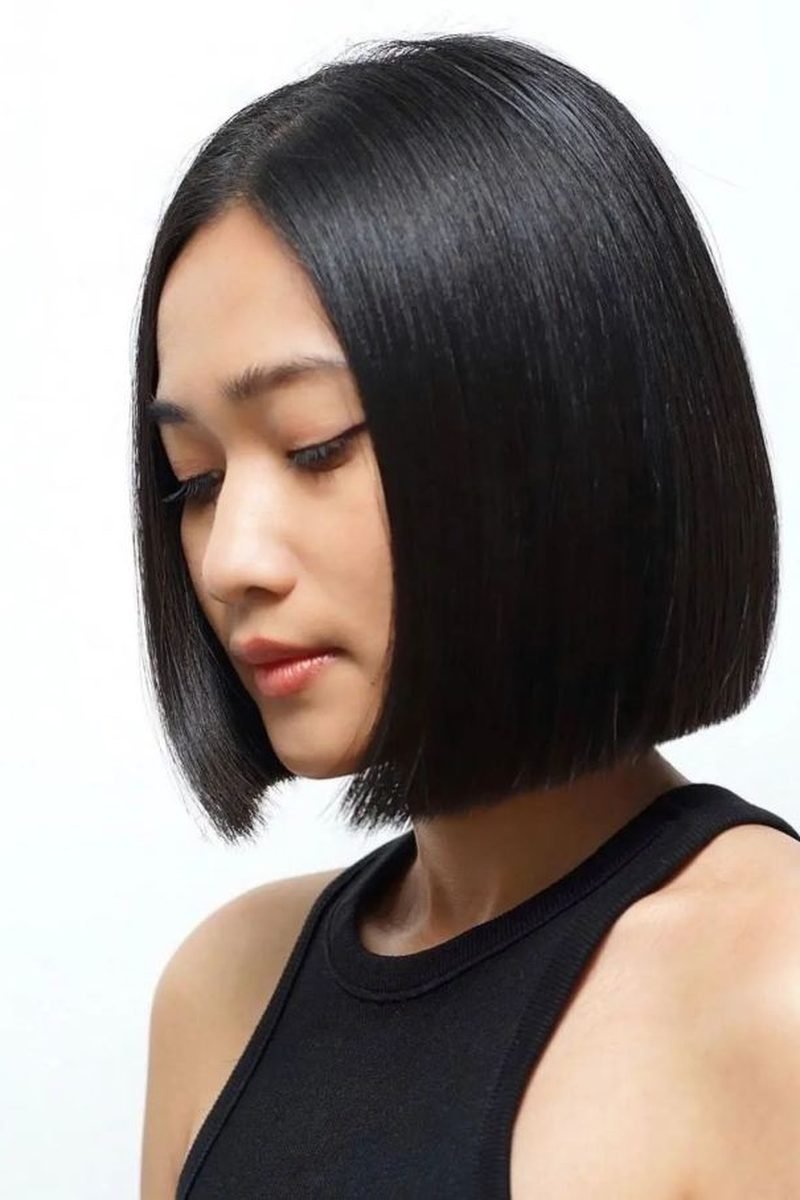
Photo: Cambiotaglio
This is the reference version, and it is still the most requested. One length, cut at the chin, with a heavy perimeter whose corners are rounded so the ends curve toward the face. The weight sits at the bottom, which gives the cut its bounce and keeps natural texture under control. It looks best when the hair is glossy and smooth, so a shine serum on the ends makes a real difference.
Best for: thick, straight-to-wavy hair and oval or heart-shaped faces. Styling tip: blow-dry with a large round brush, turning the ends under, and finish with a drop of lightweight shine serum. Ask your stylist: a one-length bob at my chin, blunt but rounded at the edges, no layers.
2. Collarbone Italian Bob with Soft Ends
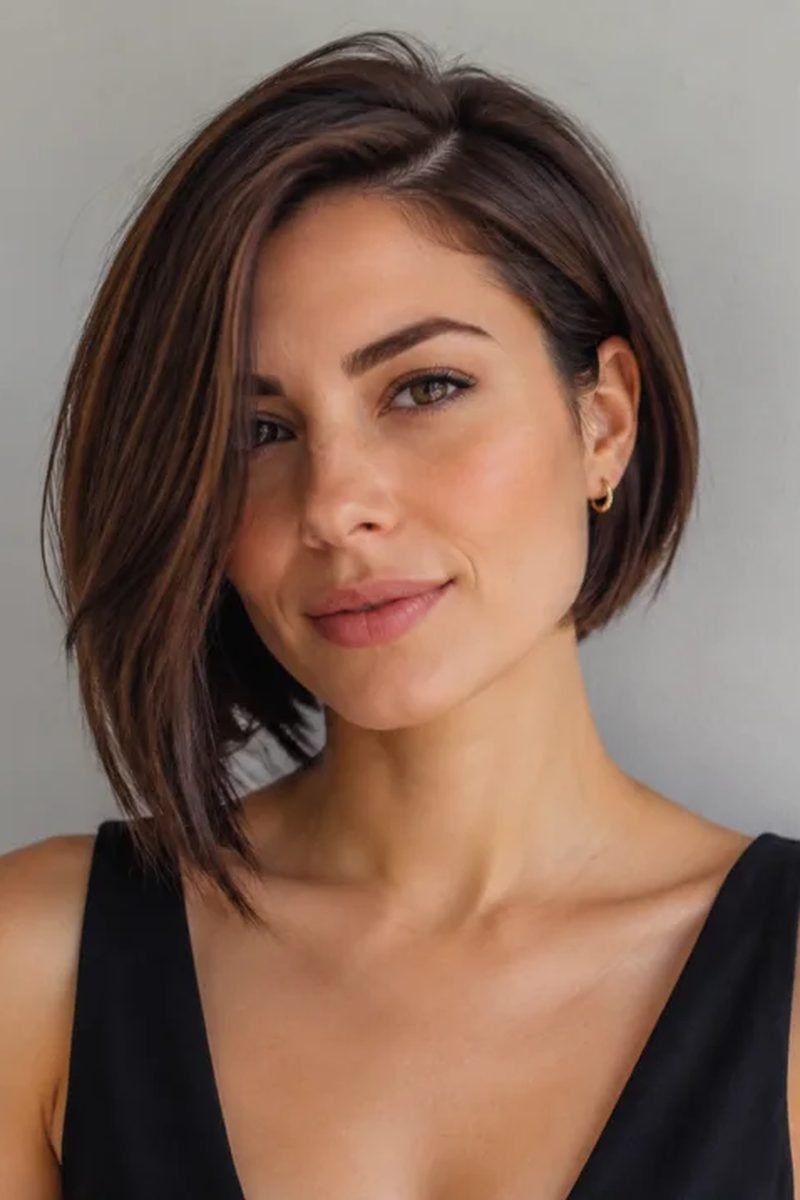
Photo: Tangolines
The longest length that still counts as an Italian bob rests between the jaw and the collarbone, with the ends softened rather than cut razor-straight. It is the most forgiving version to grow out, and it suits anyone who loves the Italian shape but is not ready to lose the length. The soft bevel at the ends keeps the outline rounded instead of square.
Best for: square or angular faces, and anyone growing out a shorter bob. Styling tip: ask your stylist to soften the ends with point-cutting, then style with a round brush and a little smoothing cream. Ask your stylist: a one-length cut at my collarbone, heavy perimeter, ends point-cut just enough to soften.
3. Sleek Polished Italian Bob
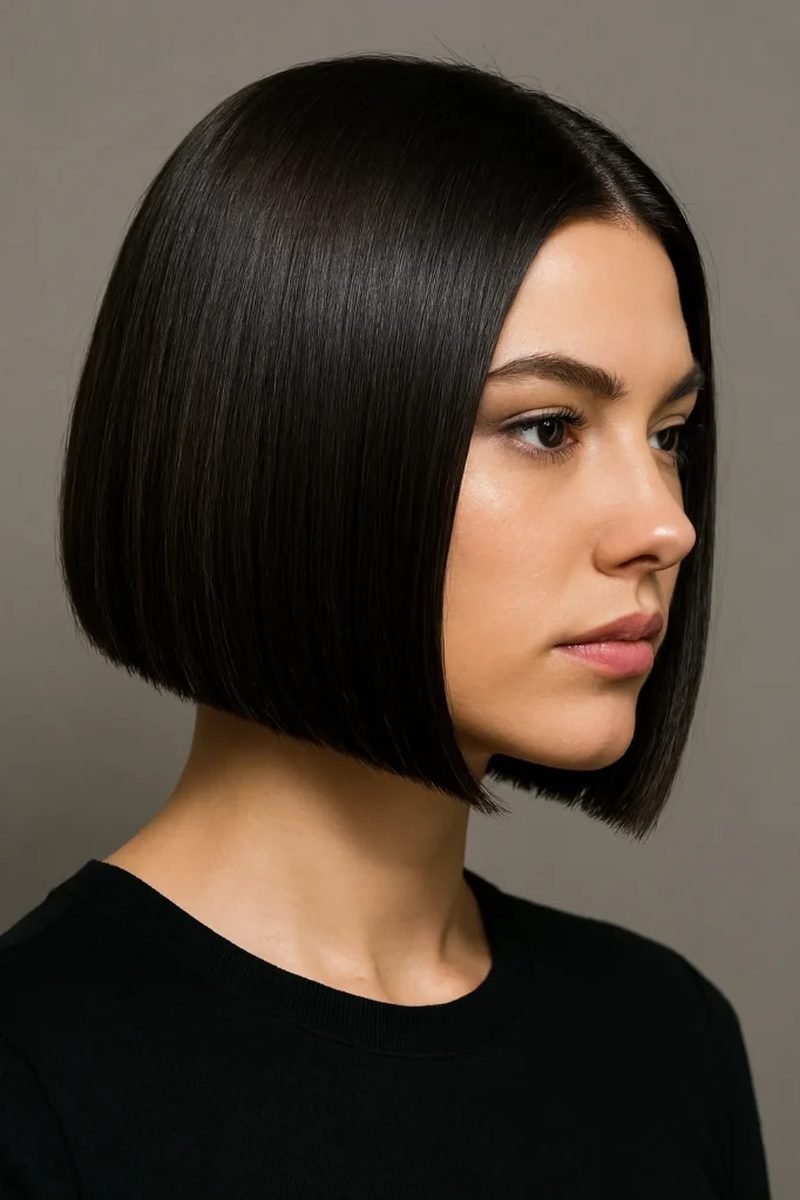
Photo: Instyluxe
Straight, glossy, and behaving itself. This is the version that looks expensive in a way that is hard to put your finger on, because the clean line and the mirror shine do all the talking. It shows off the cut more than any other version, so it rewards a precise cut and regular trims. Keep the rest of your look simple and let the hair be the statement.
Best for: straight or easily smoothed hair and oval or long faces. Styling tip: blow-dry smooth first, then pass a flat iron through small sections and finish with a pea-sized drop of hair oil from the mid-lengths down. Ask your stylist: a precise one-length bob, chin to jaw, with a very clean edge.
4. Textured Italian Bob
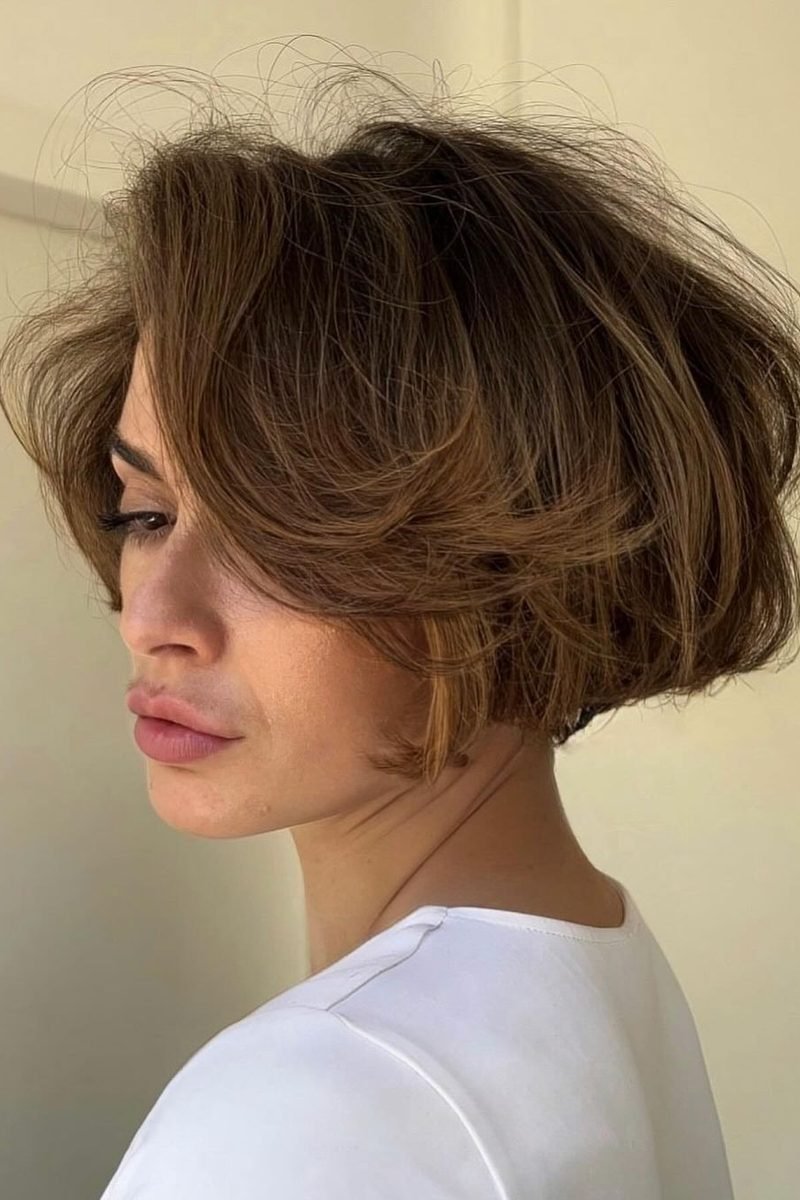
Photo: Women Club
Instead of a perfectly straight blunt line, this version uses point-cutting to break up the ends and create a lived-in, slightly undone texture. It moves, it breathes, and it looks like something you were born with. This is the Italian bob to choose when you want the shape but not the polish, and it air-dries beautifully.
Best for: wavy hair of medium thickness and oval, heart, or long faces. Styling tip: air-dry with a little styling cream scrunched through the ends, and avoid heavy products that weigh the texture down. Ask your stylist: point-cut ends and light internal texture, keeping the perimeter full.
5. Italian Lob
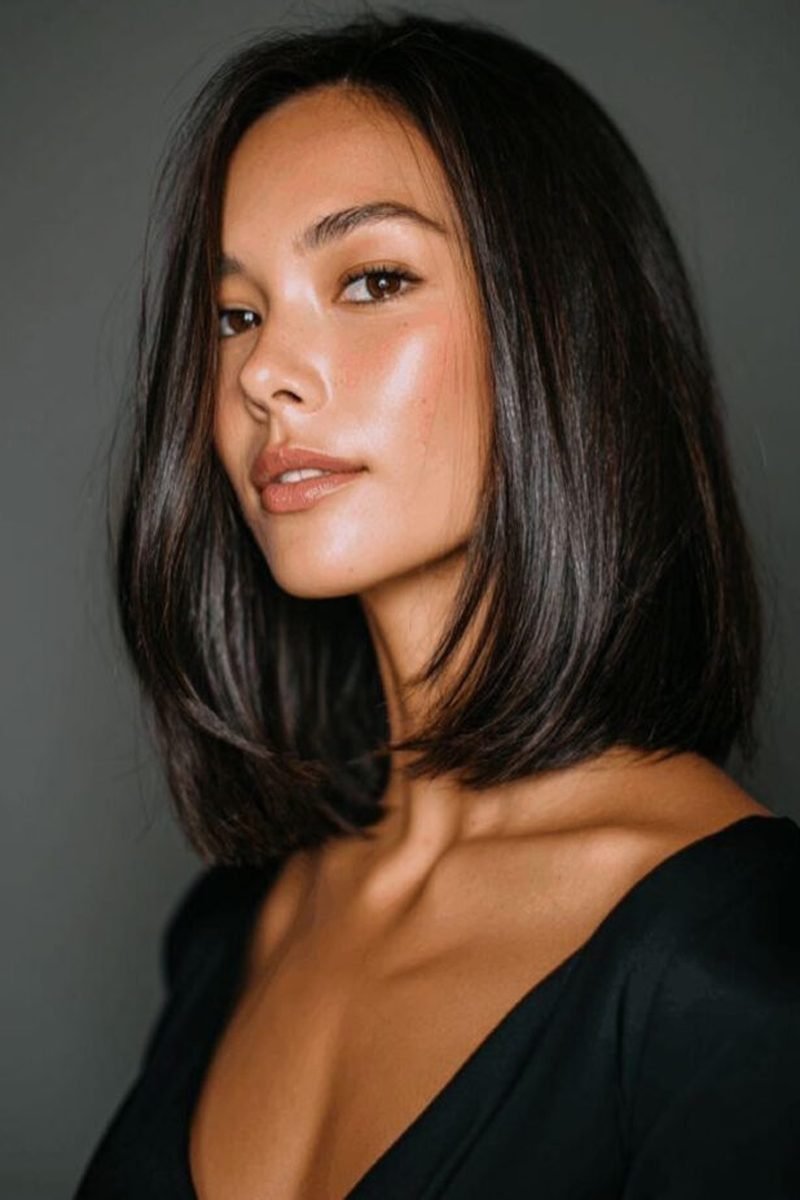
Photo: ClioMakeUp
Not ready to lose the length? The lob version grazes the collarbone and keeps internal layers minimal, cut with the same Italian principles: a heavy perimeter, soft ends, and a shape that swings. It is the easiest way into the trend, and it grows out more gracefully than any shorter bob, which matters when your next appointment is ten weeks away rather than six.
Best for: all face shapes, and anyone trying the Italian bob for the first time. Styling tip: wear it with a loose wave by wrapping wide sections around a large curling wand and leaving the last inch out. Ask your stylist: a one-length lob at my collarbone with the weight left in the ends.
Italian Bobs by Hair Type
6. Italian Bob for Fine Hair
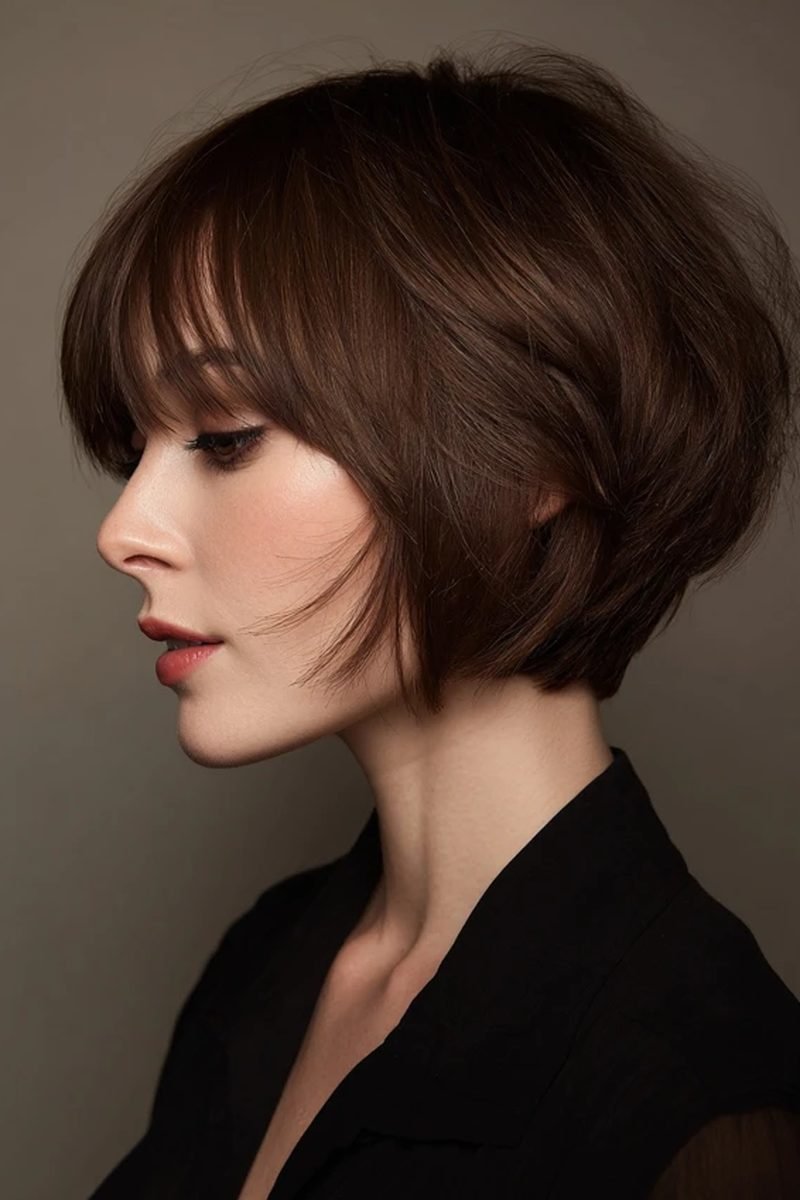
Photo: Yournextinspo
Fine hair benefits most from this cut, because the blunt perimeter creates the illusion of density. The trick is keeping the edge crisp but not bulky, so the roots stay lifted instead of dragged flat. A rounded, full shape like this one makes fine hair look twice as thick, and it holds a bend far better than a layered cut would.
Best for: fine or low-density hair and oval or heart-shaped faces. Styling tip: apply a volumising mousse at the roots before blow-drying, and avoid heavy oils, which undo the volume the cut creates. Ask your stylist: a blunt one-length bob at my chin, cut dry, with no thinning shears.
7. Italian Bob for Thick Hair
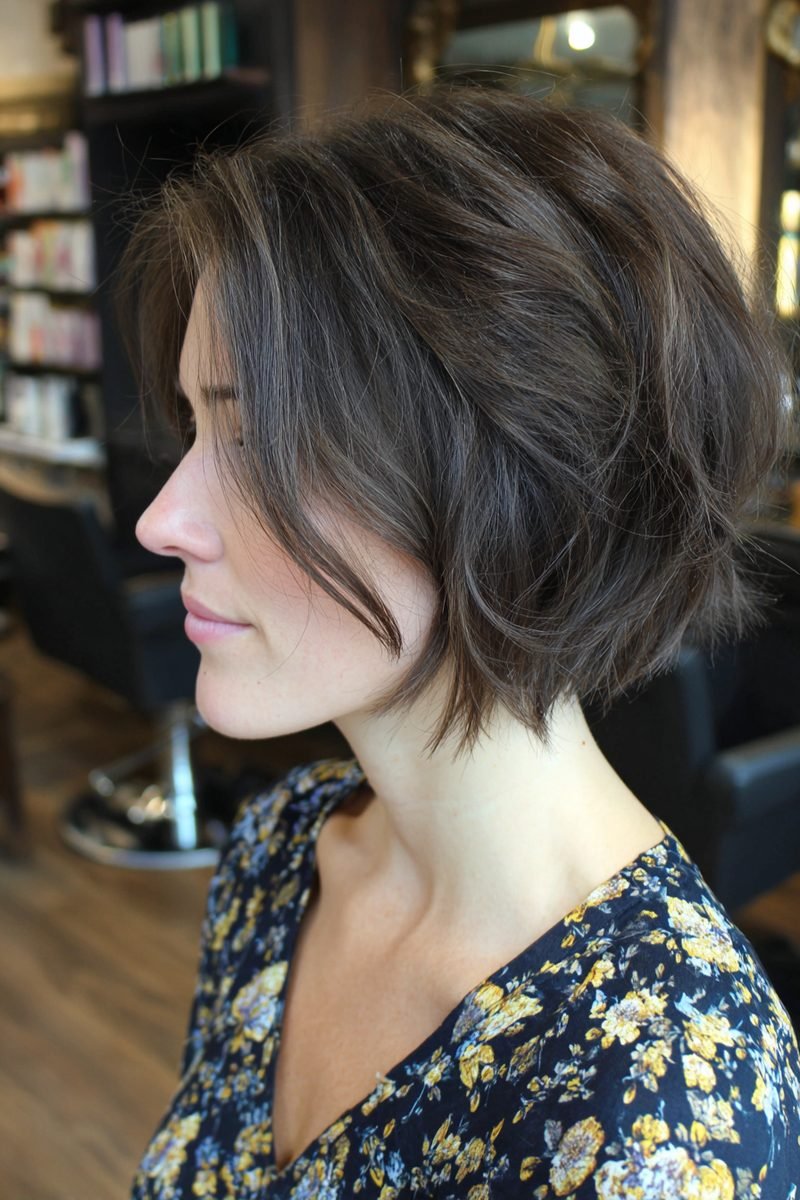
Photo: Stylesixtytwo
Very dense hair can turn a one-length bob into a triangle, so the fix is internal: the stylist removes weight from the mid-lengths underneath while the outer perimeter stays solid. The result is a piece-y, layered texture on the inside with the same full Italian outline on the outside. It dries faster, moves more, and holds a wave longer than a solid thick bob.
Best for: thick, coarse, or high-density hair. Styling tip: apply a lightweight styling cream to damp hair and air-dry, or rough-dry upside down for lift at the roots. Ask your stylist: a heavy outline, but take weight out from inside, not from the ends.
8. Wavy Italian Bob with Sea-Salt Texture

Photo: Pinterest
Loose waves and a heavy perimeter suit each other: the weight at the ends stops waves from flicking outward, and the waves stop the bob from looking too perfect. This is the beachy side of the Italian bob, and it is the easiest version to live with. Mist, scrunch, and leave it alone until it dries.
Best for: natural waves of any density. Styling tip: mist sea salt spray through damp hair, scrunch, and do not touch it while it dries, so the waves set in soft, separated pieces. Ask your stylist: a one-length bob cut to sit at my chin once my waves have dried, with a rounded edge.
9. Curly Italian Bob
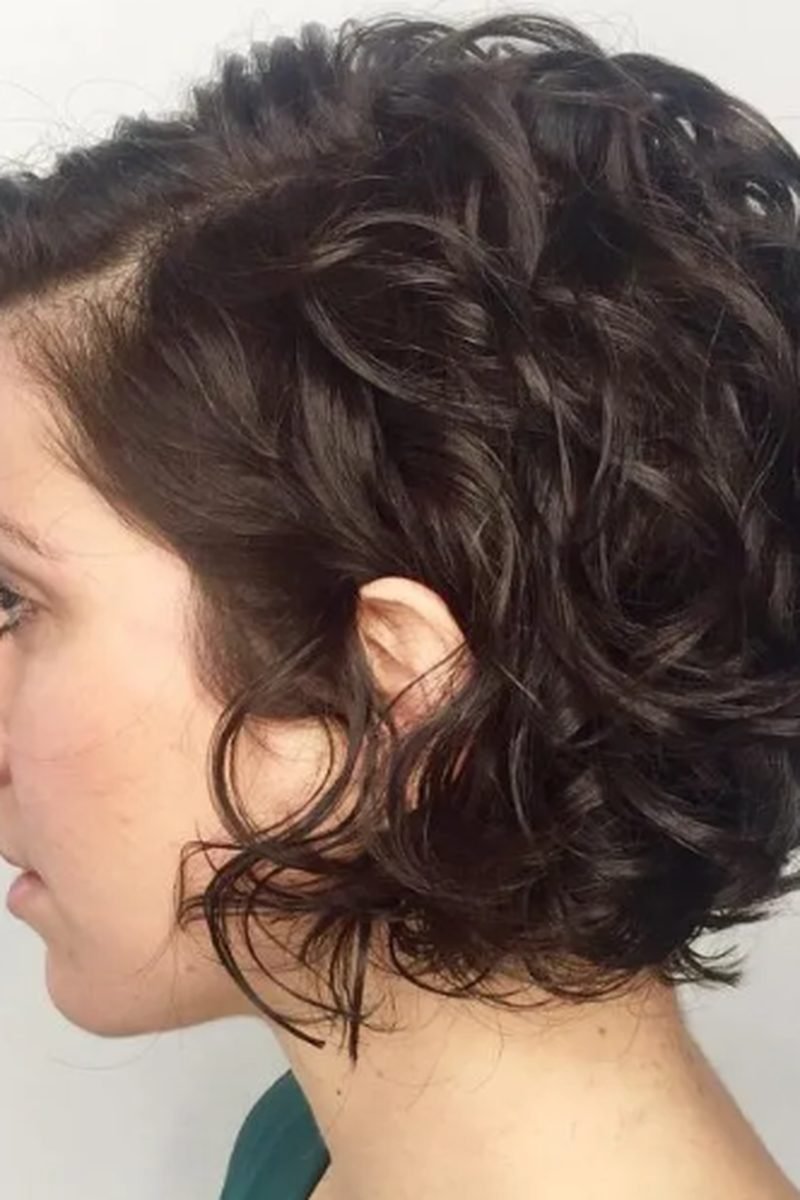
Photo: Honesthairfactory
Curls shrink as they dry, so a bob cut wet at the chin can spring up to the cheekbone. The answer is a dry cut, curl by curl, by a stylist who works with curly hair. The result is a soft, rounded shape that lets the curl pattern create the texture the Italian bob is known for, instead of fighting it.
Best for: loose to tight curls. Styling tip: refresh second-day curls with a spray bottle of water mixed with leave-in conditioner, and use fingers or a wide-tooth comb only when the hair is wet. Ask your stylist: a rounded, heavy-bottomed shape, cut dry, allowing for shrinkage.
10. Silver Italian Bob
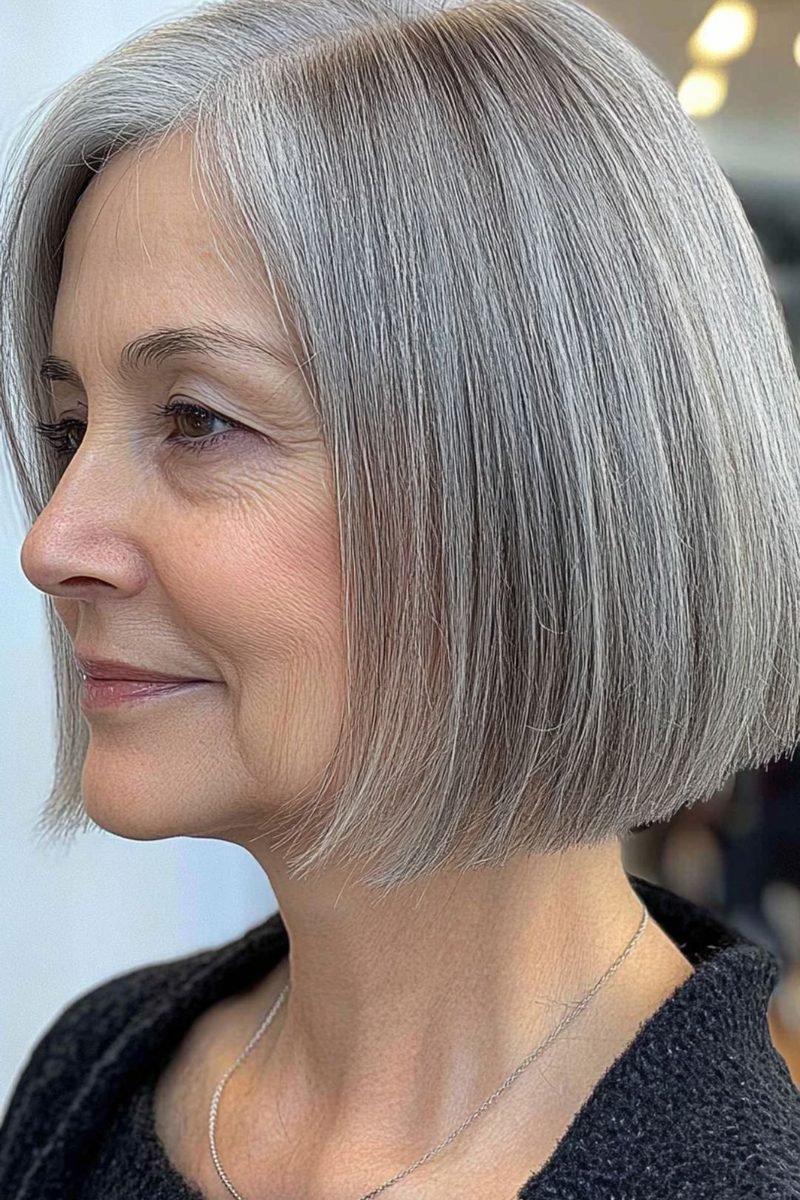
Photo: Pinterest
Grey hair can feel drier and wirier, and a weighty one-length line helps it sit smoothly while looking deliberate. The silver Italian bob is polished without daily styling: the shape does the work, and the cool silver tone makes the rounded outline look even more intentional. It is one of the most flattering Italian bob haircuts for women embracing their natural grey.
Best for: grey or silver hair, and women who want a polished shape without daily styling. Styling tip: condition generously and use a violet shampoo occasionally to cancel yellow tones. Ask your stylist: a chin-to-jaw Italian bob with a rounded edge and no short layers on top.
Italian Bobs with Bangs and Fringe
11. Italian Bob with Curtain Bangs

Photo: Womentattooideas
This combination has been everywhere for the past year, and for good reason. The curtain bangs part in the centre and fall softly on either side of the face, adding dimension and softening a strong jawline, while the bob itself stays full and rounded. The bangs also give fine hair the illusion of more going on up front. If you love soft face-framing, our curtain bangs hairstyles roundup has more versions to try.
Best for: most face shapes, especially oval and heart, and longer faces or high foreheads. Styling tip: blow-dry the bangs away from the face with a round brush for thirty seconds, and they will fall into place. Ask your stylist: an Italian bob with a curtain fringe that starts at my cheekbones and blends into the sides, cut dry.
12. Italian Bob with Blunt Bangs
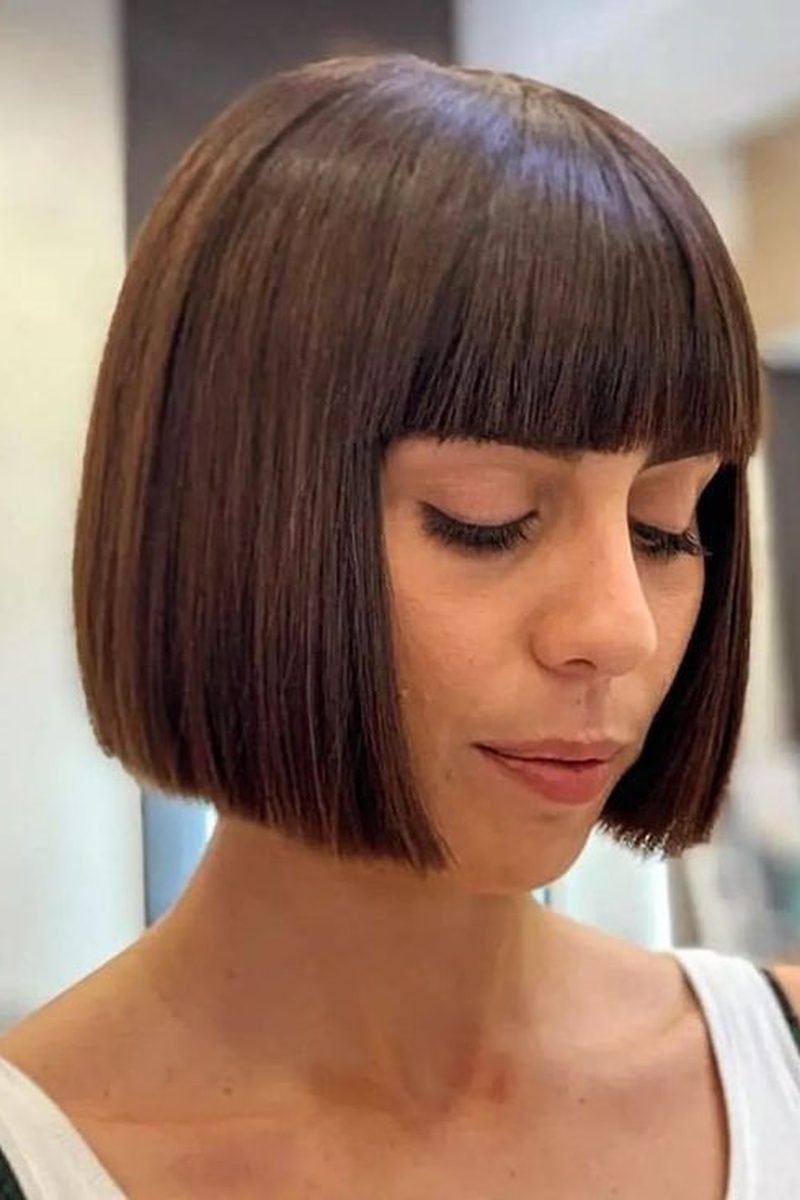
Photo: Artofit
A heavier, straight-across fringe shifts the whole mood toward 1960s Italian cinema. The bangs should hit just at the eyebrow, no higher, paired with a chin-length blunt cut for the strongest version of this look. It photographs beautifully from every angle, but it is a higher-maintenance choice: the bangs need a trim every three weeks or so to keep them from creeping into your eyelashes.
Best for: oval and heart-shaped faces with straight hair. Styling tip: dry the fringe first, straight down with a small round brush, before you style the rest, so it sets flat and even. Ask your stylist: a blunt fringe at brow level with a chin-length Italian bob.
13. Italian Bob with Bardot Bangs
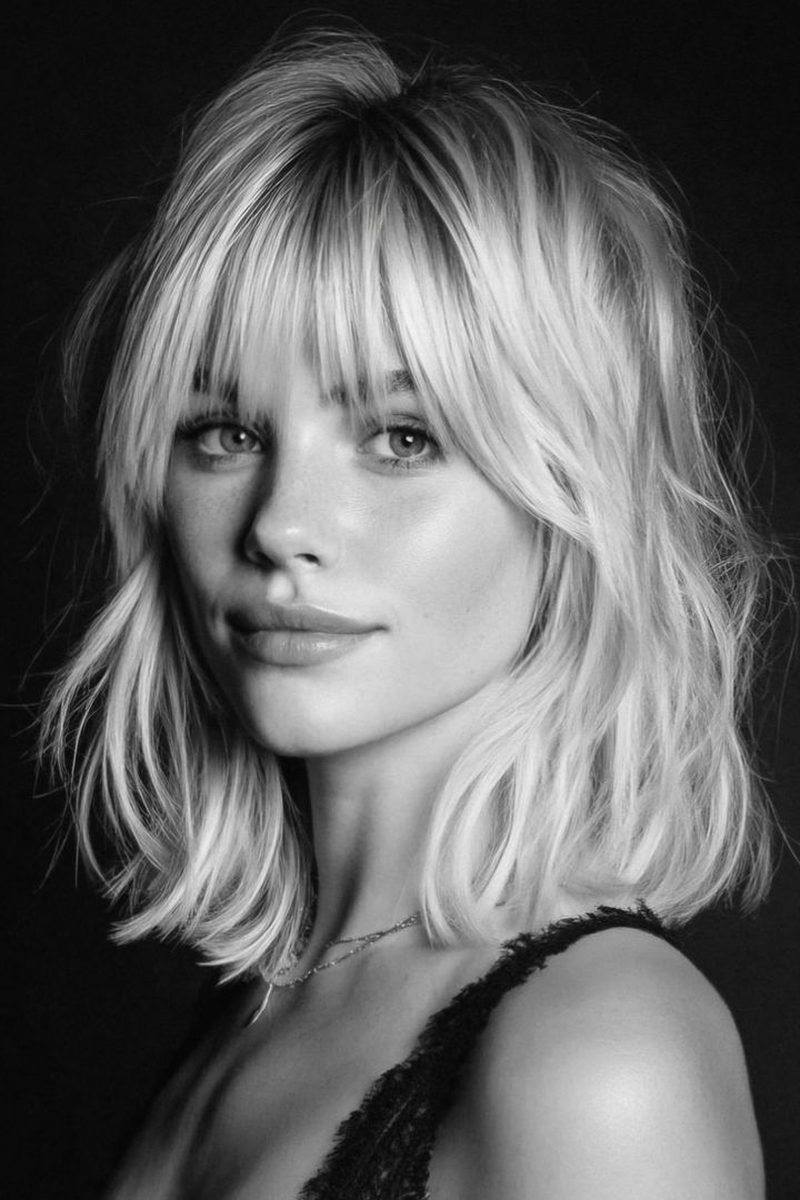
Photo: Pinvibe
Longer, swept-aside bangs that blend into the length, named after Brigitte Bardot but borrowed enthusiastically by Italian cinema. The fringe starts above the brow and feathers down to the cheekbone, giving a slightly undone, bedroom-soft quality to an otherwise structured cut. It is the most forgiving fringe in this list, because it grows out into face-framing layers instead of an awkward in-between stage.
Best for: oval and heart-shaped faces. Styling tip: style the bangs with a small round brush and a few seconds of cool air to set the curve, sweeping them to one side. Ask your stylist: a long Bardot fringe that starts at the brow and feathers to the cheekbone.
14. Italian Bob with Side-Swept Fringe
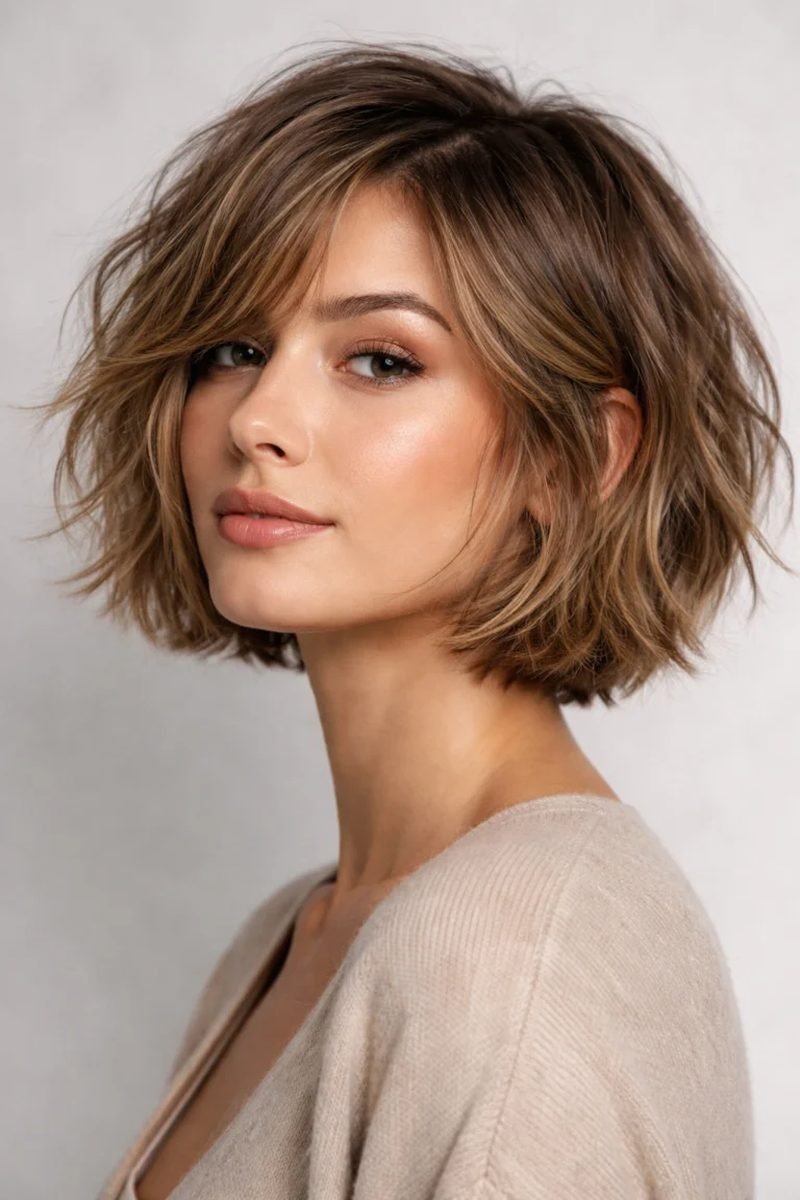
Photo: Hairtical
A long fringe swept to one side crosses the forehead on a diagonal, which softens a broad forehead or a heart-shaped face without committing to a full fringe. It is the easiest fringe to live with: it tucks behind the ear when you want it gone, and it gives the whole cut a gentle asymmetry that feels modern rather than severe.
Best for: broad foreheads or heart-shaped faces. Styling tip: blow-dry the fringe in the opposite direction first to build lift at the root, then sweep it to where you want it. Ask your stylist: a long side-swept fringe that blends into the front length of the bob.
15. Italian Bob with Wispy Bangs

Photo: Womentattooideas
Light, airy bangs bring a delicate touch to the structured Italian bob. The wispy fringe softens the strong outline without hiding the face, and it works beautifully with a wavy or tousled finish. It is the best first fringe if you are nervous about bangs, because it is light enough to grow out without drama.
Best for: most face shapes, especially round faces that want softness without width. Styling tip: keep the fringe light on product, a tiny amount of styling cream is enough, and let the ends stay piece-y rather than perfectly smooth. Ask your stylist: a wispy fringe cut into the front, light and piece-y, ending just above the brow.
Italian Bobs by Part and Finish
16. Italian Bob with a Deep Side Part
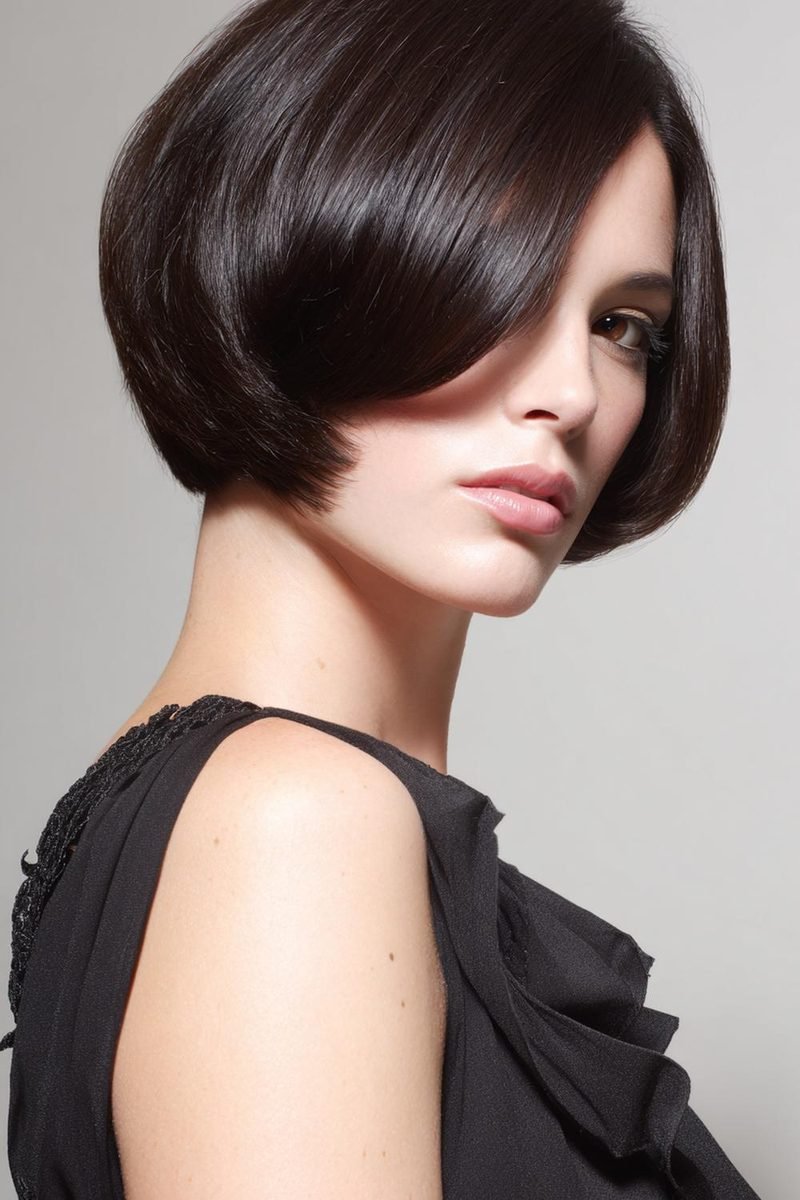
Photo: Thehairstyles
A deep side part adds asymmetry without changing the cut itself. The off-centre weight gives a slight old-Hollywood feel while keeping the soft Italian texture, and it hides a forehead you would rather not feature without resorting to bangs. It also builds instant lift at the crown, which is why this is the version stylists reach for when a client wants more volume without layers.
Best for: straight and wavy hair with natural lift, and oval or long faces. Styling tip: spritz damp roots with a volumising spray, then blow-dry the part in the opposite direction first to build lift, before pushing it to where you want it. Ask your stylist: a one-length bob balanced so I can wear it on either side or in the middle.
17. Italian Bob with a Centre Part
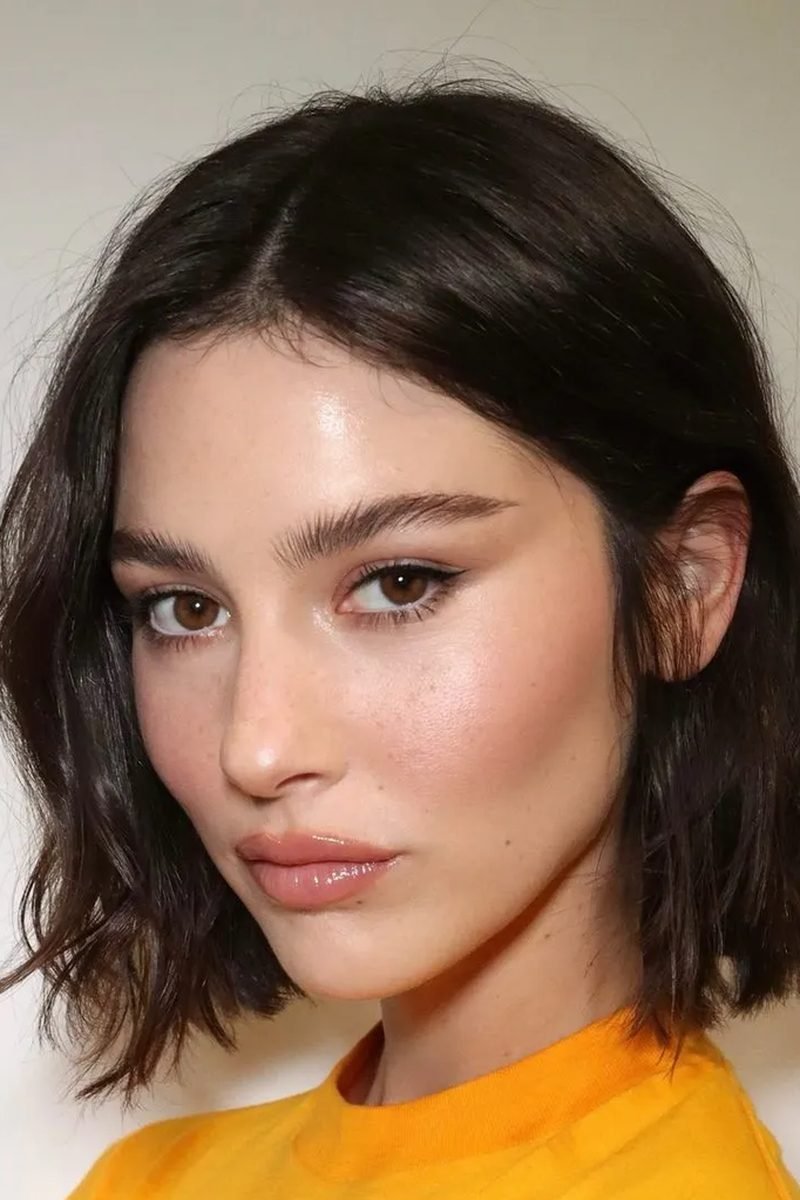
Photo: Haircutai
The centre part takes the classic Italian bob and makes it feel very editorial. It creates a perfect symmetry that works especially well on oval faces, and it is the version you see on runways: clean, deliberate, and beautiful. The key is working with your natural part rather than forcing one, because a centre part that fights your hairline will never sit still.
Best for: oval and long faces with straight to wavy hair. Styling tip: part the hair while it is damp, then blow-dry each side away from the face so the ends curve under evenly. Ask your stylist: a one-length bob with a balanced centre part and rounded ends.
18. Italian Bob with Flipped-Out Ends
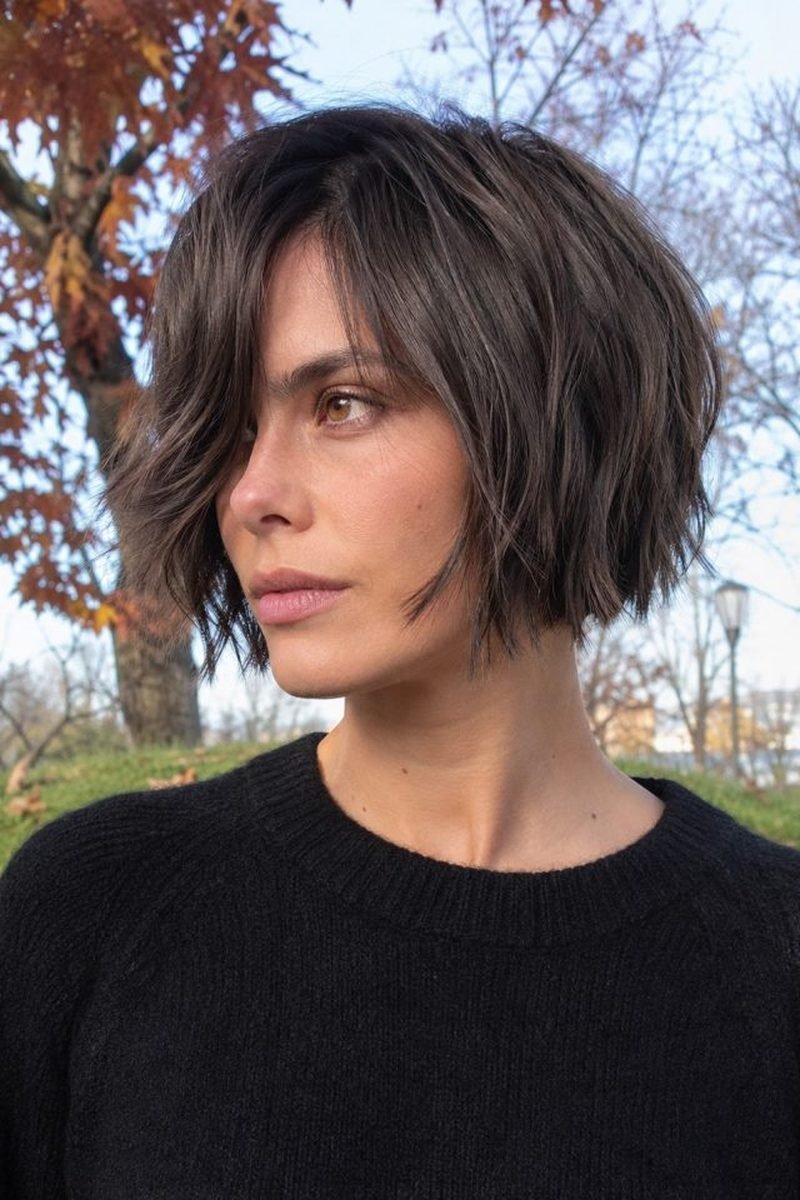
Photo: Nextstyleideas
The flick at the ends is the signature detail that started the modern revival, turning the classic under-curve outward for attitude. Instead of tucking under, the ends flip out in a soft, playful flick that gives the whole cut movement and personality. It is the boldest finish in this list, and it suits anyone who wants their bob to feel fun rather than formal.
Best for: straight to wavy hair with a natural bend at the ends. Styling tip: blow-dry with a round brush rolling outward at the hem, or flick the ends out with a flat iron, turning it away from the face at the last inch. Ask your stylist: an Italian bob with the ends flicked out rather than tucked under.
19. Round-Brush Blowout Italian Bob
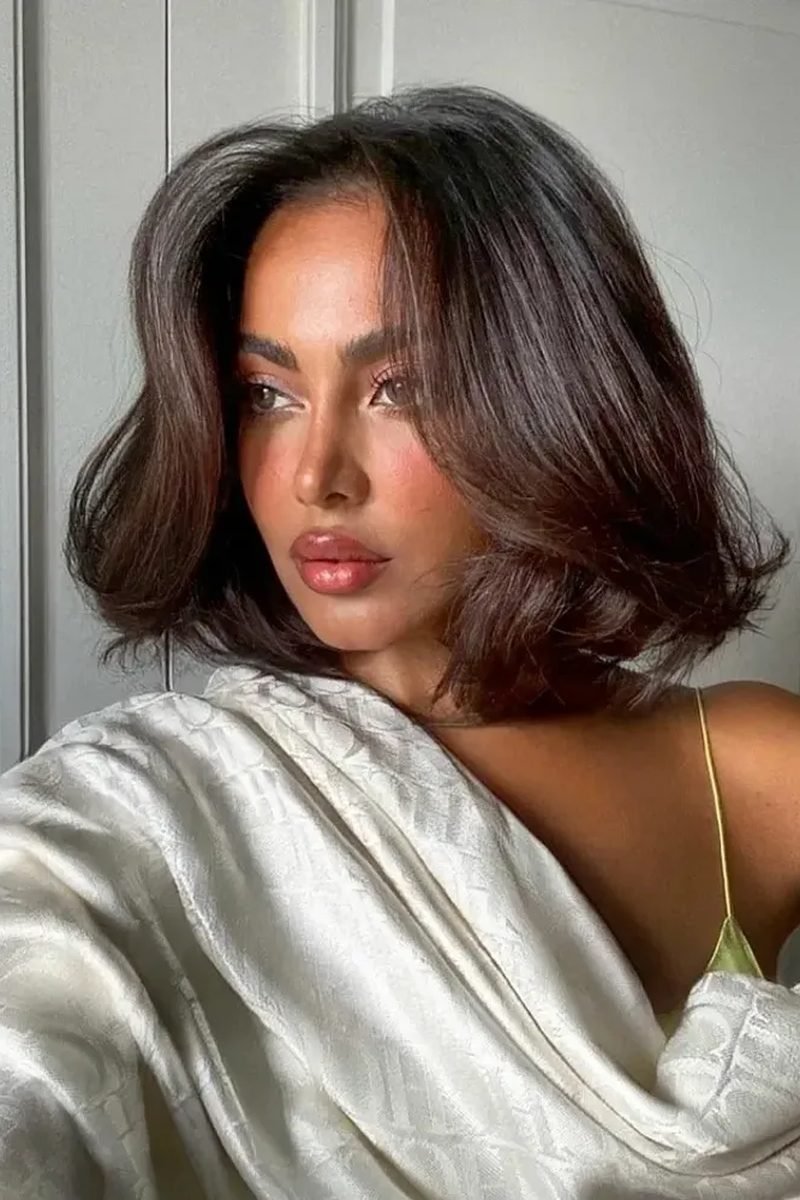
Photo: Flawlesshair
This is the polished, volume-forward finish, and the one that made the Italian bob famous on red carpets. The hair is dried in sections over a large round brush, turning the ends under, so the whole shape swells with soft volume. It takes ten minutes with a dryer, but the result looks like a salon blowout even on second-day hair.
Best for: straight to wavy hair of medium or thick density. Styling tip: apply a volumising mousse at the roots and a smoothing cream through the ends of damp hair, then dry in sections over a large round brush. Ask your stylist: a heavy rounded perimeter that will bevel under when I blow-dry it.
20. Tousled Italian Bob
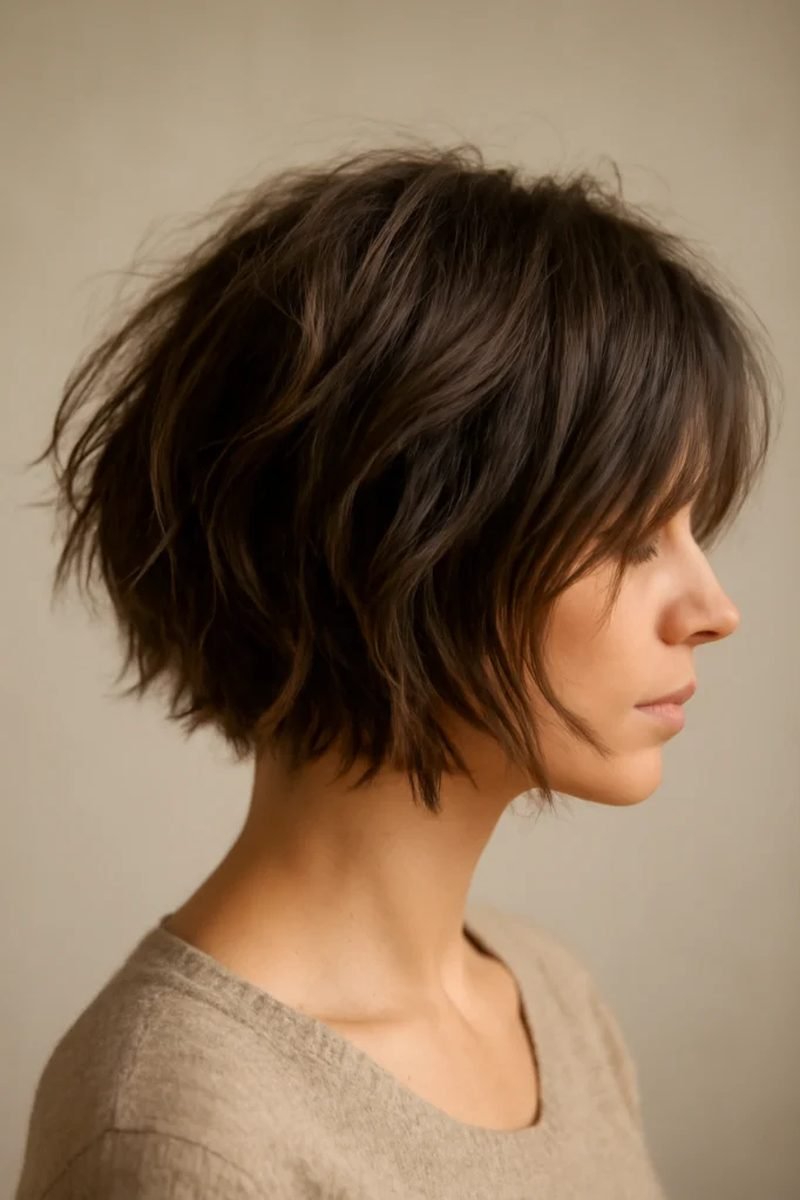
Photo: Hairtical
The undone cousin of the classic cut. Rough-dry upside down for three minutes, mist with sea salt spray, and scrunch. The point-cut perimeter from your stylist makes this work: blunt ends look frayed when tousled, while point-cut ends look intentional. This version suits anyone who chose the cut because they wanted lower maintenance, not a new full-time job, and it forgives second-day hair surprisingly well.
Best for: wavy hair and anyone who wants a wash-and-go routine. Styling tip: skip the brush entirely and use your fingers to separate the pieces once the hair is dry. Ask your stylist: point-cut ends with light internal texture for an undone finish.
21. Tucked-Behind-the-Ear Italian Bob
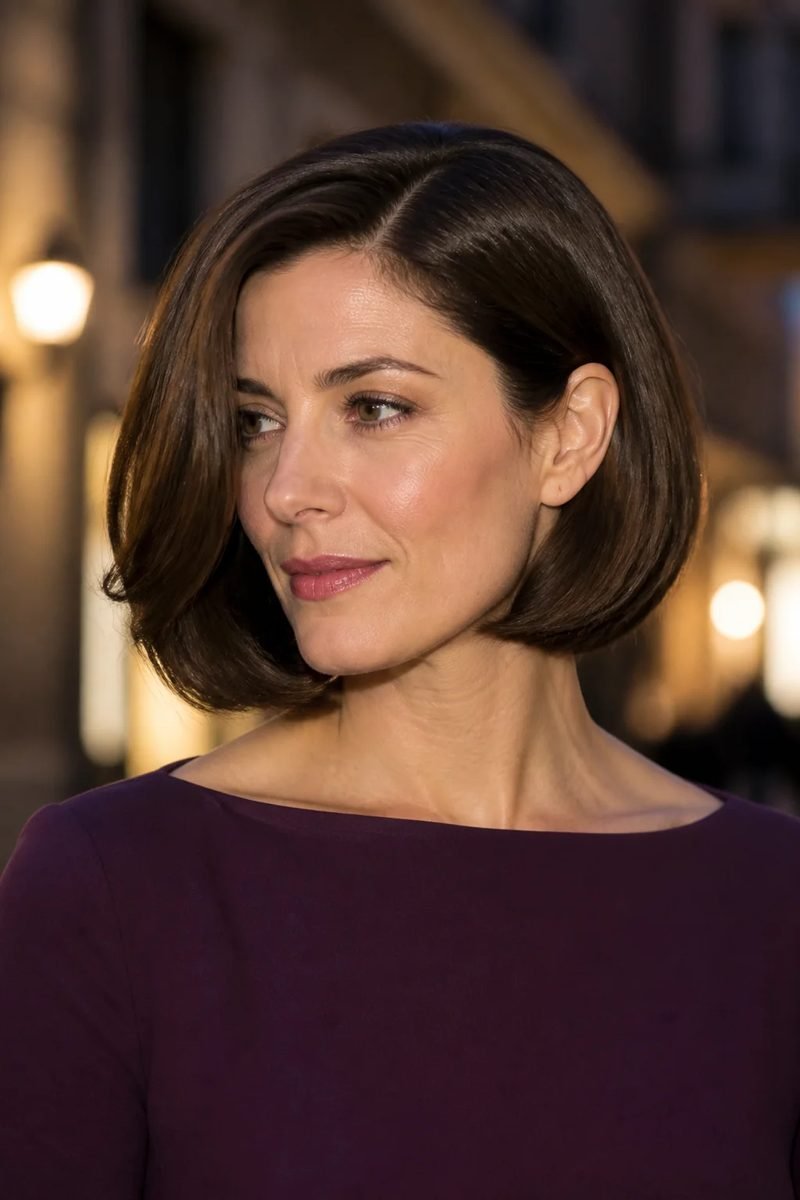
Photo: Homelifeweekly
Tucking one side behind the ear shows the jawline and makes the heavy side look fuller by contrast. It is the simplest styling trick in this list, and it changes the whole mood of the cut: one side neat and open, the other side full and swinging. It also helps thick hair feel less overwhelming, and it shows off earrings beautifully.
Best for: narrow faces and thick hair. Styling tip: tuck the side with less volume behind the ear and use a light cream to hold it in place, keeping the other side full. Ask your stylist: a one-length bob long enough at the front to tuck securely, about an inch below my chin.
22. Single-Bend Italian Bob
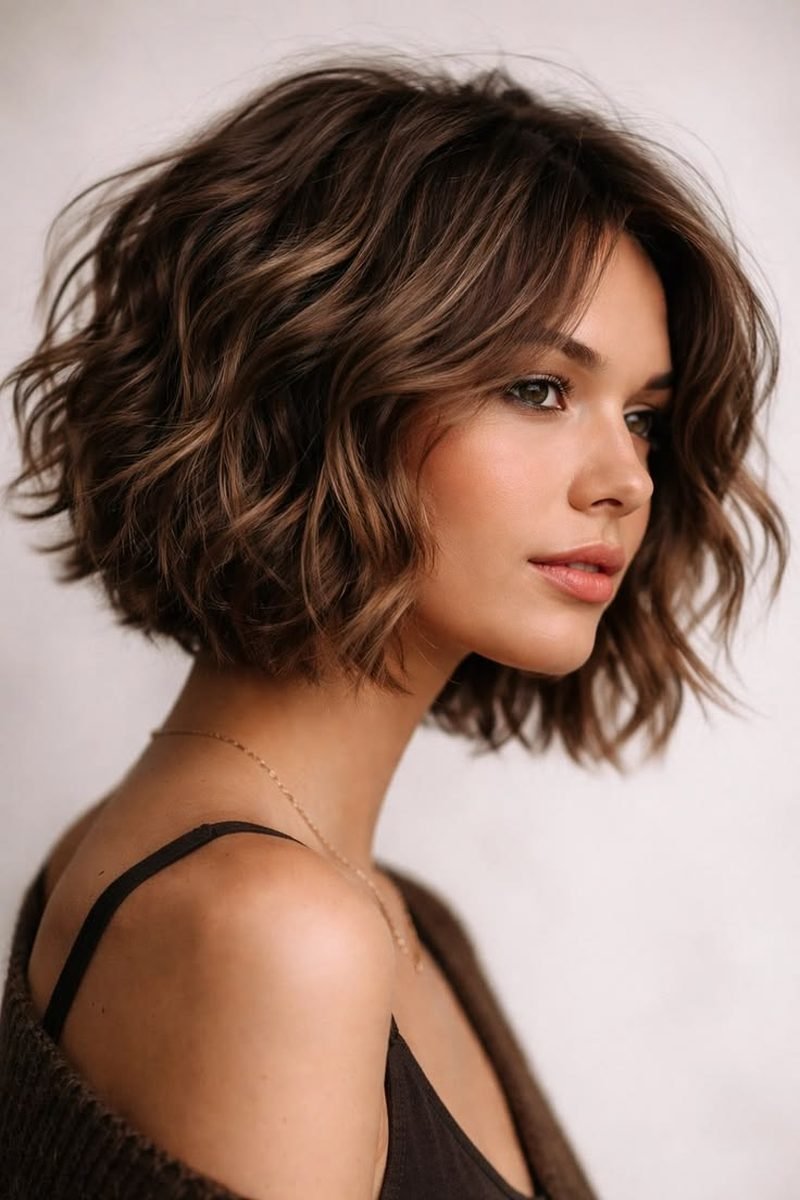
Photo: Pinterest
A single loose bend through the mid-lengths, with the ends left straight, keeps the blunt outline visible while adding width and movement. It is the most subtle styling idea in this list, and it is perfect for straight hair that falls flat, because one bend is all it takes to make the shape look alive. A texturising spray gives the bend its hold.
Best for: straight hair that falls flat. Styling tip: wrap wide sections around a large curling wand for a few seconds and leave the last inch out, then brush through gently with your fingers. Ask your stylist: a one-length bob, chin to collarbone, with solid ends I can leave straight.
Colour and Detail
23. Italian Bob with Face-Framing Pieces
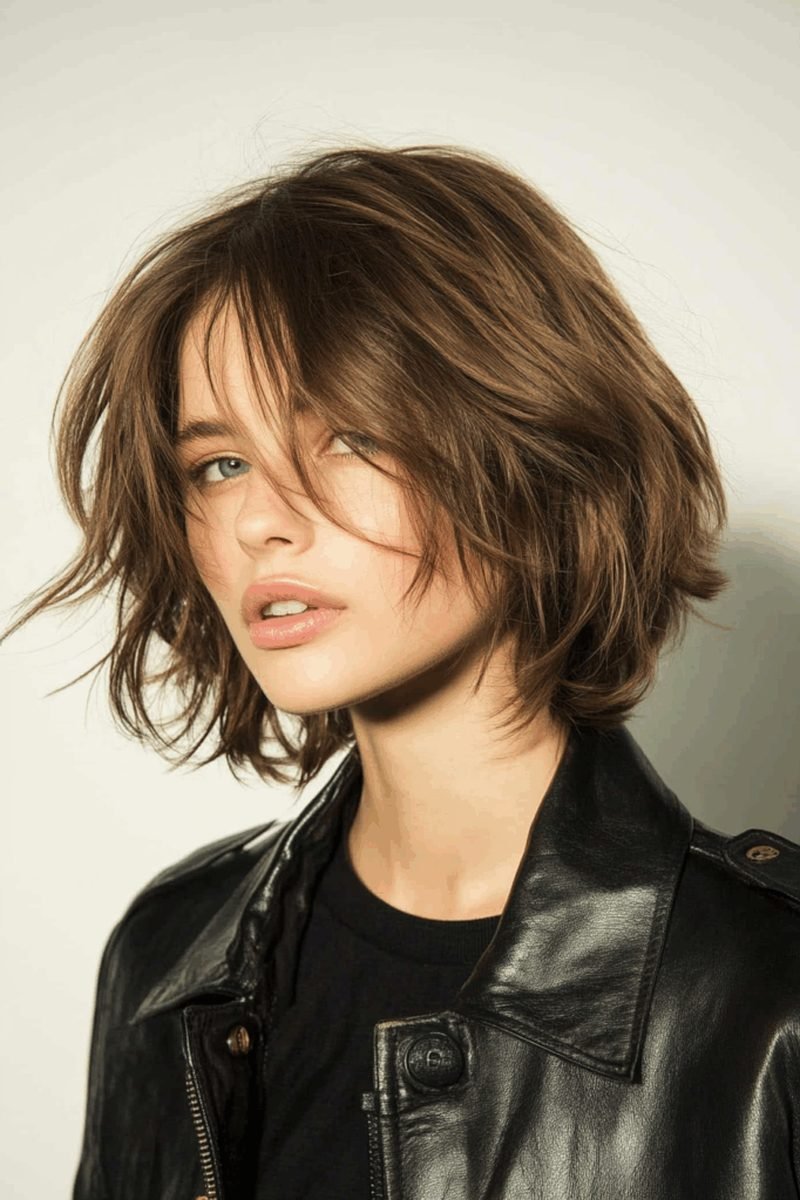
Photo: Tressnails
For anyone wary of a fringe, two soft pieces cut from the front hairline give a similar effect and tuck behind the ear when you want them gone. The face-framing pieces soften the solid outline of the bob and make the cut feel personal, especially on stronger jaw or brow structures. It is a low-risk first step into the cut, and the pieces are the detail that makes the whole shape feel finished.
Best for: most hair types, and anyone wary of a fringe. Styling tip: blow-dry the front pieces forward and slightly under, so they frame the cheekbones instead of falling flat. Ask your stylist: a one-length bob with face-framing pieces starting at the cheekbone or lip, nothing shorter.
24. Italian Bob with Face-Framing Highlights
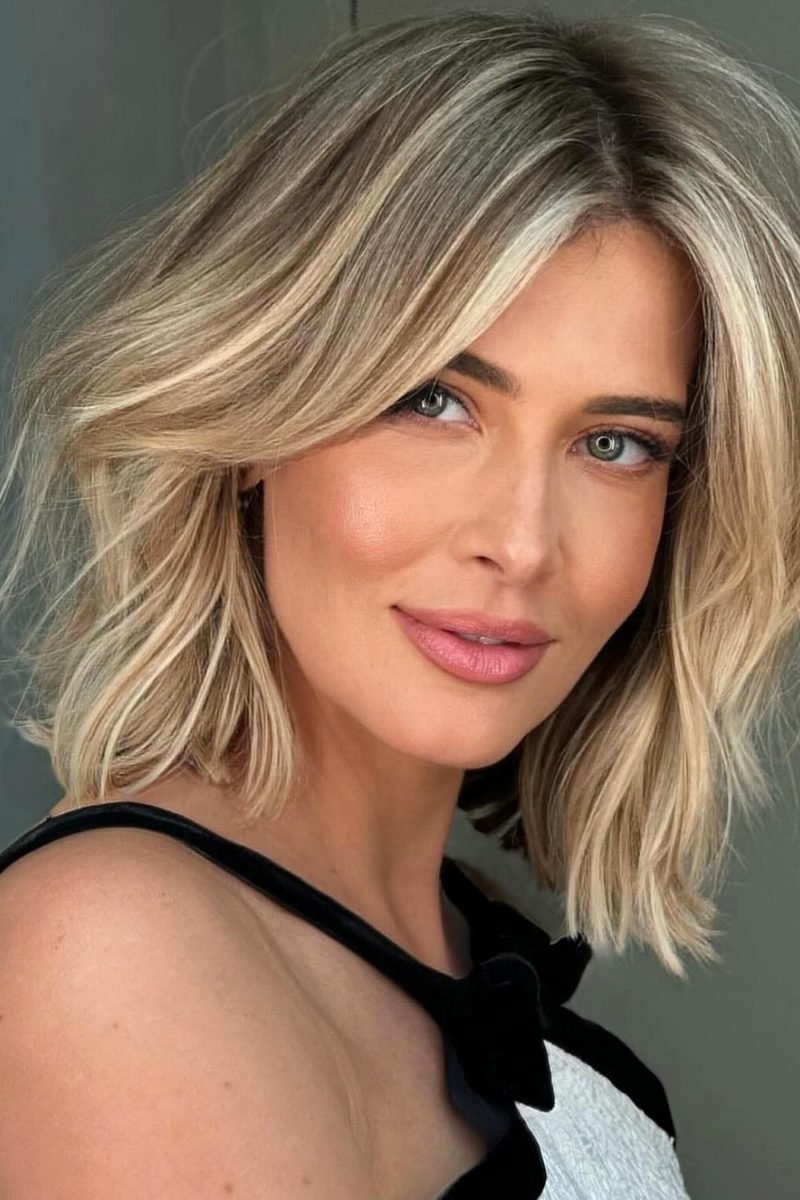
Photo: Hadviser
Face-framing highlights painted around the front pieces add dimension without the maintenance of a full colour job. The lighter ribbons catch the light exactly where the bob curves under, which makes the shape look deeper and more expensive. Ask for balayage two shades lighter than your base, focused on the pieces that fall around your cheekbones.
Best for: medium to dark bases that want dimension without full colour. Styling tip: use a purple shampoo every ten days to keep the warmth from turning brassy between appointments. Ask your stylist: balayage in two shades lighter than my base, focused on the face-framing pieces.
25. Italian Bob with a Money Piece
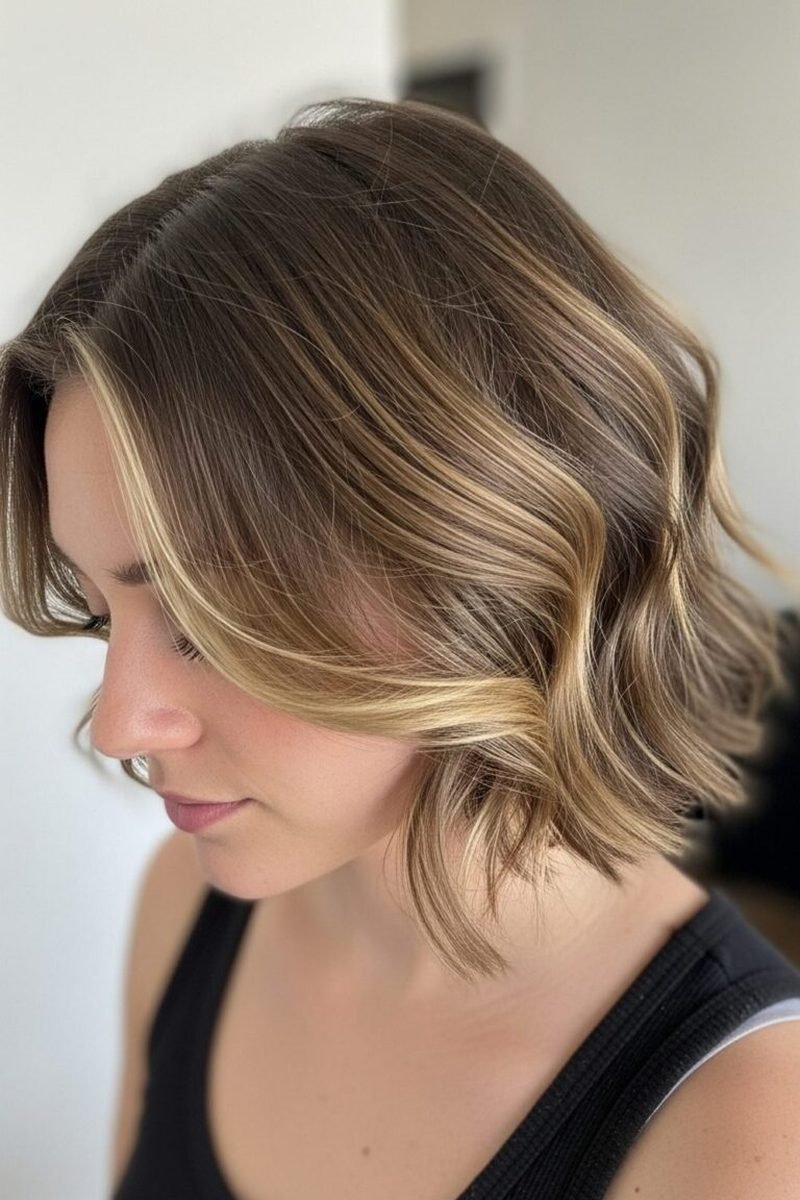
Photo: Dailyhairvibes
Two brighter front pieces frame the face while the rest stays your natural shade. The contrast should be subtle, about three levels lighter than the base, with the lightest sections starting at the cheekbone and softening down toward the ends. It brightens the face without committing to all-over colour, and it adds movement to a cut that already has natural shape.
Best for: anyone who wants brightness around the face without full highlights. Styling tip: keep the money piece glossy with a shine serum, since brightened hair shows dullness first. Ask your stylist: a money piece three levels lighter than my base, starting at the cheekbone.
26. Copper Italian Bob
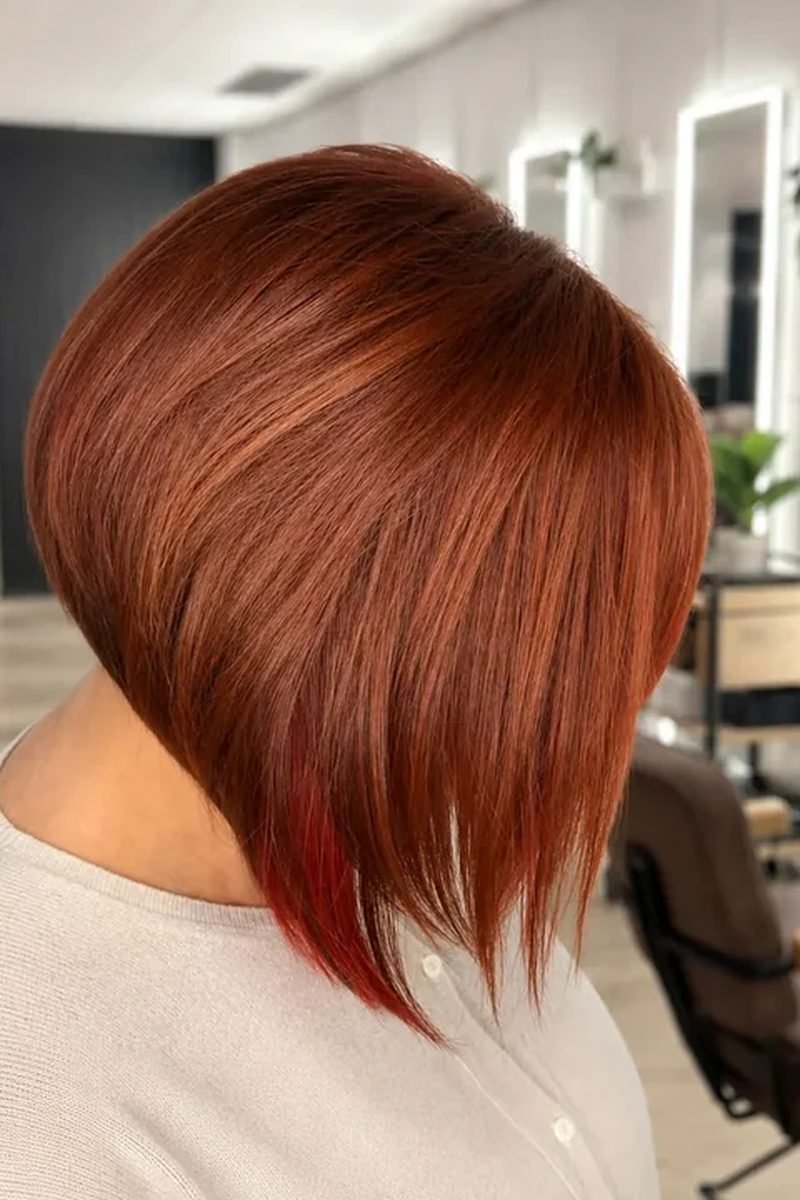
Photo: Modasalon
A rich copper shade turns the Italian bob into a statement. The warm red tones make the rounded outline look even fuller, and the colour catches the light every time the ends swing. Copper fades faster than most shades, so this version needs a colour-safe routine, but the payoff is a cut that looks custom-made rather than off the shelf.
Best for: warm skin tones and anyone ready for a bold colour. Styling tip: wash with cool water and a colour-safe shampoo, and refresh the tone with a copper gloss between salon visits. Ask your stylist: a rich copper all over, with the Italian bob cut first so the colour sits evenly on the shape.
27. Sunlit Blonde Italian Bob
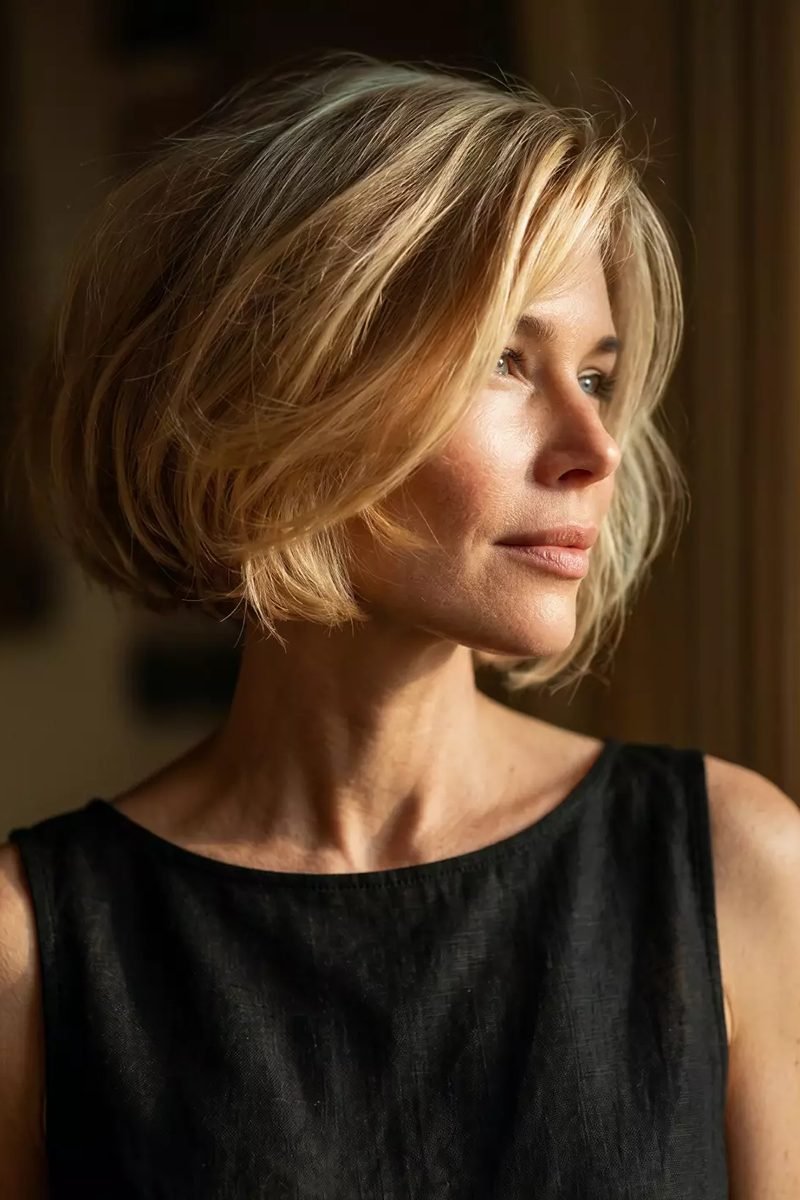
Photo: Balique
Sunlit blonde ribbons through a chin-length bob give the Italian shape a soft, golden glow. The blonde is painted through the lengths rather than from the root, so it grows out without a hard line, and the lighter pieces make the bevelled ends look even more defined. It is the Italian summer look: sun-kissed without being striped.
Best for: medium blonde to light brown bases. Styling tip: use a purple shampoo once a week to keep the blonde bright, and add a shine spray for the glossy finish this cut deserves. Ask your stylist: soft sunlit blonde balayage through the lengths, keeping the roots natural.
28. Asymmetrical Italian Bob
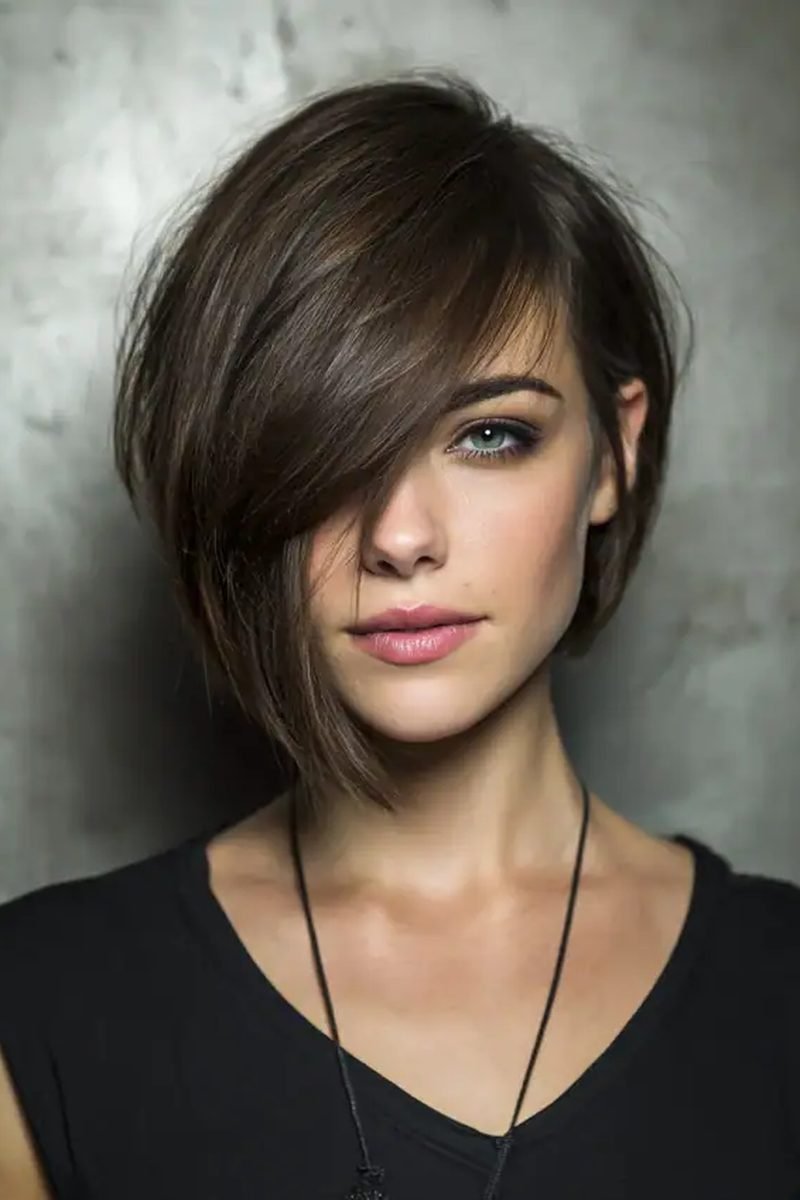
Photo: Divainspo
A subtle angle, longer in the front by about half an inch, gives the classic cut a slight edge. The back stays slightly shorter, just brushing the nape, and the longer front draws the eye downward, which works particularly well on round face shapes. Keep the asymmetry quiet, not dramatic: anything more than an inch starts to read as a 2010s cut rather than a modern Italian shape.
Best for: oval and long faces, and round faces that want length. Styling tip: wear the longer side forward and the shorter side tucked behind the ear to show off the angle. Ask your stylist: an Italian bob with the front half an inch longer than the back, keeping the asymmetry subtle.
Frequently Asked Questions
What is an Italian bob haircut?
An Italian bob is a one-length cut that falls between the chin and the collarbone, with a heavy, rounded perimeter and little to no layering. The ends curve under or flick out, the weight sits at the bottom, and the finish looks polished but slightly undone. It is longer and fuller than a French bob, and shorter than a lob.
Are Italian bob haircuts good for fine hair?
Yes, they are one of the best choices for fine hair. The blunt perimeter makes the ends look thicker, and the rounded shape adds volume that layered cuts often lose. Ask your stylist to cut it dry with no thinning shears, and style with a volumising mousse at the roots.
How is an Italian bob different from a French bob?
The French bob is shorter, usually sitting at the cheek or jaw, and it is commonly worn with a fringe. The Italian bob is longer, falling between the chin and the collarbone, with more weight in the ends and a softer, more voluminous finish. Both are chic, but Italian bob haircuts are easier to grow out and suit more face shapes.
How often should I trim Italian bob haircuts?
Every six to eight weeks is the right rhythm for most versions. The cut depends on full ends, so waiting longer lets the line go thin and the shape lose its bounce. Fringe versions need a quick fringe tidy every three to four weeks.
Can I wear an Italian bob with curly hair?
Yes, but it needs a dry cut. Curls shrink as they dry, so a bob cut wet at the chin can spring up to the cheekbone. Find a stylist experienced with curls who cuts dry, curl by curl, and builds the rounded outline at your real length. Leave-in conditioner and curl cream on wash day will keep the shape soft.
Does the Italian bob suit women over 50?
Yes, it is a wonderful choice after 50. The full, rounded shape adds volume to hair that has thinned, the soft ends are kind to the jawline, and the silver version looks deliberate and polished with very little daily styling. A trim every six to eight weeks keeps it looking fresh.
Final Thoughts
The Italian bob is a rare cut that manages to be both timeless and right on trend. Few hairstyles make such a clear statement with so little effort, and few are as easy to make your own, whether you keep the classic chin-length version, add a fringe, or go bold with colour. Of all the Italian bob haircuts in this list, the key is choosing the version that fits your face, your hair, and your daily routine, and then keeping the ends full with regular trims.
Save the ideas you love from this list, take a photo to your stylist, and be clear about the length and the finish you want. With the right cut and a little daily care, the Italian bob can be the hairstyle that finally feels like you.
You May Also Like
If you liked these Italian bob ideas, these two are worth a look next: French Bob Hairstyles for a shorter, Parisian take on blunt lines and fringes, and Blunt Bob Haircuts for a sharper, more graphic version of the one-length bob.