How to Layer Clothes in Winter Without Looking Bulky
Winter dressing usually fails in one of two ways. Either you are warm but look like a stack of laundry, or you look sharp and shiver at the bus stop. Learning how to layer clothes in winter fixes both problems at once, because layering is not about piling on more clothes. It is about giving each piece one clear job, in the right order, so you stay warm and still look like yourself.
This guide gives you a simple method: the 3-layer system, our 3-2-1 rule, the right fabric order, and five complete outfits described in detail. It shows you how to layer clothes in winter with no new wardrobe needed.
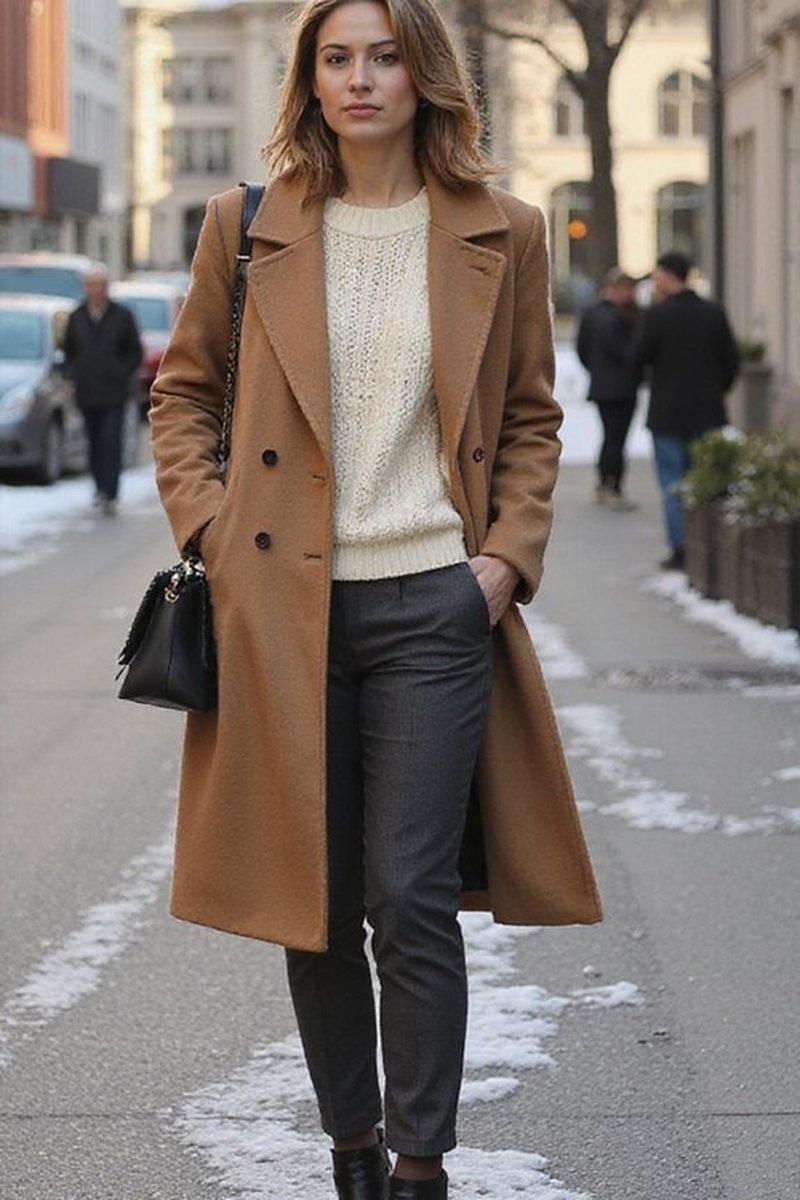
Photo: Style Sage Pro
The 3-Layer Method, Explained Simply
Every good winter outfit is built from three layers, and each layer has one job. When two layers try to do the same job, you get bulk. When one layer is missing, you get cold. The approach follows the classic principles of layered clothing.
Layer 1, the base layer, sits against your skin. Its job is comfort and keeping you dry. It should be thin and close-fitting, never baggy. A thin thermal top, a fine turtleneck, or a silk camisole all work. If the base layer bunches or rides up, everything above it will look wrong, so start here and get it right.
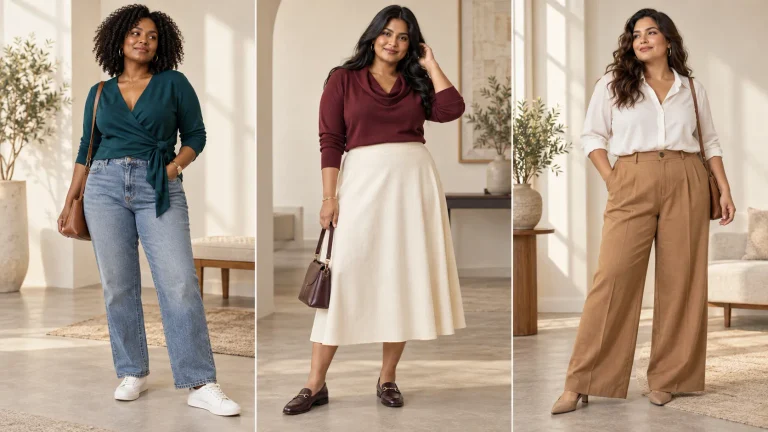
Layer 2, the middle layer, is where the warmth comes from. This is your sweater, cardigan, fleece, or vest. It is also where most of your style lives, because it is the layer people see when you take your coat off indoors. Choose one middle layer with some character, a fine knit, a soft texture, or a quiet colour, and let it do the talking.
Layer 3, the outer layer, blocks the wind and finishes the shape. This is your wool coat, puffer, or trench. It should be cut roomy enough to close over the two layers beneath it without pulling at the buttons. Always try a coat on over your thickest sweater before you buy it, or before you decide it still fits.
Two layers are enough for a mild day, three handle real winter, and four are for freezing weather or long hours outside. Even then, the fourth layer should be a thin thermal underneath, not another sweater on top.
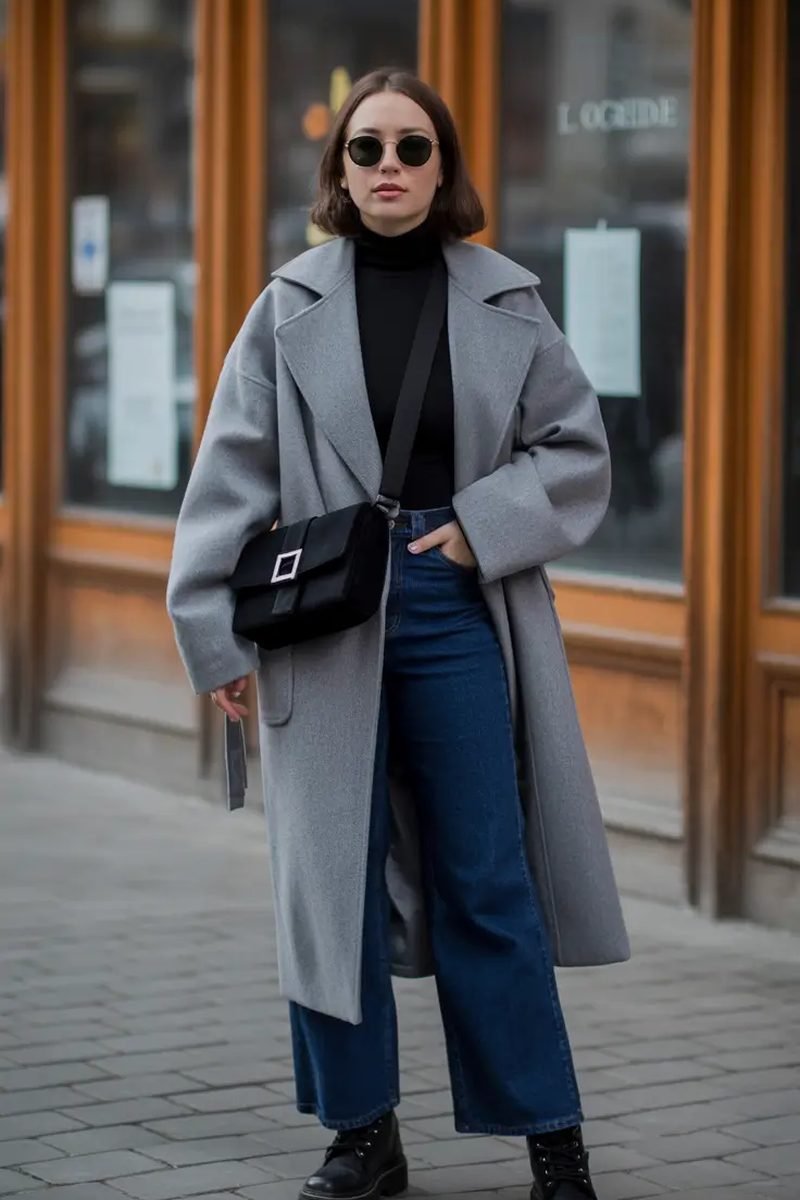
Photo: BlazyPix
The 3-2-1 Rule: Our Simple Formula for Layering
Here is the shortcut we use for every outfit in this guide. It is called the 3-2-1 rule, and it takes ten seconds to check in the mirror — a quick way to remember how to layer clothes in winter every morning.
3 layers on top, no more. Base, middle, outer. If you want more warmth, make a layer warmer instead of adding a fourth visible one. A fine merino sweater is warmer than two chunky ones stacked together, and takes up half the space.
2 textures, at least. Texture is what makes layers look deliberate instead of accidental. Pair something smooth with something soft: a crisp shirt under a brushed knit, a leather jacket over a fine sweater, a wool coat over ribbed knit. If every layer is the same flat fabric, the outfit reads as one thick block. Two different textures break it up and add depth without adding bulk.
1 fitted point. Somewhere in the outfit, your shape must show. Pick one: a defined waist (a belt over a cardigan, or a front tuck), a slim ankle (tapered trousers meeting your boots), or a neat wrist (a cuff peeking out of a sleeve). One fitted point is enough. It tells the eye where your body is, and the rest of the outfit can be relaxed around it.
Then run the peel-down test. Take off your coat. Does what is left look like a finished outfit? If yes, your layering works. If you are standing in a thin tee in January, your middle layer is not doing its job. Offices, cafes, and trains are all heated, so the outfit underneath the coat matters as much as the coat itself. That simple check is the easiest way to practise how to layer clothes in winter without overdoing it.
If your wardrobe feels thin, start with a small set of pieces that all work together. Our winter capsule wardrobe shows how a few key layers make dozens of outfits.
Fabric Order: What Goes Where
Fabric matters as much as the number of layers. The rule is simple: thin to thick, inside to out. The lightest fabric touches your skin, and the heaviest sits on the outside. A heavy cable knit under a slim blazer will never sit right. Put the bulk where there is room for it, under a proper coat. Getting this order right is half of how to layer clothes in winter well.
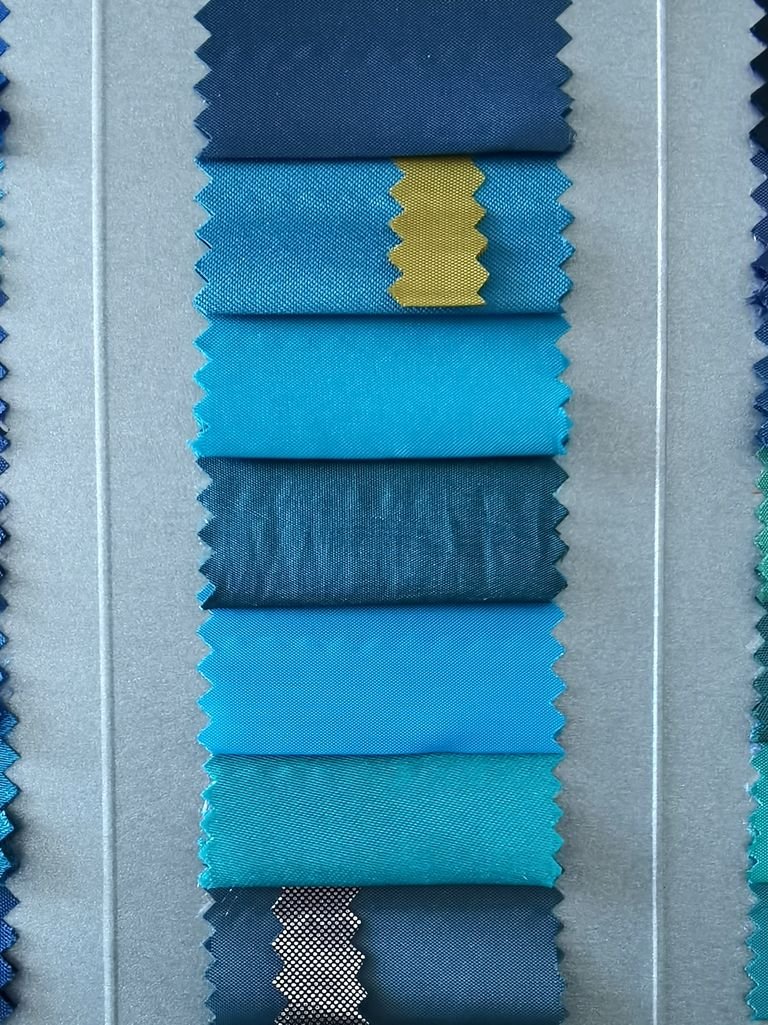
For the base layer, merino wool is the best choice on cold days. It moves moisture away from your skin, stays warm even when damp, and is thin enough to disappear under a shirt. Silk is a good second choice, smooth and warm without weight. Cotton is comfortable, but it holds damp against your skin, so save cotton base layers for mild days or short trips outside. To keep merino soft and long-lasting, follow the Woolmark care guide.
For the middle layer, wool, cashmere blends, and fleece add real warmth. A fine-gauge knit is warmer per millimetre than a thick cable knit, and it fits under a jacket without straining the shoulders. Save the chunkiest knits for days when they are the outer layer, not the middle one.
For the outer layer, tightly woven wool blocks wind, and a technical shell or insulated puffer handles rain and snow. A coat with a defined shoulder holds its shape over layers; a soft, shapeless coat over knitwear looks like a blanket. If you want the full detail on each fabric, read our guide to the warmest winter fabrics before you shop.
Layering by Temperature: Mild, Cold and Freezing
The same method adjusts to the day. Dress for the coldest part of your day, not the warmest.
Mild days, around 10 to 15 degrees: two layers are enough. A thin base, a fine knit or a shirt, and a light jacket or trench. Leave the thermal at home.
Cold days, around 0 to 10 degrees: use the full three layers. Thermal or turtleneck base, a warm middle layer, and a proper wool coat. Add a scarf, gloves, and warm socks, because the gaps at your neck, wrists, and ankles are where the cold gets in.
Freezing days, below 0 degrees: keep the same three visible layers, but upgrade what is underneath. Add a thermal base under your sweater, thermal leggings under your trousers, and an insulated coat on top. On these days warmth comes first and style comes second, and that is the right call. A beautiful outfit you cannot wait to take off is not a good outfit.
Proportion Rules That Stop the Bulk
Bulk almost never comes from having too many layers. It comes from layers that fight each other. These five rules keep them on the same team.
One volume piece only. If your coat is oversized, everything underneath should be slim. If your sweater is chunky, your bottom half should be straight or tapered. Two voluminous pieces together swallow your shape. It is a simple rule to keep in mind when learning how to layer clothes in winter.
Stagger the lengths. Layers that all end at the same point look like one thick block. Let a shirt hem peek out under a sweater, and let the sweater show under a longer coat. A one- or two-inch difference at the hem creates clean lines.
Keep the collar area calm. A shirt collar, a crew-neck sweater, a jacket collar, and a coat collar stacked together will swallow your neck. Choose a V-neck sweater over a collared shirt, or wear a roll neck and skip the shirt collar entirely. If the collars are already dense, keep the scarf thin.
Do the arm test. Put the full outfit on, close the coat, and raise your arms above your head. If the coat pulls across your back or the sleeves ride up, the middle layer is too thick for that coat. Swap it for a finer knit or a roomier coat. This test takes ten seconds and saves you a day of discomfort.
Stay close in colour. When you stack three or four layers, they all have to get along. Build around two or three colours, navy, charcoal, camel, cream, or burgundy, and let one accessory carry any bright colour. Close colours blend into one long vertical line, which always looks slimmer.
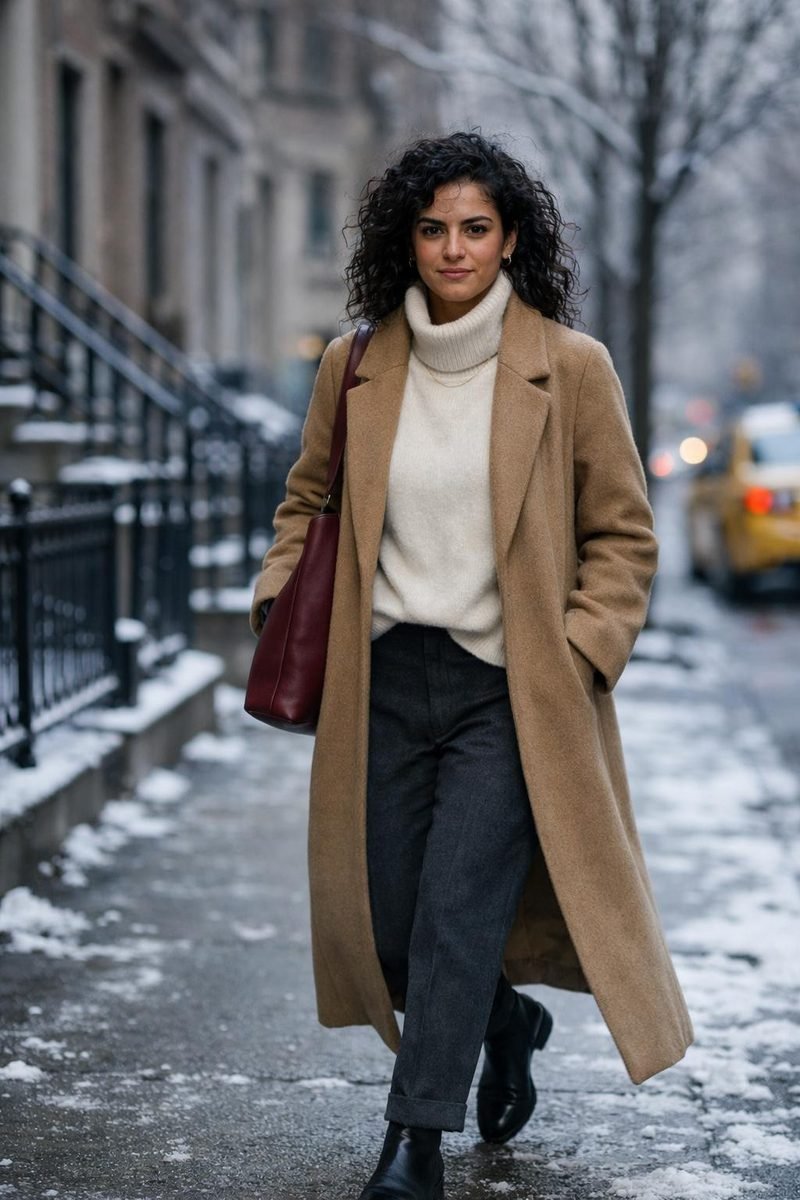
Photo: Osmoz
5 Winter Layering Outfits to Copy
Here are five complete outfits, described piece by piece. Each one follows the 3-2-1 rule, and each one works with pieces most wardrobes already hold. For more cold-weather inspiration, see our winter outfits for women.
1. The office outfit. A thin black turtleneck as the base, a grey blazer as the structured middle, charcoal tailored trousers, and a navy wool coat on top, with ankle boots. The turtleneck acts as base and neckline in one, so nothing bunches under the blazer. For more ways to wear the hero piece of this outfit, see our turtleneck outfit ideas.
2. The weekend jeans outfit. A thin thermal top, a chunky cream knit, dark straight jeans, and a long puffer coat, with lace-up boots. The thermal does the warming, so the knit stays the soft, visible layer. The long coat covers the hip, and the straight jeans keep the bottom half slim.
3. The dress day outfit. A fine long-sleeve top worn under a knit dress, opaque tights, tall boots, and a coat long enough to cover most of the dress. The underlayer is invisible except at the cuffs, the tights do the warming, and the long coat keeps the line clean.
4. The smart casual outfit. A light blue poplin shirt, a burgundy V-neck sweater, a brown pleated midi skirt, a long charcoal coat, and knee-high boots. The collar and shirt hem frame the sweater, and the skirt’s movement balances the coat. Tuck the shirt front slightly so the hem does not add bulk at the hip.
5. The evening outfit. A silk camisole as the base, a velvet blazer as the middle layer, slim black trousers, and a long wool coat, with heeled ankle boots. The camisole keeps you cool indoors, the velvet adds texture and evening polish, and the coat makes it winter-ready. If the blazer is fitted, the coat closes cleanly over it.
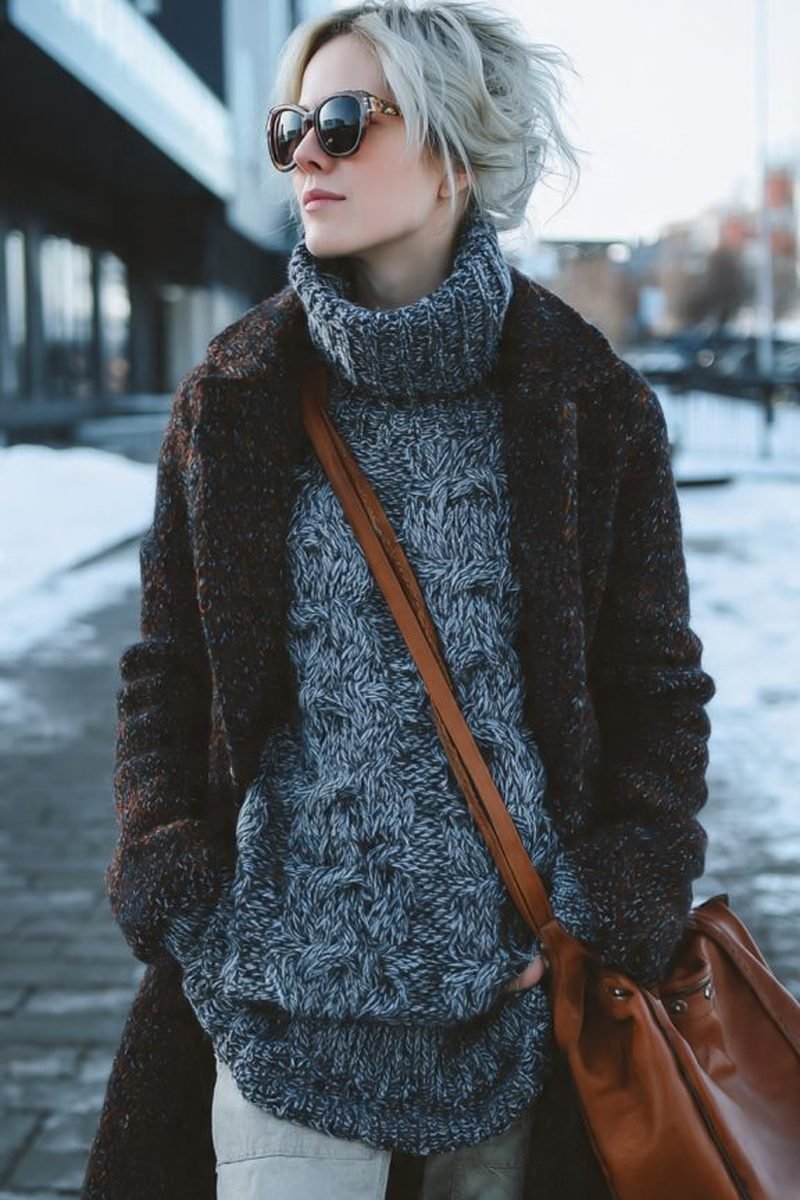
Photo: Paid Assignments
How to Layer Dresses and Skirts in Winter
Dresses do not have to wait for spring. The trick is to warm the layers nobody sees, so the dress itself can stay light.
Start underneath. Fleece-lined tights or thermal leggings under a dress or skirt add more warmth than any extra sweater, and nobody can see them. Opaque tights in black or dark brown work with almost everything. For a sleeveless dress, add a fine long-sleeve top underneath in a matching or tonal colour, so it reads as part of the dress rather than an afterthought.
Then match the boots to the hem. Tall boots should meet the hem of a midi dress or sit just under it, with no bare gap at the knee. With a shorter skirt, knee-high boots close the gap between hem and shoe. And let the coat do the covering: a coat that ends below the dress hem keeps the line clean and you warmer than a cropped jacket.
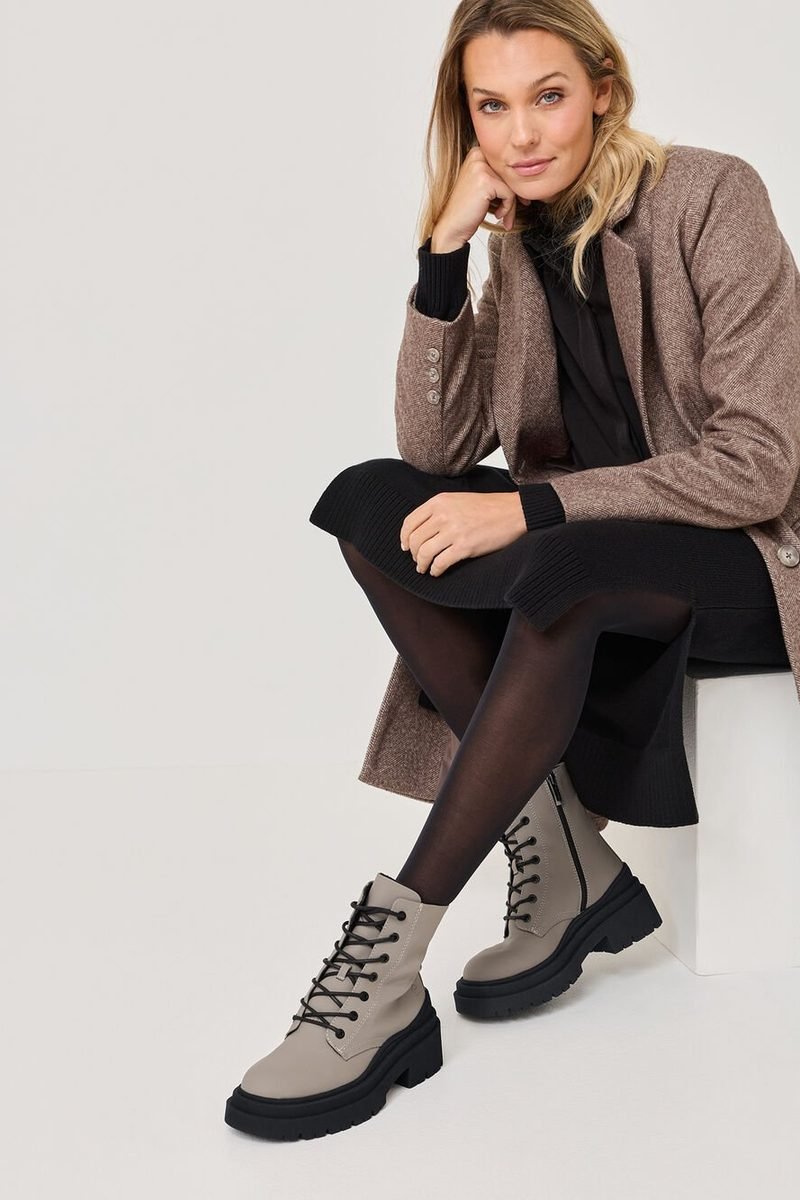
Photo: Outley
Mistakes to Avoid When You Layer Clothes in Winter
Stacking two thick layers. A chunky knit under a chunky cardigan crushes the air between them, and trapped air is what actually keeps you warm. Replace one thick piece with a fine knit.
Wearing cotton against your skin on cold days. Cotton holds damp and feels cold once you have been outside a while. Use merino or silk for the base layer when the temperature drops.
Buying a coat that only fits over a tee. Try every coat on over your thickest sweater. If it pulls, it is the wrong coat for winter.
Hiding your waist completely. Even in winter, your body needs one defined point. A belt over a cardigan, a front tuck, or a fitted ankle is enough.
Forgetting indoor temperatures. Offices and cafes are warm. Your middle layer must look good worn alone, because you will spend most of your day in it.
Too many colours or patterns. Three colours and one pattern is the limit. More than that, and the layers start competing with each other. That limit is worth remembering when you are learning how to layer clothes in winter.
Ignoring your feet. Cold feet ruin any outfit. Warm socks, boots that close the ankle gap, and trousers that meet your boots matter as much as the top half.
How to Layer Clothes in Winter: FAQs
How many layers should I wear in winter?
Three layers on top handle most winter days: a thin base layer, a warm middle layer, and a weather-blocking outer layer. On mild days two layers are enough, and on freezing days keep the same three visible layers but add thin thermals underneath. More than three visible layers usually adds bulk, not warmth.
How do I layer without looking bulky?
Go thin to thick, inside to out, and keep one fitted point in the outfit, such as a defined waist or a slim ankle. Stagger the hem lengths so layers do not all end at the same point, and keep the colours close together. If you feel bulky, the answer is usually thinner layers, not fewer layers.
Can I layer with clothes I already own?
Yes, in most cases. Start with what you have: a thin turtleneck or thermal as a base, any fine knit as a middle layer, and your warmest coat on top. The only piece worth buying first is a proper base layer, because a good merino thermal makes every sweater you own warmer.
What is the best base layer for winter?
Merino wool is the best base layer for cold days, because it moves moisture away from your skin, stays warm when damp, and is thin enough to hide under anything. Silk is a good lighter option. Cotton works only on mild days, because it holds damp and feels cold once you are outside for a while. That thin, warm base is the foundation when you are learning how to layer clothes in winter.
How do I layer a dress in winter?
Wear a fine long-sleeve top under the dress, fleece-lined tights underneath, tall boots that meet the hem, and a coat longer than the dress. The hidden layers do the warming, so the dress itself can stay light and the outfit still looks like a dress, not a bundle.
You May Also Like
If you are building your winter wardrobe around this method, these two guides go with it: 28 puffer jacket outfits for women that look chic, not bulky and 28 camel coat outfits for women that look chic, not bulky.
Final Thoughts
Good winter layering is a system, not a pile of clothes. Three layers, each with one job. Two textures, so the outfit looks deliberate. One fitted point, so your shape shows. Check the fabric order, dress for the coldest part of your day, and run the peel-down test before you leave the house. Once you know how to layer clothes in winter, you can stop thinking about the cold and start enjoying the outfits. That is the whole point.