
18 Gorgeous Short Pixie Haircuts for Older Women That Turn Heads
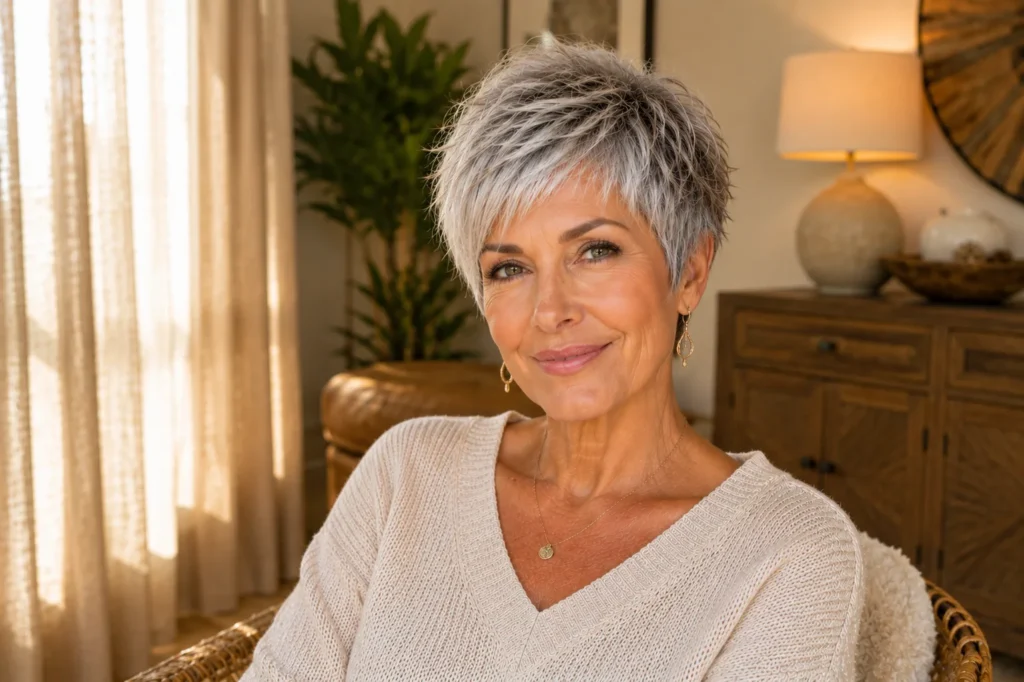
Cutting your hair short after 50 isn’t giving up it’s showing up, fully and unapologetically. I’ve worked with hundreds of women in my design studio and salon consultations, and the ones who make the pixie switch almost always say the same thing: “I wish I’d done this sooner.” Short pixie haircuts for older women have exploded in 2026 because they do something longer styles simply can’t they put your face, your eyes, and your confidence front and center. Whether your hair is thinning, going gray, or just ready for a fresh chapter, there is a pixie cut on this list that was practically made for you.
My Design Notes
I had a client in her early 60s from Scottsdale, Arizona, and she walked into my studio looking like she was carrying the weight of a decision she’d been putting off for years. She’d worn her hair long her entire adult life, always saying her late husband loved it that way. After he passed, she finally wanted something that felt like her own. We spent a good hour just talking before I even touched her hair. I suggested a soft feathered pixie with wispy layers framing her cheekbones, and she trusted me completely. When she saw herself in the mirror for the first time, she went completely quiet. Then she cried. Not from sadness but from recognition. She told me she finally looked like the woman she’d always been on the inside. That appointment changed how I think about pixie cuts for older women entirely. This isn’t a style choice. It’s a statement of self.
18 Mastering Short Pixie Hairstyles for Older Women That Command Attention
1. Why Short Pixie Haircuts for Older Women Are Having a Major Moment in 2026
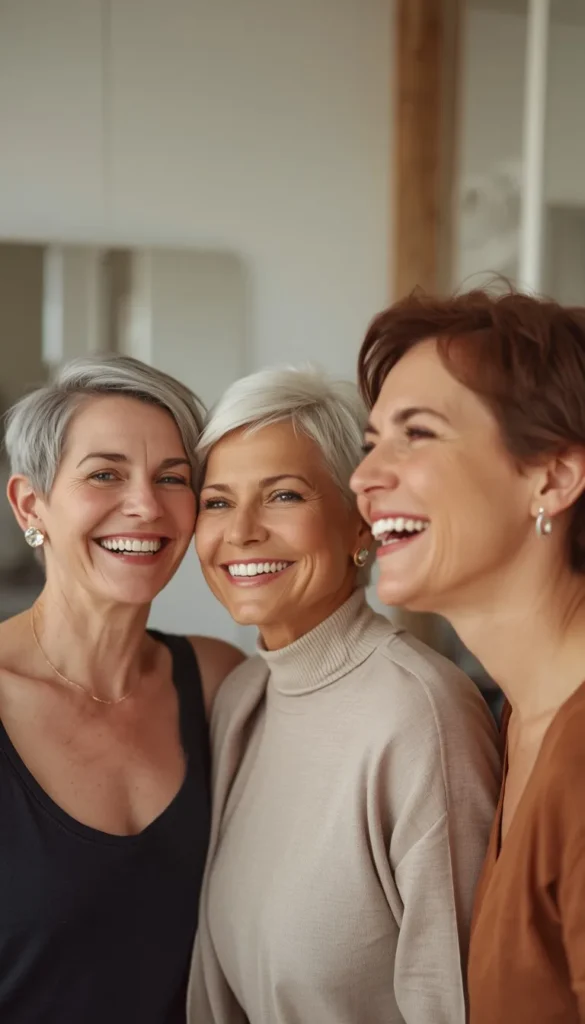
Something shifted in the last couple of years. Women over 50 stopped asking permission to go short. They stopped waiting for a “good reason” and started making the cut literally. And honestly? The results have been stunning across the board.
Part of it is cultural. We’re seeing more silver-haired, pixie-wearing women on magazine covers, in boardrooms, and all over Pinterest feeds. But a bigger part of it is practical. As hair naturally changes texture and density after 50, a well-cut pixie works with those changes instead of fighting them. Longer styles can actually highlight thinning or limpness. A great pixie eliminates that problem entirely.
What I keep telling my clients is this: the pixie cut isn’t a compromise. It’s an upgrade.
2. The Classic Tapered Pixie Timeless Elegance That Never Ages Out
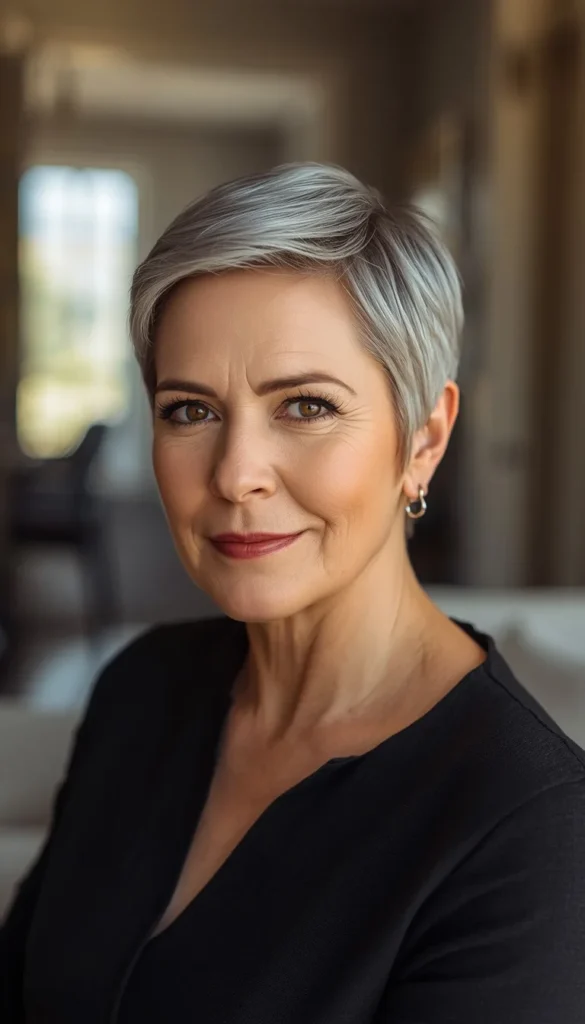
If you want one style that has never once gone out of fashion, this is it. The classic tapered pixie features short, neatly cut sides and back with slightly more length on top, and it works on virtually every face shape and hair type. It’s the little black dress of short haircuts.
For older women specifically, the taper does something really smart it creates a clean neckline and draws the eye upward toward the face. That subtle lift makes a genuine difference in how youthful the overall look feels. One thing worth knowing before you book your appointment: this cut requires a trim every four to five weeks to maintain its shape. Let it go too long and it starts to lose that crisp, intentional look that makes it so striking in the first place.
A few things that make the classic tapered pixie work beautifully after 50:
- It photographs exceptionally well, which matters more than people admit
- Gray and silver hair absolutely shine in this structured shape
- Minimal product needed a pea-sized amount of light pomade is usually all it takes
3. Textured Pixie Haircuts for Older Women With Thinning Hair
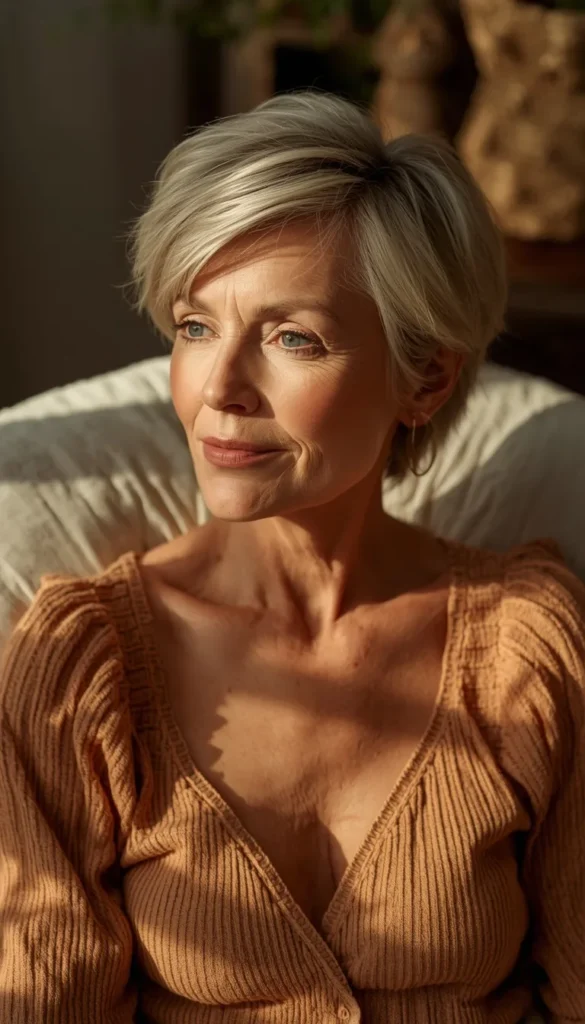
Thinning hair after 50 is one of the most common concerns I hear in my studio, and it’s also one of the most fixable with the right cut. Textured pixie haircuts are genuinely one of the best solutions out there, and I don’t say that lightly.
The way a textured pixie works is simple but brilliant. Your stylist uses point-cutting or razoring techniques to create soft, piece-y layers throughout the hair. Those layers catch light differently at every angle, which creates the illusion of fullness and density that simply isn’t there with blunt cuts. I’ve seen women with quite significant thinning walk out looking like they have twice the hair they came in with.
The key is finding a stylist who understands fine hair specifically. Ask them directly: “Have you cut pixies on fine or thinning hair before?” If they hesitate, keep looking. The technique matters enormously here, and a heavy-handed stylist can make thinning hair look even flatter.
4. The Feathered Pixie Soft, Wispy, and Incredibly Flattering After 50
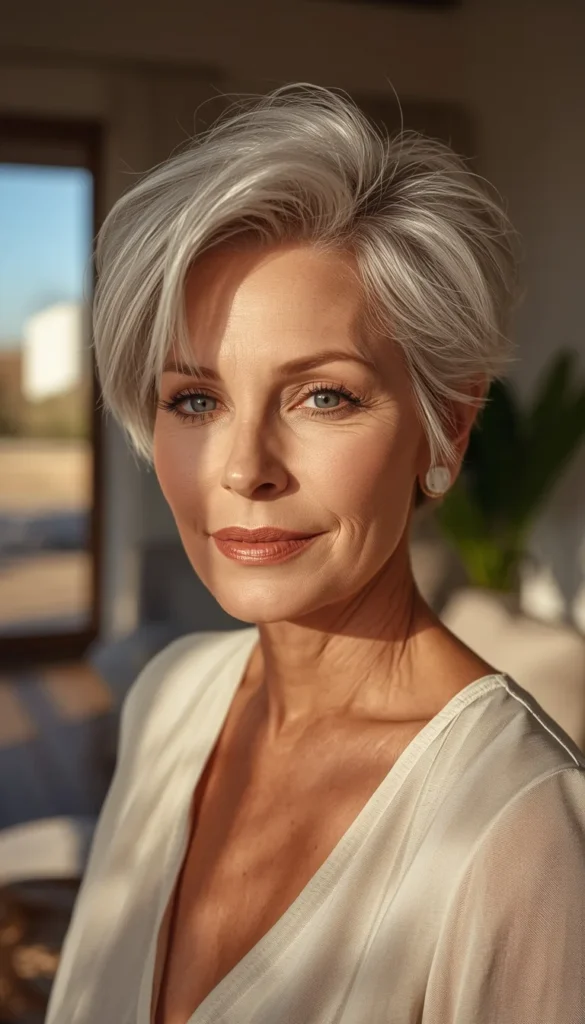
The feathered pixie is my personal favorite recommendation for women in their 50s and 60s, and I find myself suggesting it more than almost any other style. There’s a softness to it that feels age-appropriate without being old-fashioned which is a very specific balance that not every cut manages to strike.
Feathering means the ends of the hair are cut at an angle to create wispy, light pieces that frame the face gently. Around the cheekbones and temples especially, those soft feathered layers do something almost magical. They draw attention to your best features while softening areas that might have changed with age.
This style works beautifully on women transitioning to gray because the feathered texture adds dimension that gray hair can sometimes lack when cut bluntly. Natural gray with feathered layers looks intentional, polished, and genuinely stunning.
Which pixie style from this list are you most tempted to try first and what’s been stopping you from making the cut?
5. Layered Pixie Haircuts for Older Women Who Want Volume Without the Fuss
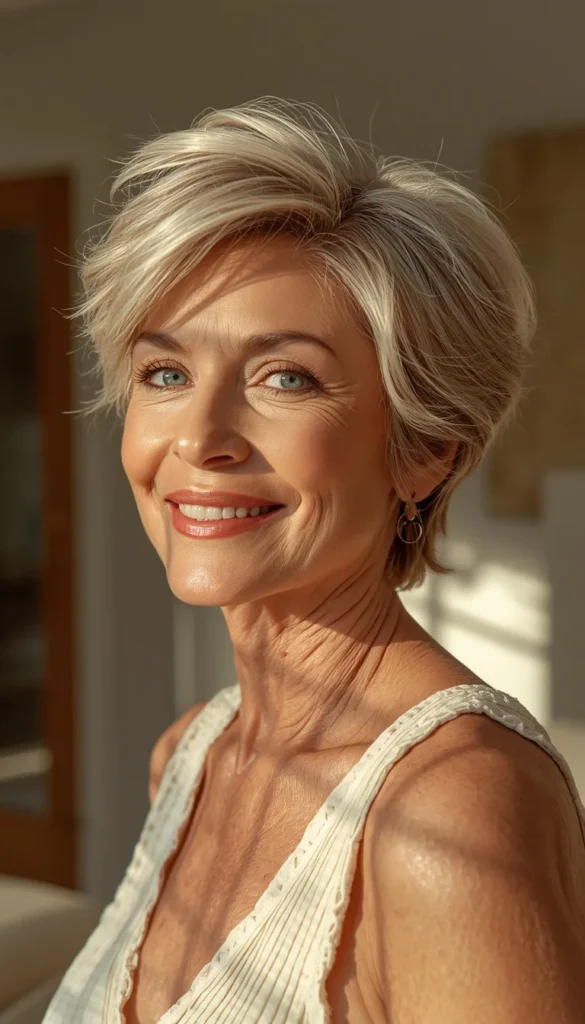
Volume is the number one request I get from women over 50, and layered pixie haircuts deliver it better than almost anything else in the short hair world. The difference between a flat, lifeless pixie and one that looks full and alive almost always comes down to layers.
What layering does is remove weight from specific sections of the hair while keeping length where you need it most. The result is hair that moves, bounces slightly, and catches light in a way that single-length cuts simply cannot replicate. For women whose hair has lost density over the years, this is genuinely a game-changer.
A quick trick I’ve learned from years of client consultations: ask your stylist for layers that are concentrated at the crown and temple area specifically. That targeted placement creates lift right where the eye naturally travels first the top of the head and the overall effect looks effortlessly voluminous rather than deliberately constructed.
- Avoid over-layering if your hair is very fine, as too many layers can make it look wispy rather than full
- A volumizing mousse applied at the roots before blow-drying amplifies the layered effect dramatically
- This style grows out gracefully, which means slightly longer gaps between salon visits are totally manageable
6. The Undercut Pixie Bold, Modern, and Surprisingly Low Maintenance
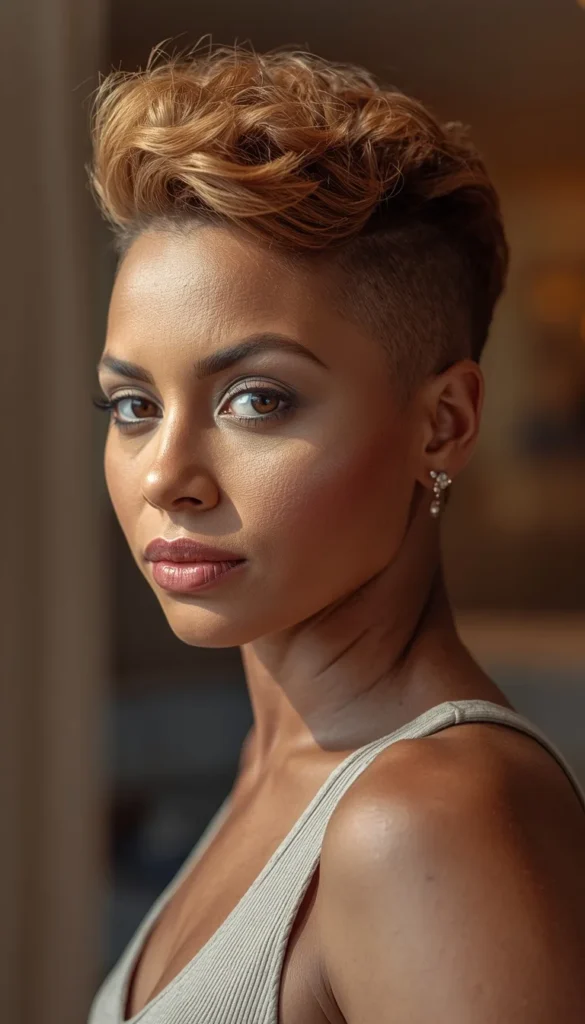
I know what you’re thinking. An undercut sounds edgy and maybe a little aggressive for women over 50. But hear me out, because this style has converted more of my hesitant clients than almost any other I’ve recommended.
The undercut pixie keeps the top and front sections longer and fuller while the sides and back are cut very close or shaved slightly. That contrast is what creates the drama. But here’s what surprises most women: the undercut actually makes the hair easier to manage, not harder. With less bulk on the sides, the top section sits and styles with very little effort.
It also works exceptionally well for women with thick hair that tends to puff outward. The undercut removes that bulk at the sides and channels all that beautiful density upward and forward, where it creates shape rather than chaos.
Top 6 Short Pixie Haircuts for Older Women
| Pixie Style | Estimated Price | Maintenance |
| Classic Tapered Pixie | $65 to $150 per cut | Medium |
| Textured Pixie for Thinning Hair | $75 to $160 per cut | Low |
| Feathered Pixie | $65 to $140 per cut | Low |
| Layered Pixie for Volume | $70 to $150 per cut | Medium |
| Platinum and Gray Pixie | $150 to $250 with color | High |
| The Bixie | $80 to $165 per cut | Medium |
7. Pixie With Side Bangs The Secret Weapon for Framing an Aging Jawline
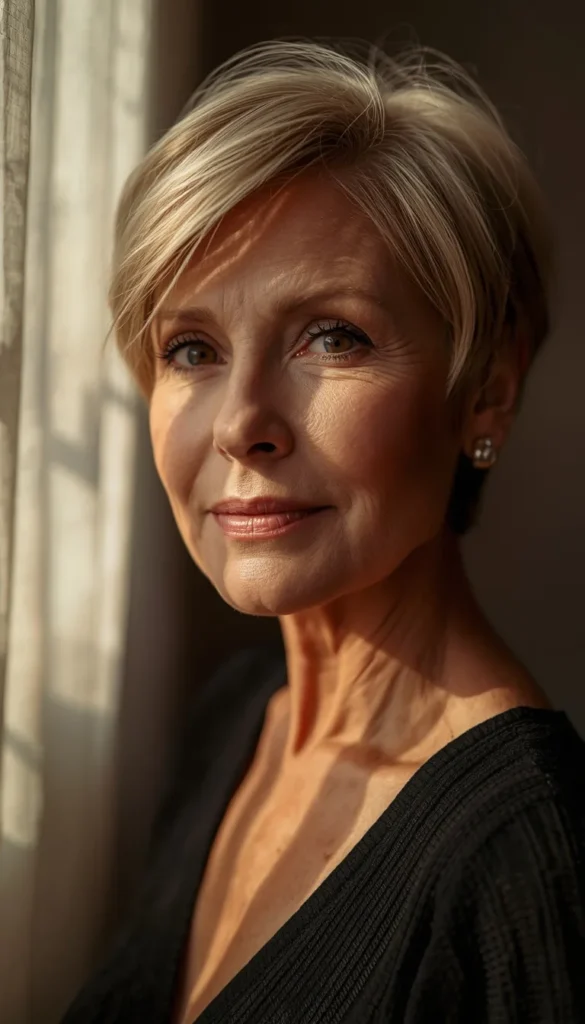
Side bangs on a pixie cut are one of those styling details that look simple but are actually doing a tremendous amount of work. I’ve recommended this combination to dozens of clients who were worried about changes in their jawline or facial structure, and the results are consistently beautiful.
The way it works is almost architectural. A soft sweep of bangs across the forehead creates a diagonal line that naturally draws the eye across and downward, which balances the face and softens any heaviness along the jaw. It’s a subtle optical trick, but it works every single time.
What I love most about this style is its flexibility:
- For oval and heart-shaped faces, side bangs add balance without overwhelming delicate features
- For rounder faces, a deeper side part with a longer sweep creates the illusion of length
- For square faces, soft wispy bangs break up strong angles beautifully
One thing to watch out for is keeping the bangs too blunt or too heavy. Wispy, feathered side bangs are almost always more flattering after 50 than a thick, solid fringe.
8. The Shaggy Pixie Effortless, Lived-In, and Full of Personality
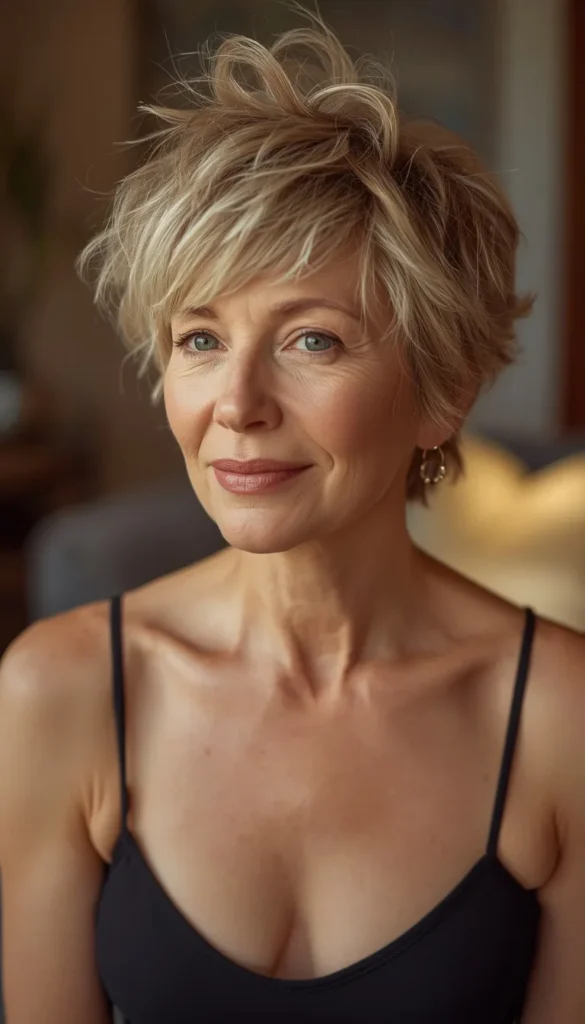
If the classic tapered pixie is the little black dress, the shaggy pixie is the perfectly broken-in leather jacket. It’s cool without trying, textured without looking messy, and it carries an energy that women over 50 absolutely own when they wear it with confidence.
The shaggy pixie features choppy, uneven layers throughout with a slightly undone finish. There’s intentional imperfection built into the cut itself, which is exactly what makes it look so good. You’re not fighting for perfection every morning the style is designed to look casually brilliant with minimal effort.
This is genuinely one of the lowest-effort styles on this entire list once you’ve got the cut right. A small amount of texturizing cream scrunched through damp hair, left to air dry, and you’re done. I’ve had clients tell me their entire morning routine dropped to under ten minutes after making this switch, and they get more compliments now than they ever did with longer hair.
Have you already rocked a pixie after 50? Tell us what finally convinced you to go short and whether you’d ever go back to longer hair.
9. Platinum and Gray Pixie Styles That Look Intentional, Not Accidental
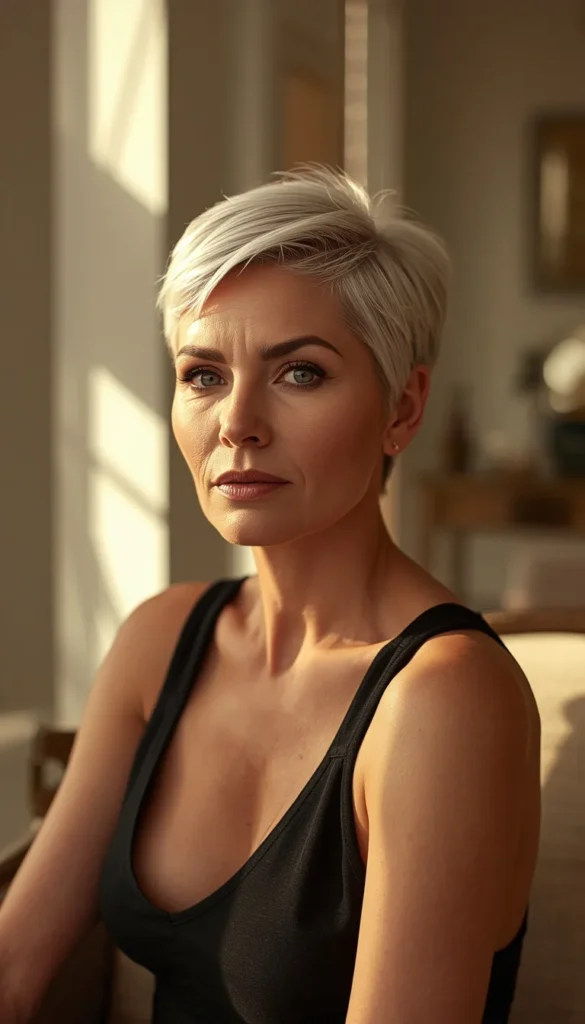
There is a version of gray hair that looks like you stopped trying, and there is a version that looks like a deliberate, sophisticated choice. The difference almost always comes down to the cut rather than the color itself. And a well-executed pixie is one of the fastest ways to move your gray hair firmly into the second category.
Platinum and gray pixie styles work so beautifully after 50 because the short length allows the color to be seen fully and evenly. With longer gray hair, the transition from roots to ends can look uneven or unintentional. With a pixie, every inch of that silver is on display and it reads as a conscious style decision rather than a maintenance gap.
A few color tricks worth knowing if you’re working with natural gray:
- A toner treatment every six to eight weeks keeps gray from pulling yellow or brassy in certain lighting
- Ask your colorist about a gloss treatment to add shine gray hair tends to be coarser and can look dull without it
- Contrast works in your favor here; women with darker brows and gray pixies create a striking, editorial look that is genuinely stunning
10. The Long Pixie Cut Best of Both Worlds for Women Not Ready to Go Full Short
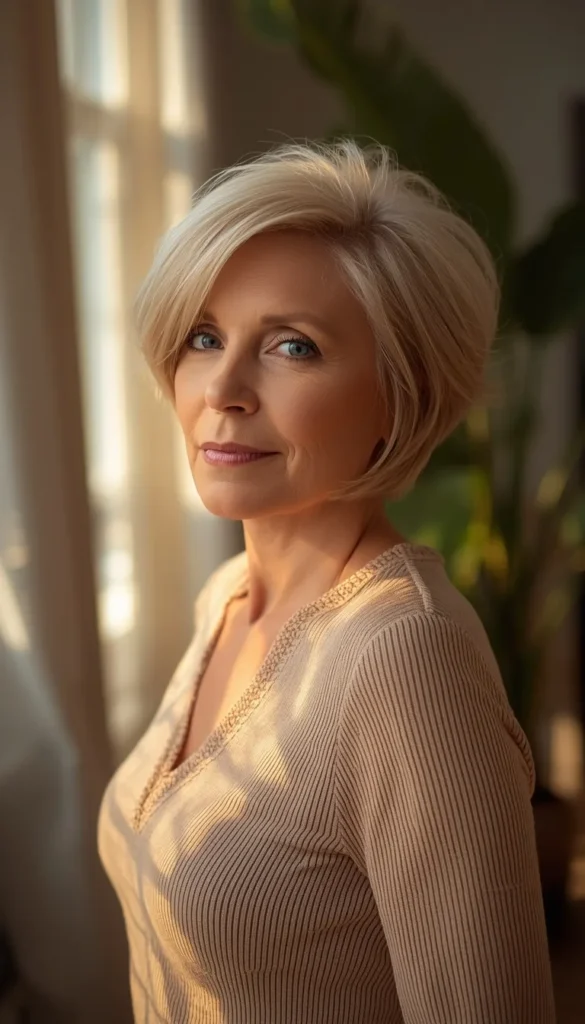
Not everyone is ready to go dramatically short all at once, and that is completely valid. The long pixie cut sits beautifully in the space between a traditional pixie and a short bob, giving you the lightness and ease of a cropped style without the commitment of a very close cut.
I recommend this as a starting point for women who have worn their hair long for most of their lives and want to make a gradual transition. It keeps enough length usually two to three inches on top that you can still tuck pieces behind your ears, style it in different directions, and feel like you have some options in the morning.
The long pixie is also incredibly forgiving as it grows out. Unlike a very short tapered pixie that can start looking unkempt after five weeks, the long pixie has a natural grow-out phase that still looks intentional and styled. That alone makes it one of the most practical choices on this list for busy women who can’t always make it to the salon on a tight schedule.
11. Curly Pixie Haircuts for Older Women With Natural Texture
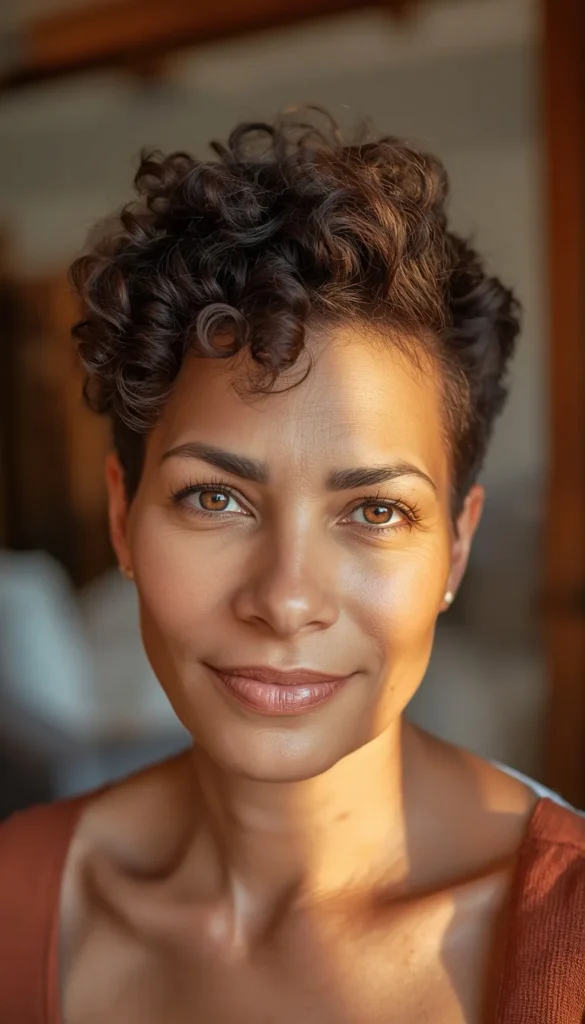
Curly hair and pixie cuts are a combination that doesn’t get nearly enough attention, and it genuinely frustrates me because the results can be absolutely breathtaking. Women with natural curl patterns often assume they can’t pull off a pixie, and that assumption is completely wrong.
The secret is in how the cut is approached. A curly pixie should never be cut dry and straight and expected to curl up correctly afterward. A skilled stylist will cut your curls while they’re in their natural state either damp with product or fully dry so they can see exactly how each curl falls and ensure the shape works with your texture rather than against it.
What makes this style so special for older women specifically is that curly hair tends to retain more volume naturally, which works in your favor after 50. While straight-haired women are chasing volume with products and techniques, your curls provide it automatically. A curly pixie worn confidently is one of the most striking looks I’ve ever seen walk out of a studio.
12. The Bixie When You Want a Pixie But Need a Little More Length
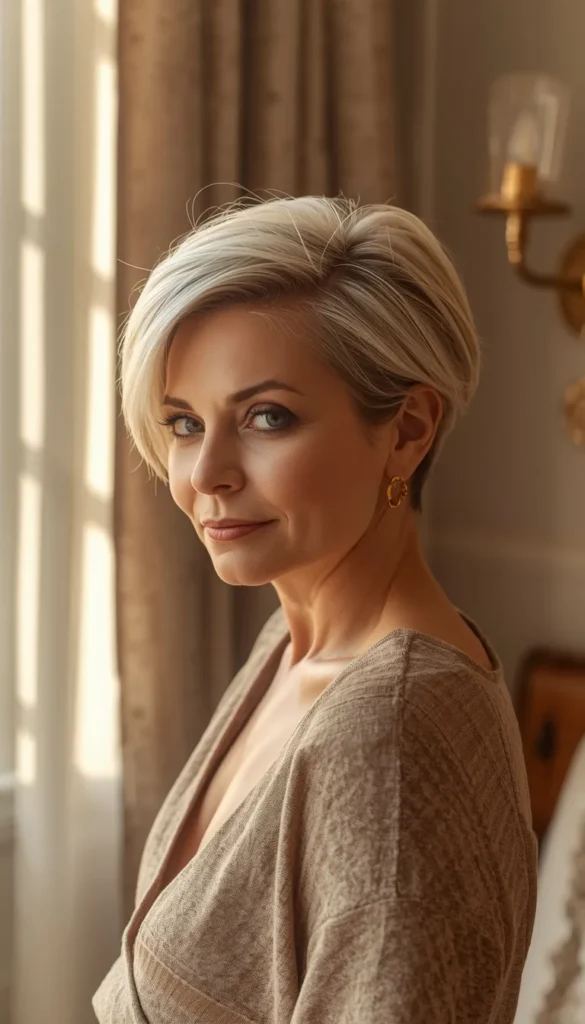
The bixie that gorgeous hybrid of a pixie and a bob has become one of the most requested styles in my consultations over the past year, and I completely understand why. It hits a sweet spot that a lot of women over 50 are looking for: shorter than a bob, longer than a traditional pixie, and somehow more versatile than either.
What makes the bixie particularly flattering after 50 is the length distribution. The front sections are kept longer, usually grazing the jaw or sitting just above it, while the back is cut shorter and tapered. That front length frames the face beautifully and gives you something to work with on days when you want a slightly more polished look.
One thing I always tell my bixie clients: this style rewards good product use more than almost any other cut on this list. A lightweight defining cream through the ends and a quick blast with a round brush gives you a completely different look than air-drying with a texturizing spray. You essentially get two styles in one cut, which is a genuinely excellent return on a single salon visit.
13. Asymmetrical Pixie Cuts for Older Women Who Want an Edge
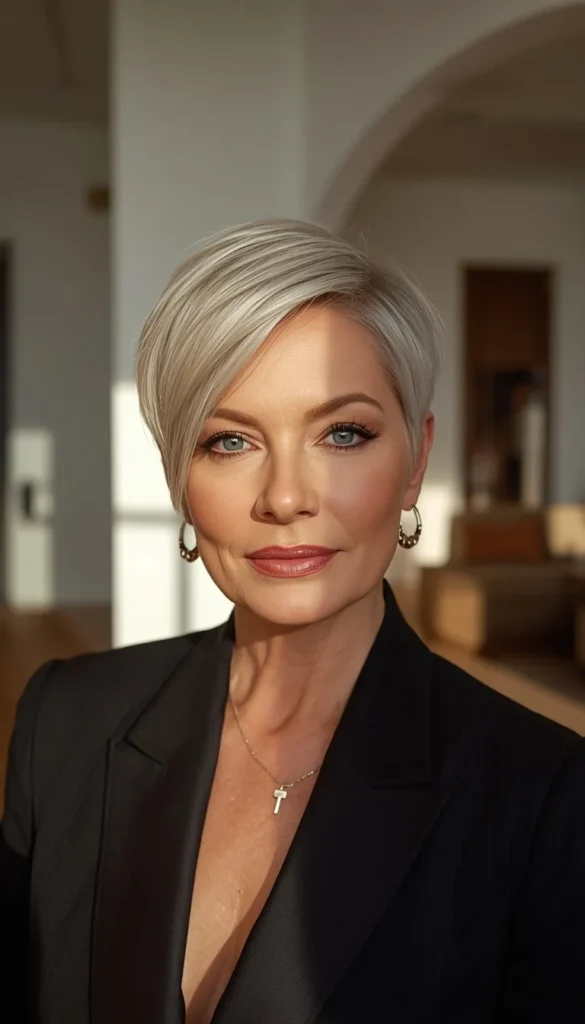
Asymmetrical pixie cuts are for the woman who walks into a room and owns it completely. One side longer, one side shorter, with a deliberate imbalance that creates movement and visual interest in a way that symmetrical cuts simply cannot. It sounds bold, and it is but it’s also more wearable than most women expect.
What I find fascinating about asymmetrical pixies on older women is how effectively they update the overall look. There’s a modernity to the uneven lines that reads as current and fashion-forward without veering into costume territory. I’ve put women in their late 60s in asymmetrical pixies and watched them look ten years younger and a hundred times more interesting, which is a combination that’s hard to argue with.
The style works particularly well if you have strong cheekbones or an angular jaw, because the longer side can be swept across to highlight those features deliberately. If your face is rounder or softer, the diagonal line of the asymmetrical cut creates the illusion of more defined structure underneath.
One practical note: this cut does require a skilled stylist. The geometry has to be intentional and precise, or it just looks uneven rather than editorial. It’s worth paying a little more for someone who has genuine experience with asymmetrical cuts specifically.
Are you team low maintenance shaggy pixie or team polished classic taper and does your morning routine play a role in that decision?
14. Low Maintenance Pixie Haircuts for Senior Women With Busy Lives
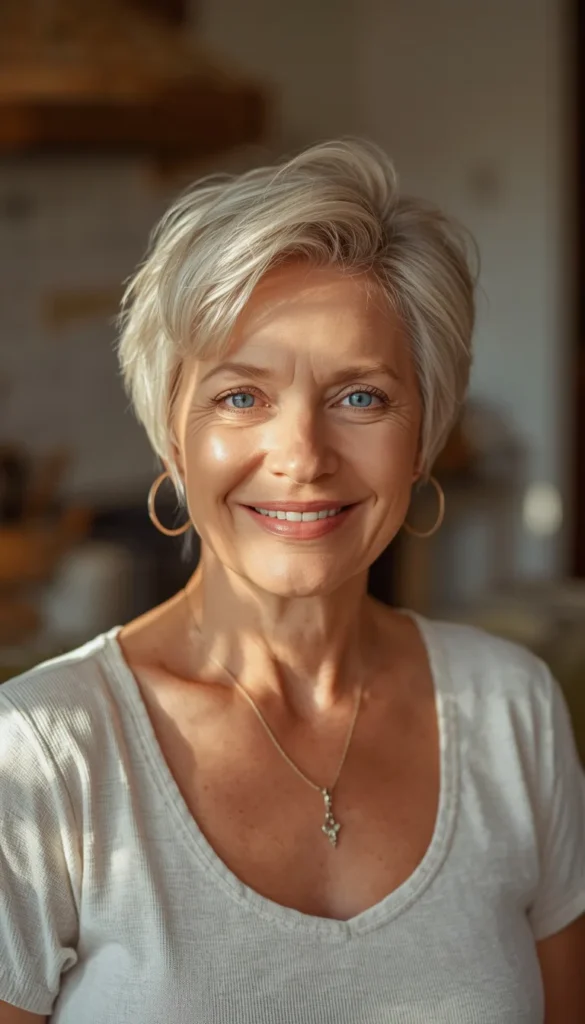
Let’s be completely honest about something. “Low maintenance” gets thrown around in the hair world almost as loosely as “effortless,” and the two are not always the same thing. A truly low maintenance pixie for senior women needs to meet a very specific set of criteria, and not every short cut qualifies.
The styles that genuinely earn the low maintenance label are the ones that look intentional even when you haven’t touched them that morning. The shaggy pixie qualifies. The textured pixie qualifies. The classic tapered pixie qualifies with the right products in place. What doesn’t qualify is anything that requires daily heat styling or precise placement to look right.
Here’s what low maintenance actually looks like in real daily life:
- A wash and wear pixie that air dries into shape without intervention
- A cut that still looks styled on day two or three without washing
- A style whose grow-out phase is graceful rather than awkward, buying you extra weeks between salon visits
The honest reality is that even low maintenance pixies need a trim every five to six weeks to stay looking their best. Budget for that. A great cut every five weeks is still dramatically less time and money than a complicated longer style with weekly blowouts and monthly treatments.
15. How to Choose the Right Pixie Cut for Your Face Shape After 50
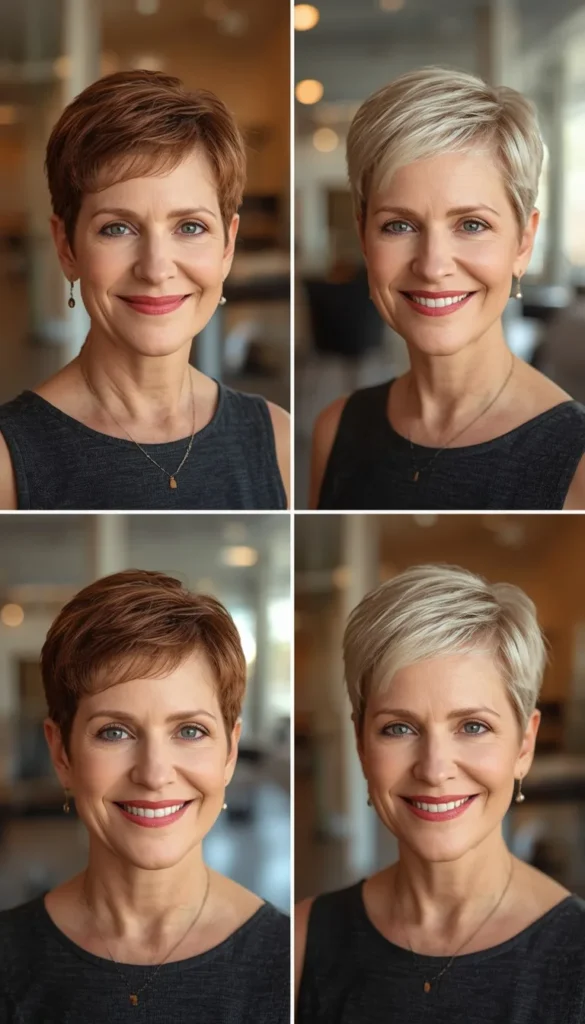
Face shape advice gets recycled endlessly in hair content, and most of it is oversimplified to the point of being useless. What I want to give you here is the practical version the advice I actually give clients sitting in my studio chair.
The first thing I tell every woman over 50 is that your face shape may have shifted since the last time you analyzed it. Bone structure stays relatively stable, but fat distribution and skin laxity change the way the face reads in a mirror. A woman who was oval-faced at 30 might read as slightly rounder or squarer at 60, and her cut choices should reflect that current reality rather than a remembered one.
Here’s how I approach the main face shapes in my consultations:
- Round faces do beautifully with pixies that have height at the crown and close-cropped sides the vertical emphasis creates length visually
- Square faces benefit enormously from soft, wispy layers and side-swept bangs that break up the strong jaw angles
- Oval faces are genuinely the lucky ones here almost every pixie variation works, so the choice becomes about texture and lifestyle rather than shape
- Heart-shaped faces look stunning with longer, feathered pieces near the chin and temples to balance a wider forehead
The single most useful thing you can do before your appointment is bring three reference photos of pixie styles you love and one of a style you definitely don’t want. That contrast gives your stylist more information than any face shape analysis ever could.
16. Products and Styling Hacks That Make Every Pixie Look Salon Fresh
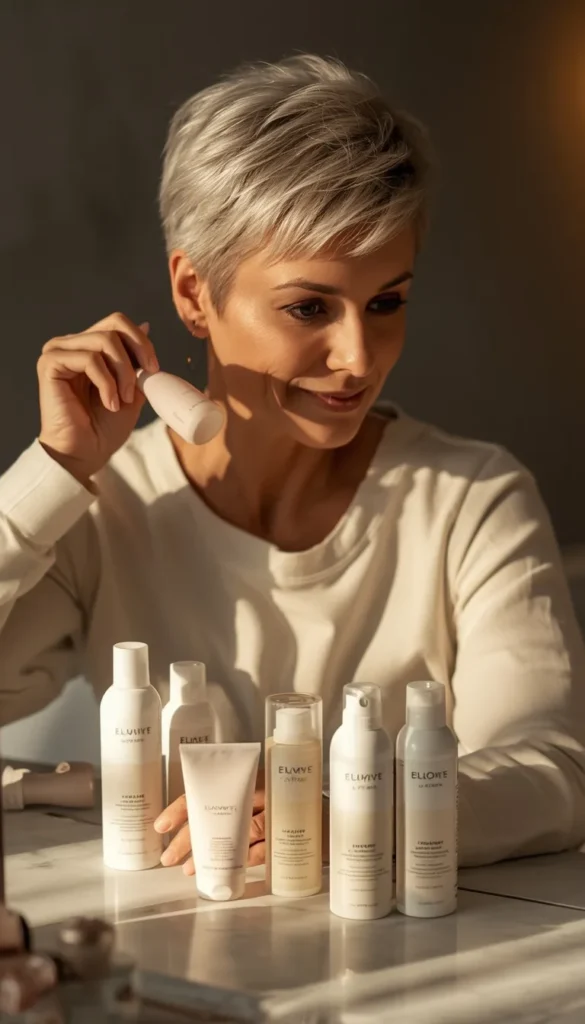
The difference between a pixie that looks incredible and one that looks like it needs a trim is almost always product knowledge. I’ve seen beautiful cuts walk out of my studio and come back six weeks later looking completely lost, and nine times out of ten the culprit is either the wrong product or no product at all.
For fine or thinning hair, a volumizing mousse applied to damp roots before blow-drying is non-negotiable. Not a heavy cream, not a thick gel a lightweight mousse that adds body without weighing individual strands down. Work it in from the root upward and then use a small round brush while blow-drying to lift at the crown.
For thicker or coarser hair which becomes more common after 50 as texture naturally changes a small amount of smoothing cream through the ends controls frizz and adds that polished, intentional finish that separates a great pixie from a chaotic one. Think pea-sized amount, emulsified between your palms, then smoothed lightly over the surface.
A styling trick I share with almost every pixie client: keep a small travel-sized dry shampoo in your bag. On day two, a quick spritz at the roots refreshes volume and absorbs any oil that accumulates overnight, and your pixie looks essentially freshly styled without a single drop of water involved.
17. How Much Does a Pixie Cut Actually Cost? Budget Reality for Older Women
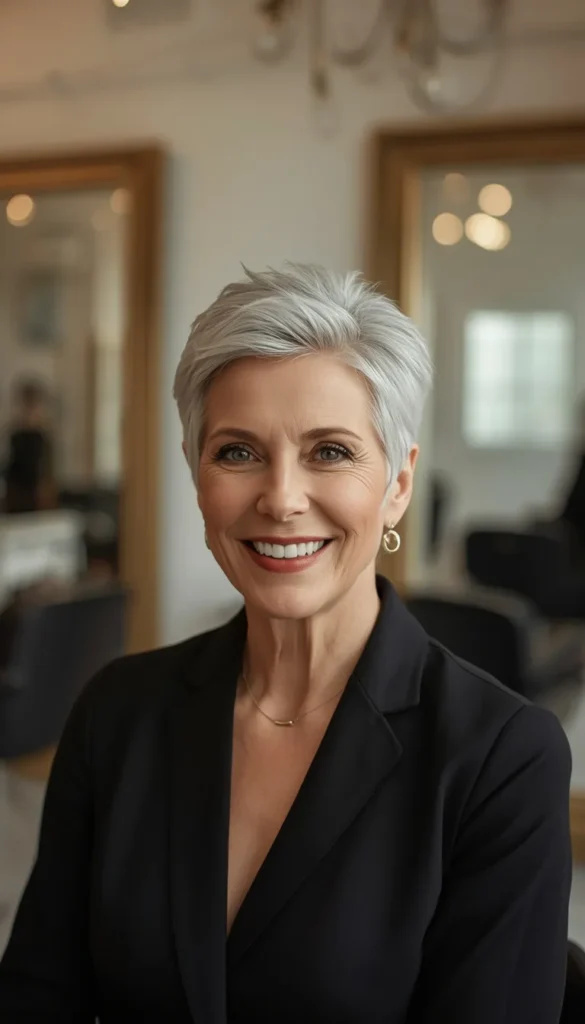
Nobody talks about this part honestly enough, and I think that does women a real disservice when they’re considering making the switch. So let me give you the straightforward version that I give every client who asks me this question in my studio.
The initial cut is usually the biggest investment. A quality pixie cut from an experienced stylist in most US cities will run you anywhere from $65 to $150 depending on your location, the salon’s positioning, and the complexity of the style you’re asking for. In major metropolitan areas like New York, Chicago, or Los Angeles, that number can climb higher. In smaller cities and suburban areas, you’ll often find excellent stylists at the lower end of that range.
Here’s the part that catches most women off guard: pixie cuts need maintenance more frequently than longer styles. Plan for a trim every four to six weeks to keep the shape looking intentional. That’s roughly eight to ten salon visits per year, which adds up. However, what you save on shampoo, conditioner, styling products, heat tools, and time is genuinely significant. Most of my clients report that their overall hair budget either stays the same or decreases after making the pixie switch, once they factor in everything they’re no longer buying or doing.
A few budget considerations worth planning for:
- First cut plus any color work can run $150 to $250 as a combined starting investment
- Maintenance trims without color typically run $45 to $85 each visit
- A good texturizing spray and a small jar of pomade are the only two products most pixie styles actually need
If you could only pick one thing that’s holding you back from trying a short pixie haircut right now, what would it honestly be?
18. How to Talk to Your Stylist About Making the Pixie Switch
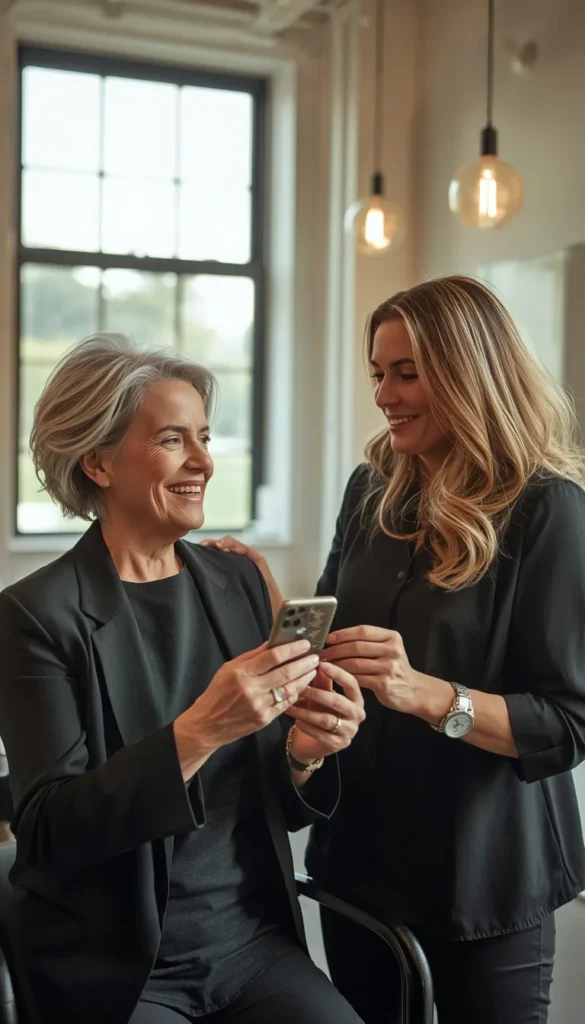
This is the section I wish every hair website included, because the conversation you have before the cut matters just as much as the cut itself. I’ve seen women leave salons disappointed not because the stylist did bad work, but because the communication going in was unclear on both sides.
Start by bringing photos. Not just one bring three to five images of pixie styles you’re genuinely drawn to, and try to choose photos of women who are close to your age and hair texture. A pixie that looks incredible on a 28-year-old with thick, straight hair may translate completely differently on finer, silver hair. The more your reference images reflect your actual starting point, the more useful they are for your stylist.
Be specific about your lifestyle when you sit down. Tell your stylist honestly how much time you spend on your hair in the morning, whether you use heat tools regularly, how often you realistically make it to the salon, and what your comfort level is with maintenance. A good stylist will use all of that information to steer you toward the variation of the pixie that actually works for your real life not just the one that looks best in a photo.
One thing I always tell women who are nervous about making this leap: ask your stylist to talk you through the cut step by step before they begin. Understanding what’s happening and why removes so much of the anxiety. And if at any point during the consultation something doesn’t feel right, it is completely acceptable to slow down, ask more questions, or reschedule until you feel fully ready. The best pixie cut is one you walk into with confidence, not one you fall into by accident.
The women I’ve seen transform most dramatically with a pixie cut weren’t the ones with the most ideal hair texture or the perfect face shape. They were the ones who walked in knowing what they wanted, communicated it clearly, and trusted the process. That combination produces something genuinely beautiful every single time.
Your 2-Minute Pixie Decision Map
By Budget
Smart Investment ($65 to $150 per cut)
- Go with the Classic Tapered Pixie for a clean, no-fuss look that holds its shape beautifully
- The Feathered Pixie is your best value soft, flattering, and needs minimal product to look polished
- Textured Pixie works hardest for thinning hair at the most accessible price point
- Low maintenance styles in this range mean fewer products to buy overall
Luxury Investment ($150 to $250+ with color)
- Platinum and Gray Pixie is the ultimate commitment stunning results, higher upkeep
- The Bixie with balayage or gloss treatment elevates the cut into genuine statement territory
- Asymmetrical Pixie with precision styling requires a senior stylist worth every dollar
- Budget for toner and gloss appointments every six to eight weeks on top of the cut itself
By Lifestyle
The Busy Woman (Minimal Morning Routine)
- Shaggy Pixie air dries beautifully, looks intentional with zero effort
- Textured Pixie scrunch and go, no heat tools required
- Low Maintenance Pixie wash, pat dry, done in under ten minutes
The Style-Conscious Woman (Loves a Polished Look)
- Classic Tapered Pixie crisp, refined, always camera-ready
- Pixie With Side Bangs elegant face framing that photographs beautifully
- Platinum Gray Pixie high impact, high style, turns heads consistently
Frequently Asked Questions
Do short pixie haircuts actually look good on older women?
Yes, and often better than on younger women. Silver hair, strong bone structure, and confident energy make pixie cuts look intentional and striking after 50.
What is the most low maintenance pixie haircut for senior women?
The shaggy or textured pixie wins here. Air dries into shape, needs almost no product, and still looks styled without any morning effort.
How often do I need to trim a pixie cut to keep it looking good?
Every four to six weeks is realistic. Skip that window and the shape starts to lose its edge and the whole look suffers fast.
Will a pixie cut work if my hair is thinning after 50?
Absolutely. A textured or layered pixie is actually one of the smartest cuts for thinning hair the technique creates an illusion of fullness that longer styles simply cannot fake.
What face shapes look best with a short pixie haircut?
Oval faces have the most flexibility, but honestly every face shape has a pixie variation that works beautifully. It is about finding the right length and bang placement, not avoiding the cut altogether.
Conclusion
You don’t need a special occasion to make this change. You don’t need permission, a milestone birthday, or anyone else’s approval. What you need is a good stylist, a clear idea of what you want, and the willingness to walk out of that salon looking like the most confident version of yourself. The women I’ve worked with who made the pixie switch in their 50s and 60s consistently tell me the same thing they only regret not doing it sooner.

One Comment