16 Dark Brown Hair Color Ideas That Look Rich and Expensive
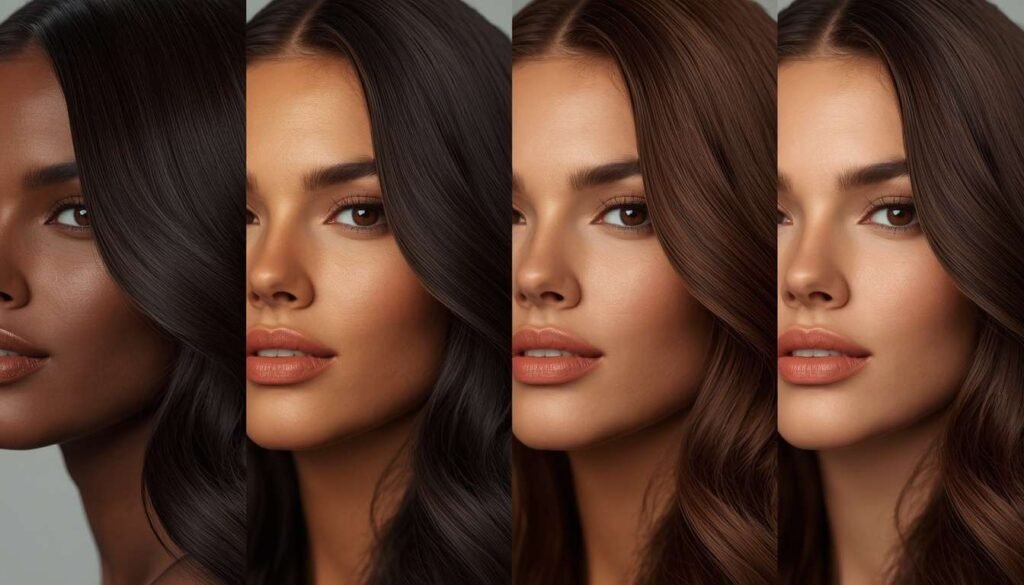
There’s a reason so many women are ditching the high-maintenance blonde and coming back to rich, deep brunette shades. Whether you’re drawn to a glossy espresso, a warm chocolate, or a dimensional mocha, dark brown hair has this effortless way of looking expensive without trying too hard. I’ve seen it completely transform a client’s entire look sharper features, glowing skin, more polished presence. If you’ve been on the fence, these 16 dark brown hair color ideas might just be the push you need.
My Design Notes 💡
Last October, a client of mine — a marketing director from Austin, Texas walked into the salon with a Pinterest board stuffed with “expensive-looking brunette” inspiration photos. She had warm golden skin, hazel eyes, and had been bleaching her hair blonde for nearly three years. Honestly? Her hair was exhausted. Instead of layering on more damage with highlights, we went with a single-process dark chocolate brown and finished it with a glossy toning glaze on top. Zero damage. Maximum impact.
Two weeks later, she texted me saying three different people had asked if she’d just gotten back from Italy. That’s the thing about a rich, well-executed dark brown it carries this almost effortless sophistication that people can’t quite put their finger on. It doesn’t scream “I just left the salon.” It whispers “I woke up like this.”
That experience is honestly what inspired me to put this guide together. Dark brown is not a default. It’s a decision — and when it’s done right, it’s one of the most powerful color choices a woman can make.
Stunning Dark Brown Hair Color Ideas to Elevate Your Brunette Game
1. Classic Espresso Brown
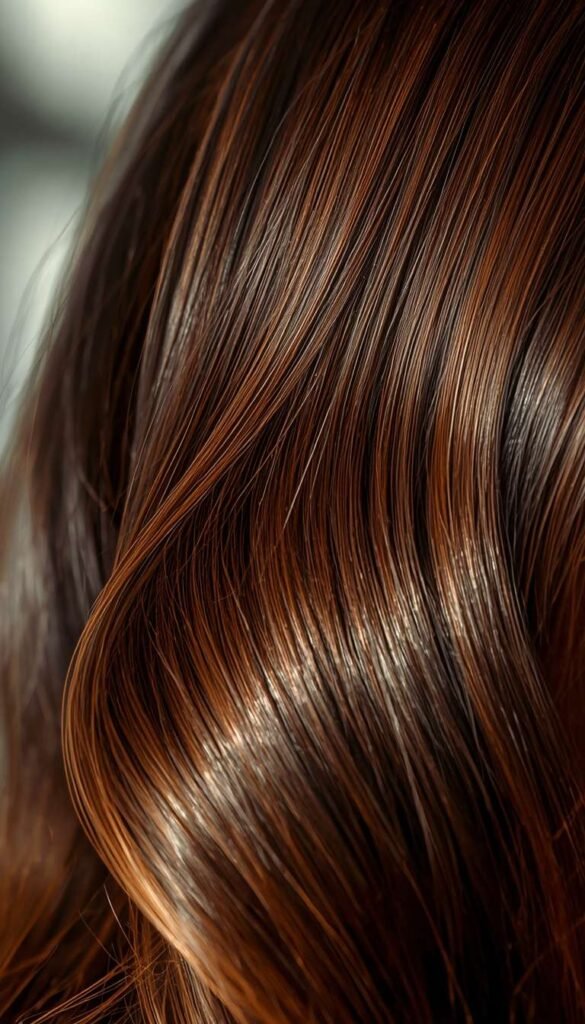
If there’s one dark brown shade that never goes out of style, it’s espresso. This is the deepest, richest end of the brown spectrum — almost black in dim lighting, but when the sun hits it? You see this incredible depth that no box dye can truly replicate. It’s the kind of color that makes your eyes look sharper and your skin look more even without any effort.
The honest truth about espresso, though, is that it does fade. On most hair types, you’ll start seeing a slight warmth creep in around weeks six to eight. A purple or blue-toned shampoo used once a week can slow that down significantly. I always tell my clients to think of color maintenance like skincare — consistency is everything.
This shade works beautifully on:
- Olive and medium skin tones
- Cool and neutral undertones
- Women with dark brown or black brows who want a seamless, natural look
2. Dark Chocolate Brown
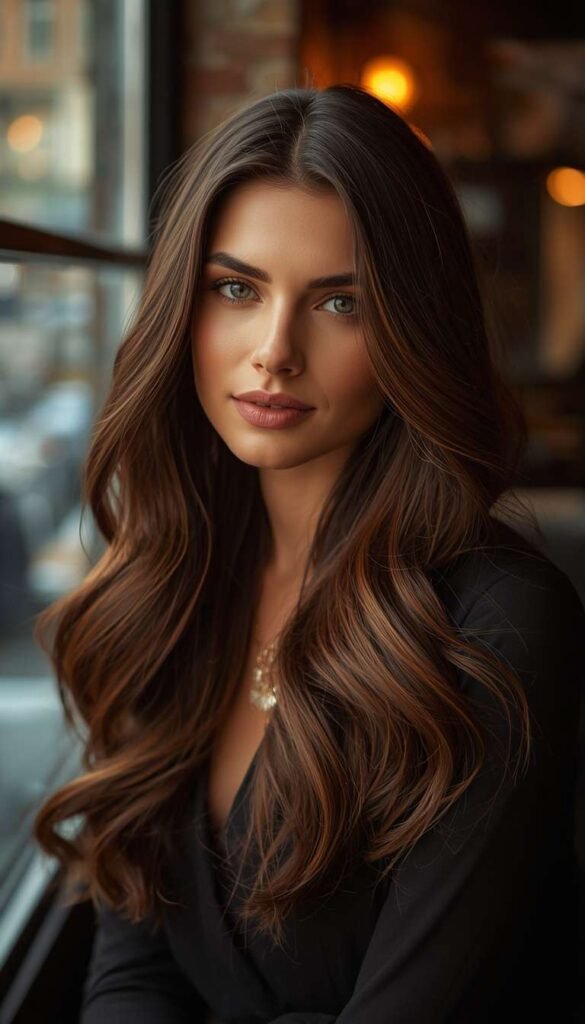
Dark chocolate brown sits just a touch warmer than espresso, and that difference is everything. Where espresso reads sleek and dramatic, dark chocolate feels rich, inviting, and almost luxurious. Think of it like the difference between a sharp black blazer and a cashmere coat — both polished, but one has more warmth to it.
This is my go-to recommendation for clients who want depth without looking too severe. It has warm undertones that naturally complement golden, peachy, and medium skin tones, making your complexion look like it’s glowing from within. One thing to watch out for, though — if your hair has been previously lightened, dark chocolate can pull slightly red or orange during the fading process. Your colorist should use a cool-toned toner after the color application to keep it looking true and rich for longer.
3. Mocha Brown
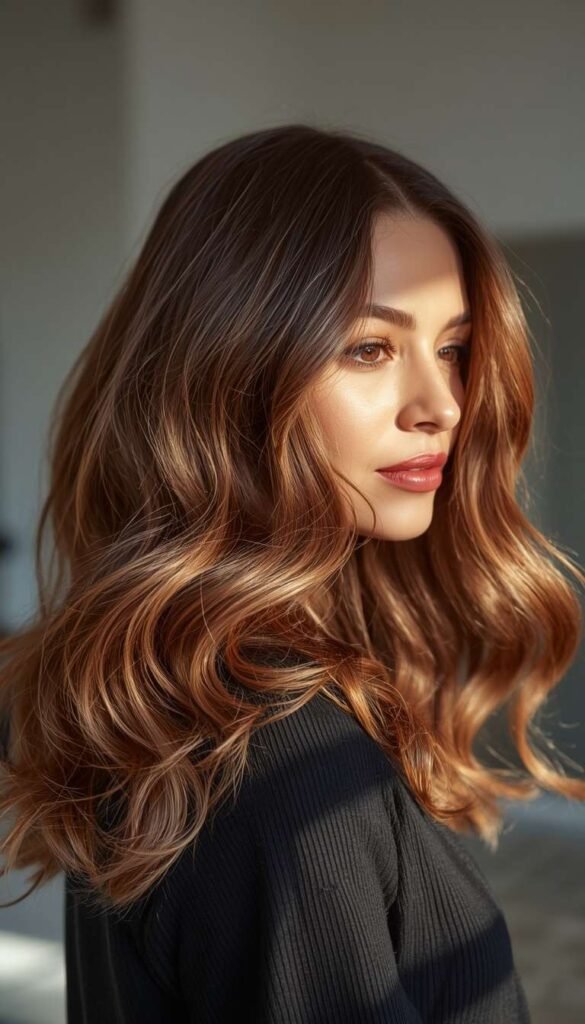
Mocha brown is honestly one of the most underrated shades in the entire brunette family. It sits right between a medium brown and a deep brown, carrying just enough warmth to feel cozy without tipping into red territory. I’ve seen it work on literally every skin tone I’ve ever worked with — fair, medium, deep, olive. It’s that rare shade that just doesn’t discriminate.
What makes mocha special is its built-in dimension. Even as a single-process color, it catches light in a way that looks like you have subtle highlights woven through. If you’re someone who wants low-maintenance hair that still looks intentional and styled, mocha brown is genuinely one of the smartest choices you can make. Pair it with a glossing treatment at the salon and you’ll walk out looking like you spent twice the budget.
4. Dark Brown Balayage
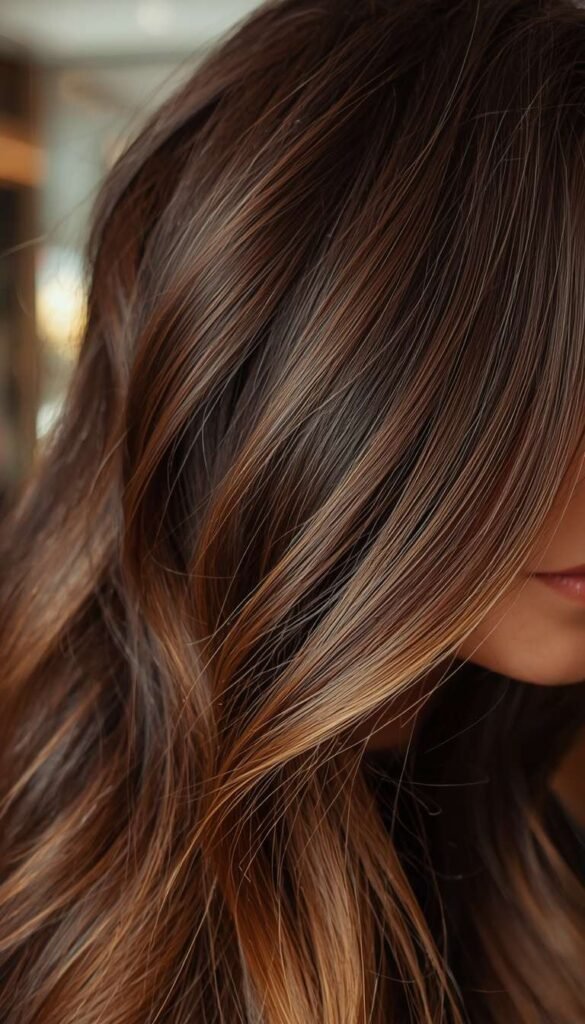
Dark brown balayage is where things start getting really beautiful. Unlike traditional highlights that go root to tip, balayage is painted freehand onto the hair — usually starting mid-shaft and getting lighter toward the ends. The result looks like your hair naturally lightened in the sun over an entire summer. It’s effortless, it’s dimensional, and it photographs incredibly well.
Here’s the reality check nobody tells you upfront: a proper dark brown balayage at a good US salon will run you anywhere from $150 to $350 depending on your location and hair length. It’s an investment. The good news is that because there’s no harsh root line, you can stretch your appointments to every 12 to 16 weeks without it looking grown out. That actually makes it more cost-effective long-term than a single-process color you’re touching up every six weeks.
A quick trick I’ve learned — ask your colorist to keep the lightest pieces framing your face. That face-framing brightness does more for your overall look than highlights scattered throughout the back of your hair.
Top 6 Dark Brown Hair Color Ideas:
| Idea | Estimated Price | Maintenance |
|---|---|---|
| Classic Espresso Brown | $80 to $150 | Medium |
| Dark Brown Balayage | $150 to $350 | Low |
| Dark Brown with Caramel Highlights | $120 to $280 | Medium |
| Glossy Glass Hair | $100 to $200 | High |
| Dimensional Brunette with Babylights | $200 to $400 | Low |
| Espresso to Caramel Melt | $180 to $380 | Low |
5. Dark Brown with Caramel Highlights
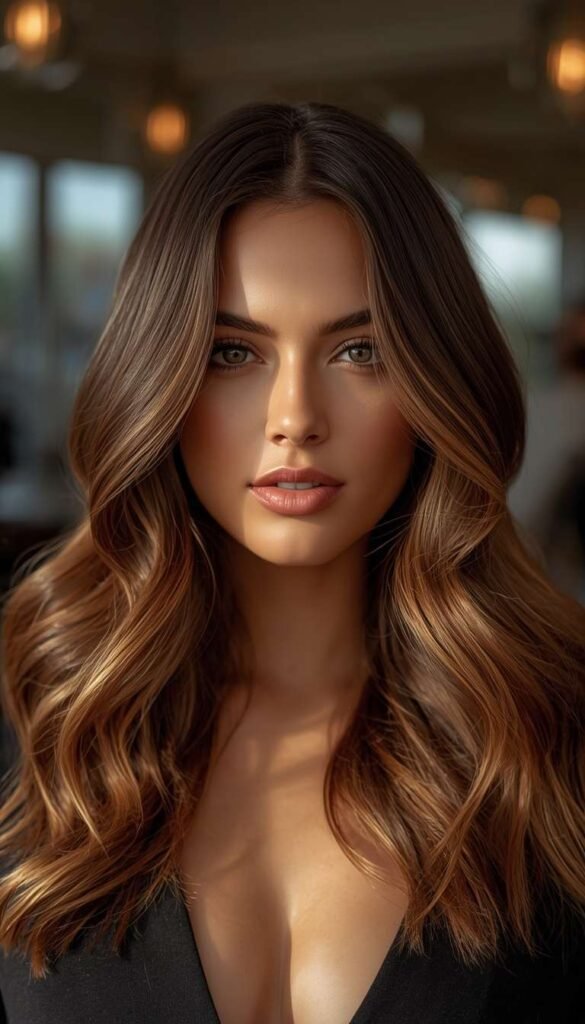
Dark brown hair with caramel highlights is one of those combinations that feels both timeless and completely current at the same time. The contrast between the deep brunette base and those warm, golden-caramel pieces creates this incredibly rich, multi-dimensional look that genuinely does appear expensive. It’s the kind of color that makes people assume you spent serious money at a high-end salon — even when you didn’t.
The key to making this work is placement. Caramel highlights that are scattered too evenly throughout the hair can look a little dated — almost like the chunky highlights of the early 2000s. What works better is a more organic, concentrated approach:
- Heavier pieces around the face for instant brightness
- Lighter, more subtle streaks through the mid-lengths
- A slightly deeper root to anchor the whole look
For skin tone matching, caramel highlights on dark brown hair are most flattering on warm and neutral undertones. If you run cool, ask your colorist to lean the caramel slightly more golden rather than orange-toned. That one small adjustment makes a significant difference in how harmonious the final result looks against your complexion.
Which of these dark brown shades feels most like you warm and cozy chocolate, sleek espresso, or something with a little highlight drama?
6. Dark Brown with Copper Highlights
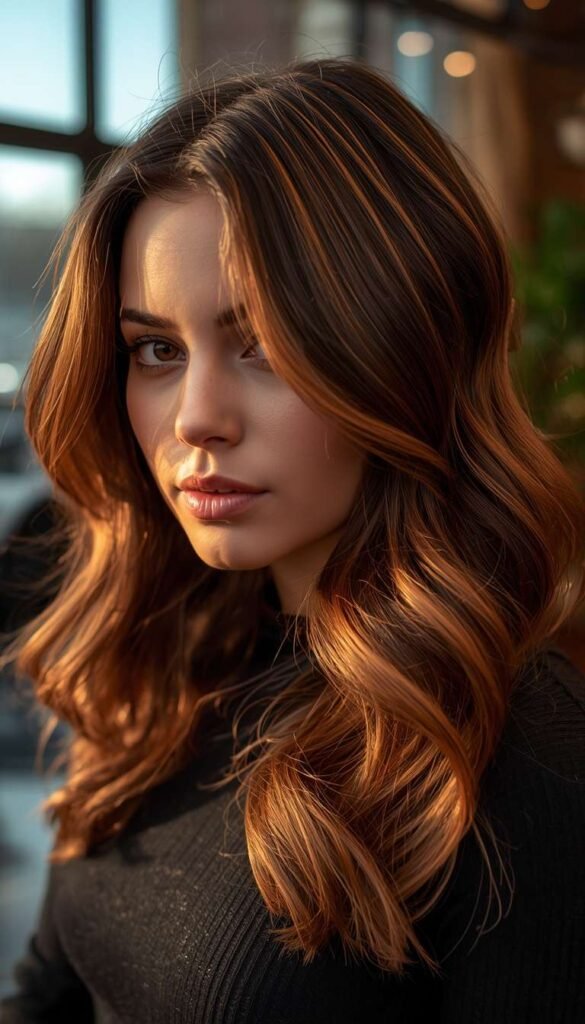
If caramel is the safe, universally flattering choice, copper highlights are for the woman who wants her dark brown hair to have a little more personality. There’s something about copper woven through a deep brunette base that feels almost jewel-toned — rich, warm, and impossible to ignore when the light catches it.
This combination is particularly stunning in fall, which is why I always start recommending it to clients around August. The warm, burnished tones mirror the season perfectly and somehow make the whole look feel very intentional and on-trend without chasing trends. One thing to watch out for is that copper fades faster than caramel. You’ll want a color-depositing conditioner in a warm auburn or copper shade to use between salon visits — it takes about two minutes in the shower and genuinely extends the life of the color by weeks.
7. Glossy Glass Hair in Dark Brown
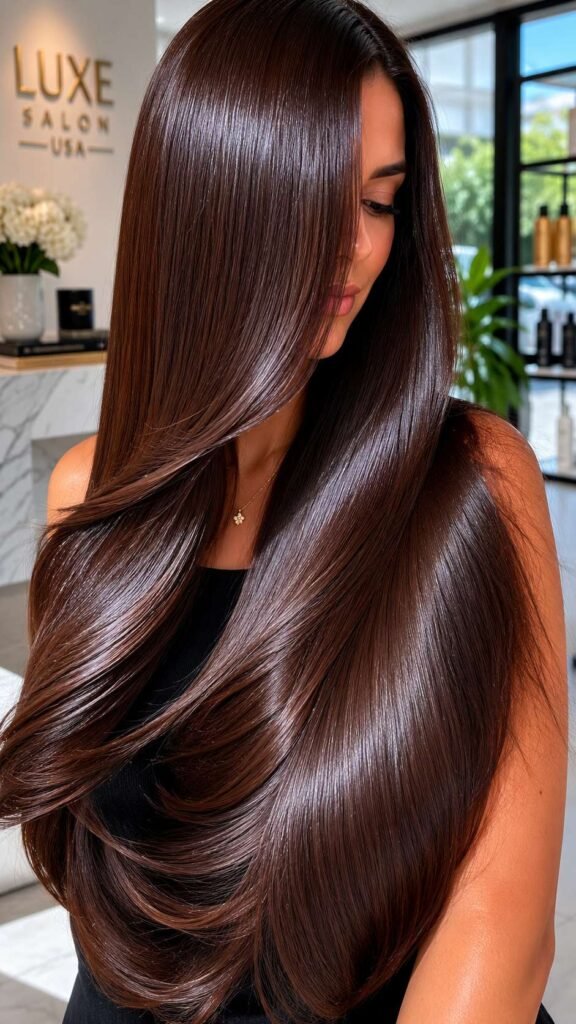
Glass hair is the trend that took over social media and honestly, for good reason. The concept is simple — ultra-smooth, mirror-like shine that makes your hair look almost wet and lacquered. When you apply that aesthetic to dark brown hair specifically, the result is nothing short of stunning. Deep color plus extreme gloss equals the kind of hair that makes people stop mid-conversation.
Achieving this at the salon usually involves a clear or tinted gloss treatment applied over your base color. At home, the maintenance comes down to three things:
- A sulfate-free shampoo that doesn’t strip moisture
- A lightweight shine serum applied to damp hair before blow-drying
- Blow-drying with a round brush on medium heat rather than high — high heat kills shine faster than anything else
I will be completely honest here — glass hair and humidity do not get along. If you live in a place like Houston or Miami, you’ll need a really solid anti-frizz product in your routine, otherwise that mirror finish turns into a frizzy situation by noon.
8. Ashy Cool Dark Brown
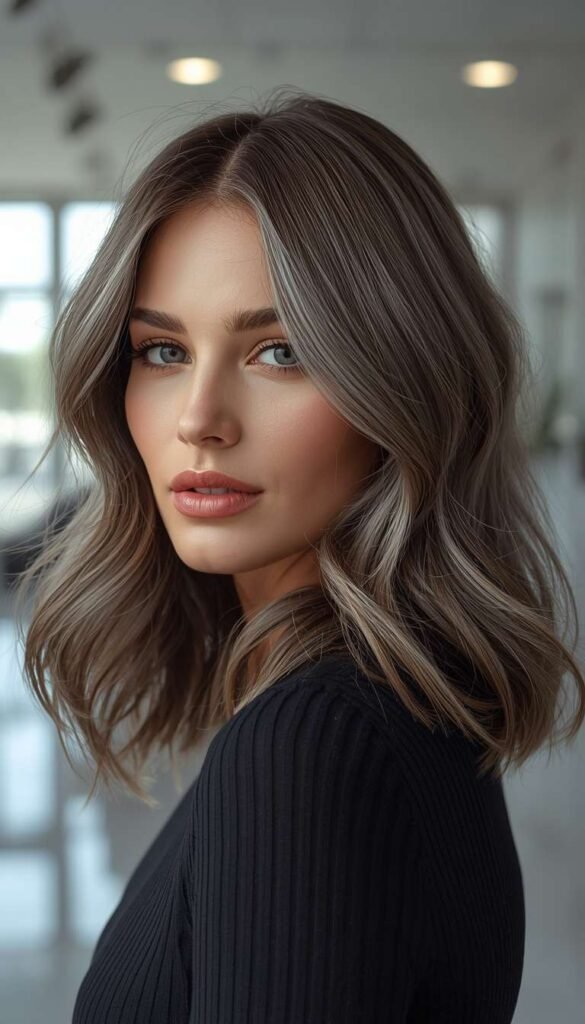
Not every dark brown needs to be warm. Ashy cool dark brown is the shade for women who have cooler undertones and have always felt like traditional brunette shades looked a little off against their skin. That slight off feeling? It’s usually because the brown was pulling too warm or too red for their complexion.
An ashy dark brown has gray-toned, almost smoky undertones that sit beautifully against fair skin with pink undertones, cool beige skin, and even deeper skin tones with blue or purple undertones. It’s sophisticated in a completely different way than warm chocolate — less cozy, more editorial. Think less rustic Italian villa and more sleek Manhattan apartment.
The maintenance reality with ashy tones is that they can shift slightly greenish or muddy if not maintained properly. A blue or violet toning shampoo used once every week or two keeps the ashiness looking intentional rather than faded. Your colorist should also use a cool-toned gloss at every appointment to refresh the tone without committing to a full recolor each time.
9. Warm Chocolate Brunette
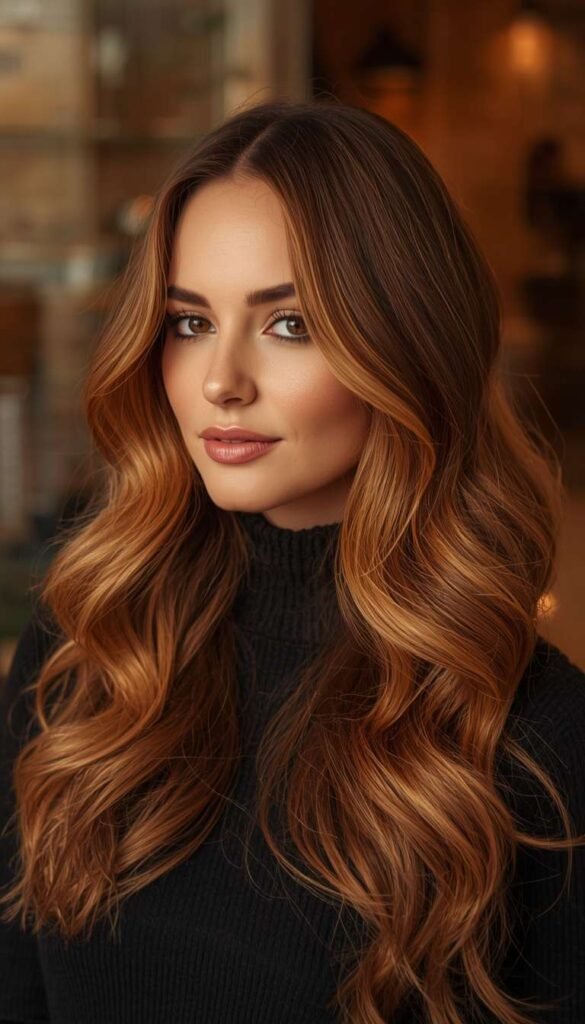
Warm chocolate brunette is the hair equivalent of your favorite cozy sweater — it just feels right. This shade leans into golden and honey undertones rather than red or copper, giving it this incredibly soft, inviting quality that photographs beautifully in natural light. It’s the shade I find myself recommending most during the winter months, when everyone wants their hair to feel a little more luxurious and lived-in.
What I love most about warm chocolate brunette is how naturally it complements a wide range of skin tones. Women with golden, peachy, or warm beige complexions especially find that this shade makes their skin look almost luminous. It’s one of those colors where people will compliment your skin when really it’s your hair doing all the heavy lifting.
A quick trick I’ve learned over the years — if you want to enhance those warm tones between salon visits, rinse your hair with a very diluted apple cider vinegar solution once a month. It closes the cuticle, adds shine, and subtly warms up the tone without any product. Completely free, completely natural.
10. Dark Brown Balayage for Short Hair
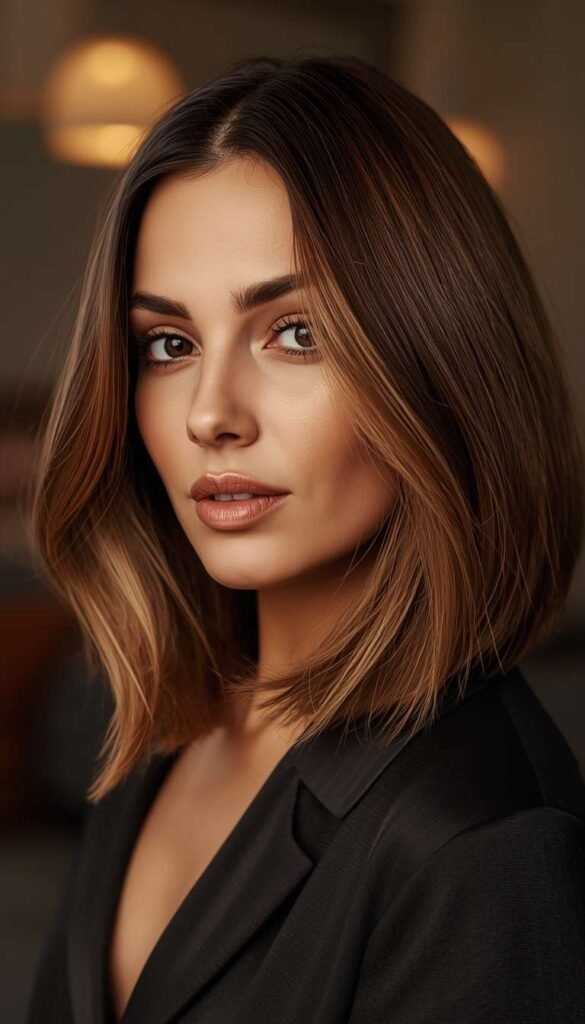
Here’s something the internet doesn’t talk about nearly enough — dark brown balayage looks absolutely incredible on short hair. Bobs, lobs, pixie cuts, shaggy cuts — all of them. There’s this misconception that balayage only works on long flowing hair, and I genuinely can’t figure out where that idea came from because it’s completely wrong.
On shorter cuts, dark brown balayage actually has more impact. The contrast is more concentrated, the painted pieces are more visible, and the whole look feels very intentional and modern. A dark brunette bob with subtle caramel balayage through the ends is one of the most chic combinations I’ve ever put together in a salon chair.
The key differences when doing balayage on short hair:
- The colorist needs to work in smaller, more precise sections
- The transition from dark to light needs to be slightly more gradual to avoid a blocky look
- Face-framing pieces carry even more visual weight, so placement around the cheekbones is critical
Cost-wise, balayage on short hair is typically less expensive than on long hair — usually in the $120 to $220 range at a mid-level US salon. So if you’ve been wanting to try the look but felt priced out, a shorter cut might actually be your most budget-friendly entry point.
Have you ever made a hair color change that completely transformed how you felt about yourself?
11. Natural Dark Brown with Dimension
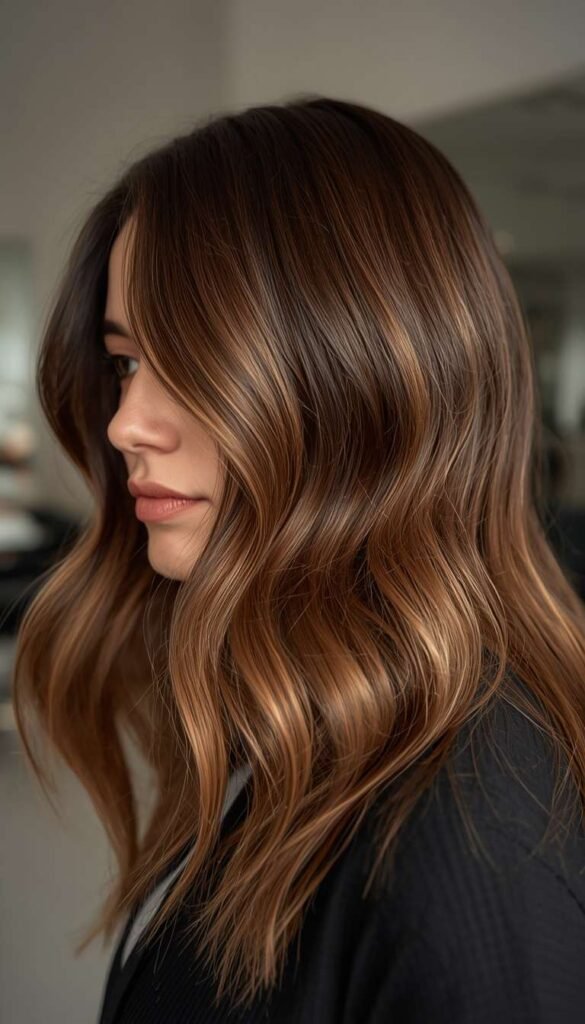
Sometimes the most expensive-looking hair color is the one that looks like you were simply born with it. Natural dark brown with dimension is exactly that — no dramatic highlights, no bold contrast, just a beautifully executed brunette that has subtle variation woven through it to prevent it from looking flat or one-dimensional.
This is achieved through a technique called toning, glazing, or sometimes a multi-tonal single process where your colorist uses two or three very close shades of dark brown together rather than one flat color. The result is hair that moves and catches light in a way that looks completely organic. I’ve had clients come in asking for “the most natural thing possible” and leave with this look — and they’re always the ones who get the most compliments because people can never quite tell what was done.
If you’re someone who is color-shy or working with a tight budget, this is genuinely the smartest place to start. A single gloss treatment at a salon — which typically runs between $45 and $85 — can add this kind of dimension to natural dark brown hair without any commitment whatsoever.
12. Chocolate Cherry Dark Brown
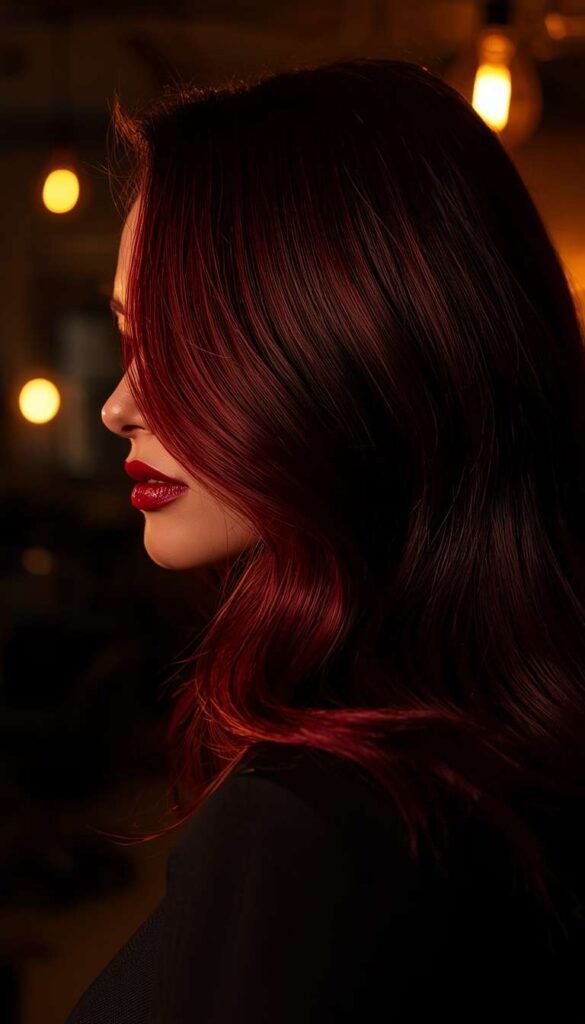
Chocolate cherry is for the woman who loves the idea of red hair but isn’t quite ready to fully commit. It’s a deep, moody blend of dark brown and burgundy-red tones that reads as brunette in most lighting but reveals these gorgeous wine and cherry undertones when the sun hits it. It’s subtle enough for a corporate office on Monday and interesting enough for a dinner party on Saturday.
The one honest con I have to share — and I always tell my clients this upfront — chocolate cherry is one of the faster-fading shades in the dark brown family. Red pigment molecules are physically smaller than brown ones, which means they rinse out of the hair cuticle more quickly. You’re looking at noticeable fading around the four to six week mark without proper maintenance.
To keep it rich and vibrant:
- Use a red or auburn color-depositing shampoo once a week
- Always rinse hair with cool water — hot water opens the cuticle and accelerates color loss
- Avoid chlorine without a swim cap because it will pull the red tones out almost immediately
Done right and maintained well though, chocolate cherry dark brown is genuinely one of the most stunning shades in this entire list.
13. Dark Brown Ombré and Sombré
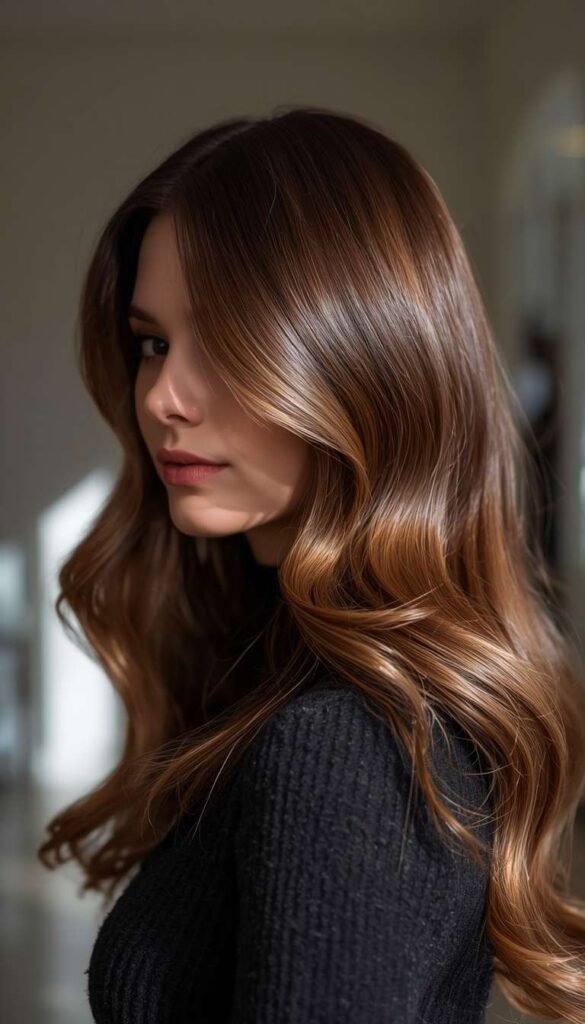
If you’ve ever wanted to try a gradient color effect but felt nervous about anything too dramatic, dark brown ombré — and its softer cousin, sombré — are your safest, most beginner-friendly entry points. The difference between the two is simple. Ombré has a more visible, defined transition from dark to light. Sombré is the same concept but blended so softly that the shift is almost imperceptible until you look closely.
On dark brown hair specifically, both techniques look incredibly elegant because the base is already so rich and deep. The contrast doesn’t need to be extreme to be effective. Even transitioning from a deep espresso at the roots to a warm chocolate brown at the ends creates a beautiful, dimensional result that looks intentional and polished.
What I genuinely love about this look from a practical standpoint is how forgiving it is as it grows out. There’s no harsh root line to worry about, no awkward in-between stage. It just grows. For busy women who can’t commit to frequent salon visits, this is honestly one of the most lifestyle-compatible color choices on this entire list.
Budget-wise, a dark brown sombré at a US salon typically runs between $100 and $200 depending on hair length and the salon’s location. It’s one of the more accessible gradient techniques, which makes it a great starting point if you’re new to color services altogether.
14. Dimensional Brunette with Babylights
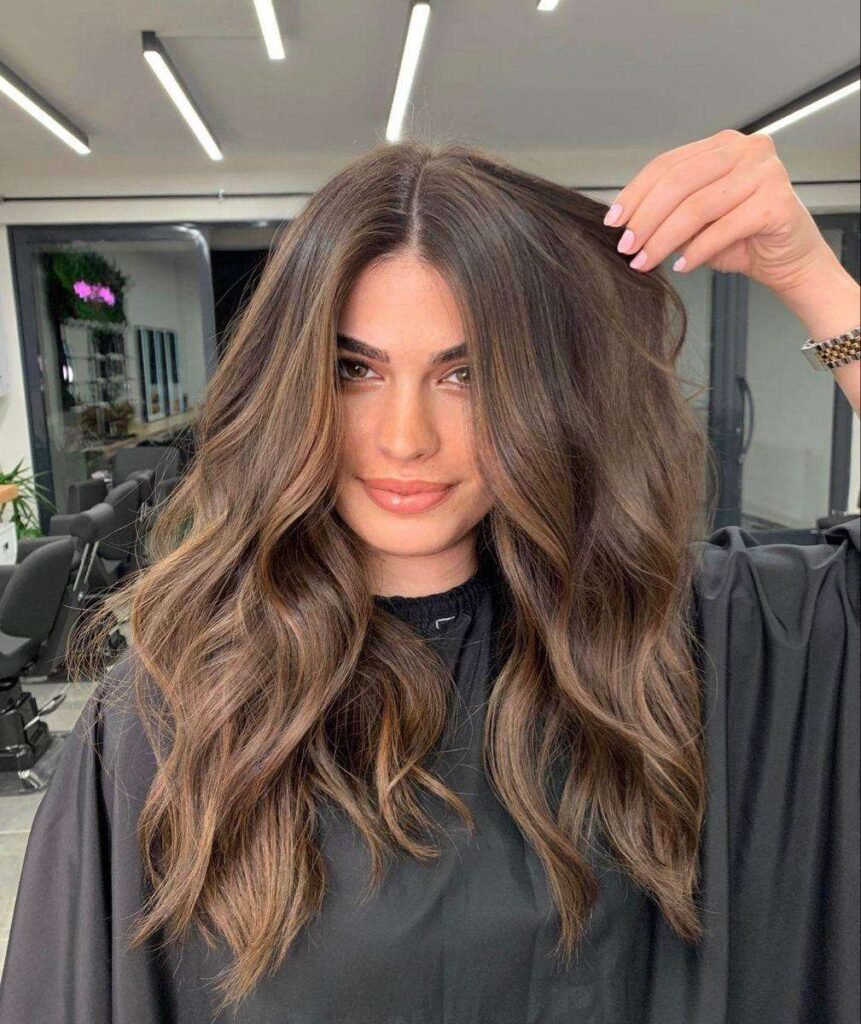
Babylights are the secret behind that “I just got back from a two-week vacation in the south of France” hair that you’ve been seeing everywhere. They’re ultra-fine, delicate highlights woven throughout the hair in sections so small that they mimic the way the sun naturally lightens hair during childhood. The result is not highlights in the traditional sense — it’s more like a glow that lives inside your hair.
On dark brown hair, babylights create what I’d describe as a luxury effect. The base stays deep and rich, but the overall look has this incredible luminosity that catches every shift in light. It never looks overdone because the pieces are so fine. Nobody can quite tell what’s been done — they just know your hair looks amazing.
Here’s the reality though — babylights are time-intensive. Because the sections are so small, a full head can take anywhere from two and a half to four hours in the salon chair. At a good US colorist, that translates to a price range of $200 to $400 or more. It is an investment. But the payoff is that the grow-out is seamless, appointments can be stretched to every four to five months, and the overall effect is genuinely one of the most natural-looking results you can achieve with color.
15. Espresso to Caramel Melt
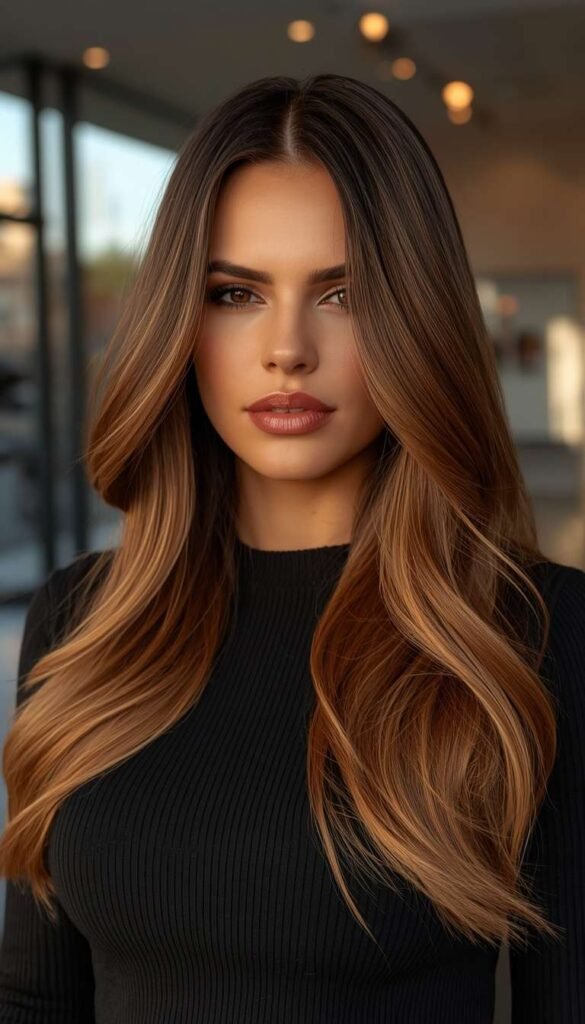
The caramel melt is the look that took over Pinterest and Instagram and absolutely refuses to leave — which tells you everything you need to know about how universally flattering it is. Starting with a deep espresso base at the roots, the color gradually melts into warm caramel tones through the mid-lengths and ends. No harsh lines, no obvious transition point. Just a seamless, buttery gradient that looks like it belongs on a runway.
What makes this specific combination so powerful is the contrast. Espresso is cool and deep. Caramel is warm and bright. Putting them together in a melt creates this incredible visual tension that somehow still looks completely natural. I’ve done this look on clients with fair skin, deep skin, warm undertones, cool undertones — and it works every single time with minor adjustments to the caramel tone used.
A few things worth knowing before you book:
- This look requires your hair to be lightened at the ends before the caramel tone is applied, so there is some damage potential if your hair is already compromised
- Always ask for a bond-strengthening treatment to be added to the lightener during the process
- Glossy finishes suit this look better than matte — request a shine gloss as a final step
At most mid-to-high-end US salons, an espresso to caramel melt will run you between $180 and $380. It sounds like a lot until you realize the grow-out is completely seamless and you can easily stretch to four months between appointments.
Are you finally ready to go dark this season, or are you still on the fence?
16. Dark Brown Hair with Honey Colored Highlights
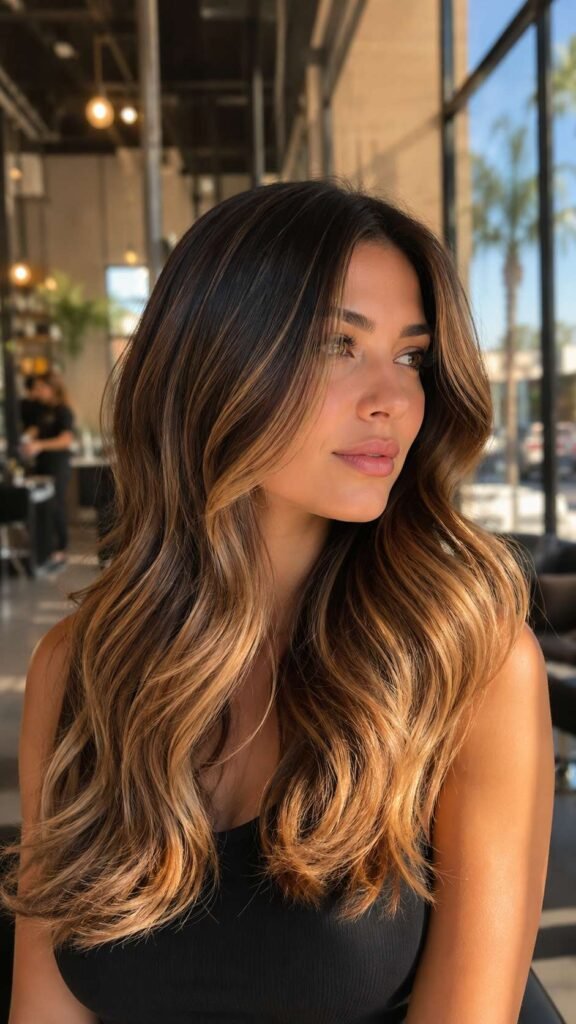
And here we are at number sixteen — saved the sweetest for last, quite literally. Honey-colored highlights on a dark brown base are one of those combinations that manages to feel both timeless and completely fresh at the same time. Honey sits in this perfect middle ground between caramel and golden blonde, warm enough to feel rich but light enough to create genuine brightness without bleaching your hair to oblivion.
What sets honey highlights apart from other lighter tones is how skin-friendly they are. That golden warmth reflects onto your face in the most flattering way — it’s the hair color equivalent of wearing your best shade of blush. I’ve had clients in their twenties and clients in their sixties ask for this look, and it genuinely flatters across the board.
The maintenance story here is actually quite encouraging compared to some of the other looks on this list. Honey tones fade gracefully — they don’t turn brassy or muddy the way some lighter highlights can. A color-depositing mask in a warm golden tone used once every two weeks keeps the honey looking fresh and vibrant between appointments. And because the dark brown base stays rich and deep, even when the highlights start to fade slightly, the overall look still reads as polished and intentional.
If you’re someone who has always wanted to try highlights but felt nervous about the commitment or the upkeep, honey highlights on dark brown hair are genuinely the most forgiving, most flattering place to start.
The 2 Minute Brunette Decision Map
By Budget
💰 Starter and Budget Friendly ($80 to $200)
- Want zero commitment? Go with a gloss treatment over your natural dark brown
- Love warmth? Mocha brown single process is your most affordable entry point
- Want highlights without the price tag? Dark brown sombré gives gradient effect at a fraction of balayage cost
- Tight budget but want dimension? Ask for a multi-tonal single process — two close brown shades instead of one flat color
✨ Luxury and Investment ($200 to $400+)
- Want the most natural expensive looking result? Babylights are worth every penny
- Love high contrast drama? Espresso to caramel melt is your signature look
- Want mirror like shine that stops people mid sentence? Book a glass hair service with a gloss finish
- Ready for a full transformation? Dark brown balayage with a toning gloss is the complete package
By Lifestyle
⚡ Busy and Low Maintenance
- Dark brown balayage — no harsh roots, stretch appointments to 16 weeks
- Natural dark brown with dimension — glossing only, zero damage, minimal upkeep
- Sombré — grows out beautifully, no awkward in between stage
🌿 Color Enthusiasts and High Maintenance Girls
- Chocolate cherry — stunning but needs weekly color depositing shampoo
- Glossy glass hair — requires consistent shine serum and humidity control
- Copper highlights — gorgeous but fades fast, needs monthly toning refresh
Frequently Asked Questions
What is the most low maintenance dark brown hair color?
Dark brown balayage or a natural gloss treatment wins every time. No harsh root line means you can stretch appointments to 16 weeks without it looking grown out.
How much does dark brown hair color cost at a US salon?
The average cost runs $80 to $150 for a single process and $150 to $400 for balayage or highlights. Location and hair length affect the final number significantly.
Will dark brown hair color work on previously bleached hair?
Yes, but with caution. Bleached hair grabs darker pigment unevenly, so always request a filler treatment before applying dark brown to avoid patchy or muddy results.
How often should I touch up dark brown hair color?
Ideally every 6 to 10 weeks for single process color. Balayage and babylights can comfortably go 12 to 16 weeks between appointments.
Does dark brown hair color suit all skin tones?
Yes — the shade just needs adjusting. Warm chocolate and mocha suit golden skin beautifully while ashy cool brown flatters fair and pink undertoned complexions best.
Conclusion
Dark brown hair is not a backup plan — it’s a power move. Whether you go full espresso, add a few honey highlights, or try a seamless caramel melt, the right shade of dark brown can completely shift how you carry yourself. I’ve watched it happen in the salon chair more times than I can count. So stop waiting for the “right time” and book that consultation this week — your hair will thank you for it.
Which of these 16 dark brown shades are you most tempted to try first? Drop it in the comments — I read every single one.