26 Curly Wolf Cut Ideas for Bold, Lived-In Texture
The curly wolf cut was practically invented for curls. On straight hair the shaggy, piecey texture has to be faked with heat and product, but curly hair arrives with it built in — the short crown layers spring up for volume, the longer back pieces fall into soft waves, and the whole silhouette reads effortlessly lived-in. These 26 curly wolf cut ideas show how the cut adapts to every curl pattern, from loose 2A waves to tight 4C coils, with bangs, colour placements, and lengths to suit each one.
Every idea below notes the curl types and face shapes it flatters most, a styling tip that works with the cut rather than against it, and the exact phrasing to use with your stylist. Save your favourites and bring them to your next appointment. The modern shag, the curly wolf cut’s closest relative, is having a major moment.
1. Long Brunette Curly Wolf with Caramel Highlights
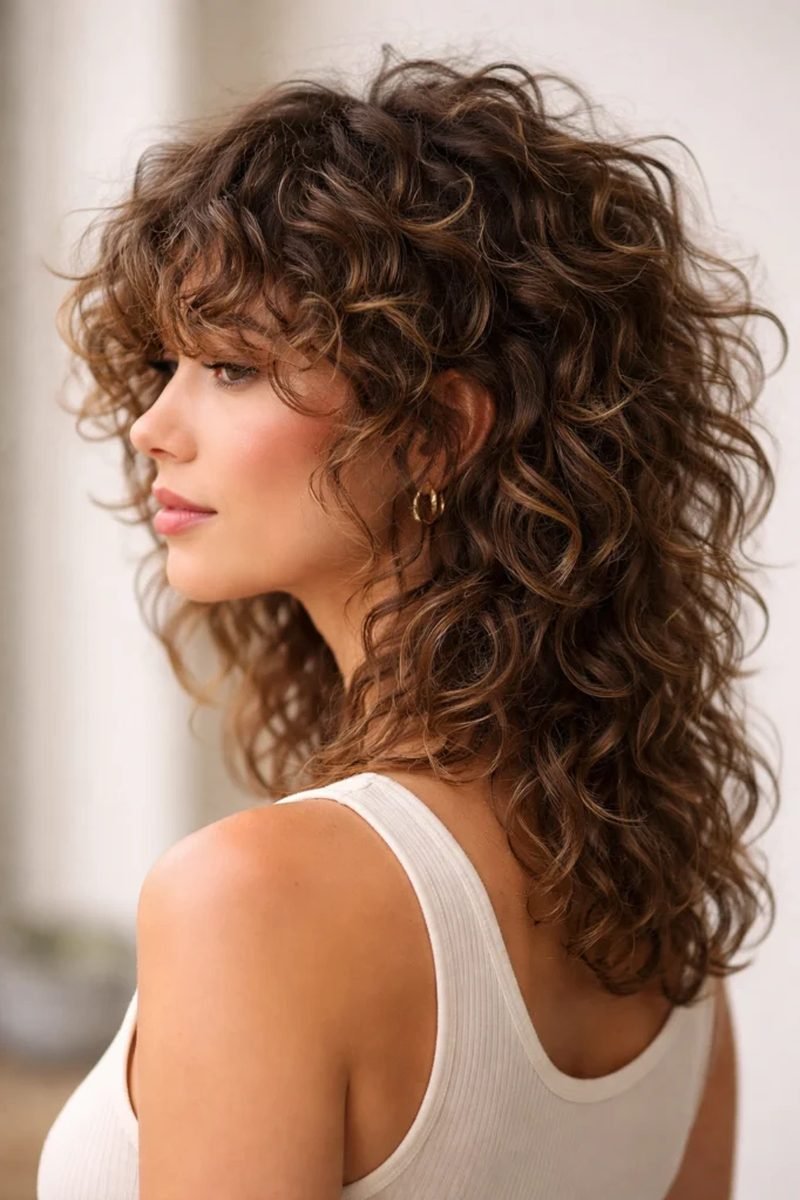
The classic long wolf on curls: shorter, springy layers through the crown that lift the roots, melting into longer, looser waves past the shoulders. The caramel highlights are doing real work here — they trace each curl’s spiral so the layering reads clearly instead of blurring into one dark mass. Best for 2C–3B curls with medium to high density and oval or oblong faces. Tell your stylist: “long wolf cut, disconnected crown layers for lift, keep the perimeter past the shoulders, caramel balayage painted curl by curl.” Diffuse upside down for maximum crown volume.
2. Wavy Blonde Wolf with Curtain Bangs
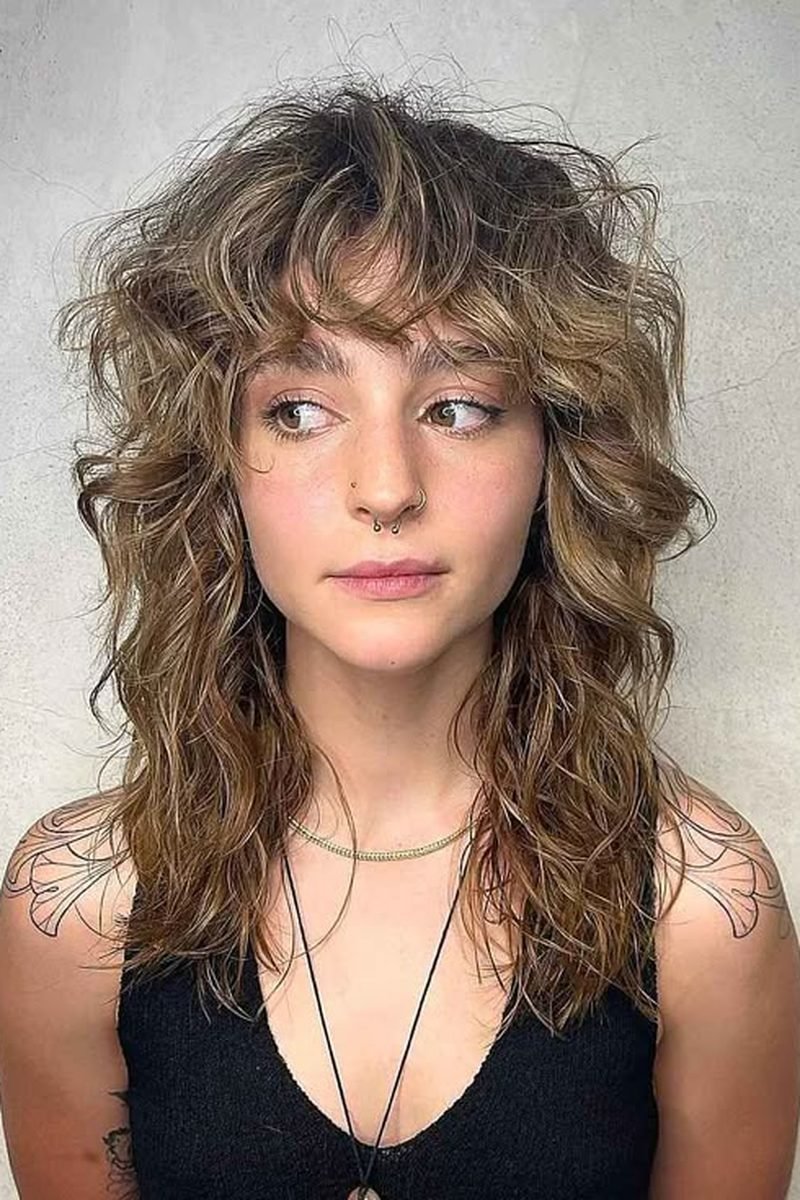
Proof the wolf cut isn’t only for tight curls — loose waves get the full treatment too. The curtain bangs part in the middle and melt into the face-framing layers, which keeps the cut soft rather than severe. Best for 2A–2C waves and round or square faces, since the long fringe visually narrows the cheeks. Tell your stylist: “wolf cut for wavy hair, curtain bangs blended into face-framing layers, soft point-cutting through the ends.” Scrunch in a lightweight mousse on damp hair and let it air-dry for the undone finish.
3. Dark Curly Wolf with Micro Bangs
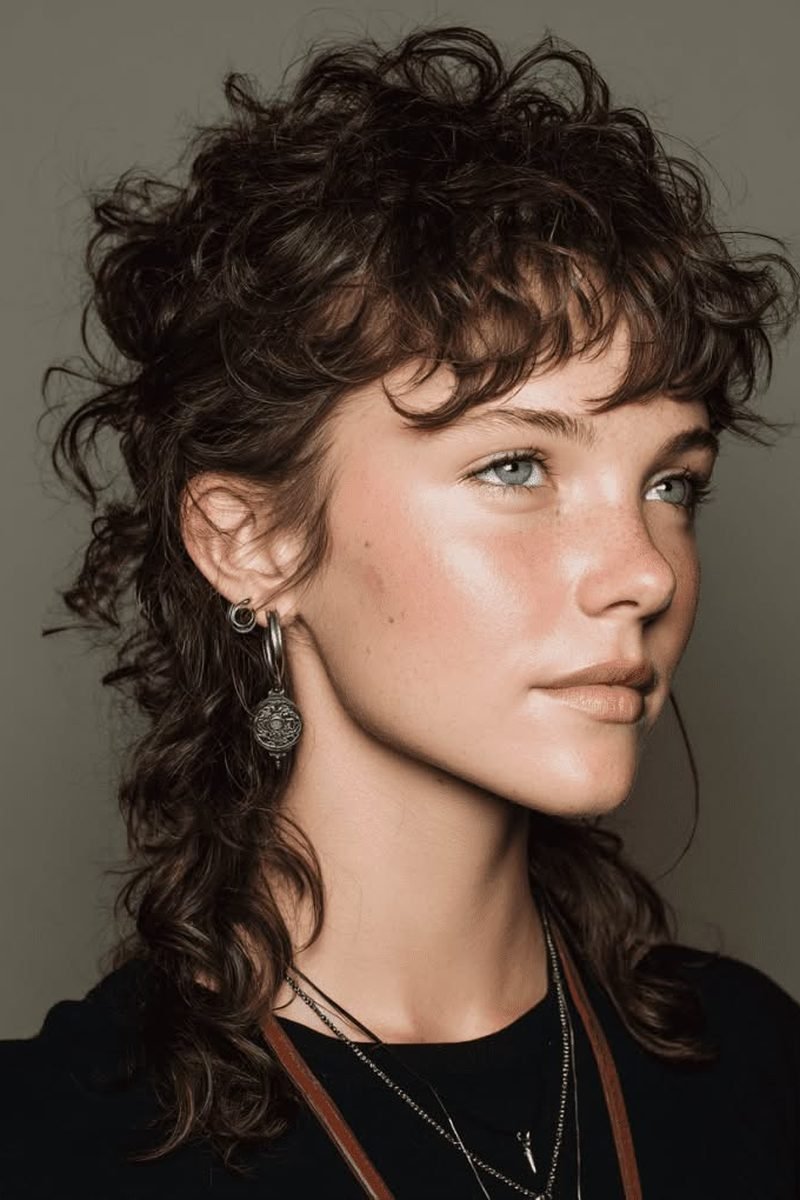
Micro bangs on curly hair sound risky, but the wolf cut’s chaos is what makes them work — a little unevenness just looks intentional. The short fringe opens up the face while the dark, dense curls stack into that signature triangular wolf silhouette. Best for 3A–3C curls with strong density and oval or heart-shaped faces. Tell your stylist: “curly wolf with micro bangs, cut the fringe dry and leave extra length for shrinkage.” Set the bangs forward with product on soaking-wet hair so they dry without gaps.
4. Voluminous Black Curly Wolf with Full Bangs
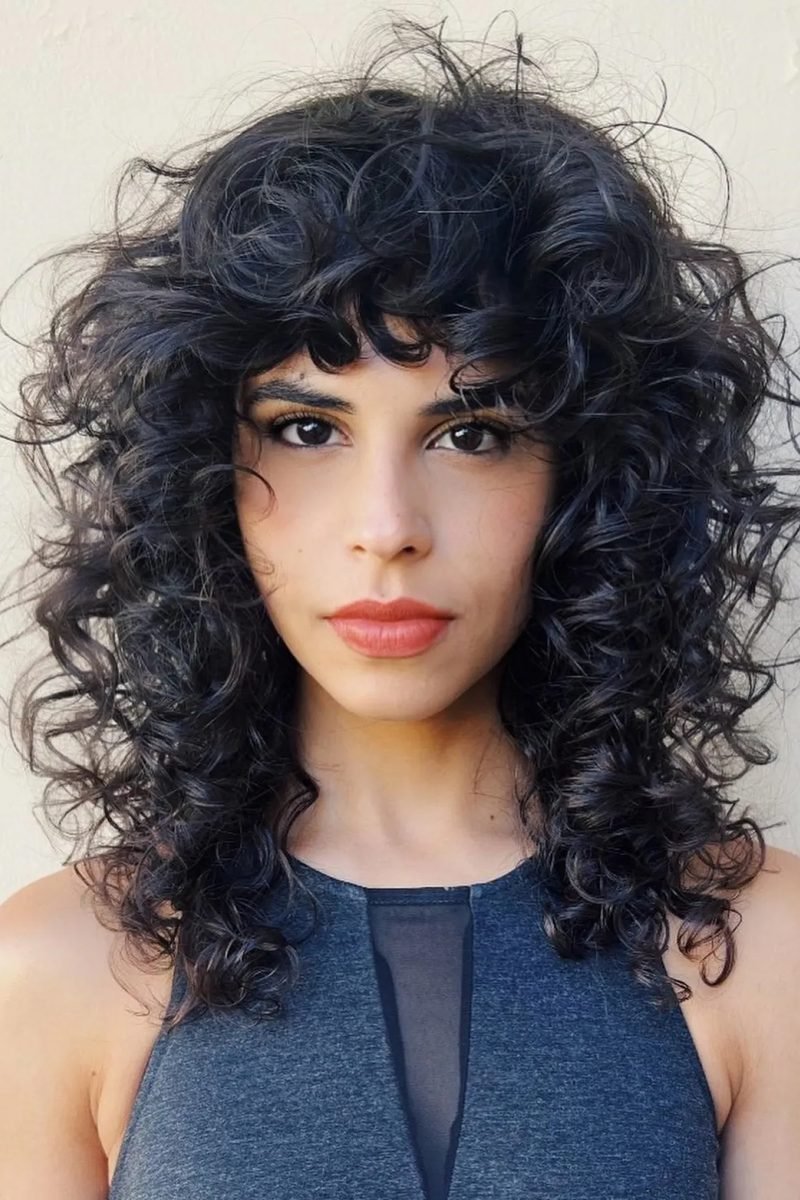
Maximum drama: a full, rounded fringe meeting a cloud of black curls with serious crown height. The trick is the graduation — the layers get progressively longer toward the back, so the volume sits up top where the wolf cut wants it instead of widening at the jaw. Best for 3B–4A curls with high density; avoid if your hair is fine, as this much layering needs weight behind it. Tell your stylist: “voluminous curly wolf, full bangs, graduated layers with the shortest at the crown.” A pick at the roots (never a brush through the lengths) keeps the shape big.
5. Medium Black Fluffy Curly Wolf
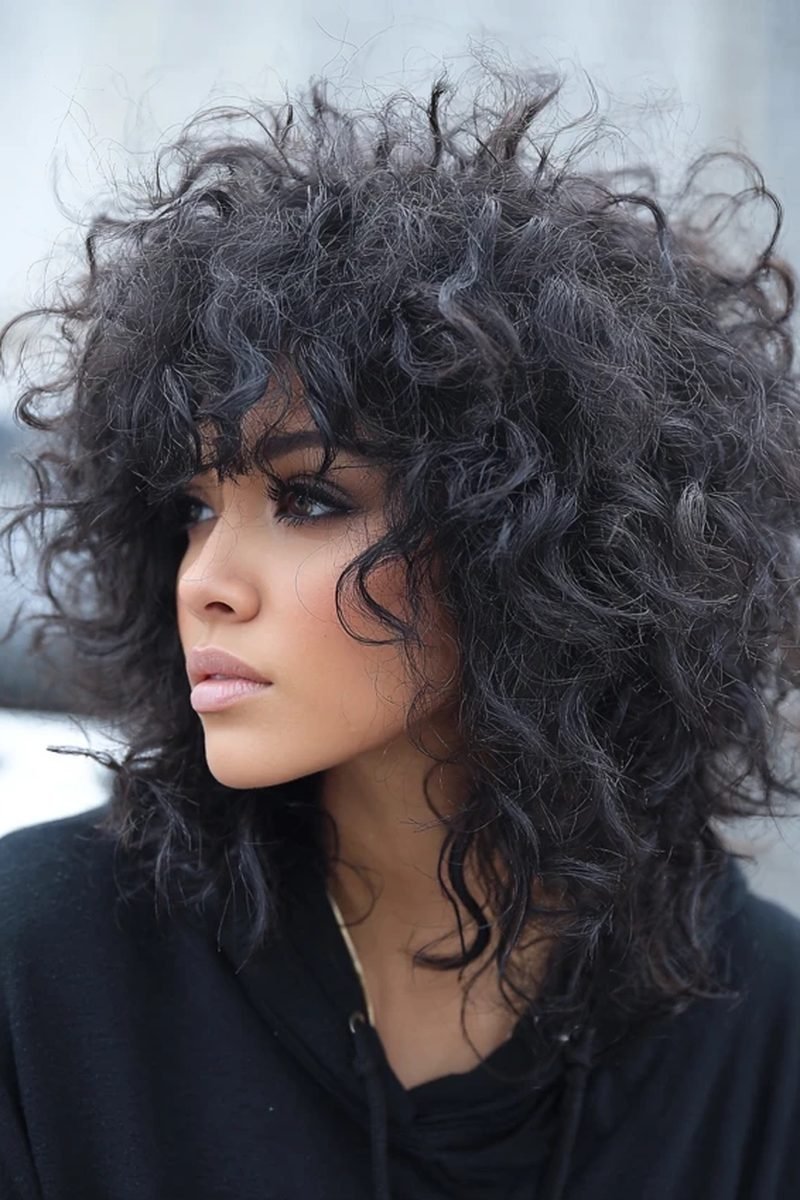
The wash-and-go wolf. At medium length the cut hits the sweet spot: short enough that the layers spring freely, long enough to pull back on lazy days. The fluffy, separated texture comes from the cut itself — choppy ends that refuse to clump into one solid curtain. Best for 3A–4B curls and anyone who wants low-effort volume. Tell your stylist: “medium wolf cut, choppy disconnected layers, keep the ends piecey not blunt.” Refresh with a water mist and a scrunch of curl cream on day two and three.
6. Long Dark-Brown Curly Wolf with Curtain Fringe
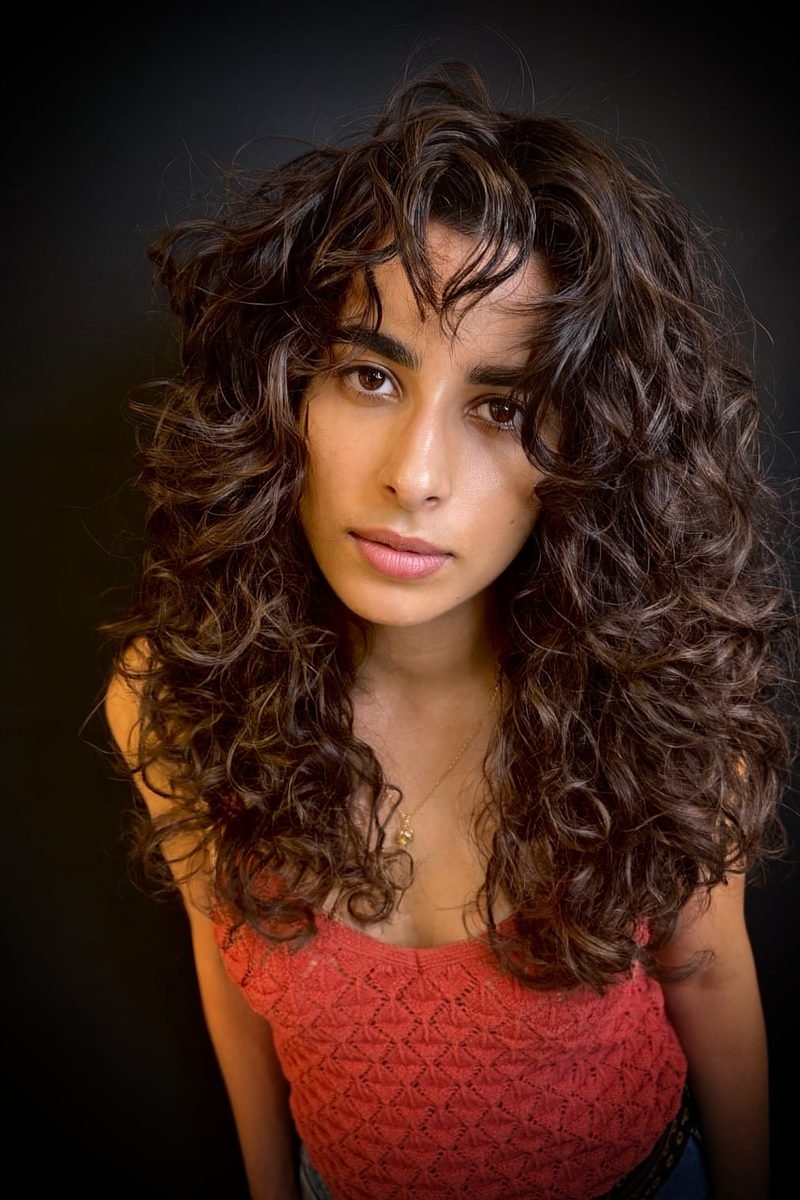
For curl wearers who won’t give up their length. The wolf architecture — short crown, long back — is all present, but the overall length stays past the chest, so you keep ponytail and braid options. The shaggy curtain fringe frames the face without the commitment of full bangs. Best for 2C–3B curls with medium density and longer face shapes. Tell your stylist: “long wolf cut, keep the length, curtain fringe blended into the shortest face-framing layers.” Sleep in a loose pineapple to protect the crown layers overnight.
7. Long Copper-Red Curly Wolf
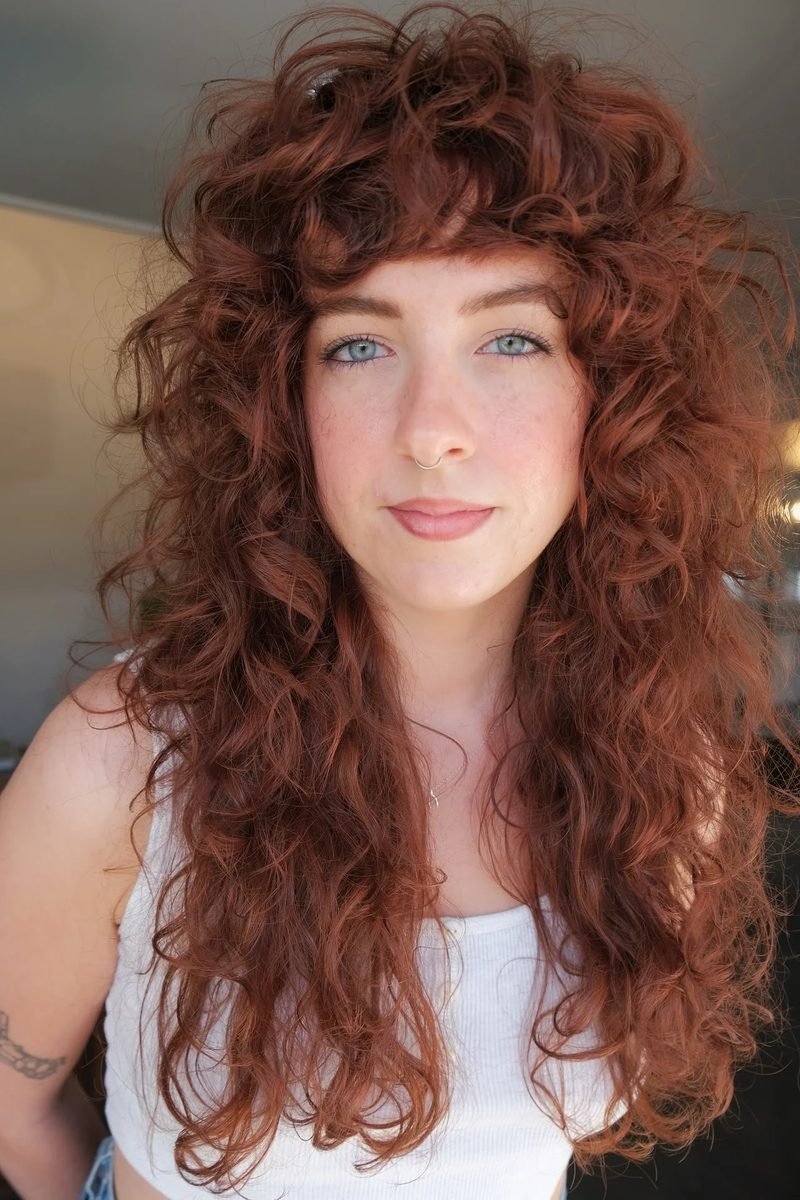
Copper and the wolf cut are a natural pairing — warm red tones make every layer boundary visible, which is exactly what a shaggy cut wants. The soft bangs keep the strong colour wearable, and the length keeps the silhouette feminine rather than severe. Best for 2B–3A curls; the colour suits warm and neutral skin tones especially. Tell your stylist: “long curly wolf, soft bangs, all-over copper with slightly deeper roots for grow-out.” Colour-treated curls need a weekly deep-conditioning mask — red fades fastest on porous curl ends.
8. Long Dark Wavy Wolf with Bangs
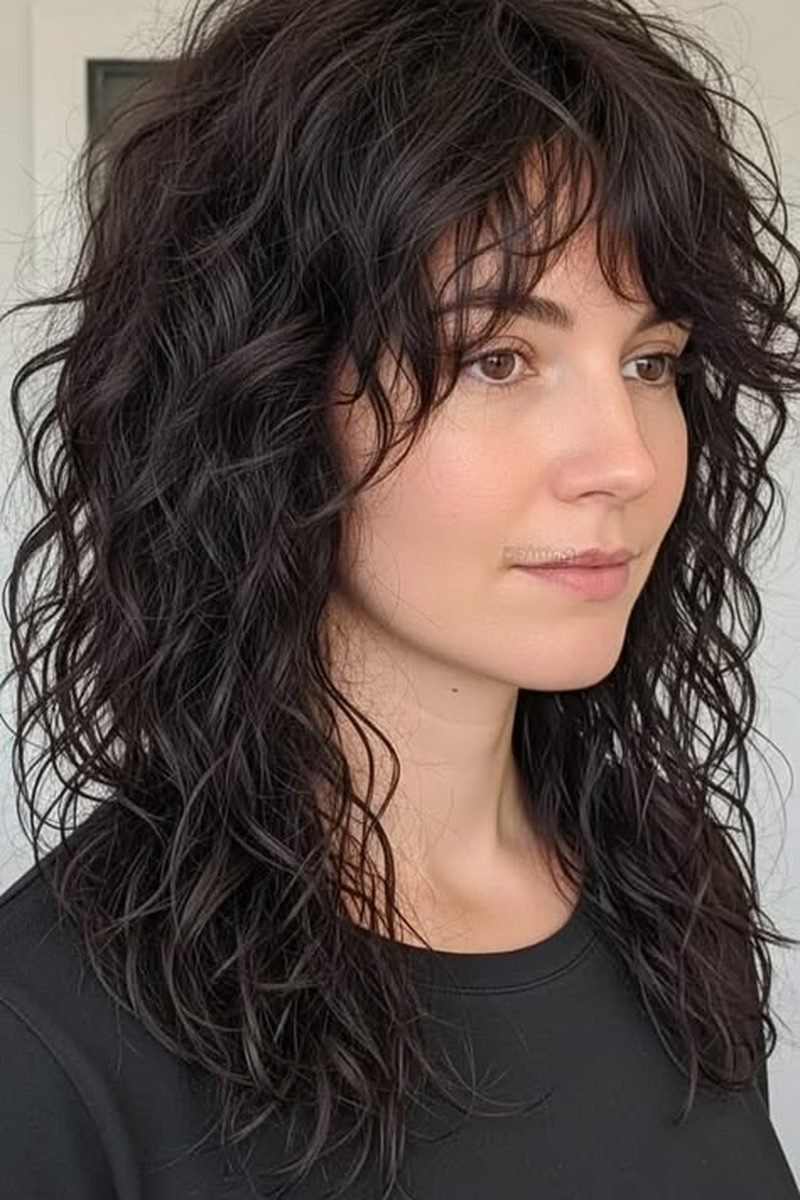
The grown-out, rock-star version: length past the shoulders, bangs that blend straight into the wavy layers, and ends that flip and wave in different directions. It works because the layers are cut to encourage the wave pattern rather than fight it. Best for 2B–2C waves with medium to thick density. Tell your stylist: “long wavy wolf, bangs that connect to the face-framing layers, razor-free point-cutting on the ends.” A salt spray scrunched into damp hair amplifies the piecey separation.
9. Sandy-Blonde Curly Wolf with Airy Fringe
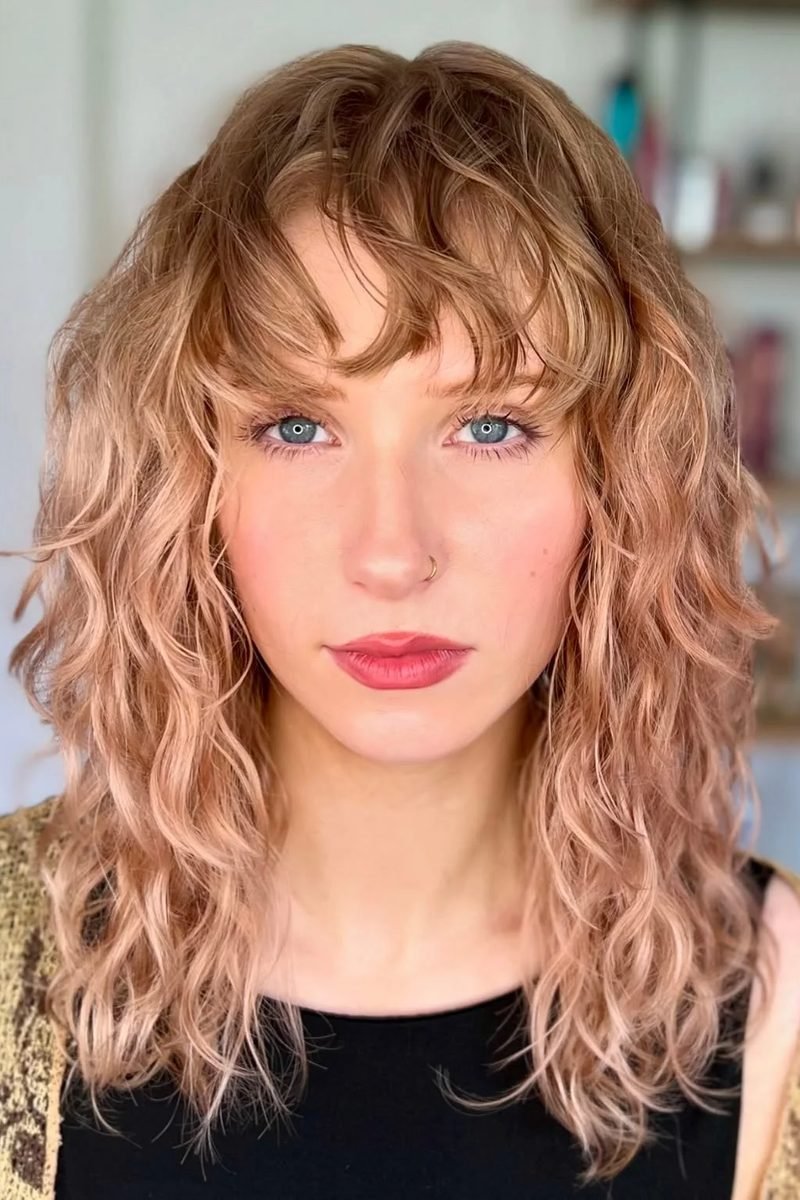
Blonde takes the wolf cut in a softer direction. The sandy tone lightens the cut’s edgy silhouette, and the airy, see-through fringe keeps the forehead open so the look stays breezy rather than heavy. Best for 2C–3A curls and fair to medium skin tones. Tell your stylist: “curly wolf, sandy blonde balayage, wispy airy fringe — keep the fringe long enough to tuck.” Blonde curls are fragile curls: use a purple shampoo sparingly (once a week max) and always follow with a hydrating mask.
10. Midnight-Blue Curly Wolf with Voluminous Bangs
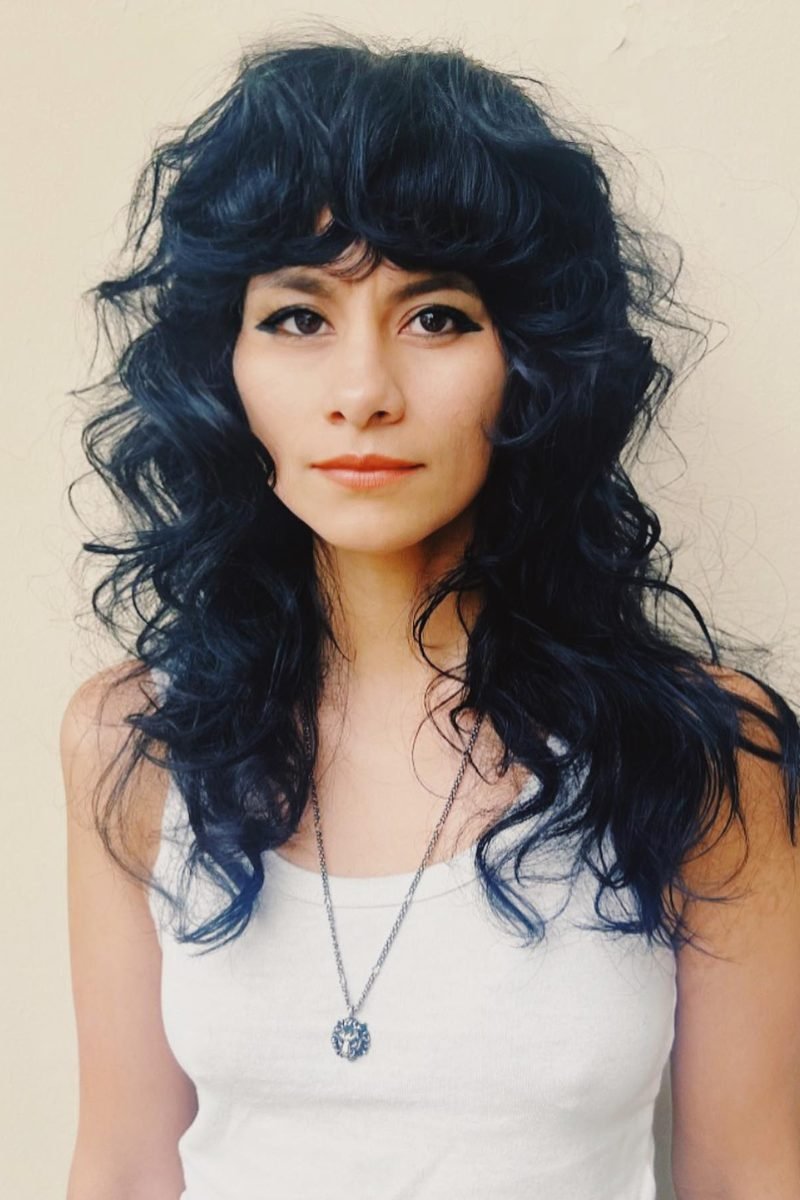
Fantasy colour meets the wolf cut’s wild energy. The deep midnight blue reads almost black indoors and flashes blue in sunlight, which gives the layered texture a second dimension. The voluminous bangs balance the strong colour so the cut — not just the dye — stays the star. Best for 3A–3C curls with healthy, non-porous hair that can handle vivid dye. Tell your stylist: “curly wolf with full bangs, midnight-blue vivid colour over pre-lightened ends.” Wash in cold water with a colour-safe shampoo; vivid blues shift tone fast on curls.
11. Medium Black Curly Wolf (Three-Quarter View)
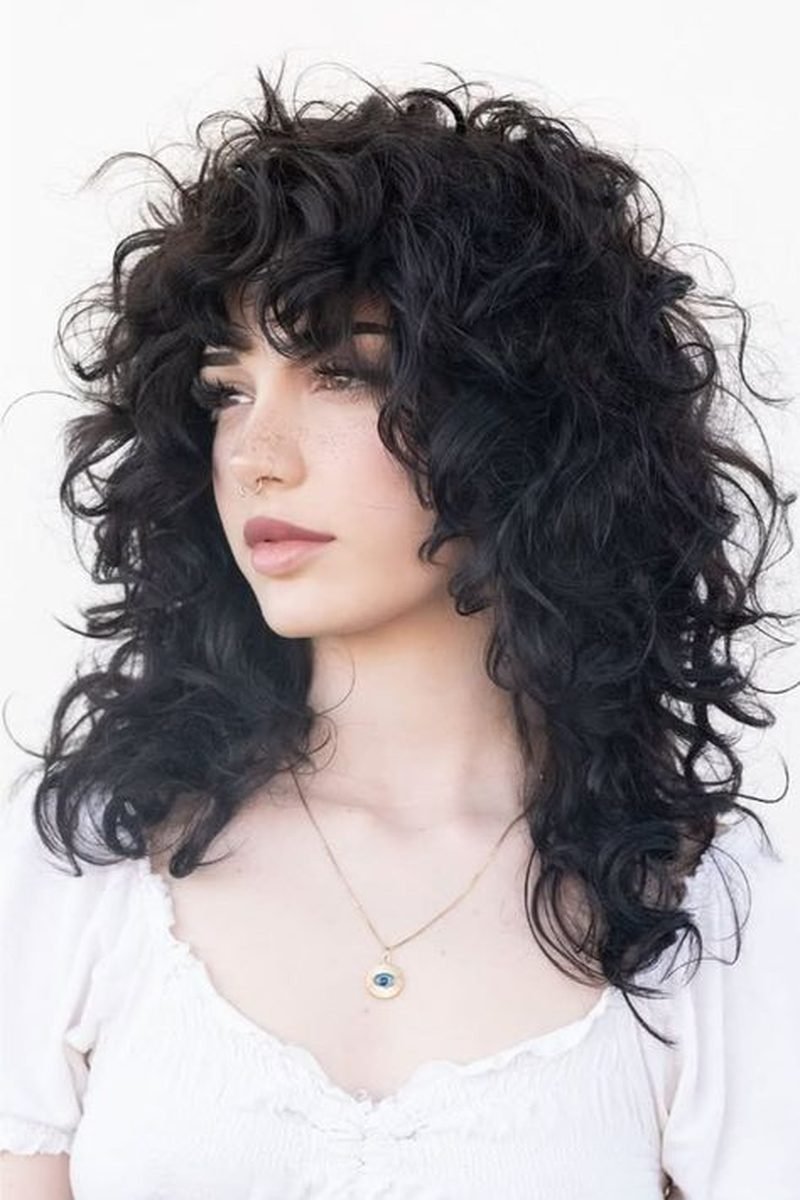
The everyday wolf: medium length, natural black, bangs that sit just at the brow. Nothing extreme — just the cut’s architecture doing its quiet work, with the crown layers lifting and the ends tapering naturally. Best for 3A–3B curls and anyone trying the wolf cut for the first time. Tell your stylist: “medium curly wolf, brow-skimming bangs, natural texture — cut it dry so the shape is honest.” This is the lowest-maintenance version on the list: the shape holds between trims longer than the shorter variations.
12. Dark Curly Wolf with Blonde Money-Piece Highlights
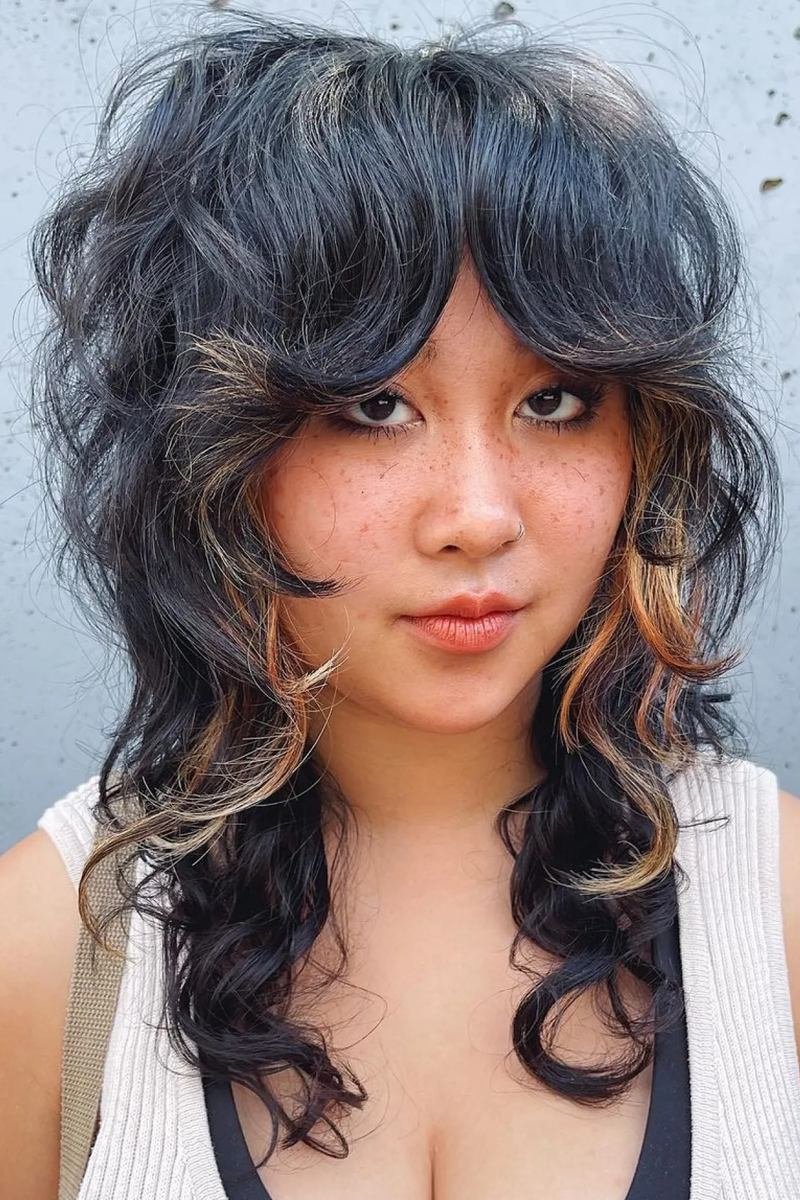
A money piece on a wolf cut does double duty: it brightens the face and spotlights the shortest, most textured layers around it. Against the dark base, the blonde front pieces make the cut’s signature face-framing obvious even at a glance. Best for 2C–3B curls and medium to deep skin tones. Tell your stylist: “dark curly wolf, bold blonde money piece on the two front sections, keep the contrast high.” Protect the lightened pieces with a leave-in containing UV filters — blonde curls frizz first in sun.
13. Salon Side-Profile Curly Wolf
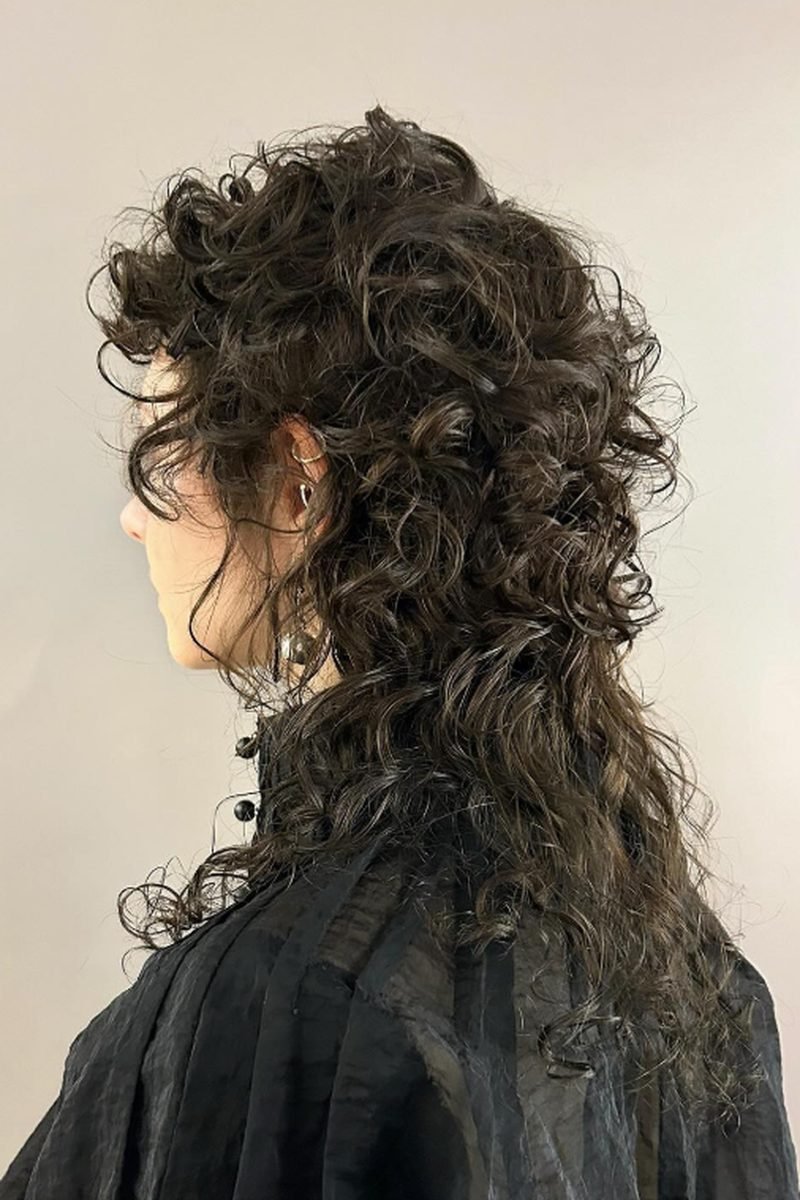
Seen from the side, the wolf cut’s mullet DNA is unmistakable: short, full layers at the crown dropping into a longer, tapered back. This is the silhouette to show your stylist when words fail — the side profile tells the whole story of where each layer sits. Best for 3A–3C curls with medium density. Tell your stylist: “show them this profile — short disconnected crown, tapered length at the back, no blunt perimeter.” Ask for the cut dry or on stretched curls so shrinkage doesn’t steal your length.
14. Curly Wolf with Bangs: The Before-and-After
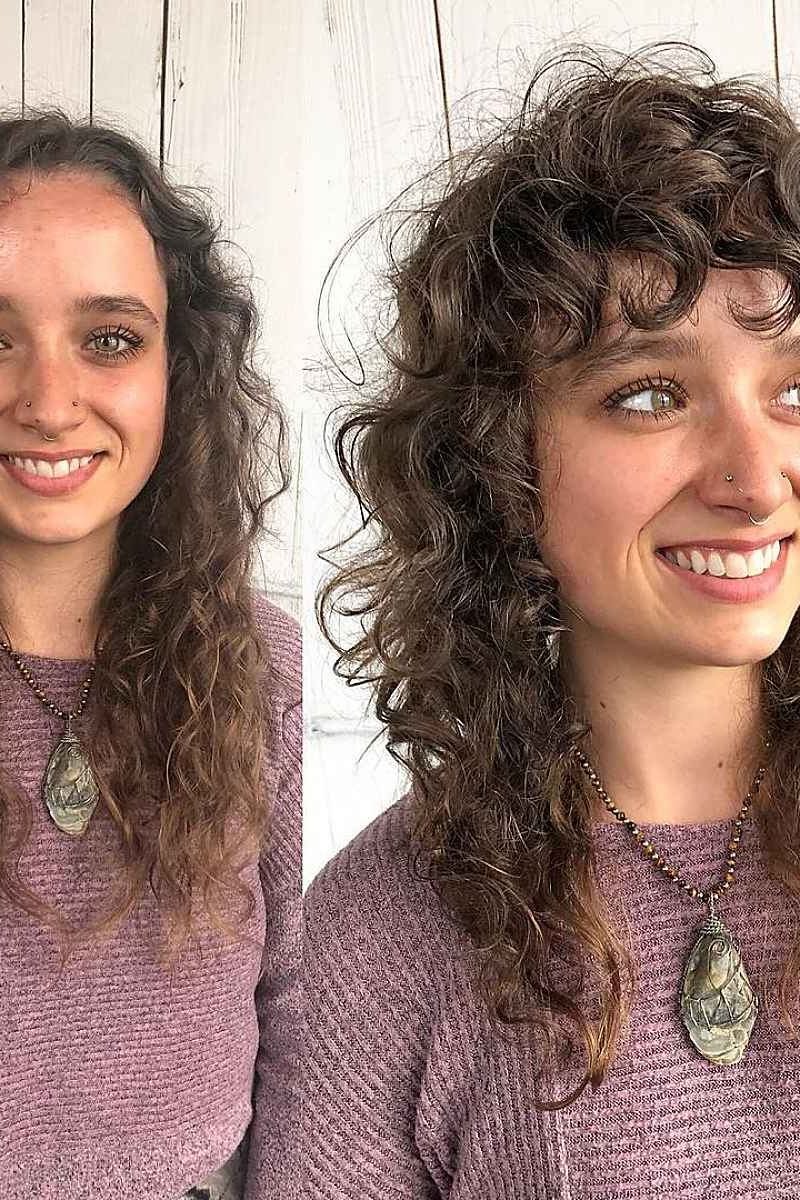
The transformation shot says it all: flat, weighed-down curls become a shaped, voluminous wolf with bangs. The difference isn’t length removed — it’s weight redistributed, with the interior layers doing the lifting. Best for anyone whose curls currently hang in a triangle (flat crown, wide ends). Tell your stylist: “my curls are weighed down — I want a wolf cut that removes interior weight and adds crown volume, with bangs.” Take your own before photo; the grow-out comparison is the best advertisement for your next trim.
15. Medium Dark Wavy Wolf with Bangs
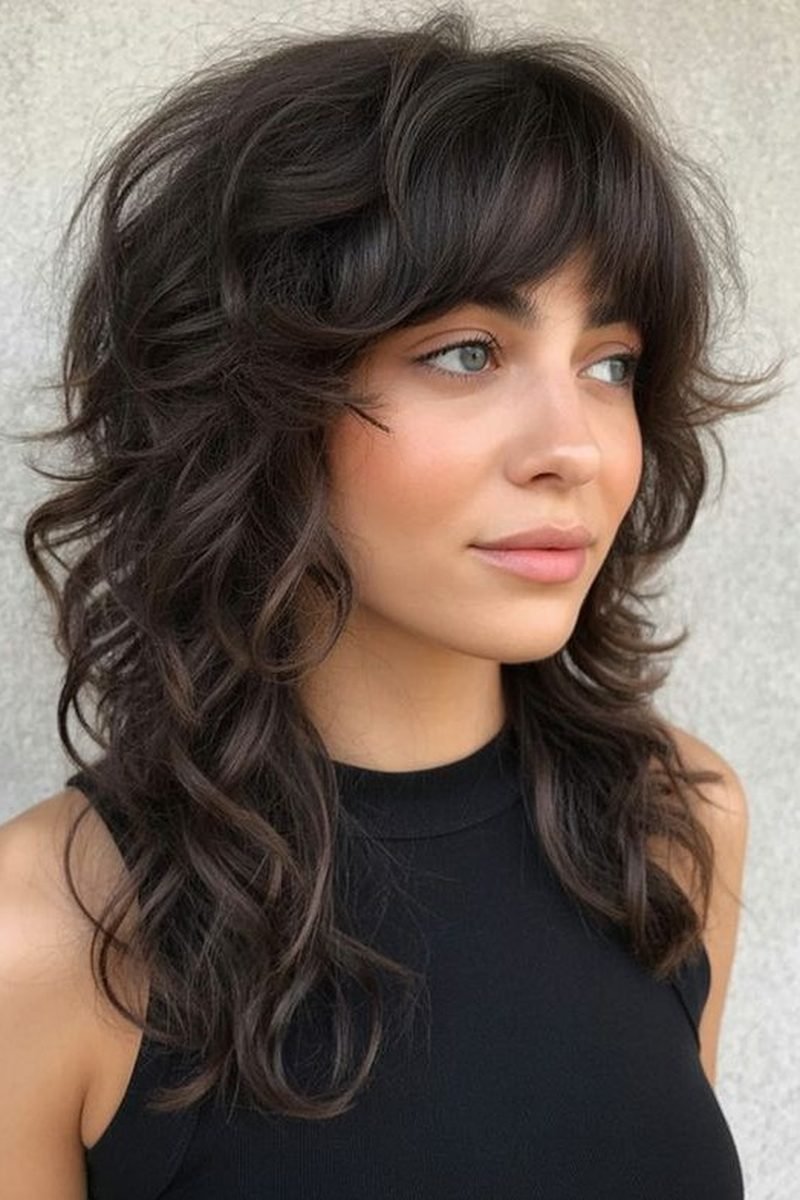
Wavy hair’s answer to the wolf cut keeps things softer: the layers are longer and more blended, the bangs sit piecey rather than solid, and the overall effect is tousled rather than spiky. It reads modern-shag more than mullet, which suits cautious first-timers. Best for 2A–2C waves and heart or oval faces. Tell your stylist: “soft wavy wolf, blended layers, piecey bangs — nothing too disconnected.” A pea-sized amount of styling cream raked through damp waves defines the pieces without crunch.
16. Tight-Ringlet Curly Wolf (Close-Up)
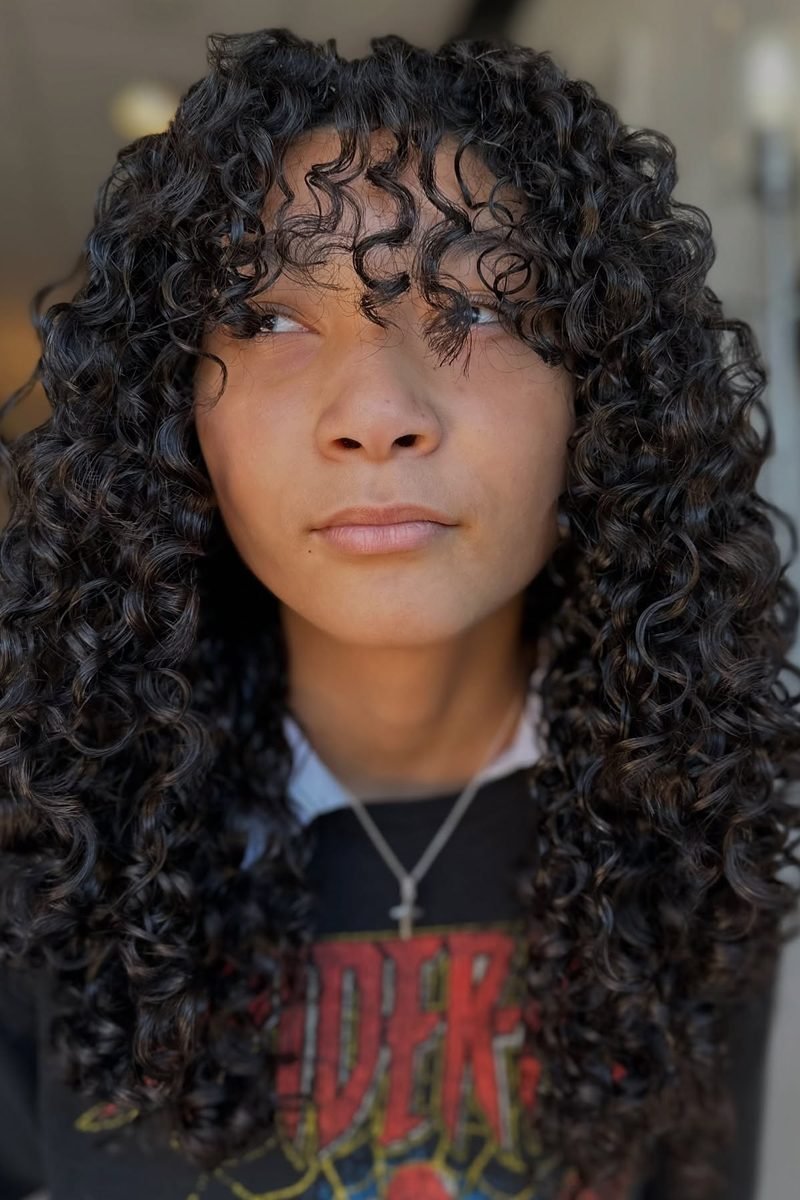
Up close, you can see why the wolf cut loves tight ringlets: each short layer forms its own perfect coil, and the stacked coils build the crown volume no product can fake. The density here is the point — fine curls can wear the cut, but this full, sculptural version belongs to thick 3C–4A hair. Best for high-density coily hair. Tell your stylist: “wolf cut for tight ringlets, cut each layer dry and individually so the coils keep their shape.” Finger-coil the crown pieces with a light gel for definition that lasts days.
17. Copper-Auburn Wavy Wolf with Wispy Bangs
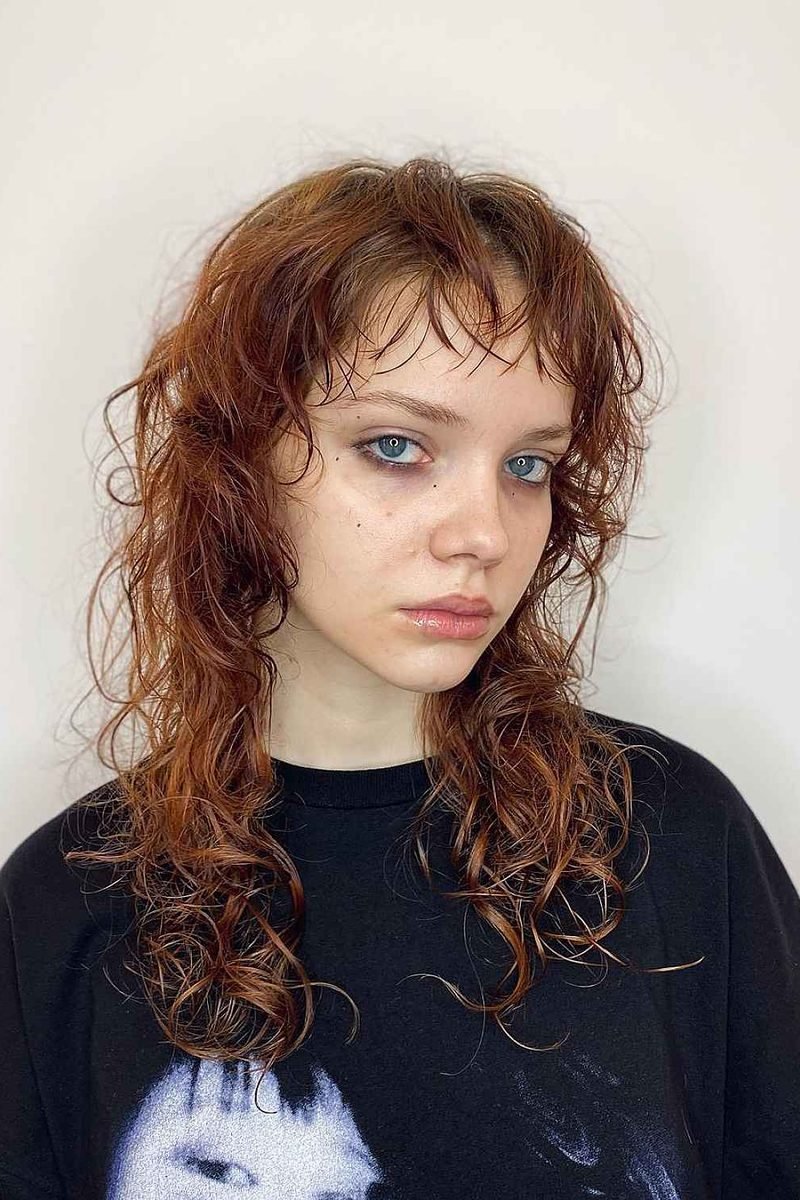
Copper-auburn is the autumn answer to the wolf cut — rich, warm, and dimensional without going full red. The wispy bangs are the gentlest fringe option here, barely-there pieces that blend into the waves instead of making a statement. Best for 2B–3A waves and warm or neutral undertones. Tell your stylist: “wavy wolf, copper-auburn gloss or demi colour, wispy blended bangs.” A colour-depositing conditioner every other week keeps the copper from fading to dull brown.
18. Medium Curly Wolf with Blonde Balayage Ends
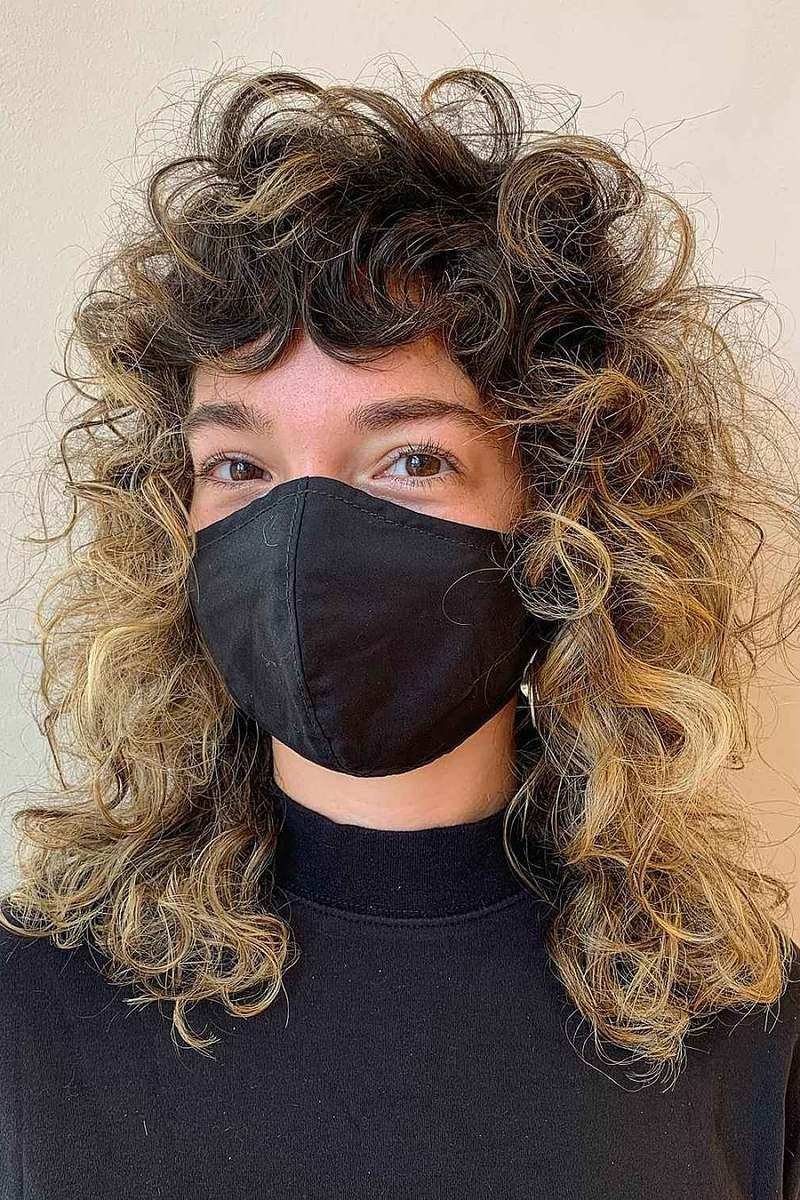
Balayage on a wolf cut isn’t just colour — it’s a highlighter for the architecture. The blonde ends draw the eye down the longer back layers while the dark roots keep the crown looking thick and full. Best for 2C–3B curls with medium density. Tell your stylist: “medium curly wolf, balayage concentrated on the mid-lengths and ends, keep the roots deep.” Lightened ends on curls need extra care: seal them with a lightweight oil after styling to prevent the frizz halo.
19. Long Dark Wavy Wolf, Back View
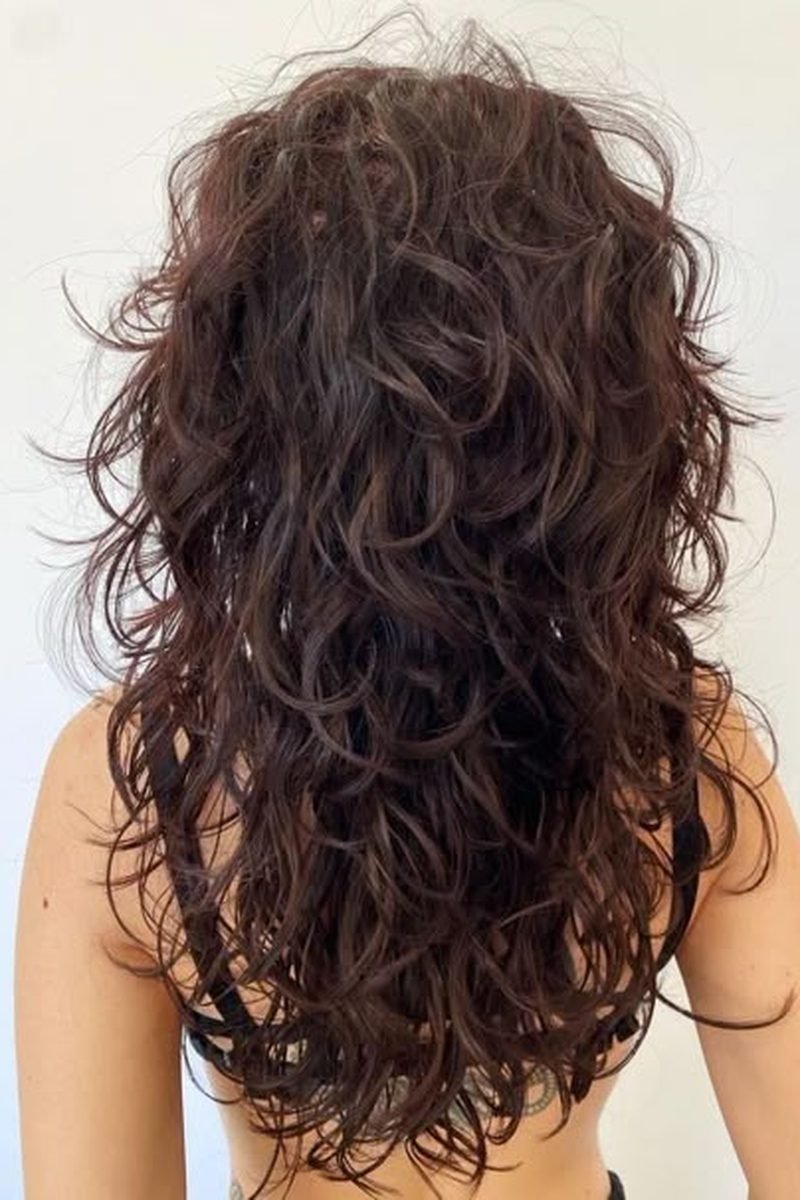
The back view reveals what the mirror hides: long, cascading layers that taper rather than blunt, with the wave pattern getting looser toward the ends. This is the wolf cut at its most wearable — all the texture, none of the severity. Best for 2B–3A waves with medium to thick density. Tell your stylist: “long wolf, tapered back layers, keep the perimeter soft and broken.” Check the back in a hand mirror before leaving the salon; the taper should look deliberate, not grown-out.
20. Salon Back-View Curly Wolf
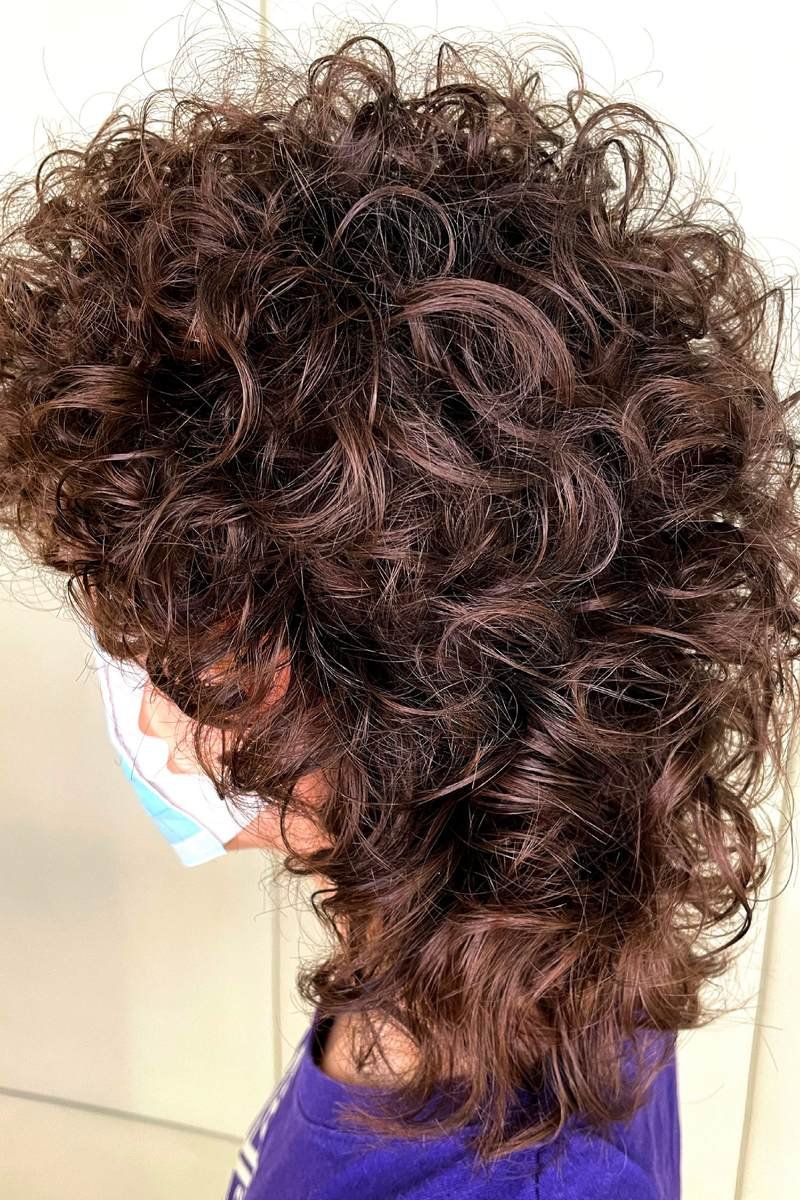
Fresh from the salon chair: the crown is lifted, the curls are defined, and the back shows the wolf’s signature graduation from short to long. This is the shape to photograph at the appointment — it’s your reference for how the cut should look after every future trim. Best for 3A–3B curls. Tell your stylist: “curly wolf with strong crown graduation — I want this exact back silhouette at every trim.” Book the next appointment before you leave; the graduation grows out in about 8 weeks.
21. Medium Dark Curly Wolf, Side Profile
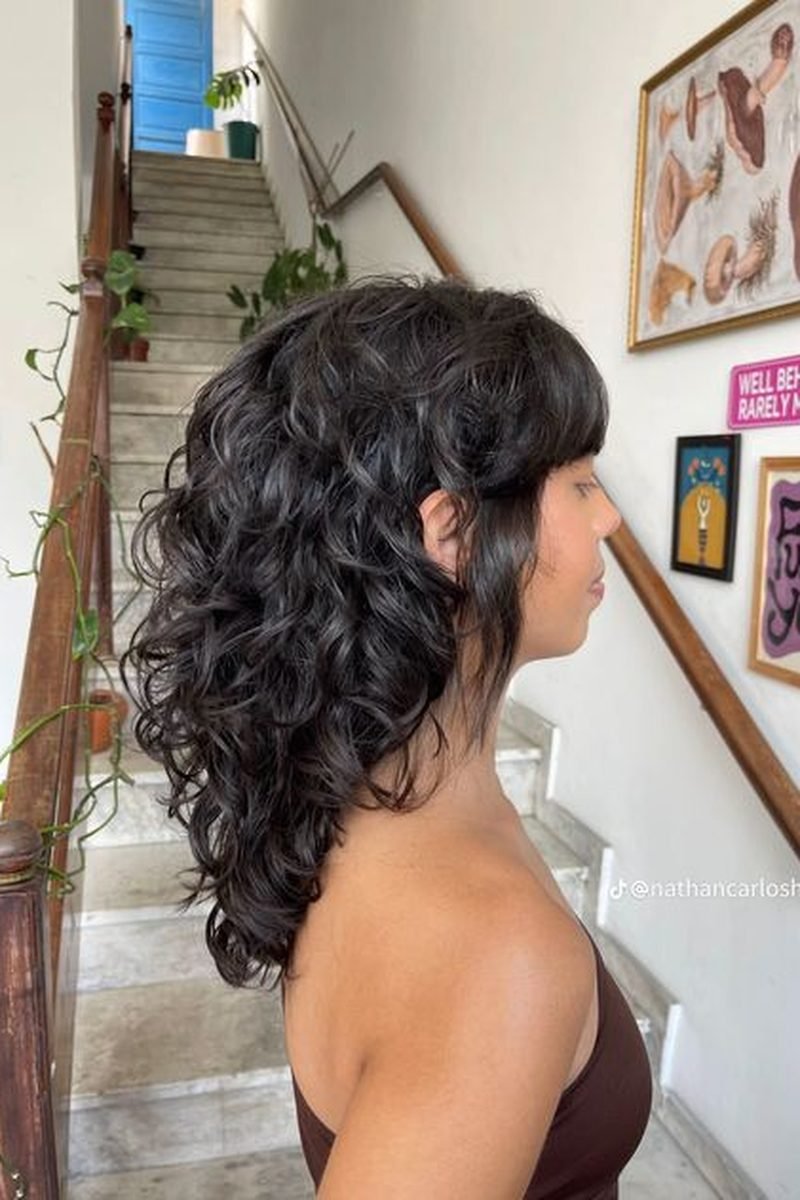
Side profiles don’t lie: this one shows the wolf cut’s volume exactly where it should be — up high at the crown — tapering down through the mid-lengths. The medium length keeps it office-friendly while the texture keeps it interesting. Best for 3A–3C curls and round faces, since the crown height elongates. Tell your stylist: “medium curly wolf, volume concentrated at the crown, tapered sides.” Diffuse with your head flipped for five minutes to set the crown lift.
22. Curly Wolf with Shaved Side
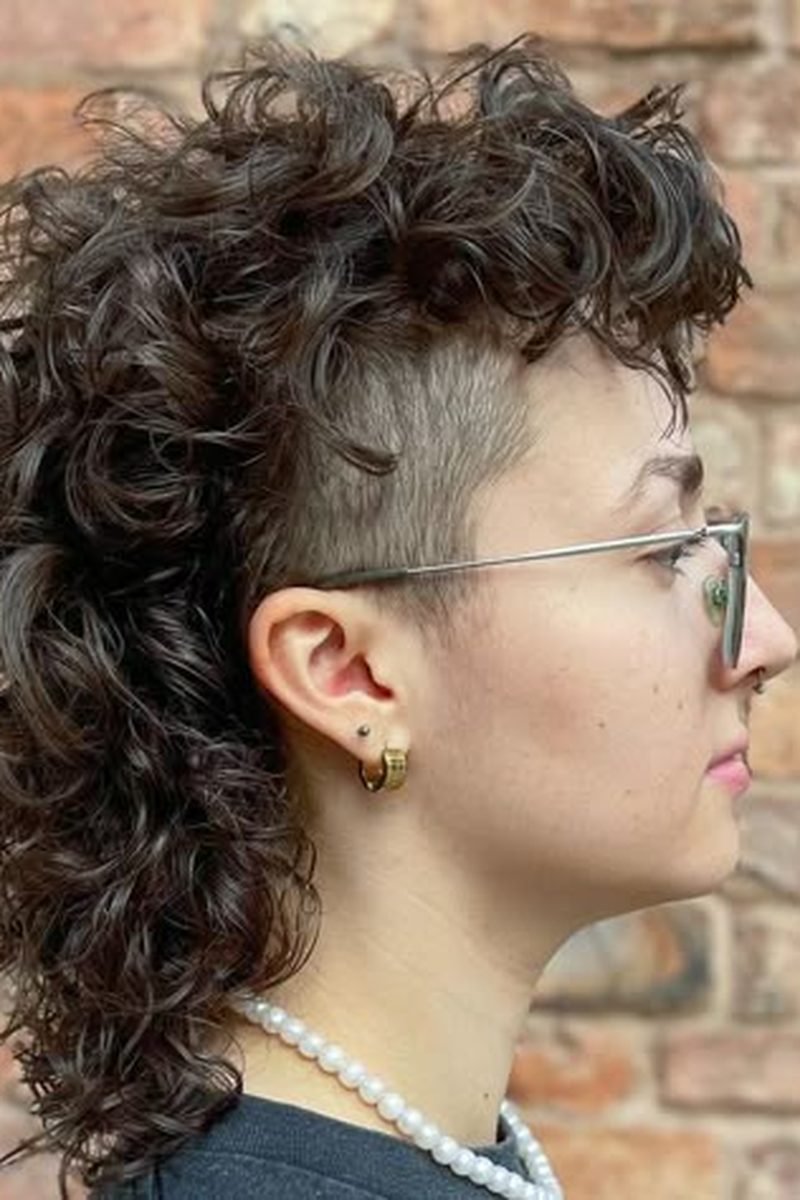
The boldest take on the list: a curly wolf with one side faded close. The contrast between the shaved section and the wild curls makes both more dramatic — and it removes serious bulk for very thick hair. Best for 3B–4A curls with high density and anyone who wants a genuinely edgy cut. Tell your stylist: “curly wolf with a faded/shaved side panel — keep the fade tight and the top disconnected.” The shaved side needs a touch-up every 3 to 4 weeks to stay crisp; the curls themselves can go longer.
23. Brown Curly Wolf, Outdoors
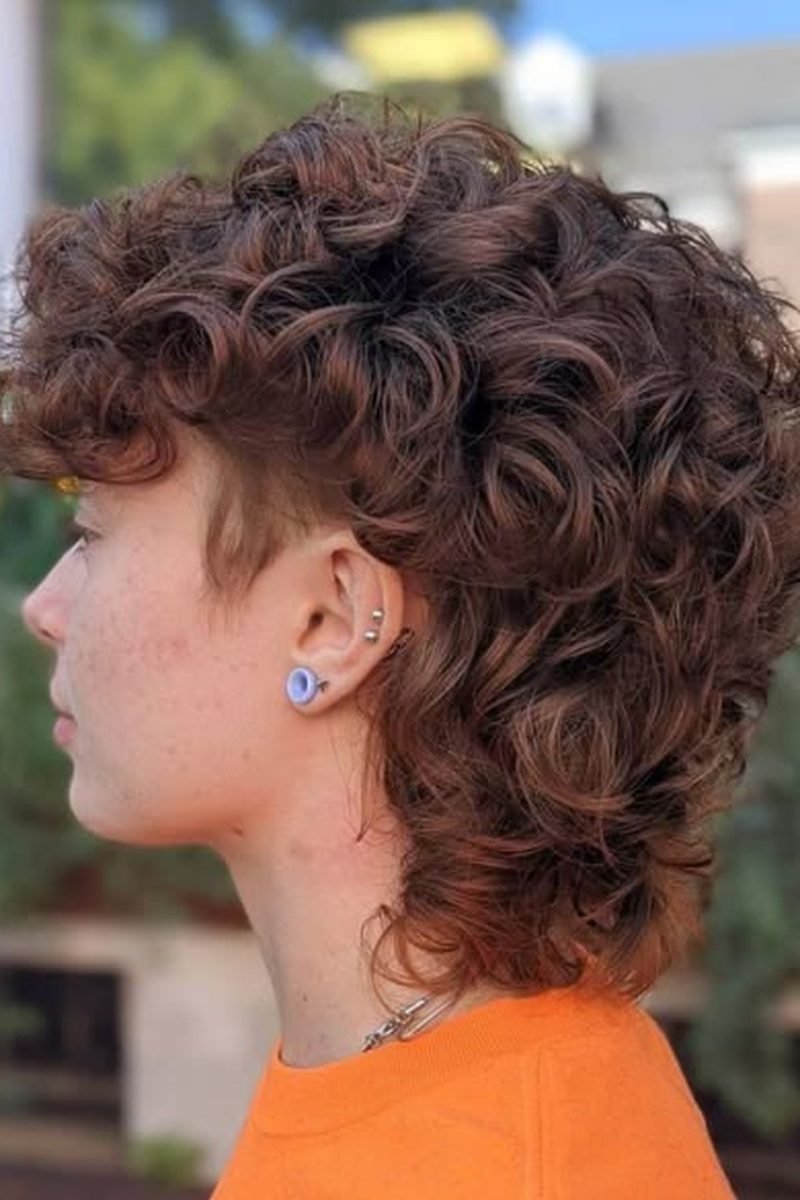
Daylight is the honest test of a wolf cut, and this one passes: the layers separate cleanly, the brown tones show natural dimension, and the shape holds without salon styling. This is the lived-in promise of the cut — it looks this good with nothing but air-drying. Best for 2C–3B curls with natural, uncoloured hair. Tell your stylist: “natural curly wolf, no colour — cut for air-dry wear.” A leave-in cream is genuinely all this version needs day to day.
24. Long Dark Curly Wolf, Side and Back
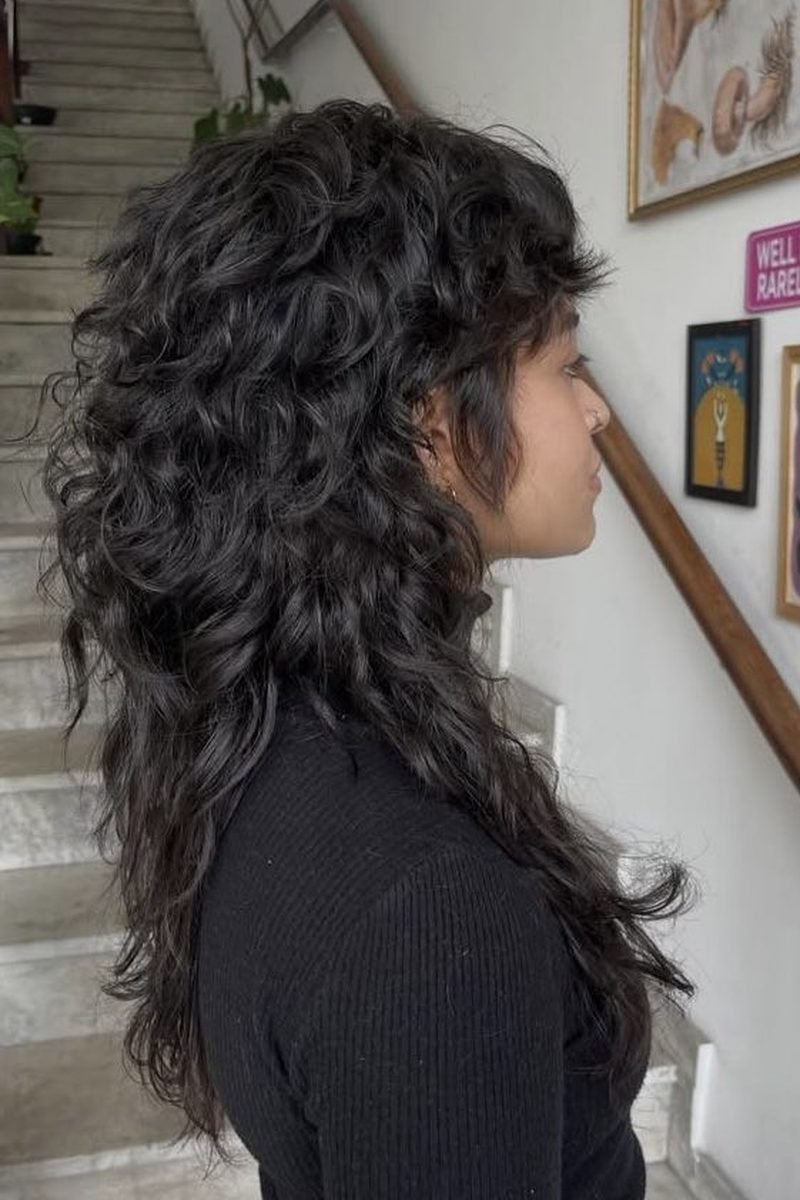
Maximum length, maximum wolf. The side-and-back angle shows how the short crown layers create a halo of volume up top while the long back pieces keep their weight and swing. It’s the best of both: big hair and long hair. Best for 3A–3B curls with high density and the patience for long-hair maintenance. Tell your stylist: “long curly wolf, keep all the length, shortest layer no higher than the cheekbones.” Long wolf cuts need trims every 10 to 12 weeks — the shape is forgiving, but split ends travel fast on long curls.
25. Copper-Red Wavy Wolf with Blunt Bangs
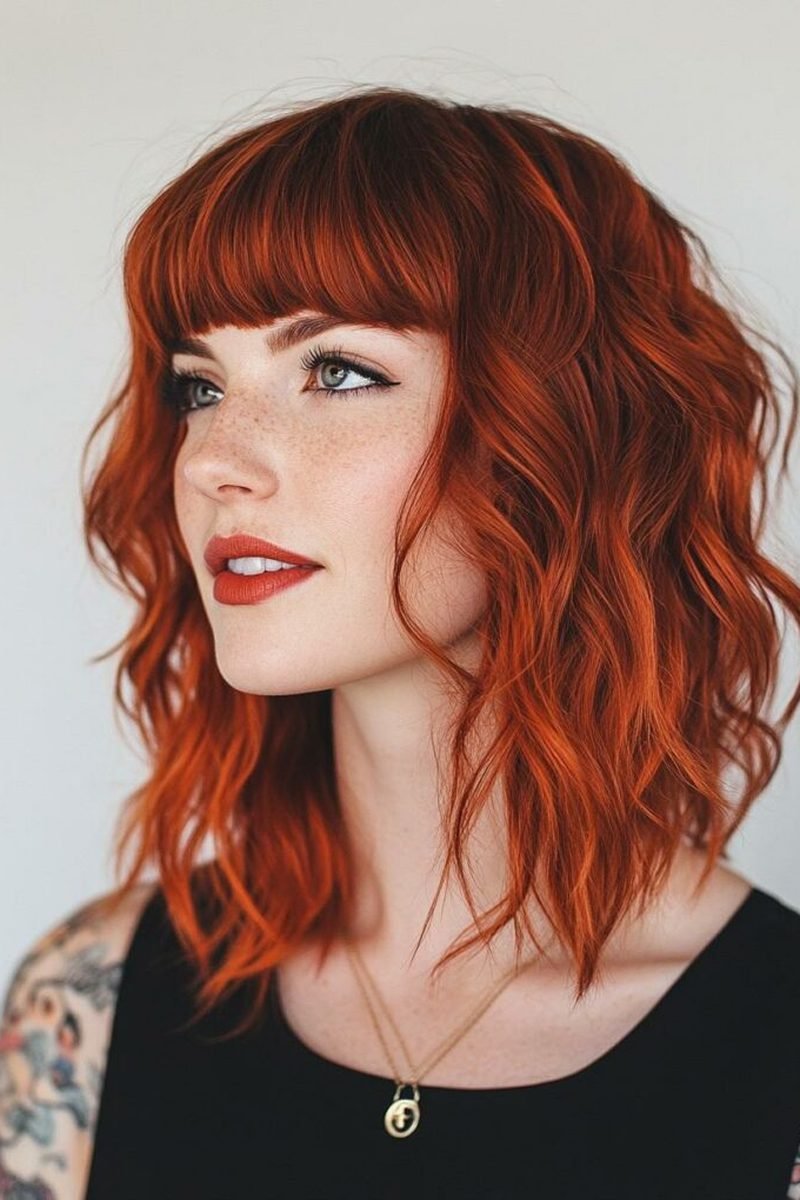
Blunt bangs against a shaggy wolf shouldn’t work, but the contrast is exactly why it does — the solid fringe anchors the wildness of the layers. The copper-red colour ties it together, giving the whole cut a deliberate, editorial feel. Best for 2B–3A waves with medium density and oval faces. Tell your stylist: “wavy wolf with a solid blunt fringe, copper-red all-over colour.” Blunt curly bangs need trimming every 4 to 5 weeks; book fringe trims between full appointments.
26. Copper-Red Wavy Wolf in Golden-Hour Light
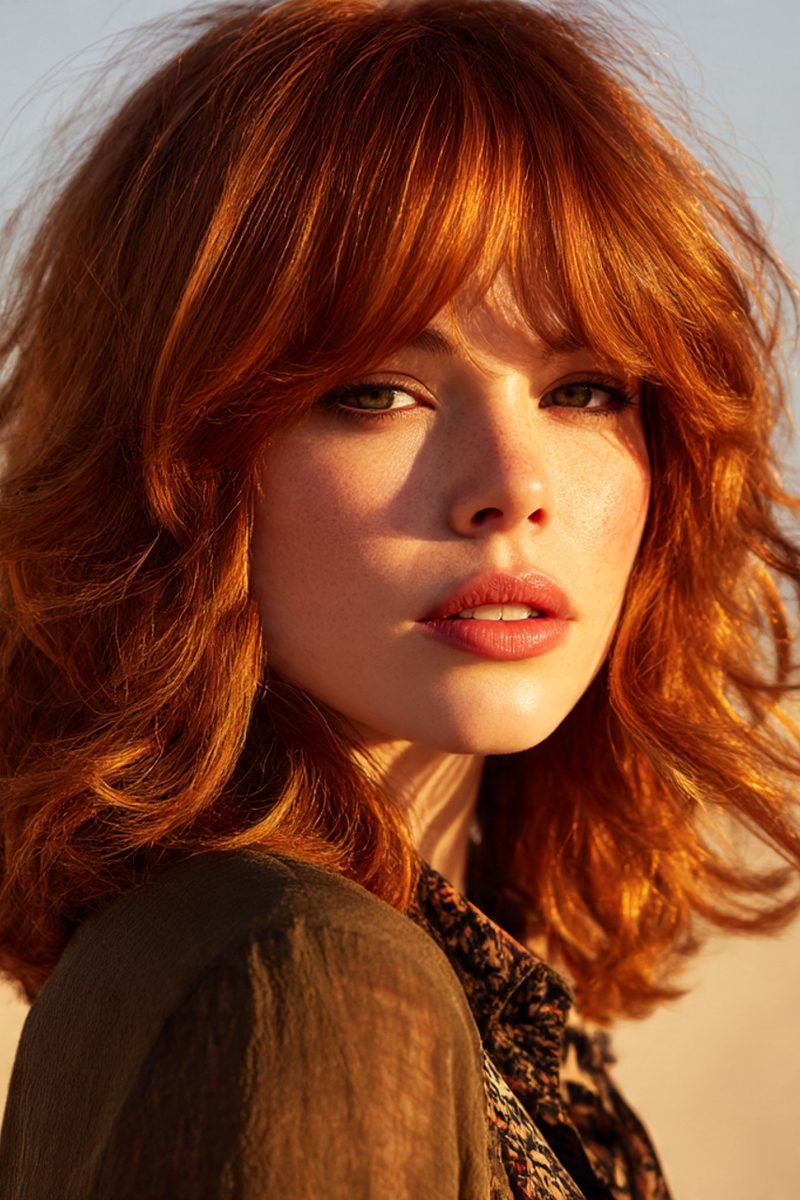
The closer: proof that the right colour turns the wolf cut into pure glow. In warm light, the copper tones ignite and every layer catches fire — this is the cut at its most photogenic. It’s also the most honest advertisement for what the wolf cut does: texture you can see from across the street. Best for 2B–3A waves ready to commit to red maintenance. Tell your stylist: “wavy wolf, vibrant copper-red, layers cut to maximise light reflection.” Red is the highest-maintenance colour here — gloss treatments every 6 weeks keep it luminous.
What to Tell Your Stylist
Bring two or three photos from this list and speak the cut’s language. The non-negotiables: “short disconnected layers at the crown” (that’s the wolf’s volume engine), “longer tapered layers at the back” (the mullet half), and “cut it dry or on stretched curls” so shrinkage doesn’t ambush you — curly hair can spring up several inches. Ask where your shortest layer will sit before the scissors move; on curls, that decision sets the whole silhouette. Skip thinning shears on the surface — they create frizz on curls; point-cutting gives texture without it. And ask how the cut grows out: a good curly wolf stays wearable for 8 to 12 weeks, with the crown layers simply getting longer.
Curly Wolf Cut FAQs
Is the wolf cut good for curly hair?
Yes — the curly wolf cut is one of the best trend cuts for curls because the style was built on texture. The short crown layers give roots lift that curly hair often lacks, while the longer back layers keep length and prevent the dreaded triangle shape. It suits 2A through 4C patterns, though the layering is adjusted: looser waves get longer, more blended layers, while tight coils get shorter, more disconnected ones. For a shorter take on the same texture, see our short shaggy hair ideas.
Will a wolf cut make my curly hair look thinner?
Only if the layers are cut too short for your density. On fine curly hair, ask for long layers and a blunt-ish perimeter to keep the ends looking full. On thick hair, the wolf cut actually removes bulk and makes hair look lighter, not thinner. The key phrase is “keep the ends thick, texture the interior” — interior layering removes weight where it hides.
How do I style a curly wolf cut at home?
Less is more. On wash day, apply leave-in cream and a light gel to soaking-wet hair, then diffuse upside down or air-dry — the cut provides the shape, so you don’t need to manufacture it. On refresh days, mist with water and scrunch; the disconnected layers reactivate easily. Avoid brushing dry curls, which destroys the layer separation the cut was designed to create. For everyday care, the AAD’s healthy hair tips are worth bookmarking.
How often should I trim a curly wolf cut?
Every 8 to 12 weeks for most versions. The cut is forgiving as it grows — the layers just get longer and the shape softens. Shorter pixie-wolf hybrids need 6 to 8 weeks, and blunt bangs need fringe trims every 4 to 5 weeks between full appointments. If the crown starts lying flat, that’s your signal the layers have grown out.
Can I get a wolf cut if I have wavy, not curly, hair?
Absolutely — several ideas on this list (2, 8, 15) are wavy versions. On 2A–2C hair the cut leans more shag than mullet: longer, softer layers with piecey ends. You’ll rely a bit more on product (mousse, salt spray) to encourage the wave pattern, but the architecture works the same. Show your stylist a wavy reference, not a coily one, so the layering matches your texture.
What should I avoid asking for with a curly wolf cut?
Three things: thinning shears on the surface (frizz factory on curls), a razor cut on very curly hair (it shreds curl clumps), and cutting bangs wet to the “final” length (shrinkage will take them inches shorter). Also be wary of over-layering fine hair — too many short layers on low-density curls looks sparse rather than textured.
Final Thoughts
The curly wolf cut works because it stops fighting curls and starts using them. Every one of these 26 ideas leans on what curly hair already does — spring, volume, texture — and simply gives it architecture. Whether you go bold with a shaved side, soft with curtain bangs, or fiery with copper, the formula holds: short crown, long back, and layers that let each curl live its best life. Pick your favourite, book the appointment, and let the cut do the talking.